How to Choose Your First Peptide: A Decision Framework by Goal

Introduction#
With over 80 peptides in active research or clinical use, choosing where to start can feel overwhelming. Each peptide targets different biological pathways, comes with a different level of evidence, and has its own regulatory status. For newcomers, the challenge is not a lack of options -- it is having too many options without a clear framework for making an informed decision.
This guide provides that framework. Rather than recommending a single peptide for everyone, it maps your primary health goal to specific peptide options, explains the evidence behind each recommendation, and helps you understand what to discuss with a healthcare provider. Whether you are interested in weight management, healing, cognitive enhancement, or anti-aging, this decision framework will help you navigate the field with confidence.
For a foundational overview of what peptides are and how they work, see the Complete Beginner's Guide to Peptide Research and our Learn section.
Step 1: Define Your Primary Health Goal#
The first and most important step is identifying your primary reason for exploring peptides. The peptide landscape can be organized into 10 broad goal categories, each with different peptide options and evidence levels:
| Goal Category | What It Covers | Evidence Strength |
|---|---|---|
| Weight Loss and Metabolism | Appetite regulation, body composition, metabolic health | Very Strong (FDA-approved options) |
| Healing and Tissue Repair | Tendon, ligament, muscle, and wound healing | Moderate (mostly preclinical) |
| Growth Hormone Optimization | GH secretion, body composition, recovery, sleep quality | Moderate to Strong |
| Anti-Aging and Longevity | Telomere maintenance, mitochondrial function, cellular repair | Weak to Moderate (mostly preclinical) |
| Cognitive Enhancement | Memory, focus, neuroprotection, mood | Moderate (limited Western trials) |
| Immune Support | Immune modulation, antimicrobial defense, inflammation | Moderate (approved outside US) |
| Skin and Hair Health | Collagen synthesis, wound healing, anti-wrinkle effects | Moderate (topical applications) |
| Sexual Health | Libido, erectile function, sexual desire | Strong (FDA-approved option) |
| Sleep and Recovery | Sleep architecture, circadian regulation, stress response | Weak (limited clinical data) |
| Muscle Building and Recovery | Muscle protein synthesis, myostatin inhibition, recovery | Moderate |
Use our Peptide Finder Quiz for a personalized, interactive recommendation based on your specific goals and preferences.
Step 2: Understand Evidence Levels#
Before looking at specific peptides, it is essential to understand what the evidence behind each recommendation actually means. Not all peptide research is created equal, and this directly affects how much confidence you should place in any particular compound.
The Research Pipeline#
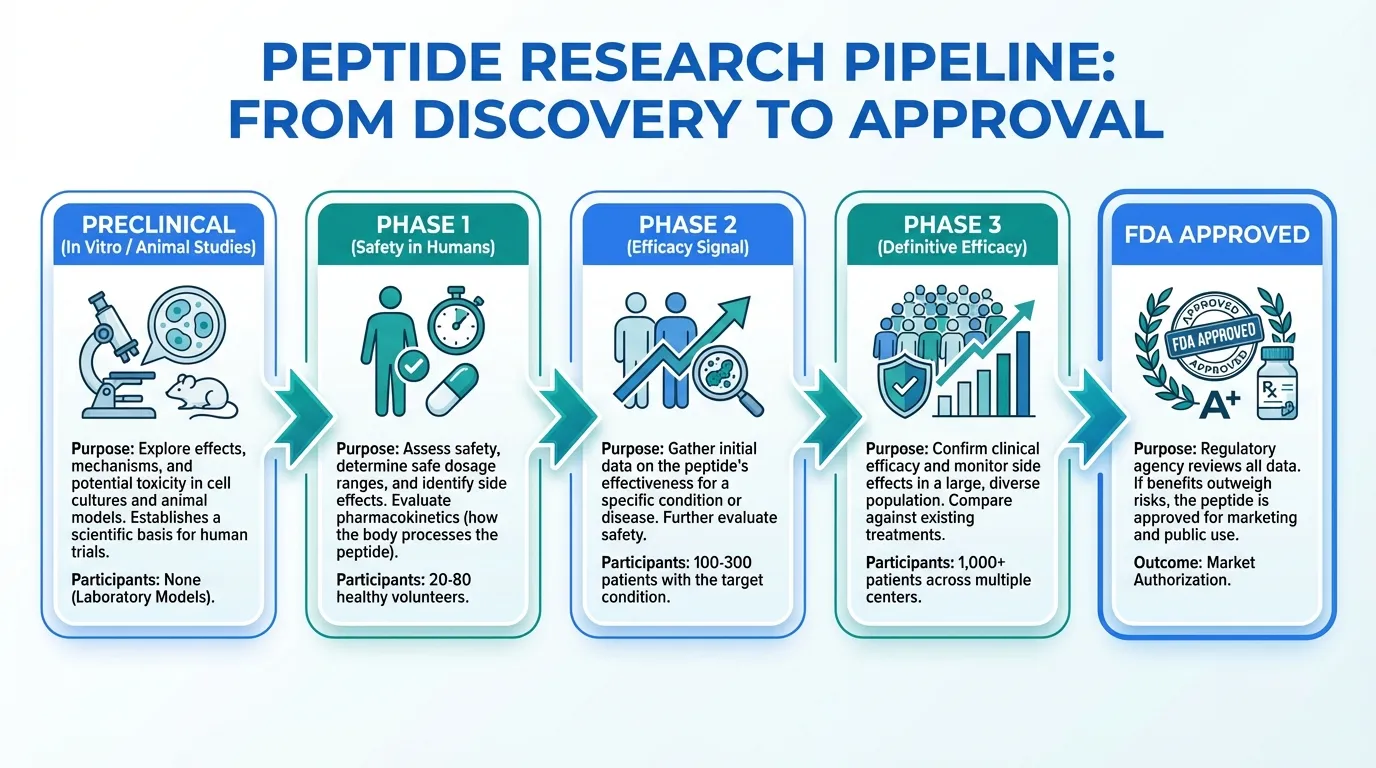
Peptides move through a standard research pipeline from initial discovery to FDA approval:
- Preclinical (In Vitro / Animal Studies) -- The peptide shows effects in cell cultures or animal models. Most peptides in the research space are at this stage. Animal results frequently do not translate to humans.
- Phase 1 (Safety in Humans) -- Small studies (20-80 people) focused on safety, dosing, and basic pharmacokinetics. Not designed to measure efficacy.
- Phase 2 (Efficacy Signal) -- Moderate studies (100-300 people) that begin testing whether the peptide actually works for its intended purpose.
- Phase 3 (Definitive Efficacy) -- Large, randomized controlled trials (1,000+ people) providing definitive evidence of safety and efficacy.
- FDA Approved -- The peptide has passed regulatory review and can be legally prescribed for specific indications.
For a detailed explanation of research phases and how to interpret them, see Understanding Peptide Research: From Animal Studies to Human Trials.
What This Means for Your Decision#
The evidence level should directly influence how you approach a peptide:
- FDA-approved peptides -- You can discuss these with your physician as established treatment options
- Phase 2-3 peptides -- Promising but still investigational; available primarily through clinical trials
- Preclinical peptides -- Interesting research but no confirmed human efficacy; far higher uncertainty
Step 3: Best Beginner-Friendly Peptide for Each Goal#
The following recommendations prioritize three factors: (1) strength of evidence, (2) favorable safety profile, and (3) accessibility for beginners. Where an FDA-approved option exists, it is listed first.
Weight Loss and Metabolism#
Top recommendation: Semaglutide
Semaglutide is the most evidence-backed peptide for weight management. As a GLP-1 receptor agonist, it reduces appetite, slows gastric emptying, and improves metabolic markers.
- Evidence level: FDA-approved (Wegovy for weight management, Ozempic for type 2 diabetes)
- Key trial data: The STEP 1 trial demonstrated 14.9% mean body weight loss at 68 weeks with semaglutide 2.4 mg weekly versus 2.4% with placebo
- Administration: Weekly subcutaneous injection (pre-filled pen)
- Why it is beginner-friendly: Pre-filled injection pens eliminate reconstitution complexity; well-established dose titration protocol; extensive real-world safety data
Also worth discussing with your provider: Tirzepatide (Zepbound), a dual GIP/GLP-1 agonist that showed up to 20.9% weight loss in the SURMOUNT-1 trial.
Learn more: Best Peptides for Weight Loss, Semaglutide vs Tirzepatide
Healing and Tissue Repair#
Top recommendation: BPC-157
BPC-157 (Body Protection Compound-157) is derived from a protein found in human gastric juice. It has been extensively studied in preclinical models for tendon, ligament, muscle, and gut healing.
- Evidence level: Preclinical (animal studies only -- no completed human clinical trials)
- Key research: Over 100 animal studies showing accelerated healing of tendons, ligaments, muscles, bones, and gastrointestinal tissue
- Administration: Subcutaneous injection (requires reconstitution) or oral
- Important caveat: Despite its popularity, BPC-157 has no published human efficacy data. It was also placed in FDA Category 2, restricting compounding pharmacy access
Alternatives to explore: TB-500 (thymosin beta-4 fragment for tissue repair), GHK-Cu (topical for wound healing)
Learn more: Best Healing Peptides, BPC-157 Mechanisms of Action, BPC-157 vs TB-500
Growth Hormone Optimization#
Top recommendation: Ipamorelin
Ipamorelin is a selective growth hormone secretagogue that stimulates the pituitary gland to release growth hormone. It is widely considered the most beginner-friendly GH peptide due to its clean side effect profile.
- Evidence level: Phase 2 clinical trials completed
- Key research: Human studies showing dose-dependent GH release with minimal effects on cortisol, prolactin, or appetite (unlike GHRP-6 or hexarelin)
- Administration: Subcutaneous injection, typically dosed 2-3 times daily
- Why it is beginner-friendly: Selective GH release without the hunger spikes (GHRP-6) or cortisol elevation (hexarelin) seen with other secretagogues
Often paired with: CJC-1295 (no DAC) for amplified GH release through the GHRH pathway. See CJC-1295 + Ipamorelin Stack.
FDA-approved alternative: Tesamorelin (Egrifta) -- approved for HIV-associated lipodystrophy, not general GH optimization.
Learn more: Growth Hormone Secretagogues Compared, Ipamorelin vs Sermorelin
Anti-Aging and Longevity#
Top recommendation: GHK-Cu (topical)
GHK-Cu is a naturally occurring copper peptide that declines with age. Research suggests it modulates the expression of over 4,000 genes, many related to tissue repair, anti-inflammation, and antioxidant defense.
- Evidence level: In vitro and animal studies for systemic effects; moderate clinical data for topical skin applications
- Key research: Studies showing increased collagen synthesis, improved wound healing, and gene expression changes associated with tissue remodeling
- Administration: Topical (serums, creams) or subcutaneous injection
- Why it is beginner-friendly: Topical formulations are widely available, non-invasive, and have a well-established safety profile for skin applications
For deeper anti-aging research: Epitalon (telomerase activation), SS-31 (mitochondrial protection), MOTS-c (mitochondrial-derived peptide). Note that these are all preclinical and require injection.
Learn more: Best Anti-Aging Peptides 2026, Mitochondrial Peptides and Longevity
Cognitive Enhancement#
Top recommendation: Selank
Selank is a synthetic analog of the immune peptide tuftsin, developed at the Institute of Molecular Genetics in Russia. It has anxiolytic, nootropic, and immunomodulatory properties.
- Evidence level: Approved in Russia for anxiety disorders; limited Western clinical trial data
- Key research: Human studies showing anxiolytic effects comparable to benzodiazepines without sedation or dependence; animal studies showing BDNF modulation and cognitive enhancement
- Administration: Intranasal spray (no injection required)
- Why it is beginner-friendly: Intranasal administration avoids injection; studied for both anxiety reduction and cognitive enhancement; no reported dependency or withdrawal
Also worth exploring: Semax (ACTH analog, more stimulating profile), Cerebrolysin (neuropeptide mixture, injection required)
Learn more: Best Nootropic Peptides, Selank vs Semax
Immune Support#
Top recommendation: Thymosin Alpha-1
Thymosin alpha-1 is a thymic peptide that modulates immune function by enhancing T-cell maturation, dendritic cell function, and cytokine balance.
- Evidence level: Approved in 35+ countries (as Zadaxin) for hepatitis B and C; Phase 2/3 data in cancer immunotherapy and sepsis
- Key research: Clinical trials in chronic hepatitis B showing improved viral clearance when combined with interferon; studies in cancer patients showing enhanced immune response to chemotherapy
- Administration: Subcutaneous injection
- Why it is notable: Unlike many immune peptides, thymosin alpha-1 has a substantial body of human clinical data, including randomized controlled trials
Also consider: KPV (anti-inflammatory, oral bioavailability), LL-37 (antimicrobial defense)
Learn more: Top Immune-Boosting Peptides, LL-37 vs Thymosin Alpha-1
Skin and Hair Health#
Top recommendation: GHK-Cu (topical)
GHK-Cu appears again here because it bridges anti-aging and skin health. For purely cosmetic applications, topical GHK-Cu has the most accessible evidence base.
- Evidence level: Multiple human studies for topical skin applications (wrinkle reduction, skin firmness, wound healing)
- Administration: Topical serum or cream (no injection needed)
- Key benefits studied: Increased collagen and glycosaminoglycan synthesis, improved skin thickness and elasticity, accelerated wound healing
For anti-wrinkle specifically: Argireline and SNAP-8 are cosmetic peptides that inhibit neuromuscular signaling to reduce expression lines.
Learn more: Peptides for Skin Health, Anti-Wrinkle Peptides Guide
Sexual Health#
Top recommendation: PT-141 (Bremelanotide/Vyleesi)
PT-141 is an FDA-approved melanocortin receptor agonist that works through the central nervous system to increase sexual desire -- a fundamentally different mechanism from PDE5 inhibitors like Viagra.
- Evidence level: FDA-approved (Vyleesi) for hypoactive sexual desire disorder (HSDD) in premenopausal women
- Key trial data: Pivotal trials showed statistically significant improvement in sexual desire scores and reduction in distress associated with low sexual desire
- Administration: Subcutaneous injection (on-demand, at least 45 minutes before anticipated activity)
- Why it is notable: PT-141 is one of the few peptides specifically approved for sexual health; it acts on desire pathways in the brain rather than on vascular mechanisms
Learn more: Peptides for Sexual Health, PT-141 vs Melanotan-2
Sleep and Recovery#
Top recommendation: DSIP (Delta Sleep-Inducing Peptide)
DSIP is a neuromodulator peptide first isolated from rabbit brain tissue in the 1970s. Research suggests it promotes delta-wave (deep) sleep and modulates stress hormones.
- Evidence level: Preclinical with limited human pilot studies
- Key research: Early human studies showing increased delta sleep percentage and improved sleep quality scores; modulation of cortisol and ACTH
- Administration: Subcutaneous injection or intranasal
- Important caveat: Human data is limited and older (primarily from the 1980s-1990s); the sleep peptide category is the thinnest in terms of rigorous evidence
Also explore: Epitalon (melatonin regulation via pineal gland), GH secretagogues like ipamorelin (which promote slow-wave sleep indirectly through GH release)
Learn more: Best Peptides for Sleep and Recovery, Growth Hormone, Sleep, and Recovery Connection
Muscle Building and Recovery#
Top recommendation: Ipamorelin (via GH optimization)
For muscle building goals, the most evidence-supported peptide approach is indirect -- stimulating the body's own growth hormone production. Ipamorelin's clean selectivity makes it the recommended starting point.
- Evidence level: Phase 2 data for GH secretion; GH itself has well-established anabolic effects on muscle tissue
- Mechanism: Increased GH secretion promotes IGF-1 production, which supports muscle protein synthesis and recovery
- For direct myostatin inhibition: Follistatin and ACE-031 target the myostatin pathway, but evidence is early-stage and these are not recommended as starting peptides
Learn more: Peptides for Muscle Growth and Preservation, Myostatin Inhibitor Peptides
Step 4: Consider Administration Routes#
For beginners, the administration route can be as important as the peptide choice itself. Understanding what each route involves helps set realistic expectations.
| Route | What It Involves | Beginner Complexity | Example Peptides |
|---|---|---|---|
| Topical | Apply cream or serum to skin | Low | GHK-Cu, Argireline, SNAP-8 |
| Oral | Swallow a pill or capsule | Low | Semaglutide (Rybelsus), KPV |
| Intranasal | Spray into nasal passages | Low-Moderate | Selank, Semax |
| Subcutaneous injection (pre-filled) | Inject using a pre-filled pen | Moderate | Semaglutide (Ozempic/Wegovy), Tirzepatide |
| Subcutaneous injection (reconstituted) | Reconstitute powder, draw dose, inject | Higher | Ipamorelin, BPC-157, DSIP |
If injection is a concern, consider starting with topical (GHK-Cu for skin/anti-aging), oral (Rybelsus for weight management), or intranasal (Selank for cognition/anxiety) options.
For those ready to learn injection technique, see our How to Reconstitute Peptides guide and the Dosing Calculator.
Step 5: Check Regulatory Status#
Before pursuing any peptide, understand its current regulatory status. This affects availability, quality assurance, and legal considerations.
FDA-Approved Peptides (Strongest Protections)#
These can be prescribed by a licensed physician and are manufactured under strict FDA oversight:
- Semaglutide (Ozempic, Wegovy, Rybelsus) -- weight management, type 2 diabetes
- Tirzepatide (Mounjaro, Zepbound) -- weight management, type 2 diabetes
- PT-141 (Vyleesi) -- HSDD in premenopausal women
- Tesamorelin (Egrifta) -- HIV-associated lipodystrophy
See the full list at FDA-Approved Peptides.
Compounded Peptides (Prescription Required)#
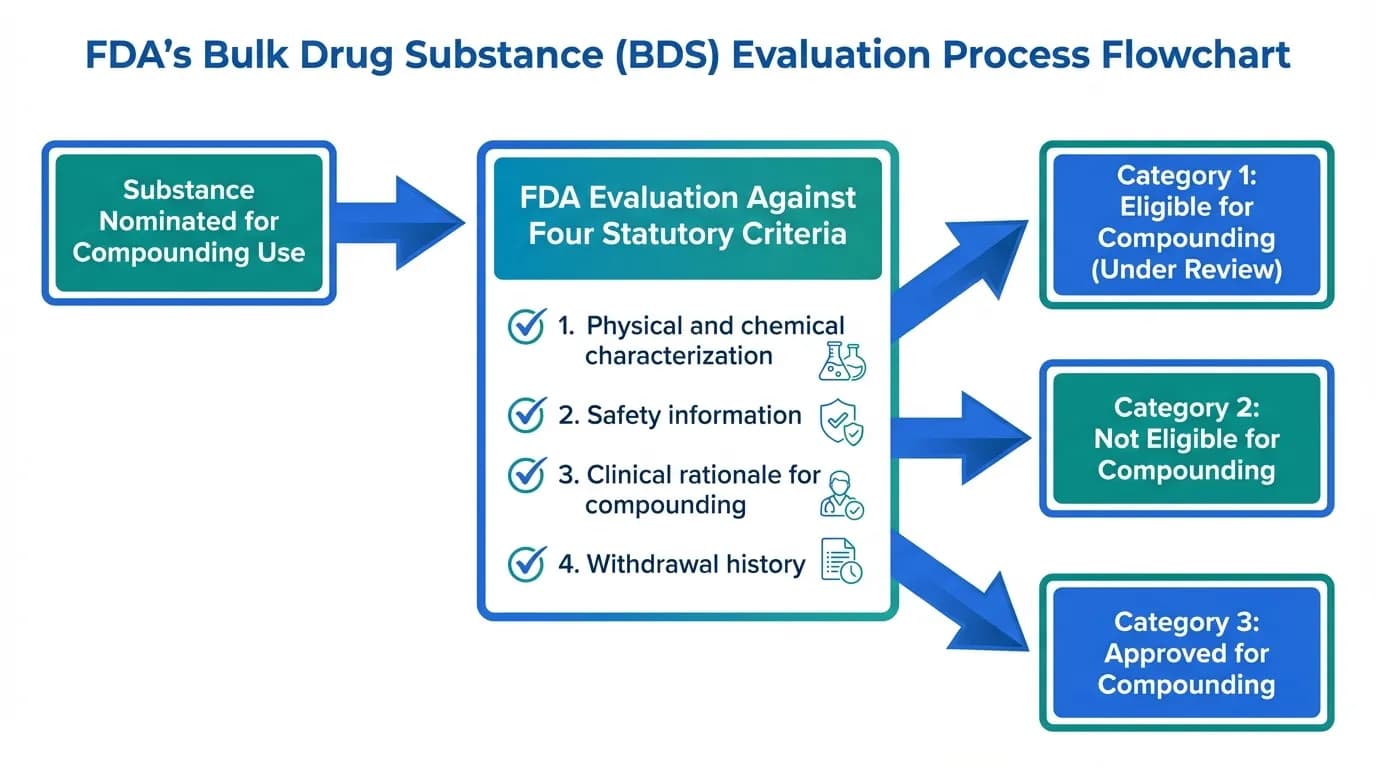
Available through compounding pharmacies with a valid prescription. The FDA's 2024 Category 1/2/3 system determines which peptides can be compounded:
- Category 1 -- Allowed for compounding
- Category 2 -- Banned from compounding (includes BPC-157, thymosin alpha-1)
- Category 3 -- Under evaluation
See FDA Peptide Regulation 2026 for current classification details.
Research Peptides (Not for Human Use)#
Sold as "for research purposes only." These lack FDA manufacturing oversight and quality guarantees. If considering research peptides, third-party purity testing becomes critical.
Step 6: Questions to Discuss with a Healthcare Provider#
Before starting any peptide, prepare a list of questions for your healthcare provider. This conversation is particularly important because many providers may not be familiar with newer peptide research.
Key questions to bring:
- Is this peptide appropriate given my medical history and current medications?
- What monitoring or lab work should be done before and during use? (For GH peptides: IGF-1 levels; for GLP-1 agonists: HbA1c, thyroid function)
- What is the expected timeline for results? (GLP-1 agonists may take 4-8 weeks for noticeable effects; GH peptides may take 2-3 months)
- What side effects should I watch for and when should I contact you?
- Are there interactions with my current medications? (See Peptide Drug Interactions Guide)
- What is the evidence quality for this specific use? (Share what you have learned about the research status)
Decision Summary Table#
| Your Goal | Top Recommendation | Evidence Level | Route | FDA Approved? |
|---|---|---|---|---|
| Weight Loss | Semaglutide | Phase 3 / Approved | Injection (pen) or oral | Yes |
| Healing | BPC-157 | Preclinical only | Injection or oral | No |
| GH Optimization | Ipamorelin | Phase 2 | Injection | No |
| Anti-Aging | GHK-Cu (topical) | Moderate (topical) | Topical | No (cosmetic use) |
| Cognition | Selank | Approved in Russia | Intranasal | No (in US) |
| Immune Support | Thymosin Alpha-1 | Phase 2-3 / Approved (non-US) | Injection | No (in US) |
| Skin Health | GHK-Cu (topical) | Moderate | Topical | No (cosmetic use) |
| Sexual Health | PT-141 | Phase 3 / Approved | Injection | Yes |
| Sleep | DSIP | Limited human data | Injection | No |
| Muscle Building | Ipamorelin | Phase 2 | Injection | No |
Key Takeaways#
-
Start with your goal, not a peptide. The right peptide depends entirely on what you are trying to achieve. Define your primary health goal first.
-
Prioritize evidence quality. FDA-approved peptides (semaglutide, tirzepatide, PT-141) have the strongest evidence. Preclinical-only peptides (BPC-157, DSIP, epitalon) have interesting research but unproven human efficacy.
-
Consider accessibility. Topical and intranasal peptides are the most beginner-friendly. Pre-filled injection pens (GLP-1 agonists) are the next easiest. Reconstituted peptides require the most preparation.
-
Understand regulatory context. FDA-approved peptides offer the strongest quality and safety assurances. Research peptides carry inherent quality and legal uncertainties.
-
Consult a healthcare provider. Especially for injectable peptides and FDA-approved medications, professional medical guidance ensures safe use and appropriate monitoring.
-
Start with one peptide. Resist the urge to combine multiple compounds initially. Understand your response to a single peptide before considering combinations.
Use the Peptide Finder Quiz for a personalized recommendation, and explore individual peptide profiles in the Peptide Directory for detailed research summaries.
This article is for educational and informational purposes only. It does not constitute medical advice, diagnosis, or treatment recommendations. Peptide research is rapidly evolving, and regulatory status may change. Always consult a qualified healthcare provider before starting any peptide or making changes to your health regimen.

Frequently Asked Questions About How to Choose Your First Peptide: A Decision Framework by Goal
What is the best peptide for a complete beginner?
There is no single "best" peptide for everyone -- it depends entirely on your health goal. For weight management, semaglutide has the strongest evidence (FDA-approved). For skin and anti-aging, GHK-Cu in topical form is the most accessible starting point. For growth hormone optimization, ipamorelin is widely considered the most beginner-friendly secretagogue. Always consult a healthcare provider before starting any peptide.
How do I know if a peptide has enough evidence to consider?
Look at the research status. FDA-approved peptides (like semaglutide and PT-141) have completed Phase 3 clinical trials in humans. Peptides in Phase 2 or 3 trials have promising but incomplete human data. Preclinical peptides (like BPC-157) have only animal or cell culture studies. The further along the research pipeline, the more confidence you can have in the evidence.
Do I need a prescription for peptides?
FDA-approved peptides like semaglutide (Ozempic, Wegovy) and PT-141 (Vyleesi) require a prescription. Some peptides are available through compounding pharmacies with a prescription. Research peptides sold as "for research purposes only" do not require prescriptions but are not intended for human use. The regulatory landscape is evolving, so always verify current legal status.
Can I take multiple peptides at the same time?
Some peptides are commonly used together (such as CJC-1295 with ipamorelin for growth hormone optimization), but combining peptides increases complexity and potential interaction risks. Beginners should generally start with a single peptide to understand their individual response before considering combinations. Use the Stack Checker tool to evaluate known interactions.
What is the difference between FDA-approved and research peptides?
FDA-approved peptides have completed rigorous clinical trials demonstrating safety and efficacy in humans, and can be legally prescribed by physicians. Research peptides have not completed this process and are sold for laboratory research purposes only. The evidence quality, manufacturing standards, and legal protections differ substantially between these categories.
Continue reading this research review
Free access to the complete analysis with citations and evidence ratings.
150+ peptide profiles · 30+ comparisons · 18 research tools
Medical Disclaimer
This website is for educational and informational purposes only. The information provided is not intended to diagnose, treat, cure, or prevent any disease. Always consult with a qualified healthcare professional before using any peptide or supplement.
Join 2,000+ researchers getting biweekly updates
Enjoyed this article?
The Research Briefing delivers deep-dives like this biweekly — plus new study breakdowns, safety updates, and tool announcements.
Free forever. No spam. Unsubscribe in one click.
Where to Find These Peptides
Continue Exploring
Peptide Profiles
Keep Reading
FDA Peptide Categories Explained: Category 1 vs Category 2 (2026)
Understand the FDA peptide classification system. Learn the difference between Category 1, Category 2, and Category 3 peptides and what the 2024-2026 regulatory changes mean for researchers.

Best Peptides for Menopause Symptoms: 2026 Research Guide
Research guide covering peptides studied for menopause symptoms including hot flashes, bone loss, cognitive changes, skin aging, sleep disruption, and hormonal regulation.
Peptide Stacking Guide 2026: Best Combinations by Goal
The definitive 2026 guide to peptide stacking organized by goal. Fat loss, muscle growth, healing, anti-aging, and cognitive stacks with evidence levels, dosing timing, and safety considerations.
You Might Also Like
Related content you may find interesting