Selank vs Semax: Comprehensive Comparison
A detailed comparison of Selank and Semax, two Russian-developed nootropic peptides, covering mechanisms, cognitive effects, dosing protocols, side effects, and research evidence for anxiety, neuroprotection, and cognition.
Verdict at a Glance
Selank for anxiety reduction and stress resilience with immunomodulatory benefits; Semax for cognitive enhancement, neuroprotection, and stroke recovery research
| Best for | Pick | Why |
|---|---|---|
| Anxiety and Stress Reduction | Selank | Selank was specifically developed as an anxiolytic, with GABAergic modulation and enkephalinase inhibition producing anxiolytic effects without sedation or dependence in preclinical and limited clinical data |
| Cognitive Enhancement | Semax | Semax has broader clinical data supporting cognitive benefits, with Russian-approved indications for cognitive disorders and demonstrated BDNF/NGF upregulation supporting synaptic plasticity |
| Stroke Recovery Research | Semax | Semax is approved in Russia specifically for ischemic stroke recovery at high doses (3-6 mg intranasally) and has the most clinical data for this application among nootropic peptides |
| Immune System Support | Selank | Selank retains immunomodulatory properties from its parent compound tuftsin, modulating cytokine expression and interferon responses with documented effects on immune parameters in chronic stress models |
| Neuroprotection | Semax | Semax demonstrates potent neuroprotective effects through BDNF and NGF upregulation, with clinical evidence from stroke patients and preclinical data in ischemia models |
| Combined Anxiolytic-Nootropic Effect | Selank | Selank provides both anxiolytic and mild nootropic effects through its multimodal mechanism, making it suitable when anxiety reduction and cognitive support are both desired without stimulatory side effects |
| Category | Selank | Semax | Advantage |
|---|---|---|---|
| Mechanism of Action | Tuftsin-derived; modulates GABA receptors allosterically, inhibits enkephalinases to preserve endogenous opioids, upregulates BDNF, and reprograms neuroimmune gene expression | ACTH(4-7) analog; upregulates BDNF and NGF via melanocortin-related pathways, modulates dopaminergic and serotoninergic systems, and activates neuroprotective transcription programs | Comparable |
| Primary Application | Anxiolytic and stress reduction; approved in Russia for anxiety disorders and neurasthenia, with immunomodulatory properties | Neuroprotection and cognitive enhancement; approved in Russia for ischemic stroke recovery, cognitive disorders, and optic nerve disease | Comparable |
| Research Evidence | Preclinical studies in rodents and primates; limited Russian clinical data with UKU monitoring showing reduced benzodiazepine side effects | Broader clinical evidence from Russian approved use; published stroke recovery and cognitive disorder data; more extensive human dosing history | Semax |
| Side Effect Profile | Favorable preclinical safety; no serious adverse effects reported; long-term human safety data sparse | Well-characterized from clinical use; nasal irritation, occasional headache, possible sleep changes; no serious systemic toxicity reported | Semax |
| Dosing Complexity | Intranasal 0.15% solution; Russian clinical doses around 200-600 mcg per dose, 2-3 times daily for 10-14 day courses | Intranasal 0.1% or 1% solution; 200-600 mcg for cognition, up to 3-6 mg for stroke; 2-3 times daily for 10-14 day courses | Comparable |
| Regulatory Status | Approved in Russia as an anxiolytic medication; not approved by FDA or EMA; classified as research compound in Western countries | Approved in Russia for stroke, cognitive disorders, and optic nerve disease; listed on Russian Vital and Essential Drugs list; not FDA/EMA-approved | Semax |

Introduction#
Selank and Semax are two of the most widely studied nootropic peptides, both developed in Russia and approved for clinical use in Russian healthcare. Despite their shared origin, intranasal route of administration, and overlapping interest in cognitive function, these peptides are derived from entirely different parent molecules and operate through distinct biological mechanisms.
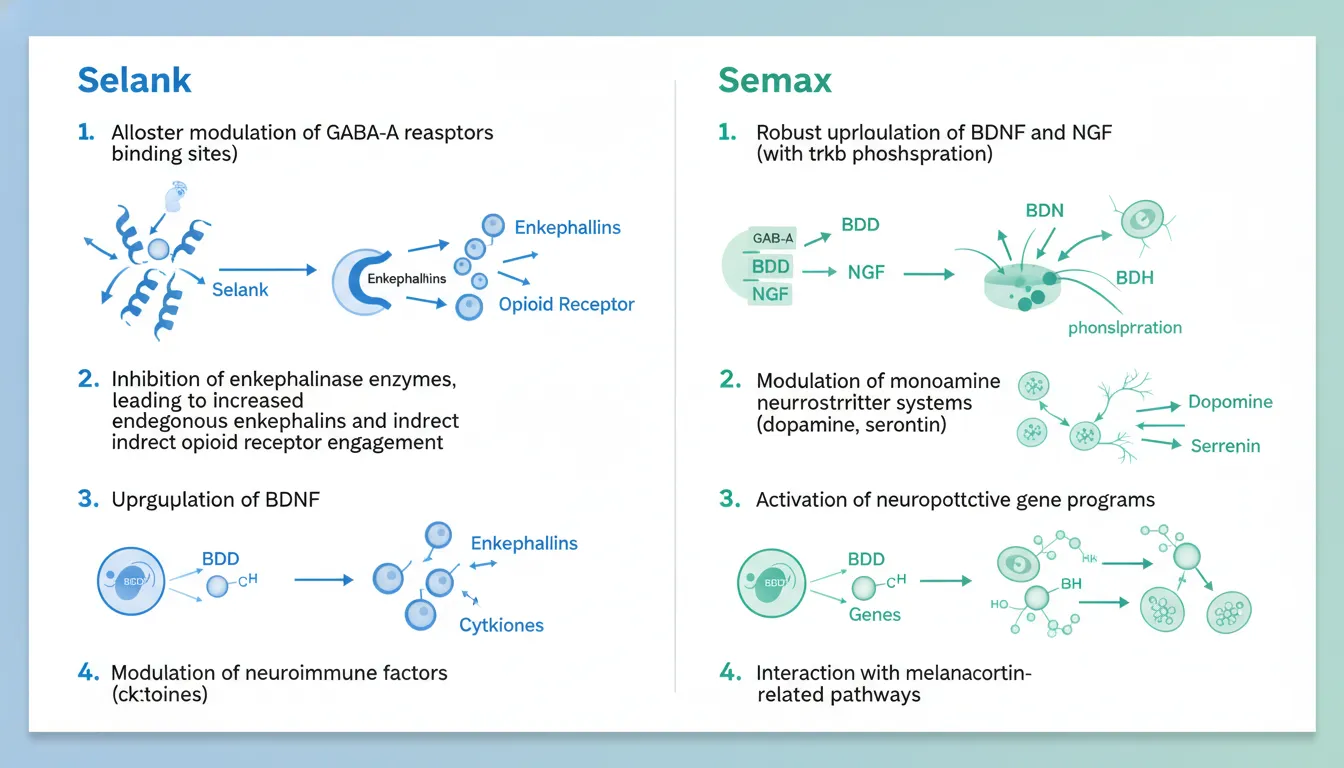
Selank is a synthetic heptapeptide derived from tuftsin, an endogenous immunomodulatory peptide. It was designed primarily as an anxiolytic -- a compound that reduces anxiety -- and achieves this through allosteric modulation of GABA receptors, preservation of endogenous enkephalins, and neurotrophic factor upregulation. Semax, by contrast, is derived from the ACTH(4-7) fragment and was developed as a neuroprotective and cognitive-enhancing agent. It operates primarily through robust upregulation of BDNF and NGF, modulation of monoamine neurotransmitter systems, and activation of neuroprotective gene programs.
This comparison examines the mechanisms, clinical applications, dosing protocols, safety profiles, and research evidence for each peptide to help researchers and clinicians understand where each compound fits within the nootropic peptide landscape.
Mechanism of Action Comparison#
Selank#
Selank (Thr-Lys-Pro-Arg-Pro-Gly-Pro) exerts its effects through a multimodal mechanism that distinguishes it from conventional anxiolytics:
GABAergic modulation: Selank acts as an allosteric modulator of the GABA-A receptor system. Rather than binding directly to the benzodiazepine site, it alters the number of GABA-specific binding sites in cortical tissue without changing receptor affinity. This produces anxiolytic effects with a benzodiazepine-like spectrum but without the sedation, tolerance, or dependence associated with benzodiazepine drugs. Functionally, Selank augments diazepam's anxiolytic effect in stressed rats, consistent with facilitation of benzodiazepine-sensitive GABA-A signaling.
Enkephalinase inhibition: Selank inhibits serum enkephalin-degrading enzymes (aminopeptidases, enkephalinase B/NEP 24-11, and ACE/enkephalinase A), increasing endogenous enkephalin levels and thereby indirectly engaging opioid receptors. This opioid pathway contribution is supported by behavioral pharmacology demonstrating naloxone sensitivity of some of Selank's effects.
Neurotrophic factor upregulation: Selank upregulates BDNF mRNA and increases BDNF protein in the hippocampus following intranasal administration. This neurotrophic effect supports synaptic plasticity and neuroprotection through downstream PI3K-AKT and MAPK/ERK cascades.
Neuroimmune modulation: Selank modulates the fractalkine receptor CX3CR1 and broad panels of cytokine and chemokine genes, linking it to neuron-microglia communication and anti-inflammatory signaling. This immunomodulatory component, inherited from its parent peptide tuftsin, distinguishes Selank from most purely neurotropic compounds.
Semax#
Semax (Met-Glu-His-Phe-Pro-Gly-Pro) acts through mechanisms centered on neurotrophic factor upregulation and monoamine system modulation:
BDNF and NGF upregulation: The most well-characterized mechanism of Semax is the robust upregulation of brain-derived neurotrophic factor (BDNF) and nerve growth factor (NGF). Research by Dolotov et al. (2006) demonstrated that a single intranasal dose of Semax (50 mcg/kg) produces a 1.4-fold increase in BDNF protein and a 1.6-fold increase in trkB tyrosine phosphorylation in the rat hippocampus. At the mRNA level, exon III BDNF showed a 3-fold increase and trkB mRNA a 2-fold increase. These neurotrophic effects are region-specific and time-dependent, varying across hippocampus, frontal cortex, and retina.
Monoamine system modulation: Semax modulates both dopaminergic and serotoninergic neurotransmitter systems. It influences dopamine metabolism and turnover in the striatum and frontal cortex, and affects serotonin levels in multiple brain regions. Critically, unlike the full ACTH molecule, Semax does not stimulate cortisol release or affect adrenal cortex function at therapeutic doses -- a deliberate design feature.
Neuroprotective gene activation: Semax activates broad transcription programs that support neuronal survival under ischemic and excitotoxic stress conditions. This includes modulation of genes involved in apoptosis, inflammation, and vascular remodeling, which forms the basis for its approved use in stroke recovery.
Melanocortin-related signaling: As an ACTH(4-7) derivative, Semax interacts with melanocortin-related pathways in the central nervous system. The melanocortin system is involved in attention, learning, and memory consolidation, contributing to Semax's nootropic profile.
Key Mechanistic Differences#
| Feature | Selank | Semax |
|---|---|---|
| Parent molecule | Tuftsin (immunomodulatory peptide) | ACTH(4-7) (neuroendocrine hormone fragment) |
| Primary neurotransmitter target | GABA (allosteric modulation) | Dopamine and serotonin (monoamine modulation) |
| BDNF upregulation | Yes (hippocampal) | Yes (hippocampal, cortical, retinal) -- more extensively characterized |
| Opioid system involvement | Yes (via enkephalinase inhibition) | Minimal |
| Immune modulation | Significant (cytokine/chemokine gene regulation) | Limited |
| Adrenal effects | None | None (dissociated from ACTH hormonal activity) |
| Anxiolytic mechanism | GABAergic + enkephalinergic | Not primary; some anxiolytic effects via monoamine modulation |
Dosing Comparison#
Selank Dosing#
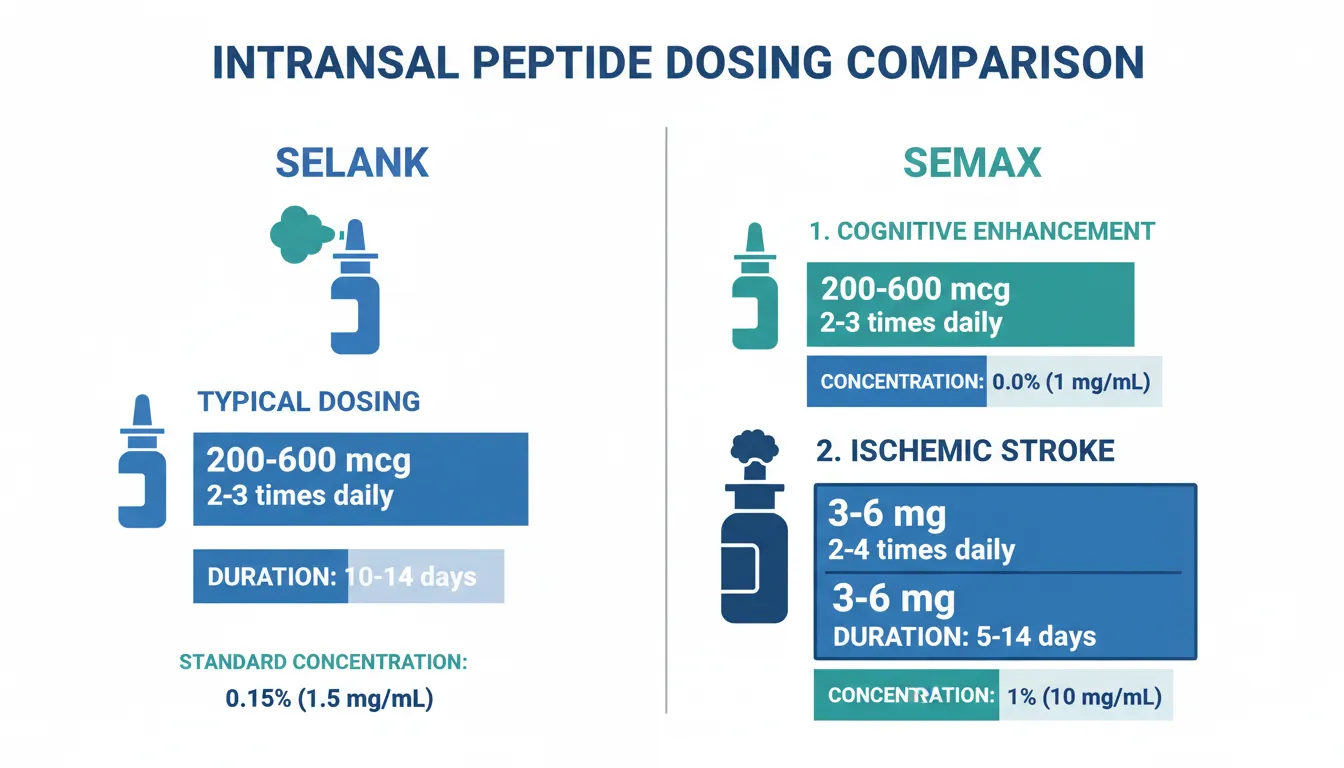
Selank is administered primarily via the intranasal route in its Russian pharmaceutical formulation (0.15% nasal drops):
- Anxiolytic use (Russian approved): 200-600 mcg per dose, administered 2-3 times daily via intranasal drops. Treatment courses typically last 10-14 days and may be repeated after a 2-4 week break.
- Research doses (animal studies): Effective CNS doses in rodents cluster at 200-500 mcg/kg for intranasal administration and around 300 mcg/kg for intraperitoneal behavioral studies. Antidepressant-like effects may require higher repeated doses (1000-2000 mcg/kg/day).
- Pharmacokinetics: Intranasal Selank appears in plasma within approximately 30 seconds and in brain tissue within approximately 2 minutes, with high reported intranasal bioavailability. In vitro plasma half-life is approximately 2 minutes due to rapid peptidase degradation, but functional effects persist much longer due to downstream signaling cascades.
Semax Dosing#
Semax is available in Russia as a ready-to-use intranasal solution in two concentrations:
- Cognitive enhancement (0.1% solution): 200-600 mcg per administration (2-6 drops per nostril from 1 mg/mL solution, each drop approximately 30 mcg), 2-3 times daily for 10-14 day courses.
- Ischemic stroke (1% solution): 3,000-6,000 mcg (3-6 mg) per administration using the 10 mg/mL solution, 2-4 times daily for 5-14 days. Initiated within hours of symptom onset under medical supervision.
- Optic nerve disease (0.1% solution): 200-600 mcg per administration, 2-3 times daily for 10-14 days.
- Research protocol (subcutaneous): 50-250 mcg/kg body weight, once daily.
Dosing Comparison Table#
| Parameter | Selank | Semax |
|---|---|---|
| Primary route | Intranasal | Intranasal |
| Standard concentration | 0.15% (1.5 mg/mL) | 0.1% (1 mg/mL) or 1% (10 mg/mL) |
| Nootropic dose range | 200-600 mcg, 2-3x daily | 200-600 mcg, 2-3x daily |
| High-dose clinical use | Not established | 3-6 mg, 2-4x daily (stroke) |
| Course duration | 10-14 days | 10-14 days (cognition); 5-14 days (stroke) |
| Reconstitution needed | No (Russian product); yes (lyophilized research) | No (Russian product); yes (lyophilized research) |
| Storage | 2-8 degrees C after opening | 2-8 degrees C after opening |
Both peptides share a C-terminal Pro-Gly-Pro sequence that enhances metabolic stability, and both use similar intranasal dosing schedules for cognitive applications. The key dosing distinction is that Semax has an established high-dose protocol (3-6 mg) for stroke treatment, which has no equivalent in Selank's dosing literature.
Side Effects Comparison#
Selank Side Effects#
Selank has demonstrated a favorable safety profile in the available preclinical and limited clinical data:
- No serious adverse effects have been reported in animal studies across doses ranging from 30 to 10,000 mcg/kg across multiple species, including rodents and primates.
- No sedation, tolerance, or dependence: Unlike benzodiazepines, Selank does not produce sedation at effective anxiolytic doses and does not develop tolerance over 14-day administration courses.
- Weight gain changes: One study noted slightly slower weight gain in treated rats compared to controls, attributed primarily to the injection procedure rather than the peptide itself.
- Russian clinical monitoring: UKU-style adverse event monitoring in Russian clinical practice showed that adding Selank to phenazepam (a benzodiazepine) reduced the frequency and severity of benzodiazepine-related side effects (sedation, asthenia, cognitive slowing, orthostatic symptoms) compared with phenazepam alone.
Key limitation: Long-term safety data, abuse potential, and rare adverse effects are insufficiently characterized due to small, short clinical trials.
Semax Side Effects#
Semax has a more extensive safety profile established through decades of clinical use in Russia:
- Nasal irritation: The most commonly reported side effect -- mild burning or tingling in the nostrils immediately after application, usually transient and resolving within minutes.
- Nasal discoloration: Reported in approximately 10% of patients; cosmetically insignificant and reversible upon discontinuation.
- Headache: Mild headache reported in some users, particularly at higher doses or with initial use.
- Sleep disturbances: Insomnia or altered sleep patterns reported, particularly with late-day administration. Related to dopaminergic and activating central effects. Managed by administering earlier in the day.
- Paradoxical anxiety: Rare reports of increased anxiety or agitation, particularly at higher doses, possibly related to excessive dopaminergic stimulation.
- No significant hormonal effects: Despite its ACTH origin, Semax does not affect adrenal cortex function, cortisol levels, or other hormonal parameters at therapeutic doses.
Safety Profile Comparison#
| Parameter | Selank | Semax |
|---|---|---|
| Most common side effect | Not well-characterized | Nasal irritation |
| Sedation risk | No | No |
| Sleep disruption | Not reported | Possible (dose/timing dependent) |
| Dependence/tolerance | Not observed | Not reported |
| Hormonal effects | None | None |
| Activating/stimulatory | Minimal | Yes (dopaminergic) |
| Established human safety data | Limited | More extensive (Russian clinical use) |
| Theoretical interaction risk | GABAergic drugs, opioids, immunomodulators | Dopaminergic drugs, anticoagulants |
Research Evidence Comparison#
Selank Research#
Selank's evidence base consists primarily of preclinical studies and limited Russian clinical data:
Preclinical findings:
- Anxiolytic effects: Demonstrated across multiple animal models (elevated plus maze, open field) with strain-dependent responses. BALB/c mice (high-anxiety strain) show anxiolytic responses at 200-3000 mcg/kg, while C57BL/6 mice are comparatively insensitive.
- BDNF upregulation: Intranasal doses of 250-500 mcg/kg increase hippocampal BDNF mRNA and protein in rats.
- Transcriptomic effects: Single doses alter expression of 36 hippocampal genes; 5-day courses alter 20 genes with some showing opposite directionality depending on dosing schedule.
- Immunomodulation: Chronic administration (100 mcg/kg/day for 20 days) normalized immune parameters (DTH reaction, phagocytic activity) in chronically stressed rats.
- Antidepressant-like effects: Observed at higher repeated doses (1000-2000 mcg/kg/day) without affecting general locomotion.
Clinical evidence:
- Russian clinical practice data with UKU monitoring suggests Selank reduces benzodiazepine-related adverse effects when used as an adjunct.
- Approved in Russia as an anxiolytic medication (intranasal 0.15% solution).
- No large-scale, double-blind, placebo-controlled trials published in Western peer-reviewed literature.
Semax Research#
Semax has a broader clinical evidence base, primarily from Russian research:
Preclinical findings:
- BDNF/NGF upregulation: Extensively characterized with dose-response data. Single intranasal doses produce measurable increases in BDNF protein (1.4-fold) and trkB phosphorylation (1.6-fold) in rat hippocampus. Effects are region-specific and time-dependent.
- Neuroprotection: Demonstrated protective effects in ischemic stroke models, traumatic brain injury, and neurodegenerative disease models.
- Monoamine modulation: Increases dopamine and modulates serotonin levels across cortical and subcortical regions.
- Gene expression: Transcriptomic studies show broad activation of neuroprotective gene programs including anti-apoptotic and neurovascular genes.
Clinical evidence:
- Stroke recovery: Approved in Russia for acute ischemic stroke treatment. Clinical data show improved neurological outcomes when administered intranasally within hours of stroke onset at 3-6 mg doses.
- Cognitive disorders: Approved for cognitive impairment, attention deficits, and neurasthenic conditions in Russian clinical practice.
- Optic nerve disease: Approved for optic nerve atrophy and glaucomatous optic neuropathy.
- Decades of clinical use: Semax has been used in Russian clinical practice since the 1990s, providing a substantial real-world safety and efficacy dataset, though largely published in Russian-language literature.
- Listed on the Russian List of Vital and Essential Drugs, indicating recognized therapeutic utility within that regulatory framework.
Evidence Comparison Summary#
| Parameter | Selank | Semax |
|---|---|---|
| Preclinical studies | Moderate (rodents, primates) | Extensive (rodents, clinical models) |
| Human clinical trials | Limited (Russian data, small cohorts) | More extensive (Russian approved indications) |
| Western peer-reviewed data | Sparse | Sparse (most literature in Russian) |
| Approved indications | 1 (anxiety, Russia) | 3+ (stroke, cognition, optic nerve, Russia) |
| Years of clinical use | Since ~2000s | Since ~1990s |
| FDA/EMA status | Not approved | Not approved |
Key Differences Summary#
- Origin: Selank derives from tuftsin (immune peptide); Semax derives from ACTH(4-7) (neuroendocrine hormone fragment)
- Primary effect: Selank is primarily anxiolytic; Semax is primarily neuroprotective and cognitive-enhancing
- GABAergic activity: Selank modulates GABA-A receptors allosterically; Semax has minimal GABAergic activity
- Dopaminergic activity: Semax significantly modulates dopamine systems (activating); Selank has less direct dopaminergic influence
- Immune effects: Selank retains significant immunomodulatory properties from tuftsin; Semax has minimal immune effects
- Opioid pathway: Selank engages the opioid system via enkephalinase inhibition; Semax does not
- Stimulatory profile: Semax is more activating (potential for insomnia, rare anxiety); Selank is calming without sedation
- Clinical dose range: Both use 200-600 mcg intranasally for cognitive applications, but Semax has established high-dose (3-6 mg) protocols for stroke
- Evidence breadth: Semax has more approved indications, longer clinical use history, and broader published data
Conclusion#
Selank and Semax represent complementary approaches to cognitive and neurological peptide therapy, distinguished by their parent molecules, primary mechanisms, and clinical positioning.
Selank is best characterized as an anxiolytic nootropic -- a compound that reduces anxiety and supports cognitive function simultaneously without the sedation, tolerance, or dependence associated with conventional anxiolytics. Its unique combination of GABAergic modulation, enkephalinase inhibition, BDNF upregulation, and immunomodulatory effects makes it particularly relevant for research into anxiety disorders, stress resilience, and conditions where immune and neurological function intersect.
Semax is best characterized as a neuroprotective nootropic -- a compound that enhances cognitive function and protects neural tissue, particularly under ischemic or degenerative stress. Its potent BDNF and NGF upregulation, monoamine system modulation, and neuroprotective gene activation make it particularly relevant for stroke recovery, cognitive decline, and neurodegenerative disease research.
Both peptides share intranasal administration, similar course durations, and favorable safety profiles. Neither is approved by the FDA or EMA, and most clinical evidence comes from Russian-language literature. Researchers selecting between these compounds should consider whether the primary goal is anxiety reduction and immune support (Selank) or cognitive enhancement and neuroprotection (Semax). The two peptides are not mutually exclusive, and some Russian protocols use them in complementary fashion.
For detailed profiles of each peptide, see our dedicated pages on Selank and Semax. To understand how these cognitive peptides fit within the broader peptide landscape, see our guide on understanding peptide categories.
Further Reading#

Which Is Better For...
Anxiety and Stress Reduction
Selank
Selank was specifically developed as an anxiolytic, with GABAergic modulation and enkephalinase inhibition producing anxiolytic effects without sedation or dependence in preclinical and limited clinical data
Cognitive Enhancement
Semax
Semax has broader clinical data supporting cognitive benefits, with Russian-approved indications for cognitive disorders and demonstrated BDNF/NGF upregulation supporting synaptic plasticity
Stroke Recovery Research
Semax
Semax is approved in Russia specifically for ischemic stroke recovery at high doses (3-6 mg intranasally) and has the most clinical data for this application among nootropic peptides
Immune System Support
Selank
Selank retains immunomodulatory properties from its parent compound tuftsin, modulating cytokine expression and interferon responses with documented effects on immune parameters in chronic stress models
Neuroprotection
Semax
Semax demonstrates potent neuroprotective effects through BDNF and NGF upregulation, with clinical evidence from stroke patients and preclinical data in ischemia models
Combined Anxiolytic-Nootropic Effect
Selank
Selank provides both anxiolytic and mild nootropic effects through its multimodal mechanism, making it suitable when anxiety reduction and cognitive support are both desired without stimulatory side effects
Continue Your Research
Get comparison updates
We publish new head-to-head comparisons regularly. Subscribe to see them first.
Frequently Asked Questions About Selank vs Semax: Comprehensive Comparison
What are the key differences between Selank and Semax?
The main differences across comparison categories are: Mechanism of Action: advantage goes to neither (tie); Primary Application: advantage goes to neither (tie); Research Evidence: advantage goes to Semax. 3 additional categories are analyzed in the full comparison. Each category evaluates a different dimension of the two peptides.
When should I consider Selank over Semax?
For the scenario of "Anxiety and Stress Reduction," research data suggests Selank may be more relevant. Selank was specifically developed as an anxiolytic, with GABAergic modulation and enkephalinase inhibition producing anxiolytic effects without sedation or dependence in preclinical and limited cli.... This is based on currently available evidence and individual circumstances may differ.
How do Selank and Semax differ in their mechanisms of action?
Selank: Tuftsin-derived; modulates GABA receptors allosterically, inhibits enkephalinases to preserve endogenous opioids, upregulates BDNF, and reprograms neuroimmune gene expression. Semax: ACTH(4-7) analog; upregulates BDNF and NGF via melanocortin-related pathways, modulates dopaminergic and serotoninergic systems, and activates neuroprotective transcription programs.
Which has fewer side effects, Selank or Semax?
In terms of side effects and tolerability, the advantage goes to Semax. Selank: Favorable preclinical safety; no serious adverse effects reported; long-term human safety data sparse. Semax: Well-characterized from clinical use; nasal irritation, occasional headache, possible sleep changes; no serious systemic toxicity reported.
Medical Disclaimer
This website is for educational and informational purposes only. The information provided is not intended to diagnose, treat, cure, or prevent any disease. Always consult with a qualified healthcare professional before using any peptide or supplement.