Best Healing Peptides: BPC-157, TB-500, and Beyond

Introduction#
Healing peptides represent one of the most actively researched areas in peptide science. From musculoskeletal tissue repair to wound healing and gut mucosa regeneration, several peptides have demonstrated remarkable regenerative properties in preclinical research.
This article reviews the five most promising healing peptides based on the breadth and quality of their published research. For each, we provide the evidence level, key mechanisms, and important citations so researchers can evaluate the data for themselves.
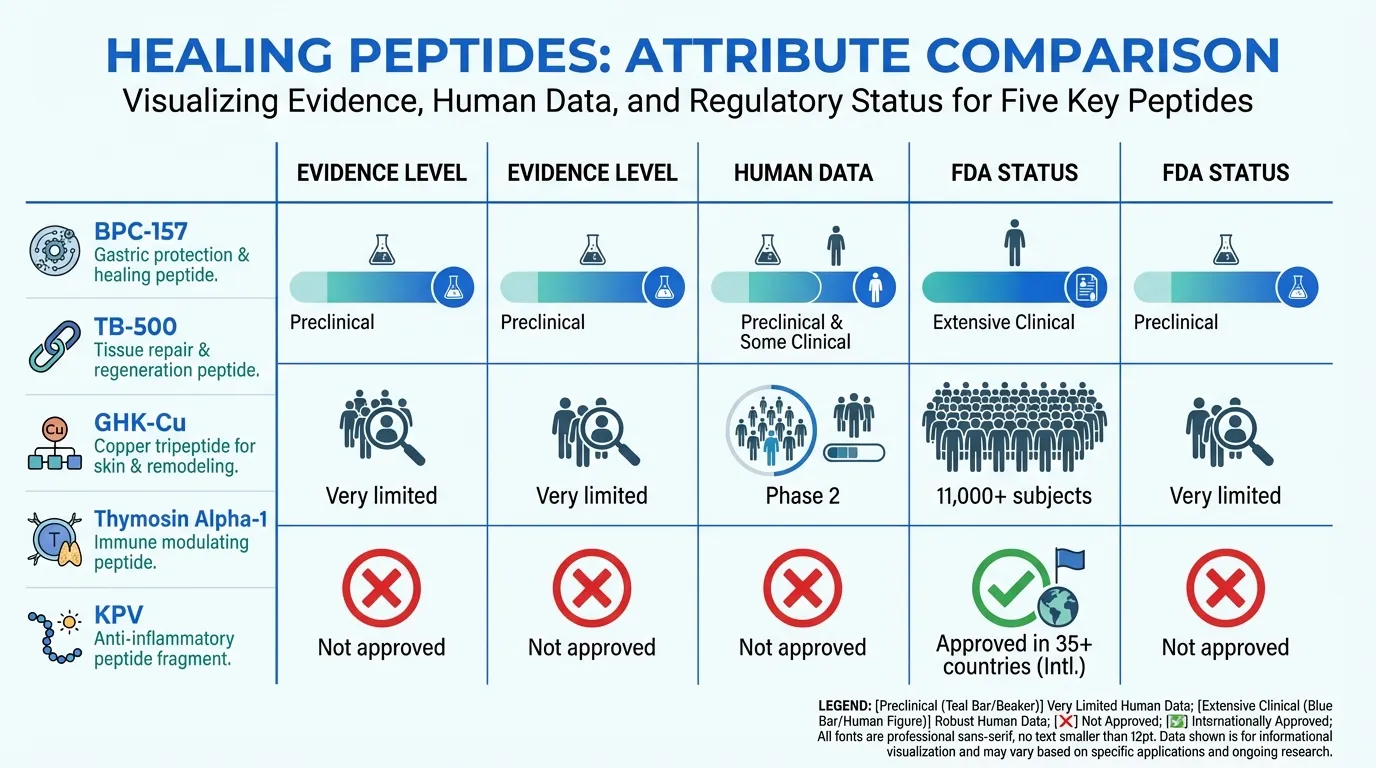
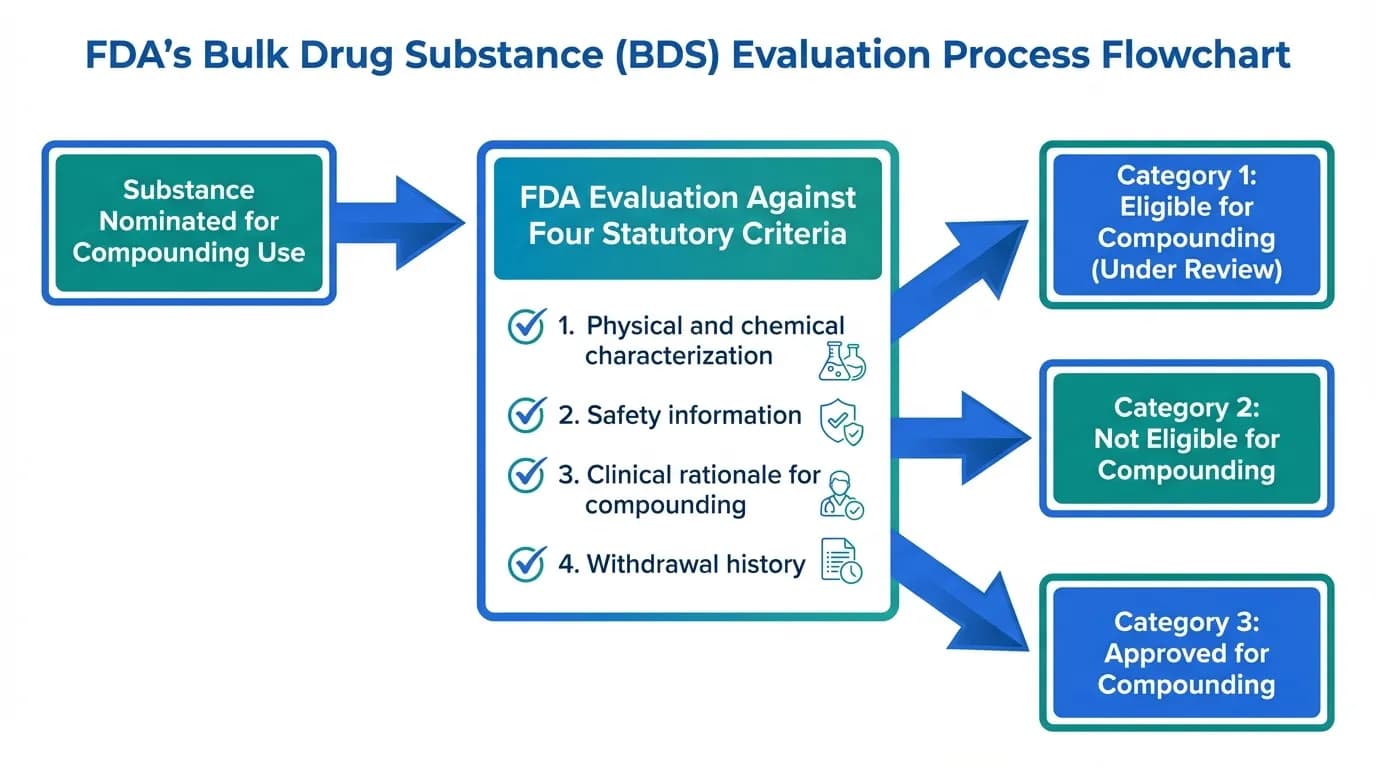
Regulatory Note: BPC-157, GHK-Cu, and KPV were placed in FDA Category 2 (banned from compounding) in 2024. Thymosin Alpha-1 was also placed in Category 2 despite being approved in 35+ other countries. None of the peptides in this article are FDA-approved for healing indications.
1. BPC-157 (Body Protection Compound)#
Evidence Level: Predominantly preclinical (animal studies); very limited human data Research Status: No FDA approval; no currently active registered clinical trials
BPC-157 is a 15-amino-acid peptide derived from human gastric juice that has been studied in over 100 animal studies spanning tendon, ligament, muscle, bone, skin, and gut tissue repair.
Key Research Findings#
A 2019 systematic review found that BPC-157 improved outcomes across muscle, tendon, ligament, and bone injury models in animals 1. A 2025 systematic review of 36 studies (1993-2024) confirmed its role in promoting healing via growth factor upregulation and reduced inflammation 2.
The limited human data includes a pilot study of IV infusion in 2 healthy adults (showing no adverse effects) 3 and an intra-articular injection study where 11 of 12 patients (91.6%) reported significant improvement in knee pain 4.
Mechanism of Action#
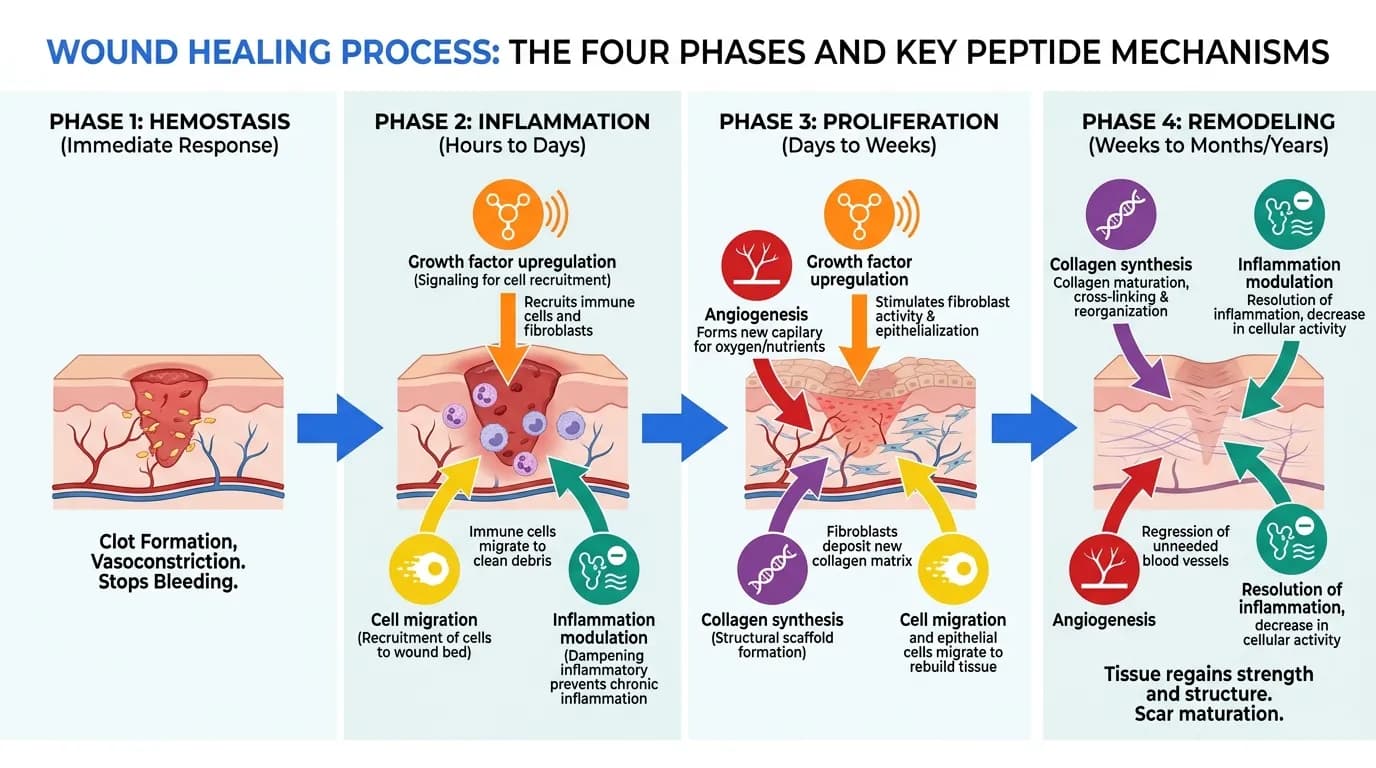
BPC-157 appears to work through multiple pathways: upregulation of growth hormone receptors, promotion of angiogenesis (new blood vessel formation), activation of the nitric oxide system, and modulation of several growth factors including VEGF, EGF, and FGF.
Important Caveats#
The vast majority of BPC-157 evidence comes from animal studies conducted by a relatively small number of research groups. Human clinical trial data is extremely limited (total n < 15 across all published studies). The potential for publication bias should be considered.
2. TB-500 (Thymosin Beta-4 Fragment)#
Evidence Level: Preclinical + Phase 2 clinical data (for parent compound) Research Status: Not FDA-approved
TB-500 is a synthetic fragment (amino acids 17-23) of thymosin beta-4, a naturally occurring 43-amino-acid peptide involved in cell migration, wound healing, and tissue repair.
Key Research Findings#
The parent compound thymosin beta-4 has stronger evidence than TB-500 itself. A Phase 2 clinical trial demonstrated that thymosin beta-4 accelerated healing of chronic stasis and pressure ulcers by almost a month compared to placebo 5. The foundational 1999 study showed thymosin beta-4 accelerates wound healing through promotion of cell migration 6.
Thymosin beta-4 was also the first molecule shown to initiate simultaneous myocardial and vascular regeneration in animal models 7.
Mechanism of Action#
Thymosin beta-4 promotes healing through actin sequestration (regulating cell migration), promotion of angiogenesis, reduction of inflammation, and upregulation of laminin-5 for cell adhesion. TB-500 as the active fragment retains many of these properties.
Important Caveats#
Clinical trial data exists for thymosin beta-4 (the full peptide), not for TB-500 (the synthetic fragment). While TB-500 contains the active region, the two molecules are not identical and should not be conflated in evidence claims.
3. GHK-Cu (Copper Peptide)#
Evidence Level: Extensive in vitro data; limited clinical data Research Status: Not FDA-approved; FDA Category 2 (banned from compounding, 2024)
GHK-Cu is a naturally occurring tripeptide-copper complex found in human plasma, saliva, and urine. It is one of the most extensively studied peptides at the molecular level, with gene expression data showing modulation of over 4,000 human genes.
Key Research Findings#
A landmark 2015 study demonstrated that GHK modulates 4,000+ human genes involved in skin regeneration, stimulating collagen synthesis, elastin production, and glycosaminoglycan (GAG) formation 8. A 2018 follow-up provided additional gene regulation data supporting regenerative and protective properties 9.
Mechanism of Action#
GHK-Cu works by binding to copper ions and delivering them to tissue sites where they are needed for enzymatic processes. It stimulates collagen I and III synthesis, promotes decorin production (which regulates collagen fibril assembly), increases angiogenesis, and has anti-inflammatory effects through suppression of TGF-beta.
Important Caveats#
While the gene expression data is extensive, most evidence comes from in vitro studies and gene expression analyses. The gap between molecular data and clinical outcomes remains significant. Topical copper peptide products are available as cosmetics, but injectable forms are not approved.
4. Thymosin Alpha-1#
Evidence Level: Extensive clinical data (11,000+ human subjects) Research Status: Approved in 35+ countries (Zadaxin); NOT FDA-approved in US; FDA Category 2
Thymosin Alpha-1 is a 28-amino-acid immune-modulating peptide that, while primarily known for immune function, has documented wound healing applications through its effects on immune cell-mediated tissue repair.
Key Research Findings#
A 2024 comprehensive review covered over 11,000 human subjects across 30+ clinical trials, confirming Thymosin Alpha-1 as a well-tolerated immune modulator 10. Its mechanism through Toll-like receptors in dendritic cells supports both immune defense and tissue repair processes 11.
Mechanism of Action#
Thymosin Alpha-1 enhances T-cell maturation, promotes dendritic cell function, and modulates cytokine production. Its healing properties are mediated through improved immune surveillance and enhanced clearance of damaged tissue, facilitating the transition from inflammation to repair.
Important Caveats#
Thymosin Alpha-1 is primarily an immune modulator rather than a direct healing peptide. Its wound healing benefits are secondary to its immune effects. Despite extensive international clinical use and 35+ country approvals, the FDA banned it from compounding in 2024.
5. KPV (Lys-Pro-Val)#
Evidence Level: Preclinical (animal studies + in vitro) Research Status: Not FDA-approved; no human clinical trials
KPV is a tripeptide derived from the C-terminal end of alpha-melanocyte-stimulating hormone (alpha-MSH). It has been studied primarily for its anti-inflammatory properties in gut tissue.
Key Research Findings#
Studies have shown that KPV reduces intestinal inflammation through PepT1-mediated uptake in immune and intestinal epithelial cells 12. In murine models of inflammatory bowel disease, oral KPV reduced DSS- and TNBS-induced colitis 13. Notably, KPV was found to exert a stronger anti-inflammatory effect than the full alpha-MSH peptide 14.
Mechanism of Action#
KPV inhibits NF-kappaB activation in a dose-dependent manner, suppresses IL-8 production, and reduces pro-inflammatory cytokine release. Its small size allows for oral bioavailability via the PepT1 transporter, which is relatively unusual for peptides.
Important Caveats#
All KPV research is preclinical. No human clinical trials have been conducted. Claims about IBD treatment potential must be clearly qualified as findings from animal models only.
Comparison Summary#
| Peptide | Primary Target | Evidence Level | Human Data | FDA Status |
|---|---|---|---|---|
| BPC-157 | Broad tissue repair | Preclinical | Very limited (n < 15) | Category 2 banned |
| TB-500 | Wound/cardiac repair | Preclinical + Phase 2* | Phase 2 (parent compound) | Not approved |
| GHK-Cu | Skin/tissue regeneration | In vitro extensive | Limited clinical | Category 2 banned |
| Thymosin Alpha-1 | Immune-mediated repair | Extensive clinical | 11,000+ subjects | Category 2 banned |
| KPV | Gut inflammation | Preclinical | None | Not approved |
*Phase 2 data is for thymosin beta-4 (parent compound), not TB-500 (fragment).
Key Takeaways for Researchers#
-
Evidence quality varies dramatically -- from Thymosin Alpha-1's 11,000+ human subjects to KPV's entirely preclinical record. Researchers should weight their evaluations accordingly.
-
The regulatory landscape has shifted -- the 2024 FDA Category 2 designations removed BPC-157, GHK-Cu, and Thymosin Alpha-1 from compounding, even as research continues.
-
Animal-to-human translation gaps remain -- particularly for BPC-157 and KPV, where impressive animal data has not yet been confirmed in human trials.
-
Combination research is limited -- while "stacking" healing peptides is popular in the biohacking community, peer-reviewed data on peptide combinations for healing is virtually nonexistent.
References#
Related Peptide Profiles#
Learn more about the peptides discussed in this article:
- BPC-157 Overview and Research Guide
- BPC-157 Dosing Protocols
- BPC-157 Side Effects and Safety
- TB-500 Overview and Research Guide
- TB-500 Dosing Protocols
- TB-500 Side Effects and Safety
- GHK-Cu Overview and Research Guide
- GHK-Cu Dosing Protocols
- GHK-Cu Side Effects and Safety
- Thymosin Alpha-1 Overview and Research Guide
- Thymosin Alpha-1 Dosing Protocols
- Thymosin Alpha-1 Side Effects and Safety
- KPV Overview and Research Guide
- KPV Dosing Protocols
- KPV Side Effects and Safety
Footnotes#
-
Gastric pentadecapeptide body protection compound BPC 157 and its role in accelerating musculoskeletal soft tissue healing. PMID: 30915550. 2019. ↩
-
Emerging Use of BPC-157 in Orthopaedic Sports Medicine: A Systematic Review. PMID: 40756949. 2025. ↩
-
Safety of Intravenous Infusion of BPC157 in Humans: A Pilot Study. PMID: 40131143. 2025. ↩
-
Intra-Articular Injection of BPC 157 for Multiple Types of Knee Pain. PMID: 34324435. 2021. ↩
-
The regenerative peptide thymosin beta-4 accelerates dermal healing in preclinical models and patients. PMID: 23050815. 2012. ↩
-
Thymosin beta4 accelerates wound healing. PMID: 10469335. 1999. ↩
-
Thymosin beta4 and cardiac repair. PMID: 20536454. 2010. ↩
-
GHK Peptide as a Natural Modulator of Multiple Cellular Pathways in Skin Regeneration. PMID: 26236730. 2015. ↩
-
Regenerative and Protective Actions of the GHK-Cu Peptide in the Light of New Gene Data. PMID: 29986520. 2018. ↩
-
Comprehensive Review of Safety and Efficacy of Thymosin Alpha 1 in Human Clinical Trials. PMID: 38308608. 2024. ↩
-
Immune Modulation with Thymosin Alpha 1 Treatment. PMID: 27450734. 2016. ↩
-
PepT1-mediated tripeptide KPV uptake reduces intestinal inflammation. PMID: 18061177. 2008. ↩
-
Melanocortin-derived tripeptide KPV has anti-inflammatory potential in murine models of IBD. PMID: 18092346. 2008. ↩
-
Dissection of the anti-inflammatory effect of the core and C-terminal (KPV) alpha-MSH peptides. PMID: 12750433. 2003. ↩

Frequently Asked Questions About Best Healing Peptides: BPC-157, TB-500, and Beyond
What does this article cover?
A comprehensive review of the top healing peptides in research, including BPC-157, TB-500, GHK-Cu, Thymosin Alpha-1, and KPV, with evidence levels, mechanisms, and key study citations for each. This guide is for educational purposes only and does not constitute medical advice.
Which peptides are discussed in this article?
This article covers BPC-157, TB-500, GHK-Cu, Thymosin Alpha-1, KPV. Key context: BPC-157 (Most widely studied healing peptide with broad tissue repair data from animal studies); TB-500 (Synthetic thymosin beta-4 fragment with wound healing and tissue regeneration research); GHK-Cu (Copper peptide with extensive gene expression data on skin regeneration and tissue repair). Each peptide is discussed based on available research evidence.
Who is this guide written for?
This guide is written for researchers and individuals seeking an evidence-based overview of the topic covered in "Best Healing Peptides: BPC-157, TB-500, and Beyond." It summarizes available research data without making treatment recommendations. Always consult a healthcare provider for medical decisions.
What are the key takeaways from this article?
The main findings covered in this article include: Most widely studied healing peptide with broad tissue repair data from animal studies. Synthetic thymosin beta-4 fragment with wound healing and tissue regeneration research. Copper peptide with extensive gene expression data on skin regeneration and tissue repair. These takeaways are based on the research data available at the time of publication.
What is BPC-157 and why is it significant?
BPC-157 is a peptide discussed in this article because: Most widely studied healing peptide with broad tissue repair data from animal studies. For a complete profile of BPC-157, see the dedicated peptide page on this site.
Continue reading this research review
Free access to the complete analysis with citations and evidence ratings.
150+ peptide profiles · 30+ comparisons · 18 research tools
Medical Disclaimer
This website is for educational and informational purposes only. The information provided is not intended to diagnose, treat, cure, or prevent any disease. Always consult with a qualified healthcare professional before using any peptide or supplement.
Join 2,000+ researchers getting biweekly updates
Enjoyed this article?
The Research Briefing delivers deep-dives like this biweekly — plus new study breakdowns, safety updates, and tool announcements.
Free forever. No spam. Unsubscribe in one click.
Where to Find These Peptides
Continue Exploring
Peptide Profiles
Keep Reading
Peptides for Wound Healing & Tissue Repair: What the Research Shows (2026)
Which peptides support wound healing? An educational overview of BPC-157, TB-500, GHK-Cu, KPV, and Thymosin Alpha-1 — mechanisms, evidence status, best-use scenarios, and safety context for tissue repair research.
FDA Peptide Categories Explained: Category 1 vs Category 2 (2026)
Understand the FDA peptide classification system. Learn the difference between Category 1, Category 2, and Category 3 peptides and what the 2024-2026 regulatory changes mean for researchers.
Peptide Stacking Guide 2026: Best Combinations by Goal
The definitive 2026 guide to peptide stacking organized by goal. Fat loss, muscle growth, healing, anti-aging, and cognitive stacks with evidence levels, dosing timing, and safety considerations.
You Might Also Like
Related content you may find interesting