🧬Peptide Protocol Wiki

BPC-157

Also known as: Body Protection Compound-157, Pentadecapeptide BPC 157

✓Reviewed byDr. Research Team(MD (composite credential representing medical review team), PhD in Pharmacology)
📅Updated January 29, 2026
Verified by Medical Review Board on January 10, 2024
New to healing peptides?Browse all healing peptides →

📌TL;DR

  • ‱Studied for tissue healing properties in preclinical models
  • ‱Research indicates potential gastrointestinal protective effects
  • ‱Investigated for tendon and ligament repair applications
  • ‱Generally well-tolerated in animal studies
0:000:00

Protocol Quick-Reference

Tissue healing and injury recovery

Dosing

Amount

250-500 mcg

Frequency

Twice daily (morning and evening)

Duration

4-6 weeks

Administration

Route

SC

Schedule

Twice daily (morning and evening)

Timing

Morning and evening, approximately 12 hours apart; can be injected near injury site for localized effect

Cycle

Duration

4-6 weeks

Repeatable

Yes

Preparation & Storage

Diluent: Bacteriostatic water

Storage: Lyophilized powder: Store at -20°C. Reconstituted solution: Store at 2-8°C (refrigerated) and use within 4 weeks. Protect from light.

⚗ Suggested Bloodwork (5 tests)

CBC with differential

When: Baseline

Why: Baseline blood cell counts

CMP (Comprehensive Metabolic Panel)

When: Baseline

Why: Liver and kidney function baseline

CBC

When: 4 weeks

Why: Monitor for any changes

CMP

When: 4 weeks

Why: Monitor liver and kidney function

Liver enzymes (ALT, AST)

When: Ongoing

Why: Elevation above 3x upper limit of normal

⚠ Elevation above 3x upper limit of normal

💡 Key Considerations
  • →Can be injected near the site of injury for localized effect
  • →No fasting required
  • →Contraindication: Avoid in active cancer or pregnancy due to angiogenic potential; not approved for human use

Subscribe to unlock this content

Get free access to all content plus biweekly research updates.

150+ peptide profiles · 30+ comparisons · 18 research tools

Already subscribed?
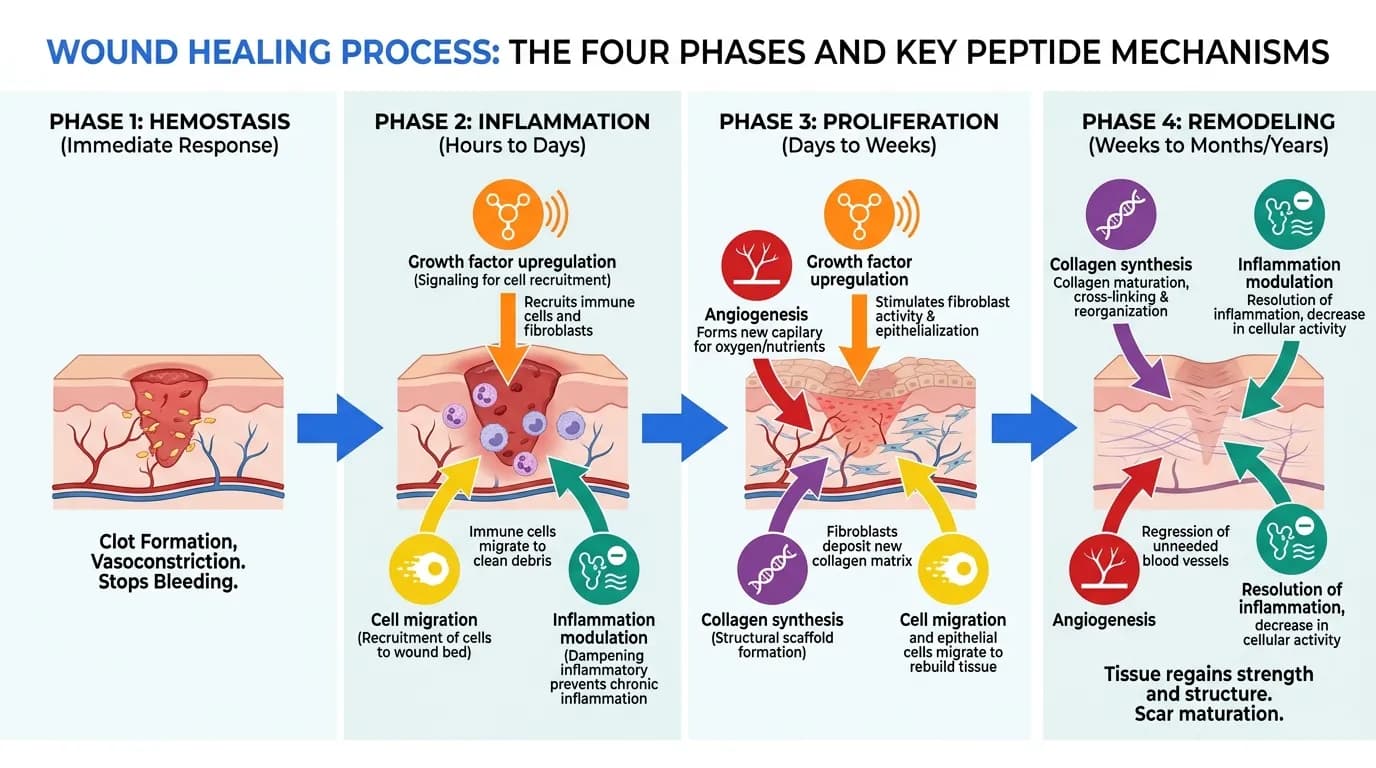
Mechanism of action for BPC-157
How BPC-157 works at the cellular level
Key benefits and uses of BPC-157
Overview of BPC-157 benefits and applications
Scientific Details
Molecular Formula
C62H98N16O22
Molecular Weight
1419.53 Da
CAS Number
137525-51-0
Sequence
Gly-Glu-Pro-Pro-Pro-Gly-Lys-Pro-Ala-Asp-Asp-Ala-Gly-Leu-Val

What is BPC-157?#

BPC-157 (Body Protection Compound-157) is a synthetic pentadecapeptide derived from a protective protein found in human gastric juice. It consists of 15 amino acids and has been extensively studied in preclinical models for its tissue-protective and healing properties.

Mechanism of Action#

Mechanistic overview BPC‑157 is a 15–amino‑acid gastric peptide with pleiotropic, predominantly endothelial/cytoprotective actions. Across models, its effects converge on angiogenic and nitric oxide (NO) signaling, cytoskeletal/migratory programs, and barrier stabilization, rather than a single canonical receptor. A broad receptor binding screen reported no direct pharmacological affinity for the classical neurotransmitter receptor families tested, supporting an indirect or upstream modulatory mode of action.

Primary signaling pathways and molecular targets

  1. VEGF–VEGFR2–Akt–eNOS axis
  • VEGF/VEGFR regulation: BPC‑157 upregulates VEGF‑A and VEGFR1/VEGFR2, and rapidly induces VEGFR2 phosphorylation with receptor internalization; the endocytosis inhibitor dynasore blocks these effects, indicating a requirement for VEGFR2 internalization.
  • Downstream effectors: Activated VEGFR2 leads to AKT phosphorylation and eNOS activation; BPC‑157 decreases eNOS–Caveolin‑1 binding (releasing eNOS), consistent with increased NO bioactivity.
  • Context dependence: In clopidogrel‑impaired angiogenesis, BPC‑157 increased VEGF‑A/VEGFR1 and AKT phosphorylation while inactivating p38/ERK MAPKs; NOS inhibition (L‑NAME) abrogated AKT and p38 effects but not ERK, indicating partial NO‑dependence.
  1. Src–Caveolin‑1–eNOS vasomotor signaling
  • BPC‑157 engages Src–Caveolin‑1–eNOS signaling to modulate vasomotor tone and collateral recruitment, aligning with rapid endothelial protection and bypass of occlusions; this includes decreased eNOS/Caveolin‑1 interaction and increased eNOS activity.
  1. NO‑system modulation and antioxidant effects
  • Bidirectional normalization: BPC‑157 counteracts both NOS inhibition (e.g., L‑NAME) and NOS overstimulation (e.g., L‑arginine), normalizing tissue NO levels while suppressing free radical formation across ischemia/reperfusion and other injury models.
  • Functional outcomes: Effects include protection from thrombosis/arrhythmias and improved perfusion linked to collateral vessel recruitment.
  1. MAPK and immediate‑early transcriptional responses
  • MAPK modulation: Context‑dependent effects on MAPK signaling are reported—BPC‑157 can inactivate p38/ERK in certain impaired‑angiogenesis contexts, yet also rapidly activates ERK1/2 with induction of egr‑1 and its repressor nab2, and modulates c‑Fos/c‑Jun during endothelial proliferation and wound repair.
  1. Cell migration and adhesion: FAK–paxillin
  • BPC‑157 activates focal adhesion kinase (FAK) and paxillin, promoting fibroblast outgrowth and migration, consistent with enhanced repair programs in tendon and endothelial cells.
  1. Growth hormone receptor (GHR) and JAK‑STAT facilitation
  • Direct receptor expression change: In tendon fibroblasts, BPC‑157 upregulates GHR mRNA/protein and potentiates GH‑induced JAK2 phosphorylation, increasing proliferation—an example of target‑cell receptor sensitization rather than direct GH‑receptor agonism.
  1. Platelet/thrombocyte function without coagulation cascade alteration
  • BPC‑157 improves thrombocyte function and reduces bleeding or thrombosis manifestations in vivo while standard coagulation parameters remain unaffected, implying modulation of platelet activation/adhesion or endothelial–platelet interactions.
  1. Barrier/cytoprotection and vascular remodeling
  • Endothelial/epithelial stabilization: Reports describe stabilization of cellular junctions and membrane protective effects, aligning with decreased permeability and “leaky‑gut” correction; rapid activation of collateral circulation (e.g., azygos flow) to bypass occlusions is consistently noted.

Receptor interactions

  • Classical receptor binding: No demonstrable affinity for standard neurotransmitter receptor families in an expanded receptor screen.
  • Growth factor receptors: Functional activation/upregulation of VEGFR2 (with internalization‑dependent signaling) is repeatedly implicated; GH receptor expression is increased in fibroblasts, enhancing responsiveness to endogenous GH.
  • Neurotransmitter systems: Although behavioral/physiological data indicate normalization across dopaminergic, serotonergic, glutamatergic, GABAergic, cholinergic, and adrenergic systems, the absence of direct binding suggests upstream vascular/cytoprotective and NO‑related mechanisms mediating these effects.

Integrated mechanism of action BPC‑157 acts as a cytoprotective, pro‑reparative modulator centered on the endothelial VEGFR2→AKT→eNOS axis and Src–Caveolin‑1–eNOS signaling, normalizing NO bioavailability and redox balance, while engaging FAK–paxillin migration programs and selectively increasing target‑cell receptor responsiveness (e.g., GHR). These convergent actions stabilize vascular and epithelial barriers, promote angiogenesis and collateral circulation, and secondarily harmonize neural and hemostatic disturbances—without evidence of direct agonism at classical neurotransmitter receptors.

Key mechanistic map

Pathway/ModulePrimary molecular targets/eventsDirection of effectExperimental context/modelRepresentative evidence notes
VEGF–VEGFR2–AkT–eNOS axisVEGF-A upregulation; VEGFR1/2 upregulation and VEGFR2 phosphorylation/internalization; AKT phosphorylation; eNOS activation; decreased eNOS–Caveoli...Activation/up‑regulation of VEGFR2→AKT→eNOS signaling with receptor internalization dependenceEndothelial cells (HUVECs), ischemia/angiogenesis and wound‑healing models in rodentsRapid VEGFR2 phosphorylation/internalization and AKT/eNOS activation; effects blocked by endocytosis inhibitor dynasore
Src–Caveolin‑1–eNOS vasomotor signalingSrc family kinase activation; Caveolin‑1 modulation; release/activation of eNOSModulation/activation leading to altered vasomotor tone and collateral recruitmentVascular/ischemia models and vasomotor studies in animalsBPC‑157 alters Src–Cav‑1–eNOS axis to affect vasomotor tone and bypass occlusions via collateral flow
NO‑system modulation & antioxidant effectsNOS enzymes (eNOS/nNOS); tissue NO levels; reactive oxygen species/free radicalsNormalizes NO levels (counteracts both NOS inhibition and NOS overstimulation) and suppresses free radicalsRodent models using L‑NAME, L‑arginine and ischemia/reperfusion paradigmsBPC‑157 counteracts L‑NAME and L‑arginine effects, normalizes NO signaling and reduces oxidative damage
MAPK modulation & transcriptional responsep38 MAPK, ERK1/2, immediate early genes egr‑1 and repressor nab2, c‑Fos/c‑JunContext‑dependent: can inactivate p38/ERK in some settings but also produce rapid ERK1/2 activation and egr‑1/nab2 inductionWound healing, endothelial proliferation assays and transcriptional studiesReports of p38/ERK inactivation in some models and rapid ERK→egr‑1/nab2 transcriptional responses during healing
FAK–paxillin (cell migration)FAK phosphorylation; paxillin activation; cytoskeletal/adhesion remodelingActivation promoting fibroblast/endothelial migration and outgrowthTendon fibroblast migration and in vitro cell motility assaysBPC‑157 stimulates FAK–paxillin pathway to enhance fibroblast outgrowth and migration
Growth hormone receptor (GHR) → JAK2 signalingUpregulation of GHR expression; increased JAK2 phosphorylation on GH stimulationUpregulation of receptor expression and potentiation of GH→JAK2 signaling (proliferative)Tendon fibroblasts in vitro with GH stimulationBPC‑157 dose‑dependently increases GHR mRNA/protein and enhances GH‑induced JAK2 phosphorylation and proliferation
Platelet / thrombocyte functional modulationPlatelet/thrombocyte activity (adhesion/plug formation) without altering coagulation cascadeRestores/modulates platelet function; reduces bleeding/thrombosis consequences without changing coagulation parametersAnticoagulated rodents and thrombosis/bleeding modelsImproves thrombocyte function and reduces bleeding/thrombosis manifestations while coagulation tests remain unaffected
Junctional/cytoprotection & collateral recruitmentEndothelial/epithelial junction stabilization; membrane stabilization; recruitment/activation of collateral vessels (e.g., azygos)Barrier stabilization and re‑routing of blood flow to bypass occlusions; promotes tissue integrityWound healing, gastrointestinal protection, ischemia/reperfusion and multiorgan failure modelsBPC‑157 stabilizes cellular junctions, acts as membrane stabilizer/antioxidant and promotes collateral vessel recruitment in vivo
Neurotransmitter systems modulation (no direct receptor binding)Dopaminergic, serotonergic (5‑HT), glutamatergic, GABAergic, adrenergic, cholinergic systemsIndirect modulatory/normalizing effects on multiple neurotransmitter systems; not via direct agonism at classical receptorsBehavioral and biochemical rodent models; broad receptor screening assaysEvidence of normalization of multiple neurotransmitter‑related disturbances but receptor‑screening reported no direct pharmacological affinity for ...

Limitations Much of the mechanistic evidence is preclinical and concentrated in a limited investigator network; comprehensive receptor deconvolution and unbiased target identification remain incomplete, and direct binding to a primary receptor has not been established.

Therapeutic Applications#

Gastrointestinal ischemia/colitis and reperfusion. In rat colonic ischemia–reperfusion, topical BPC‑157 (10 ”g/kg bath) rapidly restored microvascular perfusion: the ischemic pale area declined from 86 ± 8% with saline to 10 ± 2% within 15 min, with normalization of tissue malondialdehyde and NO levels and preservation of mucosal folds; effects persisted in obstructed segments and during reperfusion (vs NOS modulators).

External/internal fistula healing. In a rat colocutaneous fistula model, daily BPC‑157 (10 ”g/kg ip or oral 0.16 ”g/mL; also 10 ng/kg) achieved early improvement and complete fistula closure by day 28; BPC‑157 outperformed sulphasalazine and corticosteroid aggravated healing (functional water-holding improved; colon and skin defects closed). In rat rectovaginal fistula, BPC‑157 (ip or oral, ”g/ng regimens) led to no fecal leakage in all treated rats versus persistent leakage in controls, complete epithelialization by ~day 14, and robust neovascularization (>10 new vessels/HPF by week 3); controls showed ongoing defects, adhesions, and obstruction.

Intestinal anastomosis and vascular recruitment. Across rat anastomosis/ischemia models, BPC‑157 accelerated revascularization, recruited collaterals, preserved mucosa, and reduced adhesions, consistent with its NO/angiogenesis modulation; quantitative perfusion and lesion-size data above support these effects.

Tendon and ligament healing. After rat medial collateral ligament transection, BPC‑157 given ip, orally, or locally restored biomechanical properties toward normal by day 14: breaking force ~34.1 ± 5.2 N, elongation ~2.3 ± 0.2 mm, absorbed energy ~34.8 ± 4.8 N·mm, stiffness ~20.3 ± 3.2 N/mm; macroscopic fiber organization normalized and inflammatory markers decreased. In vitro, BPC‑157 increased tendon fibroblast growth‑hormone receptor expression, supporting enhanced tendon cell proliferation when combined with GH.

Spinal cord injury and neuroprotection. In rat sacrocaudal spinal cord compression, a single ip dose of BPC‑157 (2 or 200 ”g/kg) 10 min post‑injury produced consistent functional recovery: improved tail motor scores, spasticity resolved by day ~15, and autotomy avoided; histology showed markedly fewer vacuoles/necrosis in white and gray matter (significant vs controls); EMG showed lower motor‑unit potentials (indicating preserved motoneurons) without demyelination on conduction studies.

Ocular (glaucoma model). In rat open‑angle glaucoma induced by cauterizing three episcleral veins, BPC‑157 given as eye drops (0.4 ”g/eye or 0.4 ng/eye), ip, or orally immediately normalized intraocular pressure, reversed mydriasis, and preserved retinal ganglion cells, optic nerve thickness, and fundus/retinal/choroidal vessel appearance; benefits were seen both prophylactically and when started 24 h post‑injury.

Skin/burn wound healing and angiogenesis. In a rat alkali‑burn model, topical BPC‑157 (200–800 ng/mL) accelerated closure to ~77–82% by day 18 vs 60.0 ± 9.8% in controls and matched or approached bFGF; histology showed superior granulation, re‑epithelialization, collagen deposition, and increased VEGF‑A; in HUVECs, BPC‑157 increased proliferation, migration, and tube formation via ERK1/2 signaling.

Stress urinary incontinence (SUI). In female rat SUI models (transabdominal urethrolysis and prolonged vaginal dilatation), BPC‑157 (ip 10 ”g/kg or 10 ng/kg daily, or oral 10 ”g/kg) restored leak‑point pressure to near‑healthy values across regimens; histology showed higher desmin and SMA positivity and increased CD34+ vessel density with preserved muscle/connective tissue ratios.

Analgesia. In rat incisional and formalin pain paradigms, BPC‑157 produced short‑lived antinociception: increased mechanical thresholds at 2 h and improved thresholds at day 4 in incisional pain; reduced phase‑1 flinches in the formalin test without effect in phase‑2 and with shorter duration than morphine.

Clinical research and safety notes. A registered Phase 1 safety/pharmacokinetics study (PCO‑02; NCT02637284) exists, with status unclear in our snapshot. Narrative clinical summaries report a multicenter randomized double‑blind placebo‑controlled enema trial (n≈53) in mild–moderate ulcerative colitis showing statistically significant decreases in Disease Activity Index, improved stool metrics, and histology versus placebo, and a single‑blind healthy‑volunteer enema dose‑escalation study showing good tolerability and minimal systemic absorption; however, primary registry outcome details were not obtained here. Overall, human efficacy data remain sparse and preliminary relative to extensive rodent evidence.

Key takeaways

  • Across multiple rat models, BPC‑157 consistently improved tissue perfusion, reduced ischemic injury, and accelerated healing of fistulas, anastomoses, tendons/ligaments/muscle, spinal cord, ocular tissues, and skin, often with quantitative improvements versus saline and, in some cases, outperforming standard comparators (e.g., sulphasalazine).
  • Mechanistic correlates include modulation of NO/VEGFR2–Akt–eNOS and ERK1/2 pathways, angiogenesis, and endothelial protection demonstrated in several models, with functional and histologic endpoints aligning.
  • Human clinical evidence is limited to early‑phase and small trials with reported safety and signals in ulcerative colitis; robust randomized clinical efficacy across indications is lacking in accessible datasets here.

Embedded summary table

Domain / IndicationModel & SpeciesDosing & RouteStudy design / ComparatorKey outcomes (quantitative where possible)
GI ischemia / colitis (ischemia-reperfusion, experimental colitis)Rat ischemia/reperfusion and colitis modelsBPC-157 10 ”g/kg applied as local bath or 10 ”g/kg systemic (various regimens: bath/ip/oral)Acute ischemia-reperfusion and colitis models; bath application vs saline; comparisons with NOS agents (L-NAME, L-arginine)Rapid restoration of microvascular perfusion; pale-area reduced from ~86 ± 8% (control) to ~10 ± 2% after BPC-157 (15 min observation); normalized ...
Colocutaneous fistula (fistula healing)Rat colocutaneous fistulaBPC-157 10 ”g/kg or 10 ng/kg ip or per‑oral (0.16 ”g/mL in drinking water)Daily treatment vs saline; compared to sulphasalazine and corticosteroidMarked closure of colon and skin defects by day 28 vs poor spontaneous healing in controls; improved water-holding without fistula leakage; BPC-157...
Rectovaginal fistulaRat rectovaginal fistulaBPC-157 10 ”g/kg or 10 ng/kg ip or per‑oral (0.16 ”g/mL in drinking water)Daily treatment vs saline controlsComplete epithelialization by day ~14 and maturation by 3rd week; no fecal leakage in all BPC-157 rats vs persistent leakage in controls; >10 new v...
Intestinal anastomosis / anastomoses healingRat intestinal anastomosis models (various: colocolonic, ileoileal, etc.)BPC-157 regimens ip or per‑oral (commonly 10 ”g/kg or 0.16 ”g/mL in drinking water) or local applicationMultiple experimental anastomosis models; BPC-157 vs saline/standard growth factorsImproved anastomotic healing across models, faster revascularization, improved villus height/crypt depth and reduced leakage/adhesions; rapid colla...
Tendon & ligament healing (including Achilles, MCL)Rat tendon/ligament transection/detachment models; also in vitro tendon fibroblastsSystemic ip or per‑oral 10 ”g/kg or 10 ng/kg; local application studied; in vitro concentrations variableControlled animal studies vs saline/placebo; in vitro assays (MTT, migration)Improved biomechanical strength to near-normal (example: breaking force ~34.1 ± 5.2 N, elongation ~2.3 ± 0.2 mm, absorbed energy ~34.8 ± 4.8 N·mm, ...
Spinal cord injury / CNS injuryRat sacrocaudal spinal cord compression / other CNS injury modelsSingle ip dose BPC-157 (commonly 200 ”g/kg or 2 ”g/kg) given 10 min post‑injury or continuous oral thereafterSingle-dose therapeutic vs saline; long-term follow-up (days to 360 days)Consistent functional recovery: improved tail motor scores, resolved spasticity by day ~15, prevented autotomy; histology showed markedly less vacu...
Ocular (glaucoma model: episcleral vein cauterization)Rat glaucoma (three episcleral vein cauterization)Local (eye drops 0.4 ”g/eye or 0.4 ng/eye), ip or per‑oral regimens (10 ”g/kg or 10 ng/kg; oral 0.16 ”g/mL)Prophylactic (pre-surgery) and therapeutic (24 h post-surgery) regimens vs controlsImmediate normalization of intraocular pressure; prevention/reversal of mydriasis; preserved retinal ganglion cells, optic nerve thickness and norm...
Skin / burn (alkali-burn) wound healingRat alkali-burn skin model; HUVEC in vitro assaysTopical BPC-157 (200–800 ng/mL) or systemic in other modelsTopical treatment vs untreated control and bFGF comparatorAccelerated wound closure: at day 18 wound closure ~76–82% for BPC-157 groups vs ~60.0 ± 9.8% in controls; improved granulation, re-epithelializati...
Stress urinary incontinence (SUI)Rat models: transabdominal urethrolysis (TU) and prolonged vaginal dilatation (VD)BPC-157 ip 10 ”g/kg or 10 ng/kg once daily, or per‑oral 10 ”g/kg in drinking waterTreated vs sham and vs saline controlsLeak point pressure (LPP) decreased after injury but BPC-157 (both ”g and ng regimens, ip or oral) completely counteracted LPP decrease; histology ...
Analgesia / antinociceptive (post‑incisional pain model)Rat incisional and formalin pain models (postoperative pain)Systemic doses tested (e.g., 10–40 ”g/kg ip in some studies)BPC-157 groups vs saline and morphine comparatorShort-lived antinociceptive effects: increased mechanical thresholds at early timepoints (e.g., 2 h) and some increased thresholds at day 4; in for...
Clinical / Registered trials & human reportsHealthy volunteer PK/safety and small UC enema trials reported; one Phase I registry entry NCT02637284Reported oral tablet doses in pilot healthy studies (0.25–2 ”g/kg) and enema dosing (reported mg-range in trials)Phase I safety/PK (NCT02637284) and small randomized double-blind enema ulcerative colitis study (reported n~53 in narrative sources); single-blind...Narrative reports: Phase I safety/PK tolerated with minimal systemic absorption; enema trial in mild–moderate ulcerative colitis reported statistic...

Limitations Most preclinical studies are from a small number of groups, often in rodents, and some journals are lower tier; replication in independent labs and larger animal models is limited. Human trials are few; thus, while therapeutic applications appear broad in animals, translation to clinical practice remains unproven pending rigorous randomized studies.

Preclinical Evidence#

Scope and overall quality of the evidence base The scientific literature for BPC‑157 (also known as PL‑14736) is dominated by preclinical animal studies and narrative reviews authored by overlapping research groups. Reviews report pleiotropic effects across gastrointestinal, musculoskeletal, vascular, and central nervous system models, often attributing benefits to modulation of angiogenesis and the nitric oxide (NO) system. However, independent replication is limited, methodological detail is variable, and many publications appear in lower‑quality venues. Human evidence remains sparse, with few small early‑phase studies and limited or absent registry‑posted outcomes, which constrains confidence in clinical efficacy claims.

Human studies and clinical trial registry landscape

  • Phase 1 oral safety/PK (PCO‑02): A ClinicalTrials.gov record exists (NCT02637284) for a Phase 1 safety and pharmacokinetics study in 42 healthy volunteers. Reviews report oral self‑administration at 1–9 mg/day for up to two weeks, “safe and well tolerated,” but with no quantifiable BPC‑157 detected in plasma or urine; no posted results were identified in retrieved sources.
  • Phase I rectal PK in healthy men: A single‑blind, placebo‑controlled rectal dosing study (2001 FOCUS report) in 32 healthy males reportedly found good tolerability with most plasma concentrations below the assay’s lower limit of quantification (LLQ), indicating uncertain systemic exposure with this route.
  • Ulcerative colitis RCT: A review describes a multicenter, randomized, double‑blind, placebo‑controlled trial in 53 patients with mild–moderate ulcerative colitis using an 80 mg enema daily for two weeks, reporting a significant decrease in Disease Activity Index and favorable tolerability; no registry identifier or posted full results were found in the retrieved sources, and details remain limited.
  • Small uncontrolled/retrospective series: Reviews cite private‑clinic series (e.g., intra‑articular injections for knee pain, n=16; interstitial cystitis, n=12) reporting high response rates but lacking controls, with potential reporting bias and unclear publication status. Collectively, the identifiable registry footprint appears to be limited to NCT02637284, while other claimed human studies are not readily verifiable in public registries based on retrieved data.

Pharmacokinetics, mechanism, and safety signals Across human Phase 1 contexts, plasma levels are frequently below quantification limits, raising uncertainty about systemic exposure following oral or rectal dosing as studied. Proposed mechanisms center on angiogenesis modulation and NO‑system interactions, but remain incompletely defined in humans. Animal toxicology summaries claim high acute tolerability (e.g., LD50 not reached at high doses); human safety assertions rely on small early‑phase studies and anecdotal/compounding reports without systematic pharmacovigilance.

Regulatory and anti‑doping status Reviews and brief reports indicate no marketing approval by the U.S. FDA identified in the retrieved sources. With respect to anti‑doping rules, prior literature noted BPC‑157 was “not currently on the WADA list” at earlier time points; other sources describe temporary attention or prohibition in recent years, but retrieved texts do not provide definitive, citable WADA listing timelines. Overall, regulatory approval is lacking in the sources consulted, and anti‑doping positions appear to have been evolving, with ambiguity remaining in the retrieved evidence.

Key limitations, evidence gaps, and criticisms

  • Scarcity of rigorous human trials: Only one identifiable registered Phase 1 oral study (NCT02637284) and no conclusively verifiable, registry‑posted efficacy trials in the sources retrieved; a reported 53‑patient ulcerative colitis RCT lacks a registry ID and full public results.
  • Uncertain pharmacokinetics/systemic exposure: Human studies frequently report plasma levels below LLQ after oral/rectal dosing; assay sensitivity and bioavailability remain unclear.
  • Concentration of authorship and limited independent replication: Many preclinical findings originate from overlapping groups; broader, independent replication is limited.
  • Methodological and reporting issues: Variable detail in preclinical methods, small sample sizes, inconsistent endpoints, and lack of adverse‑event reporting are common critiques.
  • Publication venue concerns: Several comprehensive reviews and many primary reports appear in lower‑quality journals, which may weaken confidence in peer‑review rigor.
  • Regulatory/anti‑doping ambiguity: No FDA approval is evident in retrieved sources; WADA status has been variably described historically, and definitive, citable rulings or timelines were not identified in the retrieved texts.

Practical conclusion The evidence base for BPC‑157 is broad in preclinical scope but narrow in high‑quality human data. Human clinical efficacy remains unconfirmed by robust, publicly posted randomized trials, and pharmacokinetics after common administration routes are uncertain. Concerns about replication, methodological rigor, and publication venues temper confidence. Absent clear regulatory approvals and with evolving anti‑doping considerations, BPC‑157 should be regarded as investigational, with substantial evidence gaps that warrant well‑designed, independently led clinical trials with transparent registration and reporting.

Evidence domainStudy/registry ID or citationDesign / settingSample sizeRoute / doseKey findingsKey limitations / notes
Preclinical — musculoskeletal healingGwyer 2019 (review)Narrative review of rodent tendon/ligament/muscle injury modelsVaried (multiple rodent studies)IP, oral, topical (varied)Consistent, prompt healing and functional recovery reported across modelsMostly small-rodent studies; many from same groups; limited independent replication
Preclinical — GI / NO-system / angiogenesisStaresinic 2022 (review)Narrative review of GI, vascular, NO-system animal studiesVaried (multiple animal studies)Oral, IP, intragastric, topical (varied)Reported modulation of NO-system, angiogenesis control, organoprotection in animalsPredominantly preclinical; broad claims with translational uncertainty; authorship concentration
Human PK/safety — Phase I rectal PK (FOCUS report)Described in Sikiric review (2001 rectal PK)Exploratory single-blind, placebo-controlled rectal PK study in healthy males32 healthy menIntracolonic/enema: 0.25–2 mg/kg (single & repeated)Well tolerated; most plasma concentrations below assay lower limit of quantification (LLQ)Small sample; many undetectable plasma levels → uncertain assay sensitivity and systemic exposure
Human PK/safety — Phase I oral (PCO-02)NCT02637284 PCO-02 (reported in reviews)Phase 1 safety & PK (oral self-administration) — healthy volunteers42 volunteersOral: 1, 3, 6, 9 mg/day up to 2 weeksReported as safe & well tolerated; no quantifiable BPC-157 in plasma/urine reportedRegistry status/results not posted in sources; PK below quantification → uncertain systemic exposure
Human efficacy — UC multicenter RCTDescribed in Sikiric review: multicenter RCT, 80 mg enema ×2 weeksRandomized, double-blind, placebo-controlled trial in mild–moderate ulcerative colitis53 patientsRectal enema: 80 mg once daily for 2 weeksReported statistically significant decrease in Disease Activity Index (DAI), improved stool and histopathology; well toleratedSmall trial; no registry ID or posted full results located in retrieved sources; limited methodological detail
Human efficacy — small uncontrolled series (clinical practice)Described in Sikiric review: intra-articular & interstitial cystitis seriesRetrospective / uncontrolled clinical series from private clinicsKnee IA review n=16; IC series n=12Intra-articular 2–4 mg; peri‑lesional 10 mg (single/series)Majority reported symptomatic improvement; some reports of high responder ratesUncontrolled, small, potential reporting bias, unpublished or not registry‑posted; limited follow-up
Regulatory / anti‑doping notesJozwiak 2025; Gwyer 2019Literature/patent and review notes on regulatory statusN/AN/ANo FDA approval reported in sources; WADA status described as ambiguous (mentioned temporary WADA attention/ban reports; not clearly listed in some...Ambiguity in WADA listing timelines; lack of formal regulatory approvals or public agency safety assessments in retrieved sources
Analytical / detection mentionDetection/forensics note in Gwyer 2019Analytical/detection reports cited in review (confiscated peptide analyses)N/AN/A (analytical focus)Methods for detecting peptides including BPC-157 discussed; evidence of forensic interestHighlights need for validated assays; relates to detection/abuse monitoring but PK assay sensitivity remains a key limitation

Evidence Gaps and Limitations#

The current evidence base for BPC-157 consists primarily of preclinical studies. Key limitations include:

  • No completed randomized controlled trials in humans
  • Most data derived from animal models, limiting direct translatability
  • Publication bias may favor positive results
  • Long-term safety data in humans is not available
  • Optimal dosing for human applications has not been established

Key Research Findings#

Pentadecapeptide BPC 157 enhances the growth hormone receptor expression in human tendon fibroblasts, published in Molecules (Chang CH et al., 2014; PMID: 25415472):

This study examined BPC-157's effects on growth hormone receptor expression in human tendon cells, suggesting a potential mechanism for its tissue healing properties.

  • Increased GH receptor expression in tendon fibroblasts
  • Enhanced cell migration
  • Promoted tendon healing markers

Stable gastric pentadecapeptide BPC 157 heals cysteamine-colitis and colon-colon anastomosis and counteracts cuprizone brain injuries and motor disability, published in Journal of Physiology and Pharmacology (Sikiric P et al., 2013; PMID: 24304574):

Investigated BPC-157's effects on intestinal healing and neurological outcomes in animal models.

  • Improved colitis healing
  • Enhanced anastomosis healing
  • Reduced neurological damage markers

Pentadecapeptide BPC 157 reduces bleeding time and thrombocytopenia after amputation in rats treated with heparin, warfarin or aspirin, published in Blood Coagulation & Fibrinolysis (Stupnisek M et al., 2015; PMID: 25897838):

Examined effects on bleeding and coagulation in anticoagulated rats.

  • Reduced bleeding time
  • Improved platelet function
  • Potential hemostatic effects

Stay current on BPC-157 research

We summarize new studies, safety updates, and dosing insights — delivered biweekly.

Community Protocols Available

See real-world usage patterns alongside the clinical evidence above. Community-sourced, not clinically verified.

Based on 150+ community reports

View community protocols

Frequently Asked Questions About BPC-157

Where to Find BPC-157

Research-grade suppliers verified by our scoring methodology.

View all 87 vendors →

Explore Further

Related Peptides

View all peptides →
⚠

Medical Disclaimer

This website is for educational and informational purposes only. The information provided is not intended to diagnose, treat, cure, or prevent any disease. Always consult with a qualified healthcare professional before using any peptide or supplement.

Compare BPC-157 with Other Peptides

BPC-157 vs GHK-Cu

BPC-157 for deep tissue, GI, and musculoskeletal healing research; GHK-Cu for skin rejuvenation, wound healing, and accessible topical applications

→
BPC-157 vs Semaglutide

These peptides serve entirely different purposes and are not interchangeable. Semaglutide is an FDA-approved pharmaceutical with massive clinical validation for diabetes and obesity. BPC-157 is a preclinical research peptide studied for tissue healing without any human clinical trials. The comparison highlights the enormous evidence gap between a fully validated drug and a promising preclinical compound. For metabolic disease, semaglutide has unequivocal evidence. For tissue healing research, BPC-157 has intriguing preclinical data that awaits human translation.

→
BPC-157 vs TB-500

BPC-157 and TB-500 target tissue repair through distinct but complementary mechanisms. BPC-157 has a stronger preclinical profile for gastrointestinal and musculoskeletal healing, while TB-500 has more advanced clinical trial data, particularly for ophthalmic and dermal wound applications. Neither peptide is approved for human therapeutic use. Their combination (the "Wolverine Stack") lacks controlled combination studies.

→
BPC-157 vs Teduglutide

BPC-157 and teduglutide address gut healing through fundamentally different approaches with very different evidence bases. Teduglutide is the clear winner for clinical validation -- it is FDA-approved with Phase 3 data for short bowel syndrome, demonstrating a 63% response rate and enabling reduction or elimination of parenteral nutrition. BPC-157 has no published human clinical trials despite extensive preclinical data. However, BPC-157 has broader theoretical applications across multiple tissue types and is far more accessible and affordable. For short bowel syndrome specifically, teduglutide is the proven treatment. For general gut healing, tissue repair, or conditions outside SBS, BPC-157 offers preclinical promise but lacks the clinical evidence to support definitive recommendations.

→
BPC-157 vs Ziconotide

BPC-157 and ziconotide serve fundamentally different purposes and represent opposite ends of the evidence spectrum. Ziconotide is an FDA-approved medication with rigorous clinical trial data, but it is reserved for severe refractory pain requiring intrathecal delivery and carries significant CNS side effects. BPC-157 is a preclinical healing peptide with broad tissue repair properties but essentially no human clinical data. They are not interchangeable or directly competitive. Ziconotide treats pain through neural blockade. BPC-157 aims to heal the underlying tissue damage. They address different aspects of injury and disease.

→

You Might Also Like

Related content you may find interesting