Peptides for Sexual Health: PT-141, Kisspeptin, and Beyond

Introduction#
Sexual dysfunction is one of the most prevalent yet underdiagnosed health conditions, affecting approximately 40% of women and 30% of men at some point in their lives. While the pharmaceutical approach to male sexual dysfunction (PDE5 inhibitors like sildenafil and tadalafil) has been available since 1998, treatment options for female sexual dysfunction — particularly disorders of desire — remained virtually nonexistent until the approval of PT-141 (bremelanotide) in 2019.
Peptides offer a fundamentally different approach to sexual health compared to existing therapies. Rather than targeting peripheral blood flow (the PDE5 inhibitor mechanism), peptides like PT-141 and kisspeptin act on central nervous system pathways that underlie sexual desire and arousal. This distinction between peripheral arousal mechanisms and central desire mechanisms is critical for understanding the peptide approach to sexual health.
This guide examines four peptides with research profiles relevant to sexual function, from the FDA-approved PT-141 to investigational compounds like kisspeptin. For the broader context of reproductive peptides, see Reproductive Health Peptides.
Important note: Sexual dysfunction has multiple potential causes including psychological, relational, hormonal, neurological, and vascular factors. A comprehensive medical evaluation is important before pursuing any treatment approach.
The Neuroscience of Desire#
Understanding why peptides are studied for sexual health requires a brief overview of the neuroscience of sexual desire:
- Central desire — sexual desire originates in the brain, involving the hypothalamus, limbic system, and prefrontal cortex. It is modulated by neurotransmitters (dopamine, norepinephrine, serotonin) and neuropeptides (melanocortins, oxytocin, kisspeptin)
- Peripheral arousal — the physical response to sexual stimulation (erection, lubrication, engorgement) is mediated by peripheral mechanisms including nitric oxide-mediated vasodilation
- The desire-arousal disconnect — desire and physical arousal are separable processes. A person can experience physical arousal without desire, or desire without physical arousal. PDE5 inhibitors address arousal; peptides primarily address desire
This distinction explains why PDE5 inhibitors failed in clinical trials for female sexual dysfunction — they addressed peripheral blood flow but not the central desire deficit that characterizes most female sexual dysfunction.
1. PT-141 (Bremelanotide)#
Evidence Level: FDA-approved (Phase 3 clinical trials) Primary Mechanism: Melanocortin-4 receptor (MC4R) agonist; central nervous system activation of desire pathways FDA Status: Approved (Vyleesi) for hypoactive sexual desire disorder in premenopausal women
PT-141, marketed as bremelanotide under the brand name Vyleesi, is the only FDA-approved peptide for sexual dysfunction. It acts on melanocortin-4 receptors in the hypothalamus and limbic system — brain regions that regulate sexual desire and motivation.
Research Findings#
PT-141's clinical program provides the strongest evidence base in this guide:
- RECONNECT trials — two Phase 3 randomized, double-blind, placebo-controlled trials in premenopausal women with HSDD demonstrated statistically significant improvements in sexual desire (measured by the Female Sexual Function Index desire domain) and reductions in distress related to low desire
- Central mechanism — functional imaging studies show PT-141 activates brain regions associated with sexual arousal and desire, confirming a central rather than peripheral mechanism
- On-demand dosing — PT-141 is administered as a subcutaneous injection at least 45 minutes before anticipated sexual activity, providing a practical on-demand approach
- Male erectile dysfunction — Phase 2 studies demonstrated efficacy for ED in men, including those who did not respond to sildenafil. However, the clinical development program focused on the female HSDD indication
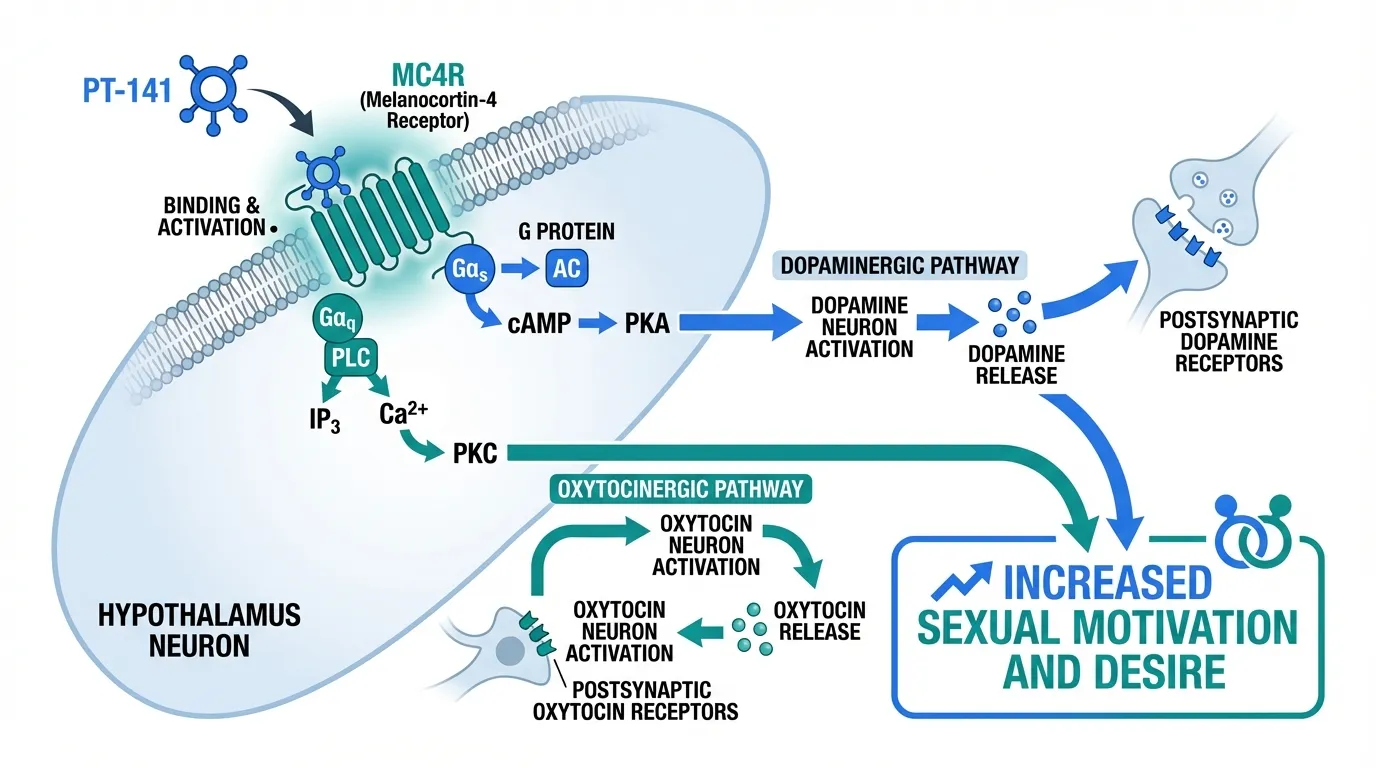
- Mechanism of action — PT-141 activates MC4R receptors, triggering downstream dopaminergic and oxytocinergic signaling pathways involved in sexual motivation
Important Considerations#
PT-141 has a significant side effect profile that limits its clinical utility:
- Nausea — approximately 40% of women in clinical trials experienced nausea, the most common reason for treatment discontinuation
- Blood pressure — transient increases in blood pressure (mean 2-3 mmHg) were observed, leading to a contraindication in patients with uncontrolled hypertension or cardiovascular disease
- Skin hyperpigmentation — focal darkening of the skin at injection sites was reported in some patients
- Dosing limitations — the label recommends no more than one dose per 24 hours and no more than 8 doses per month
PT-141 is approved only for premenopausal women with HSDD. It is not approved for men, postmenopausal women, or general sexual enhancement.
2. Kisspeptin#
Evidence Level: Clinical research studies (not approved for sexual health indications) Primary Mechanism: Hypothalamic GnRH pulse generator activation; modulation of reproductive and arousal pathways FDA Status: Investigational; not approved
Kisspeptin is primarily known as a reproductive hormone regulator (see Reproductive Health Peptides), but emerging research has explored its role in sexual behavior and arousal. Kisspeptin neurons in the hypothalamus are positioned at the intersection of reproductive endocrinology and sexual behavior circuits.
Research Findings#
Kisspeptin's sexual health research is at an earlier stage than PT-141's but has produced intriguing results:
- Brain activation — functional MRI studies have shown that kisspeptin-54 administration enhances brain activation in regions associated with sexual arousal (including the anterior cingulate and posterior cingulate cortices) when subjects view sexual imagery
- Sexual arousal — in healthy men, kisspeptin administration enhanced penile tumescence in response to sexual stimulation, suggesting a facilitation of the arousal response
- Psychosexual effects — kisspeptin may improve sexual aversion and reduce negative mood associated with sexual stimuli, potentially relevant for individuals with psychogenic sexual dysfunction
- Reproductive-sexual integration — kisspeptin represents a peptide that integrates reproductive function (hormone regulation) with sexual behavior (desire and arousal), which is biologically logical given that reproduction requires both
Important Considerations#
Kisspeptin's sexual health applications are investigational with small study sizes. The peptide has a very short half-life (~28 minutes), which limits practical dosing. The relationship between kisspeptin's reproductive hormone effects (LH/FSH elevation) and its psychosexual effects is not fully characterized — it is unclear whether the two can be separated pharmacologically. No clinical trials for sexual dysfunction indications have been completed. For kisspeptin's broader role in women's health, see Peptides for Women.
3. Melanotan-2#
Evidence Level: Clinical data available; NOT FDA-approved Primary Mechanism: Non-selective melanocortin receptor agonist (MC1R, MC3R, MC4R, MC5R) FDA Status: Not approved; regulatory warnings issued
Melanotan-2 is the compound from which PT-141 was derived. It is a non-selective melanocortin receptor agonist that produces multiple effects through activation of different melanocortin receptors — including skin tanning (MC1R), appetite suppression (MC3R/MC4R), and sexual effects (MC4R).
Research Findings#
Melanotan-2's sexual effects were discovered incidentally during tanning research:
- Pro-erectile effects — Melanotan-2 administration produced spontaneous erections in male research subjects, an unexpected finding during early clinical studies that led to the development of PT-141
- Libido enhancement — both men and women reported increased sexual desire with Melanotan-2, though these reports were often in the context of uncontrolled use
- MC4R activation — the sexual effects of Melanotan-2 are attributed to MC4R activation in the CNS, the same receptor targeted by PT-141. However, Melanotan-2 also activates MC1R (tanning), MC3R (metabolic effects), and MC5R (exocrine function), producing a broader and less desirable effect profile
Important Considerations#
Melanotan-2 is not approved for any indication, and multiple regulatory agencies worldwide have issued warnings against its use. Key concerns include:
- Mole darkening — increased pigmentation of existing nevi (moles), which could theoretically mask early melanoma detection (see Peptides for Skin Health)
- Non-selectivity — unlike PT-141 (which was specifically designed for MC4R selectivity), Melanotan-2 activates multiple melanocortin receptors, producing a wider range of side effects
- Nausea — common, often more severe than PT-141 due to broader receptor activation
- Unregulated production — Melanotan-2 is typically obtained from unregulated sources without quality assurance
PT-141 was developed specifically to capture Melanotan-2's sexual effects while eliminating the tanning, appetite, and other off-target effects through improved receptor selectivity.
4. Oxytocin#
Evidence Level: Well-characterized physiology; mixed clinical data for sexual applications Primary Mechanism: Oxytocin receptor activation; modulation of bonding, arousal, and orgasm FDA Status: Approved for obstetric indications (Pitocin); not approved for sexual health
Oxytocin is an endogenous peptide hormone with established roles in social bonding, trust, and reproductive physiology. Its connection to sexual health is well-documented in basic science — oxytocin is released during sexual arousal and peaks during orgasm in both sexes.
Research Findings#
Oxytocin's role in sexual function includes:
- Orgasm — oxytocin levels surge during orgasm, and the peptide is implicated in the subjective experience of sexual pleasure and the physiological responses associated with climax
- Pair bonding — oxytocin mediates the bonding and attachment that occurs between sexual partners, contributing to the relational aspects of sexual function
- Arousal facilitation — intranasal oxytocin has been studied for its effects on sexual arousal, with some studies reporting enhanced genital and subjective arousal in women
- Erectile function — central oxytocin signaling has been implicated in erectile function through hypothalamic pathways, and intranasal oxytocin has shown modest effects on erectile response in some studies
- Estrogen interaction — estrogen upregulates oxytocin receptor expression, which may explain some sex differences in oxytocin's effects and its particular relevance during the follicular phase of the menstrual cycle
Important Considerations#
Clinical studies of intranasal oxytocin for sexual function have produced mixed results. The peptide's effects appear to be context-dependent — influenced by the relationship between partners, baseline attachment style, and the social setting. Intranasal oxytocin's ability to reach relevant brain regions in sufficient concentrations is debated. Oxytocin is not approved for sexual health applications, and self-administration for sexual enhancement is not recommended. For oxytocin's broader reproductive roles, see Peptides for Women.
How These Peptides Compare#
| Feature | PT-141 | Kisspeptin | Melanotan-2 | Oxytocin |
|---|---|---|---|---|
| Primary Target | MC4R (CNS desire) | GnRH neurons / arousal circuits | Multiple MCRs (non-selective) | Oxytocin receptor (bonding/arousal) |
| FDA Status | Approved (HSDD in women) | Investigational | Not approved; warnings | Approved (obstetric only) |
| Sexual Effect | Desire enhancement | Arousal facilitation | Pro-erectile / libido | Bonding / orgasm |
| Side Effects | Nausea (40%); BP increase | Minimal (short duration) | Tanning; nausea; mole darkening | Generally well-tolerated |
| Administration | SC injection (on-demand) | SC injection | SC injection | Intranasal (research) |
| Evidence Quality | Phase 3 RCTs | Small clinical studies | Clinical data (uncontrolled) | Mixed clinical data |
The Future of Peptides in Sexual Health#
Several developments may expand the role of peptides in sexual health:
- Longer-acting kisspeptin analogs — longer half-life kisspeptin derivatives could make kisspeptin-based sexual health interventions more practical
- Selective melanocortin agonists — more selective MC4R agonists with improved side effect profiles compared to PT-141
- Combination approaches — combining central (desire) and peripheral (arousal) mechanisms for comprehensive sexual dysfunction treatment
- Male HSDD — extending PT-141 or similar compounds to male hypoactive sexual desire, a condition with no approved treatments
- Postmenopausal applications — studying these compounds in postmenopausal women, who are currently excluded from PT-141's approved indication
Conclusion#
Peptides represent a paradigm shift in sexual health therapeutics — moving from the peripheral vascular approach of PDE5 inhibitors to central nervous system mechanisms that address the neurological foundations of desire and arousal. PT-141's FDA approval validated this approach, demonstrating that peptide-mediated MC4R activation can meaningfully improve sexual desire in women with HSDD.
Kisspeptin's emerging role at the intersection of reproductive endocrinology and sexual behavior adds a new dimension to this field, while oxytocin provides insights into the bonding and relational aspects of sexual function. Melanotan-2, though not approved, served as the historical foundation from which more selective therapeutic agents were developed.
For dose calculations and further research tools, visit the Dosing Calculator. For important safety information, see the Safety page.
Related Peptide Profiles#
Learn more about the peptides discussed in this article:
- PT-141 Overview and Research Guide
- PT-141 Dosing Protocols
- PT-141 Side Effects and Safety
- Kisspeptin Overview and Research Guide
- Kisspeptin Dosing Protocols
- Kisspeptin Side Effects and Safety
- Melanotan-2 Overview and Research Guide
- Melanotan-2 Dosing Protocols
- Melanotan-2 Side Effects and Safety
- Oxytocin Overview and Research Guide
- Oxytocin Dosing Protocols
- Oxytocin Side Effects and Safety

Frequently Asked Questions About Peptides for Sexual Health: PT-141, Kisspeptin, and Beyond
What does this article cover?
Peptides for sexual health — PT-141, kisspeptin, Melanotan-2, and oxytocin — covering mechanisms, clinical evidence, and safety data. This guide is for educational purposes only and does not constitute medical advice.
Which peptides are discussed in this article?
This article covers PT-141, Kisspeptin, Melanotan-2, Oxytocin. Key context: PT-141 (FDA-approved melanocortin receptor agonist (bremelanotide/Vyleesi) for hypoactive sexual desire d...); Kisspeptin (Hypothalamic neuropeptide that regulates reproductive hormones and has been studied for effects o...); Melanotan-2 (Non-selective melanocortin agonist with sexual side effects that led to PT-141 development, not a...). Each peptide is discussed based on available research evidence.
Who is this guide written for?
This guide is written for researchers and individuals seeking an evidence-based overview of the topic covered in "Peptides for Sexual Health: PT-141, Kisspeptin, and Beyond." It summarizes available research data without making treatment recommendations. Always consult a healthcare provider for medical decisions.
What are the key takeaways from this article?
The main findings covered in this article include: FDA-approved melanocortin receptor agonist (bremelanotide/Vyleesi) for hypoactive sexual desire d.... Hypothalamic neuropeptide that regulates reproductive hormones and has been studied for effects o.... Non-selective melanocortin agonist with sexual side effects that led to PT-141 development, not a.... These takeaways are based on the research data available at the time of publication.
What is PT-141 and why is it significant?
PT-141 is a peptide discussed in this article because: FDA-approved melanocortin receptor agonist (bremelanotide/Vyleesi) for hypoactive sexual desire disorder in premenopausal women. For a complete profile of PT-141, see the dedicated peptide page on this site.
Continue reading this research review
Free access to the complete analysis with citations and evidence ratings.
150+ peptide profiles · 30+ comparisons · 18 research tools
Medical Disclaimer
This website is for educational and informational purposes only. The information provided is not intended to diagnose, treat, cure, or prevent any disease. Always consult with a qualified healthcare professional before using any peptide or supplement.
Join 2,000+ researchers getting biweekly updates
Enjoyed this article?
The Research Briefing delivers deep-dives like this biweekly — plus new study breakdowns, safety updates, and tool announcements.
Free forever. No spam. Unsubscribe in one click.
Where to Find These Peptides
Continue Exploring
Peptide Profiles
Keep Reading
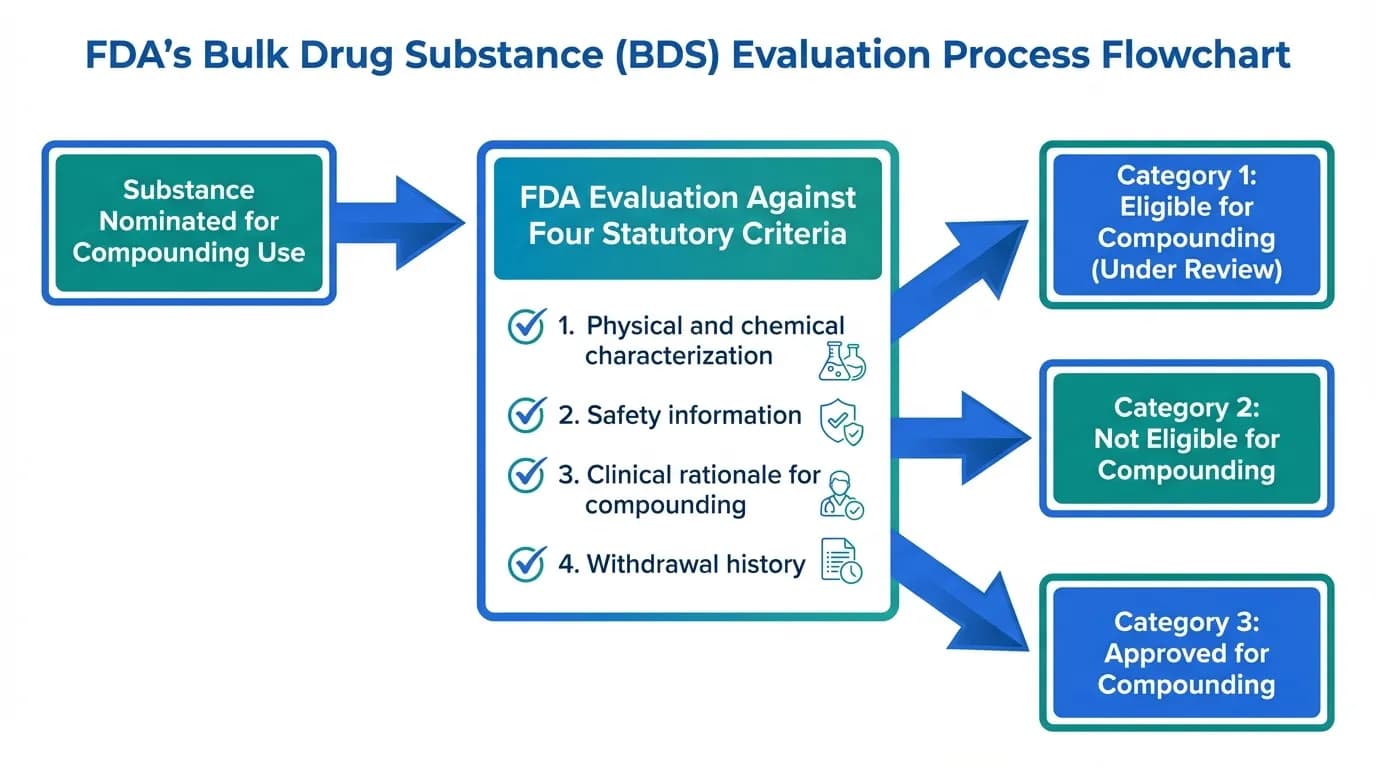
FDA Peptide Categories Explained: Category 1 vs Category 2 (2026)
Understand the FDA peptide classification system. Learn the difference between Category 1, Category 2, and Category 3 peptides and what the 2024-2026 regulatory changes mean for researchers.

Best Peptides for Menopause Symptoms: 2026 Research Guide
Research guide covering peptides studied for menopause symptoms including hot flashes, bone loss, cognitive changes, skin aging, sleep disruption, and hormonal regulation.

Peptides for Men's Sexual Health: PT-141, Kisspeptin, and Emerging Options
Guide to peptides researched for male sexual health including PT-141, kisspeptin, gonadorelin, HCG, alprostadil, and oxytocin with evidence levels.
You Might Also Like
Related content you may find interesting