๐ŸงฌPeptide Protocol Wiki

GHK-Cu

Also known as: Copper Peptide GHK-Cu, Copper Tripeptide-1, Glycyl-L-Histidyl-L-Lysine:Copper(II), Loren Pickart Copper Peptide

โœ“Reviewed byDr. Research Team(MD (composite credential representing medical review team), PhD in Pharmacology)
๐Ÿ“…Updated January 29, 2026
Verified
New to healing peptides?Browse all healing peptides โ†’

๐Ÿ“ŒTL;DR

  • โ€ขNaturally occurring peptide found in human plasma and saliva
  • โ€ขStudied for wound healing acceleration and tissue remodeling
  • โ€ขResearch supports collagen and glycosaminoglycan synthesis stimulation
  • โ€ขGene expression studies show modulation of over 4,000 human genes
  • โ€ขWidely used in cosmetic and dermatological applications
0:000:00

Protocol Quick-Reference

Skin rejuvenation, wound healing, and tissue repair via copper peptide signaling

Dosing

Amount

Topical: 0.01-1% in cream/serum; SC injection: 1-2 mg daily

Frequency

Topical: once or twice daily; SC: once daily

Duration

Topical: 8-12 weeks for visible results; SC: 4-8 weeks on, 2-4 weeks off

Administration

Route

Topical

Schedule

Topical: once or twice daily; SC: once daily

Timing

Topical: morning and/or evening on clean skin; SC: any time of day

โœ“ Rotate injection sites

Cycle

Duration

Topical: 8-12 weeks for visible results; SC: 4-8 weeks on, 2-4 weeks off

Rest Period

4 weeks off between cycles

Repeatable

Yes

Preparation & Storage

Diluent: Bacteriostatic water

Storage: Lyophilized powder: Store at -20ยฐC to 4ยฐC. Topical formulations: Store at room temperature, away from direct sunlight. Reconstituted solution: Refrigerate at 2-8ยฐC, use within 2 weeks.

โš—๏ธ Suggested Bloodwork (6 tests)

CMP

When: Baseline

Why: Liver and kidney function baseline

Serum copper and ceruloplasmin (for injection use)

When: Baseline

Why: Baseline copper status; avoid supplementation in copper overload conditions

CBC

When: Baseline

Why: General health baseline

Serum copper

When: 4 weeks (injection use only)

Why: Ensure copper levels remain within normal range

CMP

When: 4 weeks (injection use only)

Why: Monitor liver function

Serum copper

When: Ongoing

Why: Elevation above normal range indicates copper accumulation; discontinue injection use

โš ๏ธ Elevation above normal range indicates copper accumulation; discontinue injection use

๐Ÿ’ก Key Considerations
  • โ†’Cycle SC injection use to maintain receptor sensitivity and avoid copper dysregulation
  • โ†’Contraindication: Avoid SC injection in Wilson's disease or copper overload disorders; topical use is generally safe but test on small area first

Subscribe to unlock this content

Get free access to all content plus biweekly research updates.

150+ peptide profiles ยท 30+ comparisons ยท 18 research tools

Already subscribed?
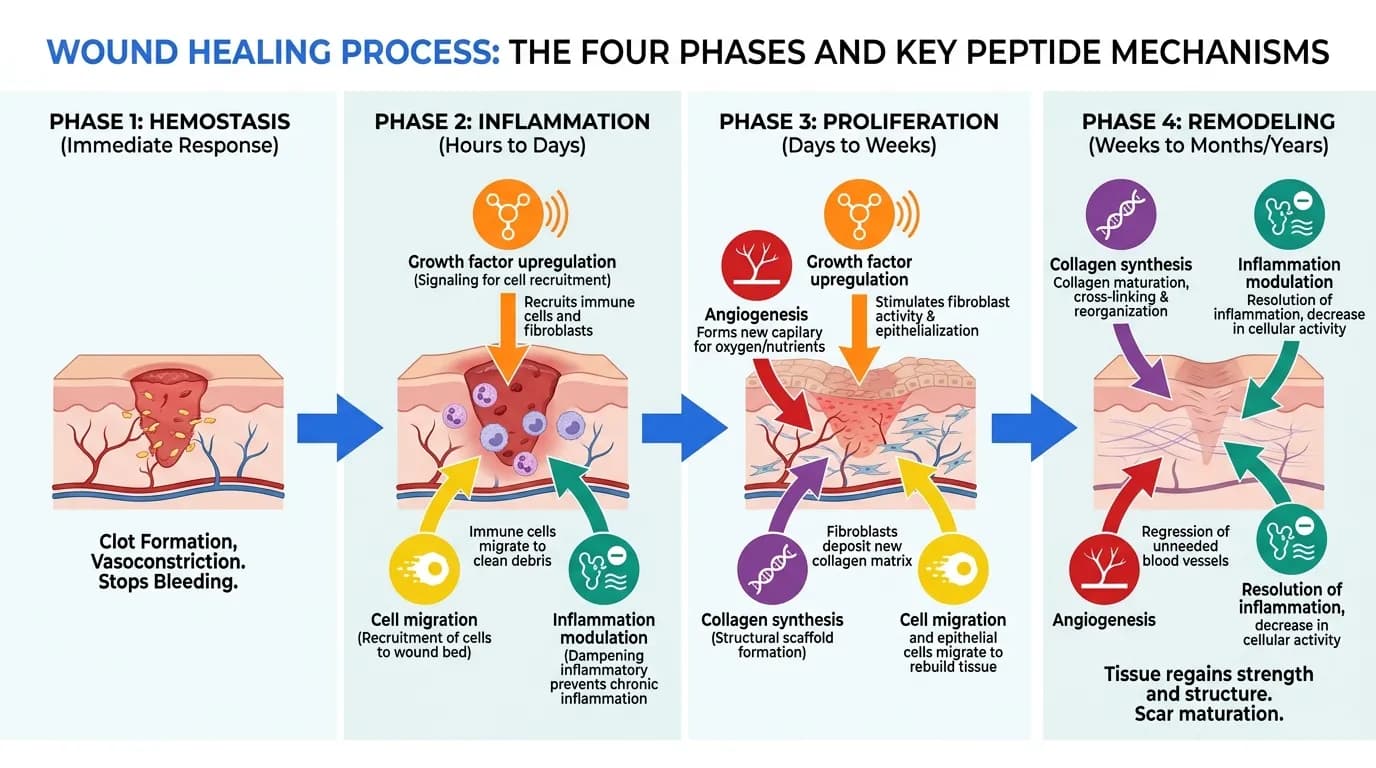
Mechanism of action for GHK-Cu
How GHK-Cu works at the cellular level
Key benefits and uses of GHK-Cu
Overview of GHK-Cu benefits and applications
Scientific Details
Molecular Formula
C14H24CuN6O4
Molecular Weight
403.93 Da
CAS Number
49557-75-7
Sequence
Gly-His-Lys

What is GHK-Cu?#

GHK-Cu (glycyl-L-histidyl-L-lysine:copper(II)) is a naturally occurring copper-binding tripeptide first isolated from human plasma by Loren Pickart in 1973. The peptide consists of three amino acids โ€” glycine, histidine, and lysine โ€” that form a high-affinity complex with copper(II) ions. Found naturally in human plasma, saliva, and urine, GHK-Cu levels decline significantly with age, from approximately 200 ng/mL in plasma at age 20 to approximately 80 ng/mL by age 60.

GHK-Cu has attracted research interest for its diverse biological activities, including wound healing, extracellular matrix remodeling, antioxidant defense, anti-inflammatory signaling, and modulation of gene expression patterns associated with tissue repair and regeneration.

Mechanism of Action#

GHK-Cu exerts its biological effects through multiple interconnected mechanisms:

Copper Delivery and Metalloenzyme Activation#

The copper(II) ion is essential for the activity of numerous metalloenzymes involved in tissue repair, including lysyl oxidase (collagen cross-linking), superoxide dismutase (antioxidant defense), and cytochrome c oxidase (mitochondrial respiration).

Extracellular Matrix Remodeling#

  • Collagen synthesis: Stimulates production of collagen types I, III, and V
  • Glycosaminoglycans: Increases decorin, heparan sulfate, and chondroitin sulfate synthesis
  • Matrix metalloproteinases: Modulates MMP activity to balance tissue degradation and rebuilding

Gene Expression Modulation#

Broad Connectivity Map (CMAP) analyses suggest GHK-Cu may modulate the expression of over 4,000 human genes, with upregulation of genes associated with tissue repair and stem cell function, and downregulation of genes associated with inflammation and tissue destruction.

Research Overview#

Research on GHK-Cu spans dermatology, wound healing, and regenerative medicine. Studies have demonstrated accelerated wound closure in animal models, increased collagen deposition, and anti-inflammatory effects. In cosmetic applications, clinical studies have shown improvements in skin firmness, elasticity, and appearance of fine lines.

Important Considerations#

  • Primarily studied in preclinical models; limited controlled human clinical trial data
  • Widely available in cosmetic formulations (topical creams and serums)
  • Copper toxicity is a theoretical concern at high systemic doses
  • Not FDA-approved as a therapeutic agent

Key Research Findings#

GHK peptide as a natural modulator of multiple cellular pathways in skin regeneration, published in BioMed Research International (Pickart L et al., 2015; PMID: 26236730):

  • The study showed GHK modulates expression of 31.2% of human genes

Stay current on GHK-Cu research

We summarize new studies, safety updates, and dosing insights โ€” delivered biweekly.

Community Protocols Available

See real-world usage patterns alongside the clinical evidence above. Community-sourced, not clinically verified.

Based on 90+ community reports

View community protocols

Frequently Asked Questions About GHK-Cu

Where to Find GHK-Cu

Research-grade suppliers verified by our scoring methodology.

View all 56 vendors โ†’

Explore Further

โš ๏ธ

Medical Disclaimer

This website is for educational and informational purposes only. The information provided is not intended to diagnose, treat, cure, or prevent any disease. Always consult with a qualified healthcare professional before using any peptide or supplement.

Related Articles

You Might Also Like

Related content you may find interesting