8 Peptides for Skin Health and Rejuvenation: Research Guide

Introduction#
Peptides have become one of the most active areas of dermatological research and cosmetic science. From copper peptides that modulate thousands of genes involved in skin remodeling to neuropeptides that affect muscular expression lines, the range of peptide applications in skin health is broad and scientifically diverse.
However, the evidence base for skin peptides varies dramatically. Some compounds have extensive gene expression data but limited clinical outcomes research. Others have clear clinical applications but carry significant side effects. Understanding where each peptide falls on this spectrum is essential for evaluating their potential.
This guide covers eight peptides studied for skin health and rejuvenation, organized by their primary mechanisms and evidence levels. For topical formulations featuring some of these peptides, see our articles on Glow Blend and Healthy Hair, Skin, and Nails Blend.
1. GHK-Cu (Copper Peptide)#
Evidence Level: Extensive in vitro and gene expression data; limited clinical outcomes data Primary Mechanism: Gene expression modulation; collagen and elastin synthesis Administration: Topical (most common), injectable
GHK-Cu is a naturally occurring tripeptide-copper complex found in human plasma, saliva, and urine. Plasma levels decline with age — from approximately 200 ng/mL at age 20 to 80 ng/mL by age 60 — a decline that correlates with reduced regenerative capacity in skin tissue.
Research Findings#
A landmark 2015 study demonstrated that GHK modulates the expression of over 4,000 human genes, many of which are directly involved in skin biology. Key affected pathways include:
- Collagen synthesis — upregulation of collagen I and III genes
- Elastin production — stimulation of elastin gene expression
- Glycosaminoglycan formation — increased hyaluronic acid and decorin production
- Antioxidant defense — upregulation of superoxide dismutase and other protective enzymes
- Anti-inflammatory signaling — suppression of TGF-beta and other pro-inflammatory mediators
Topical application studies have shown improvements in skin thickness, firmness, and fine line appearance, though these studies have generally been small and industry-sponsored. GHK-Cu is widely available in cosmetic formulations as a topical ingredient.
Important Considerations#
GHK-Cu was placed in FDA Category 2 (banned from compounding) in 2024, affecting injectable forms. Topical cosmetic formulations are not affected by this designation. The gap between the extensive gene expression data and clinical outcomes evidence remains significant — modulating gene expression does not automatically translate to measurable clinical skin improvements.
2. SNAP-8 (Acetyl Octapeptide-3)#
Evidence Level: Limited clinical data; primarily industry-sponsored studies Primary Mechanism: SNARE complex inhibition; neuromuscular signal modulation Administration: Topical
SNAP-8 is a synthetic octapeptide that functions as a SNARE complex modulator. The SNARE complex mediates the release of neurotransmitters at the neuromuscular junction — the same target as botulinum toxin, though through a different mechanism and with far less potency.
Research Findings#
SNAP-8 is designed to reduce the depth of expression lines (wrinkles caused by repeated facial muscle contraction) by partially inhibiting neurotransmitter release at the neuromuscular junction. The mechanism is analogous to botulinum toxin but operates at the SNARE assembly level rather than by cleaving SNARE proteins.
Industry-sponsored studies have reported reductions in wrinkle depth of approximately 25-35% after 28 days of topical application. These results are modest compared to botulinum toxin injections but achieved through non-invasive topical application.
The key limitation is penetration depth. SNAP-8 must reach the neuromuscular junction to exert its effects, and topical peptides face significant barriers to skin penetration. The degree to which topically applied SNAP-8 reaches its target in biologically relevant concentrations remains debated.
Important Considerations#
SNAP-8 is used exclusively in topical cosmetic formulations. The comparison to botulinum toxin is mechanistic, not clinical — SNAP-8 is far less potent and its effects are substantially more subtle. Independent peer-reviewed clinical data is limited; most published studies have been funded by peptide ingredient manufacturers.
3. Melanotan-1 (Afamelanotide)#
Evidence Level: Phase 3 clinical trials; FDA-approved for specific indication Primary Mechanism: Melanocortin-1 receptor (MC1R) selective agonist; stimulates eumelanin production Administration: Subcutaneous implant (approved form)
Melanotan-1, also known as afamelanotide, is a synthetic analog of alpha-melanocyte-stimulating hormone (alpha-MSH) that selectively binds the MC1R receptor to stimulate melanin production. It is FDA-approved under the brand name Scenesse for the treatment of erythropoietic protoporphyria (EPP), a rare genetic photosensitivity disorder.
Research Findings#
Melanotan-1's clinical development has focused on its photoprotective properties. By stimulating eumelanin (the darker, more photoprotective form of melanin) production, it increases the skin's natural UV resistance without UV exposure. In EPP patients, clinical trials demonstrated significant increases in pain-free time outdoors compared to placebo.
Research has also explored Melanotan-1 for photoprotection in organ transplant recipients and individuals at high risk of skin cancer, though these applications have not yet received regulatory approval.
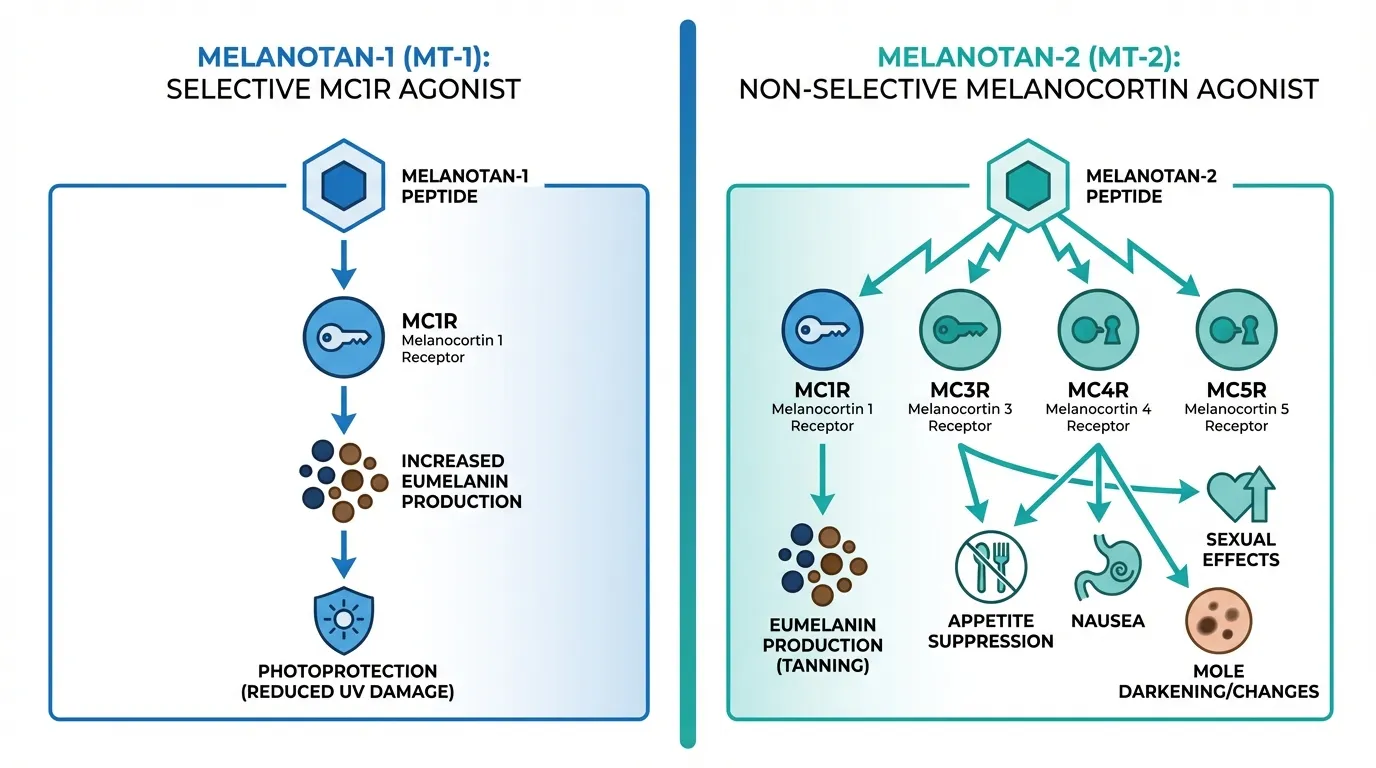
Unlike Melanotan-2, Melanotan-1 is highly selective for the MC1R receptor, which means it produces melanogenesis without the broad melanocortin receptor activation that causes sexual side effects, appetite suppression, and other off-target effects.
Important Considerations#
The approved form of Melanotan-1 (Scenesse) is a subcutaneous implant available only through restricted distribution. It is approved only for EPP, not for cosmetic tanning. The cosmetic tanning market is served predominantly by Melanotan-2, which is not FDA-approved.
4. Melanotan-2#
Evidence Level: Clinical data available; NOT FDA-approved Primary Mechanism: Non-selective melanocortin receptor agonist Administration: Subcutaneous injection (research); intranasal (unregulated)
Melanotan-2 is a synthetic cyclic heptapeptide analog of alpha-MSH that activates multiple melanocortin receptors (MC1R, MC3R, MC4R, MC5R). This non-selectivity is responsible for both its tanning effects and its significant side effect profile.
Research Findings#
Melanotan-2 produces robust skin darkening through MC1R-mediated melanogenesis. Studies have demonstrated significant increases in melanin density and skin pigmentation with subcutaneous administration. However, its non-selective receptor binding produces numerous additional effects including:
- Sexual effects (MC4R) — spontaneous erections, increased libido (this led to the development of PT-141 as a selective MC4R agonist for sexual dysfunction)
- Appetite suppression (MC4R/MC3R) — reduced food intake
- Nausea — common, particularly during initial dosing
- Mole darkening — increased pigmentation of existing moles, which has raised concerns about masking melanoma development
Important Considerations#
Melanotan-2 is not FDA-approved for any indication. Multiple regulatory agencies worldwide have issued warnings against its use. The dermatological concern centers on mole darkening — by increasing pigmentation of existing nevi, Melanotan-2 could theoretically mask early signs of melanoma. No direct evidence links Melanotan-2 to melanoma causation, but the mole-darkening effect is a legitimate clinical concern that has not been adequately studied in long-term follow-up.
5. BPC-157 (for Skin Healing)#
Evidence Level: Preclinical (animal wound healing studies) Primary Mechanism: Angiogenesis promotion; growth factor upregulation Administration: Injectable (research); topical (limited data)
BPC-157 is primarily known as a healing peptide, but its tissue repair mechanisms are directly relevant to skin health. Animal studies have demonstrated accelerated wound healing, improved burn recovery, and enhanced skin tissue repair following BPC-157 administration.
Research Findings#
Preclinical studies have shown that BPC-157 promotes skin wound healing through multiple mechanisms: increased angiogenesis (new blood vessel formation), upregulation of growth factors (VEGF, EGF, FGF), promotion of collagen deposition, and modulation of the nitric oxide system. In burn models, BPC-157 demonstrated accelerated re-epithelialization and improved wound closure rates.
The vasculogenic properties of BPC-157 may be particularly relevant for skin health, as adequate blood supply is critical for skin nutrient delivery, waste removal, and regenerative capacity.
Important Considerations#
All skin-specific BPC-157 data is preclinical. BPC-157 was placed in FDA Category 2 in 2024. The primary evidence for BPC-157 in skin applications comes from animal wound healing models, and translation to human cosmetic skin improvement has not been established. For a broader review of BPC-157's healing properties, see Best Healing Peptides.
6. Glutathione#
Evidence Level: Mixed clinical data for skin applications Primary Mechanism: Antioxidant protection; melanin synthesis modulation Administration: Oral, IV, topical
Glutathione is the body's primary intracellular antioxidant, and its relevance to skin health extends beyond basic antioxidant defense. Research has identified glutathione as a modulator of melanin synthesis pathways, leading to its use in skin lightening applications.
Research Findings#
Glutathione influences skin pigmentation by shifting melanin synthesis from eumelanin (darker pigment) toward pheomelanin (lighter pigment) through inhibition of tyrosinase, the rate-limiting enzyme in melanogenesis. Several clinical studies have evaluated glutathione for skin lightening:
- Oral glutathione supplementation studies have reported modest skin lightening effects over 4-12 weeks, though results have been inconsistent
- IV glutathione has been used in clinical aesthetics for skin brightening, though standardized protocols and long-term safety data are limited
- Topical glutathione formulations have shown limited efficacy due to poor skin penetration
Beyond lightening, glutathione's antioxidant properties protect skin cells from UV-induced oxidative damage, environmental pollution, and other sources of free radical stress that contribute to photoaging.
Important Considerations#
The skin lightening market for glutathione is large but the clinical evidence is mixed. Oral bioavailability remains a challenge — much orally consumed glutathione is degraded before reaching target tissues. The safety of long-term, high-dose IV glutathione for cosmetic purposes has not been established through rigorous clinical trials.
7. Collagen Peptides (Hydrolyzed Collagen)#
Evidence Level: Moderate clinical data from oral supplementation studies Primary Mechanism: Provide collagen building blocks; may signal fibroblast stimulation Administration: Oral
While not a single defined peptide, hydrolyzed collagen peptides represent one of the most commercially significant categories of skin-targeted peptide supplementation. These are short peptide fragments (typically 2-20 amino acids) derived from enzymatic hydrolysis of collagen protein.
Research Findings#
Several randomized controlled trials have evaluated oral collagen peptide supplementation for skin outcomes:
- Studies have reported improvements in skin hydration after 6-8 weeks of supplementation
- Some trials demonstrated reduced wrinkle depth and improved skin elasticity
- Specific collagen-derived peptides (particularly Pro-Hyp and Hyp-Gly dipeptides) have been detected in blood after oral ingestion, suggesting some degree of intact absorption
The proposed mechanism involves two pathways: providing amino acid building blocks for collagen synthesis, and acting as signaling molecules that stimulate fibroblast activity in the dermis. The signaling hypothesis suggests that collagen peptides in the bloodstream may be interpreted by fibroblasts as evidence of collagen breakdown, triggering compensatory collagen production.
Important Considerations#
The collagen peptide supplement market is large, but study quality varies. Many positive studies have been funded by supplement manufacturers, and the optimal peptide type, dose, and duration have not been established through independent systematic review. The bioavailability question — whether orally consumed collagen peptides reach the skin in sufficient quantities — remains actively debated.
8. Palmitoyl Pentapeptide-4 (Matrixyl)#
Evidence Level: Industry-sponsored clinical data; limited independent research Primary Mechanism: Stimulates collagen and fibronectin synthesis Administration: Topical
Matrixyl (palmitoyl pentapeptide-4) is one of the most commercially successful cosmetic peptides. It is a synthetic lipopeptide designed to stimulate collagen production when applied topically.
Research Findings#
The palmitoyl group enhances skin penetration compared to unmodified peptides. In vitro studies demonstrated that Matrixyl stimulates the production of collagen types I, III, and IV, as well as fibronectin — key structural components of the skin's extracellular matrix.
Industry-sponsored clinical studies reported reductions in wrinkle depth and improvements in skin texture after topical application over 2-4 months. Some studies compared Matrixyl favorably to retinol for wrinkle reduction, though independent replication of these findings is limited.
Important Considerations#
Matrixyl is well-established in the cosmetic industry but its evidence base is predominantly industry-funded. Like other topical peptides, the question of how much active peptide reaches target cells in the dermis after topical application remains an area of ongoing investigation.
Comparison Summary#
| Peptide | Primary Application | Evidence Level | Administration | FDA Status |
|---|---|---|---|---|
| GHK-Cu | Regeneration/anti-aging | Extensive in vitro | Topical/injectable | Category 2 (injectable) |
| SNAP-8 | Expression lines | Limited clinical | Topical | Cosmetic ingredient |
| Melanotan-1 | Photoprotection | Phase 3/approved | SC implant | Approved (EPP only) |
| Melanotan-2 | Tanning | Clinical data | SC injection | Not approved; warnings issued |
| BPC-157 | Wound healing | Preclinical | Injectable | Category 2 |
| Glutathione | Skin lightening/antioxidant | Mixed clinical | Oral/IV/topical | GRAS (supplement) |
| Collagen peptides | Hydration/elasticity | Moderate clinical | Oral | GRAS (supplement) |
| Matrixyl | Anti-wrinkle | Industry clinical | Topical | Cosmetic ingredient |
Conclusion#
Skin health peptides span a wide range of mechanisms, evidence levels, and regulatory categories. GHK-Cu stands out for the depth of its gene expression data, while Melanotan-1 is unique as the only FDA-approved peptide specifically for a skin indication. Collagen peptides have the broadest consumer use with moderate supporting evidence, while Melanotan-2 carries the most significant safety concerns.
For researchers evaluating skin peptides, the critical distinction is between molecular-level data (gene expression, in vitro collagen production) and clinical outcomes data (measurable improvements in human skin). Many peptides have compelling molecular evidence but limited clinical validation — a gap that the field is actively working to close.
As always, the regulatory status of each compound should be verified before use, and the Safety page provides essential guidance on evaluating peptide quality and potential risks. For pharmacokinetic data on these peptides, see the half-life comparison tool.
Related Peptide Profiles#
Learn more about the peptides discussed in this article:
- GHK-Cu Overview and Research Guide
- GHK-Cu Dosing Protocols
- GHK-Cu Side Effects and Safety
- SNAP-8 Overview and Research Guide
- SNAP-8 Dosing Protocols
- SNAP-8 Side Effects and Safety
- Melanotan-1 Overview and Research Guide
- Melanotan-1 Dosing Protocols
- Melanotan-1 Side Effects and Safety
- Melanotan-2 Overview and Research Guide
- Melanotan-2 Dosing Protocols
- Melanotan-2 Side Effects and Safety
- BPC-157 Overview and Research Guide
- BPC-157 Dosing Protocols
- BPC-157 Side Effects and Safety
- Glutathione Overview and Research Guide
- Glutathione Dosing Protocols
- Glutathione Side Effects and Safety

Frequently Asked Questions About 8 Peptides for Skin Health and Rejuvenation: Research Guide
What does this article cover?
Peptides for skin health — GHK-Cu, SNAP-8, Melanotan-1, BPC-157, and Glutathione reviewed with evidence levels and mechanisms of action. This guide is for educational purposes only and does not constitute medical advice.
Which peptides are discussed in this article?
This article covers GHK-Cu, SNAP-8, Melanotan-1, Melanotan-2, BPC-157, Glutathione. Key context: GHK-Cu (Copper peptide with gene expression data on 4,000+ genes involved in skin regeneration); SNAP-8 (Acetyl octapeptide-3 studied as a topical neuropeptide for reducing expression lines); Melanotan-1 (Alpha-MSH analog (afamelanotide) studied for UV protection and skin pigmentation disorders). Each peptide is discussed based on available research evidence.
Who is this guide written for?
This guide is written for researchers and individuals seeking an evidence-based overview of the topic covered in "8 Peptides for Skin Health and Rejuvenation: Research Guide." It summarizes available research data without making treatment recommendations. Always consult a healthcare provider for medical decisions.
What are the key takeaways from this article?
The main findings covered in this article include: Copper peptide with gene expression data on 4,000+ genes involved in skin regeneration. Acetyl octapeptide-3 studied as a topical neuropeptide for reducing expression lines. Alpha-MSH analog (afamelanotide) studied for UV protection and skin pigmentation disorders. These takeaways are based on the research data available at the time of publication.
What is GHK-Cu and why is it significant?
GHK-Cu is a peptide discussed in this article because: Copper peptide with gene expression data on 4,000+ genes involved in skin regeneration. For a complete profile of GHK-Cu, see the dedicated peptide page on this site.
Continue reading this research review
Free access to the complete analysis with citations and evidence ratings.
150+ peptide profiles · 30+ comparisons · 18 research tools
Medical Disclaimer
This website is for educational and informational purposes only. The information provided is not intended to diagnose, treat, cure, or prevent any disease. Always consult with a qualified healthcare professional before using any peptide or supplement.
Join 2,000+ researchers getting biweekly updates
Enjoyed this article?
The Research Briefing delivers deep-dives like this biweekly — plus new study breakdowns, safety updates, and tool announcements.
Free forever. No spam. Unsubscribe in one click.
Where to Find These Peptides
Continue Exploring
Peptide Profiles
Keep Reading
FDA Peptide Categories Explained: Category 1 vs Category 2 (2026)
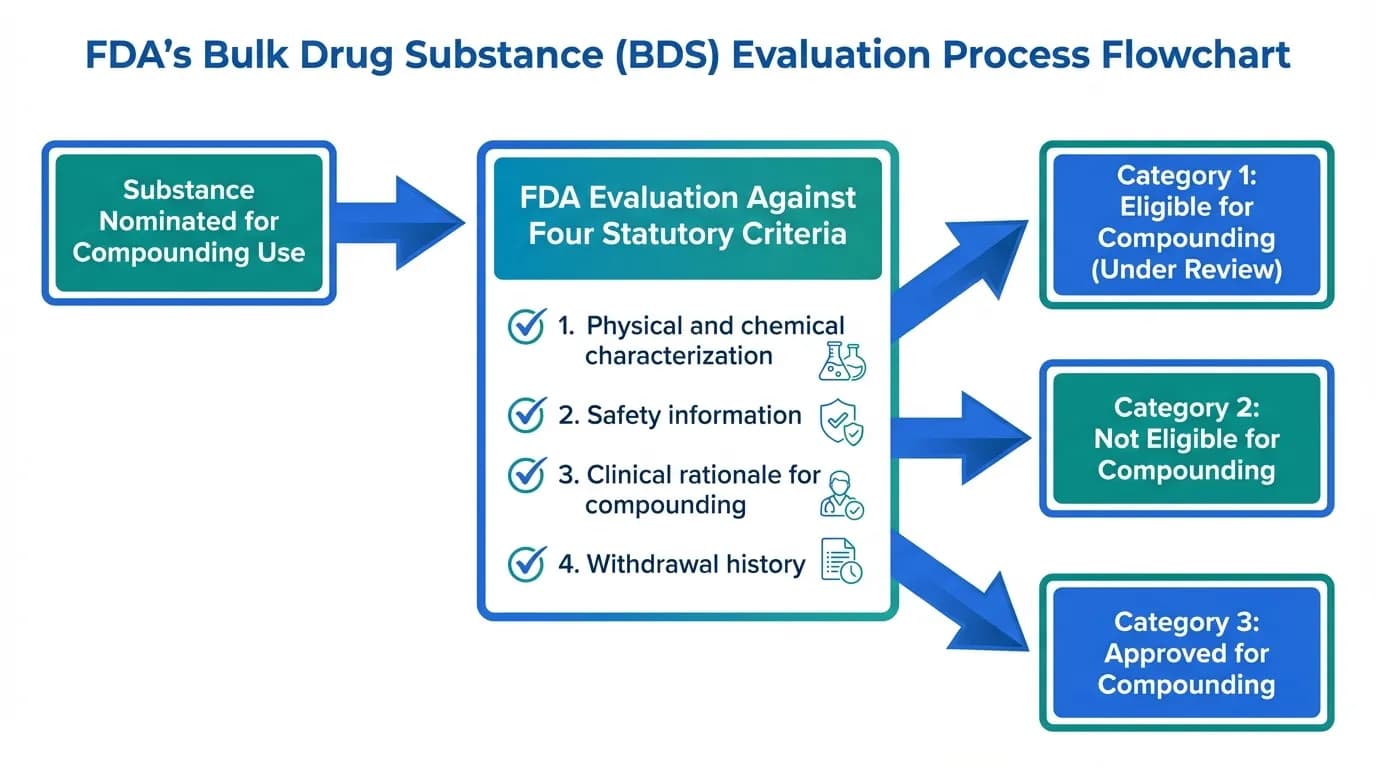
Understand the FDA peptide classification system. Learn the difference between Category 1, Category 2, and Category 3 peptides and what the 2024-2026 regulatory changes mean for researchers.
Most Popular Therapeutic Peptides in 2026: 15 Ranked by Research Interest
The 15 most popular therapeutic peptides in 2026, ranked by clinical trial activity, search interest, and research community adoption. From semaglutide to BPC-157.

Peptides for Women: 7 Research-Backed Options
Seven peptides relevant to women's health — covering weight management, skin rejuvenation, healing, and hormonal support with evidence.
You Might Also Like
Related content you may find interesting