Peptides for Athletic Recovery: Beyond BPC-157 and TB-500

Introduction#
Athletic recovery is a multi-faceted process involving muscle repair, connective tissue remodeling, inflammation resolution, hormonal restoration, and sleep quality. While the peptide community often reduces the conversation to BPC-157 and TB-500, the research landscape for recovery-relevant peptides is broader and more nuanced than these two compounds alone.
This guide examines the full spectrum of peptides studied for athletic and exercise recovery, from direct tissue-healing agents to growth hormone optimization and sleep enhancement. It also addresses a topic that many peptide articles overlook: anti-doping considerations for athletes subject to World Anti-Doping Agency (WADA) testing.
For detailed profiles of individual healing peptides, see Best Healing Peptides. For the specific BPC-157 and TB-500 combination, see The Wolverine Stack.
The Recovery Framework: Four Pillars#
Athletic recovery involves multiple biological systems working in concert. Different peptides target different aspects of this process:
- Direct tissue repair: Healing damaged muscle fibers, tendons, ligaments, and connective tissue
- Inflammation management: Resolving acute exercise-induced inflammation without suppressing the adaptive response
- Growth hormone optimization: Supporting the GH-mediated anabolic recovery window
- Sleep enhancement: Maximizing deep sleep where the majority of physical recovery occurs
Understanding which pillar a peptide targets helps clarify why certain combinations are discussed together and why no single peptide addresses all recovery needs.
Pillar 1: Direct Tissue Healing#
BPC-157: The Tissue Repair Peptide#
BPC-157 (Body Protection Compound-157) is a 15-amino acid peptide derived from a sequence found in human gastric juice. It has the most extensive preclinical evidence base of any healing peptide, with animal studies demonstrating accelerated repair across multiple tissue types.
Preclinical evidence for recovery-relevant tissues:
- Tendon healing: Studies in rat Achilles tendon transection models show accelerated healing with improved biomechanical properties of the repaired tissue
- Ligament repair: Animal models demonstrate enhanced healing of medial collateral ligament injuries
- Muscle injury: Preclinical data shows accelerated repair of crushed and lacerated muscle tissue with improved functional recovery
- Bone fracture: Animal studies suggest enhanced fracture healing and improved callus formation
Proposed mechanisms: BPC-157 appears to promote angiogenesis (new blood vessel formation) through upregulation of VEGF (vascular endothelial growth factor) and modulation of nitric oxide (NO) pathways. It also demonstrates cytoprotective effects and anti-inflammatory activity without immunosuppression.
Critical evidence caveat: All tissue healing evidence comes from animal models and in vitro studies. No published human clinical trials have evaluated BPC-157 for injury recovery. Translating preclinical results to human outcomes requires caution, as many compounds that show promise in animal models fail to demonstrate equivalent effects in humans.
For a detailed mechanism analysis, see BPC-157 Mechanisms of Action.
TB-500: The Tissue Remodeling Peptide#
TB-500 is a synthetic peptide representing the active region of thymosin beta-4, a naturally occurring protein involved in cell migration, angiogenesis, and tissue remodeling. While often discussed alongside BPC-157, its mechanism is distinct.
Preclinical evidence:
- Anti-inflammatory: Thymosin beta-4 reduces inflammatory cytokine production and promotes resolution of inflammation
- Tissue remodeling: Modulates actin polymerization, supporting cell migration to injury sites
- Cardiac repair: Animal studies show improved cardiac function after myocardial infarction through promotion of new blood vessel formation and cardiomyocyte survival
- Wound healing: Preclinical models demonstrate accelerated dermal wound closure and reduced scarring
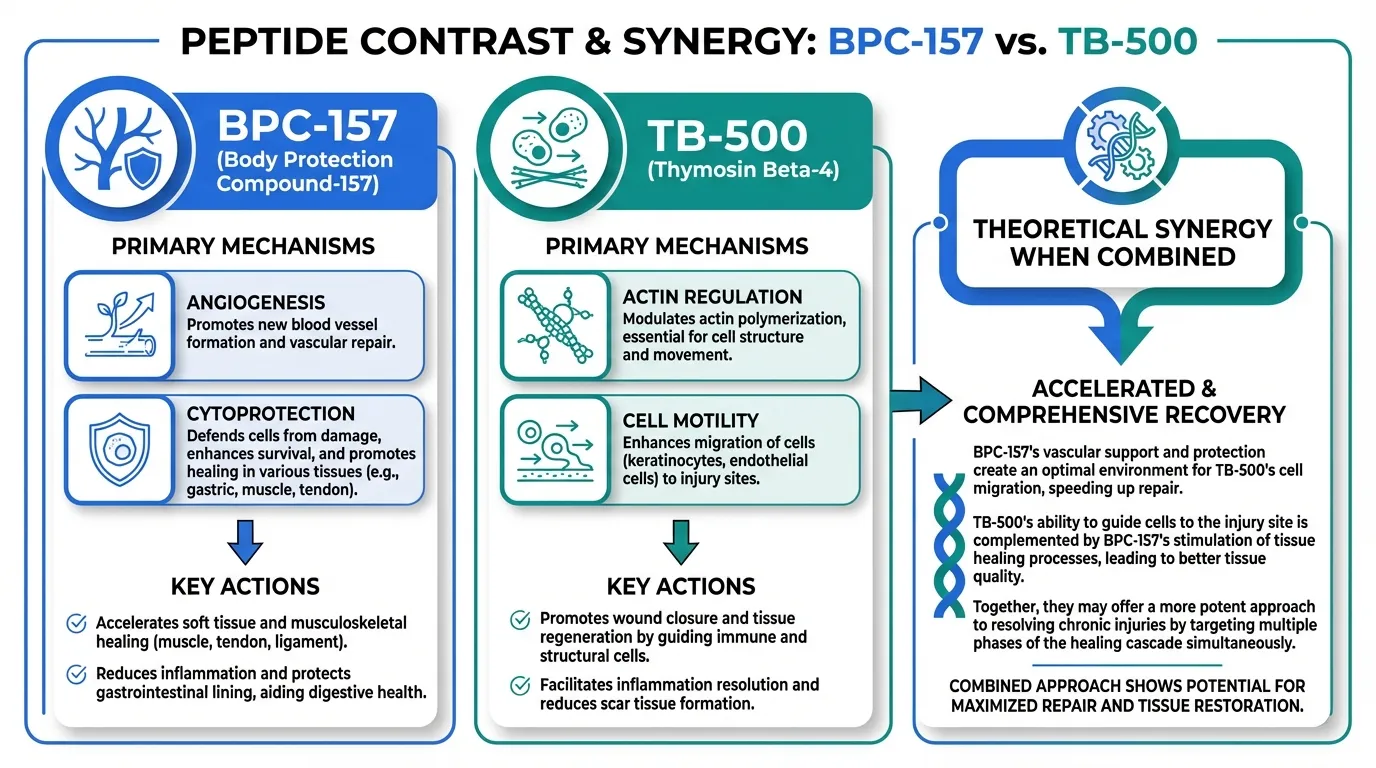
Key difference from BPC-157: While BPC-157's primary mechanism involves angiogenesis and cytoprotection, TB-500's action centers on actin regulation and cell motility -- helping repair cells migrate to where they are needed. This mechanistic distinction is the theoretical basis for combining the two.
The BPC-157 + TB-500 Combination (Wolverine Stack)#
The combination of BPC-157 and TB-500 is widely discussed in the peptide community based on the rationale that their distinct mechanisms create complementary healing effects:
- BPC-157: Promotes blood vessel formation and tissue protection at the injury site
- TB-500: Facilitates cell migration and reduces inflammation to support tissue remodeling
No human clinical trials have studied this specific combination. The synergy rationale is based on non-overlapping mechanisms rather than direct combination studies. For a complete analysis, see BPC-157 and TB-500 Blend.
Pillar 2: Inflammation Management#
GHK-Cu: The Tissue Remodeling Copper Peptide#
GHK-Cu (glycyl-L-histidyl-L-lysine copper complex) is a naturally occurring tripeptide that declines with age. While primarily known for skin applications, its tissue remodeling properties extend to deeper connective tissue recovery.
Recovery-relevant evidence:
- Collagen synthesis: Stimulates production of collagen types I and III, the primary structural proteins in tendons and ligaments
- Anti-inflammatory signaling: Reduces production of inflammatory cytokines (IL-6, TNF-alpha) while preserving the adaptive inflammatory response
- Gene expression: Research by Pickart and colleagues has identified over 4,000 genes regulated by GHK-Cu, including genes involved in tissue remodeling, antioxidant defense, and DNA repair
- Wound healing: Clinical evidence supports accelerated wound healing with improved tissue quality
Practical note: GHK-Cu is available in both injectable and topical forms. Topical application may be relevant for superficial tissue recovery, while injectable forms are studied for systemic effects. For a comparison with BPC-157, see BPC-157 vs GHK-Cu.
Pillar 3: Growth Hormone Optimization#
Growth hormone plays a central role in athletic recovery. GH stimulates IGF-1 production, which in turn drives protein synthesis, muscle repair, collagen formation, and bone remodeling. GH secretion naturally peaks during deep sleep, creating a direct link between sleep quality and recovery capacity.
Ipamorelin: Clean GH Support for Recovery#
Ipamorelin is a selective ghrelin-receptor agonist that stimulates endogenous GH release with minimal effects on cortisol, prolactin, and appetite. For recovery applications, its selectivity is advantageous because:
- No cortisol elevation: Cortisol is catabolic and counterproductive to tissue repair. Ipamorelin's clean profile avoids adding to the cortisol burden from intense training.
- Minimal appetite disruption: Athletes following specific nutritional protocols need predictable appetite patterns.
- Pulsatile GH release: Preserves the natural GH secretion pattern, which is thought to be more effective for tissue repair than sustained elevation.
Sermorelin: GHRH-Pathway Recovery Support#
Sermorelin activates the GHRH receptor to promote GH synthesis and release. For recovery contexts, its primary advantage is the ability to enhance the natural sleep-associated GH pulse when administered before bed.
Research in elderly subjects has demonstrated that sermorelin increases both GH output and deep sleep quality -- two factors directly relevant to overnight recovery. Because it works through the GHRH pathway rather than the ghrelin pathway, it produces no appetite stimulation, making evening administration practical.
The GH-Recovery Connection#
The rationale for GH secretagogues in recovery protocols is indirect but well-grounded:
- GH stimulates IGF-1, which drives protein synthesis in muscle and connective tissue
- GH promotes collagen synthesis in tendons and ligaments
- GH enhances fat metabolism, supporting body composition during recovery periods
- GH secretion peaks during deep sleep, linking sleep quality to recovery capacity
For more on this connection, see Growth Hormone, Sleep, and Recovery.
Pillar 4: Sleep and Recovery#
DSIP: The Delta Sleep Peptide#
DSIP (delta sleep-inducing peptide) is a neuropeptide that was initially identified in the 1970s for its ability to promote delta-wave (slow-wave) sleep in animal models. For athletes, deep sleep is the primary recovery window where tissue repair, GH release, and neural recovery are concentrated.
Research evidence:
- Animal studies demonstrate increased slow-wave sleep duration and delta EEG activity
- Limited human studies suggest improvements in sleep onset and subjective sleep quality
- Research also indicates DSIP may modulate cortisol and stress hormone responses, potentially supporting recovery from training stress
- Effects on pain perception have been studied, with some evidence of analgesic properties
Evidence level: DSIP remains a preclinical/early clinical peptide. The human data is limited and the evidence base is not as robust as for GH secretagogues. Nevertheless, its mechanism of promoting the specific sleep phase most associated with physical recovery makes it relevant to the recovery discussion.
For more on sleep-related peptides, see Best Peptides for Sleep and Recovery.
Pillar 5: Exercise-Induced Growth Factors#
MGF (Mechano Growth Factor)#
MGF is a splice variant of IGF-1 (specifically IGF-1Ec) that is produced locally in muscle tissue in response to mechanical stress -- i.e., exercise. It plays a specific role in the early phase of muscle repair by activating satellite cells (muscle stem cells) that are essential for muscle fiber regeneration.
Mechanism in recovery:
- Mechanical loading of muscle produces MGF through alternative splicing of the IGF-1 gene
- MGF activates quiescent satellite cells, initiating the muscle repair process
- It acts as a local autocrine/paracrine signal at the site of muscle damage
- Following the initial MGF pulse, systemic IGF-1 (IGF-1Ea) drives the subsequent proliferation and differentiation of activated satellite cells
Distinction from systemic IGF-1: MGF acts locally and transiently at the site of muscle damage, while systemic IGF-1 drives the later proliferative phase of repair. This temporal sequence -- MGF first for satellite cell activation, then IGF-1 for proliferation -- reflects the natural repair cascade.
Evidence level: MGF research is primarily preclinical, with animal studies demonstrating enhanced muscle repair when MGF is administered to damaged muscle tissue. The synthetic PEG-MGF variant has improved stability for research use.
Anti-Doping Considerations: WADA and Competitive Athletes#
This section is critical for anyone involved in competitive sport. The World Anti-Doping Agency (WADA) maintains a Prohibited List that is updated annually, and most peptides discussed in this article are explicitly prohibited.
Prohibited at All Times (In and Out of Competition)#
| Peptide | WADA Category | Status |
|---|---|---|
| All GH secretagogues (ipamorelin, sermorelin, GHRP-2, GHRP-6, hexarelin, CJC-1295, MK-677) | S2: Peptide Hormones, Growth Factors | Prohibited |
| All growth factors (MGF, IGF-1, PEG-MGF) | S2: Peptide Hormones, Growth Factors | Prohibited |
| TB-500 / Thymosin Beta-4 | S2: Peptide Hormones, Growth Factors | Prohibited |
| BPC-157 | S0: Non-approved Substances | Prohibited |
What This Means Practically#
- Athletes subject to anti-doping testing should assume all peptide secretagogues and growth factors are prohibited
- The prohibition applies both in-competition and out-of-competition
- Even "recovery use" during off-season constitutes a violation if the athlete is in a registered testing pool
- Some peptides may be detectable in testing for weeks after last administration
- Therapeutic Use Exemptions (TUEs) are not routinely granted for peptide secretagogues
What Is Not Prohibited#
- GHK-Cu (topical copper peptide): Not specifically listed on the WADA Prohibited List as of the current year, though athletes should verify annually
- Collagen peptides (oral supplements): Not prohibited
- Standard amino acid supplements: Not prohibited
Athletes should always consult the current year's WADA Prohibited List and their sport's anti-doping authority before using any substance.
Building a Recovery-Focused Approach#
By Recovery Need#
| Recovery Goal | Primary Peptides Studied | Evidence Level | WADA Status |
|---|---|---|---|
| Acute injury healing | BPC-157, TB-500 | Preclinical only | Prohibited |
| Tendon/ligament repair | BPC-157, GHK-Cu | Preclinical (BPC-157), some clinical (GHK-Cu) | BPC-157 prohibited; GHK-Cu check annually |
| Muscle repair | MGF, BPC-157 | Preclinical | Prohibited |
| GH optimization | Ipamorelin, Sermorelin | Phase 2+ clinical trials | Prohibited |
| Sleep enhancement | DSIP, Sermorelin | Limited clinical | DSIP check list; Sermorelin prohibited |
| Tissue remodeling | GHK-Cu, TB-500 | Mixed preclinical/clinical | TB-500 prohibited; GHK-Cu check annually |
The Evidence Hierarchy#
It is important to maintain realistic expectations based on the quality of evidence:
- Strong clinical evidence: Sermorelin and tesamorelin for GH elevation. GHK-Cu for wound healing.
- Moderate clinical evidence: Ipamorelin for GH elevation with selectivity data.
- Strong preclinical evidence: BPC-157 for tissue healing across multiple animal models. TB-500 for anti-inflammatory and tissue remodeling effects.
- Limited evidence: DSIP for sleep enhancement. MGF for muscle repair.
No human clinical trials have specifically studied any of these peptides in athletic recovery protocols. The recovery applications are extrapolated from tissue healing, GH physiology, and sleep research.
Key Takeaways#
- Athletic recovery involves four interconnected pillars: tissue healing, inflammation management, GH optimization, and sleep quality. Different peptides target different pillars.
- BPC-157 and TB-500 are the most discussed healing peptides with extensive preclinical evidence, but neither has completed human clinical trials for injury recovery
- GH secretagogues (ipamorelin, sermorelin) support recovery indirectly through enhanced growth hormone release, which drives tissue repair, collagen synthesis, and protein synthesis
- GHK-Cu offers recovery-relevant tissue remodeling with some clinical evidence for wound healing and collagen stimulation
- DSIP targets the sleep phase of recovery, promoting the deep sleep where GH secretion and tissue repair are concentrated
- MGF represents the body's own exercise-induced repair signal, though research on exogenous administration remains preclinical
- Nearly all peptides discussed are prohibited by WADA for competitive athletes -- this is a critical consideration that cannot be overlooked
- The evidence base for peptide-assisted athletic recovery is largely preclinical. Claims of efficacy should be evaluated against the actual quality of available evidence
This article is for educational and informational purposes only. It does not constitute medical advice, diagnosis, or treatment recommendations. The peptides discussed are investigational compounds and are prohibited in competitive sport by WADA. Always consult a qualified healthcare provider and verify anti-doping regulations before making any decisions about peptide use.
Related Resources#

Frequently Asked Questions About Peptides for Athletic Recovery: Beyond BPC-157 and TB-500
What are the best peptides for athletic recovery?
The most commonly discussed recovery peptides are BPC-157 and TB-500 for direct tissue healing, ipamorelin or sermorelin for growth hormone-mediated recovery support, and DSIP for sleep enhancement. The choice depends on the type of recovery needed. Injury-specific recovery may focus on healing peptides (BPC-157, TB-500), while general training recovery often centers on GH optimization and sleep quality. It is important to note that most evidence for these applications comes from preclinical studies and that many peptides are prohibited in competitive sports.
Are peptides banned in competitive sports?
Yes, most peptides discussed for athletic recovery are on the World Anti-Doping Agency (WADA) Prohibited List. All growth hormone secretagogues (ipamorelin, sermorelin, GHRP-2, etc.), growth factors (MGF, IGF-1), and thymosin beta-4 (TB-500) are explicitly prohibited at all times in competitive sport. BPC-157 falls under the general prohibition on peptide hormones. Athletes subject to anti-doping testing should assume all peptide secretagogues and growth factors are prohibited unless specifically verified otherwise.
Is there human clinical trial data for BPC-157 in injury recovery?
No. Despite extensive preclinical research showing healing effects in animal models of tendon, ligament, muscle, and bone injury, BPC-157 has not completed published human clinical trials for injury recovery as of 2026. The evidence base is entirely from animal studies and in vitro research. This is a critical distinction that should inform how the preclinical results are interpreted.
How does sleep affect athletic recovery and where do peptides fit?
Deep slow-wave sleep is the primary recovery phase when growth hormone secretion peaks, tissue repair accelerates, and inflammatory markers decrease. GH secretagogues like sermorelin administered before bed may enhance this natural GH pulse. DSIP (delta sleep-inducing peptide) is researched for its potential to promote slow-wave sleep directly. However, both remain investigational for these applications.
What is the Wolverine Stack?
The Wolverine Stack refers to the combination of BPC-157 and TB-500, named for the comic book character's rapid healing ability. The rationale is that BPC-157 promotes angiogenesis and tissue repair through VEGF and NO pathways, while TB-500 modulates actin polymerization and reduces inflammation, creating complementary healing mechanisms. No human clinical trials have studied this specific combination.
Continue reading this research review
Free access to the complete analysis with citations and evidence ratings.
150+ peptide profiles · 30+ comparisons · 18 research tools
Medical Disclaimer
This website is for educational and informational purposes only. The information provided is not intended to diagnose, treat, cure, or prevent any disease. Always consult with a qualified healthcare professional before using any peptide or supplement.
Join 2,000+ researchers getting biweekly updates
Enjoyed this article?
The Research Briefing delivers deep-dives like this biweekly — plus new study breakdowns, safety updates, and tool announcements.
Free forever. No spam. Unsubscribe in one click.
Where to Find These Peptides
Continue Exploring
Peptide Profiles
Keep Reading
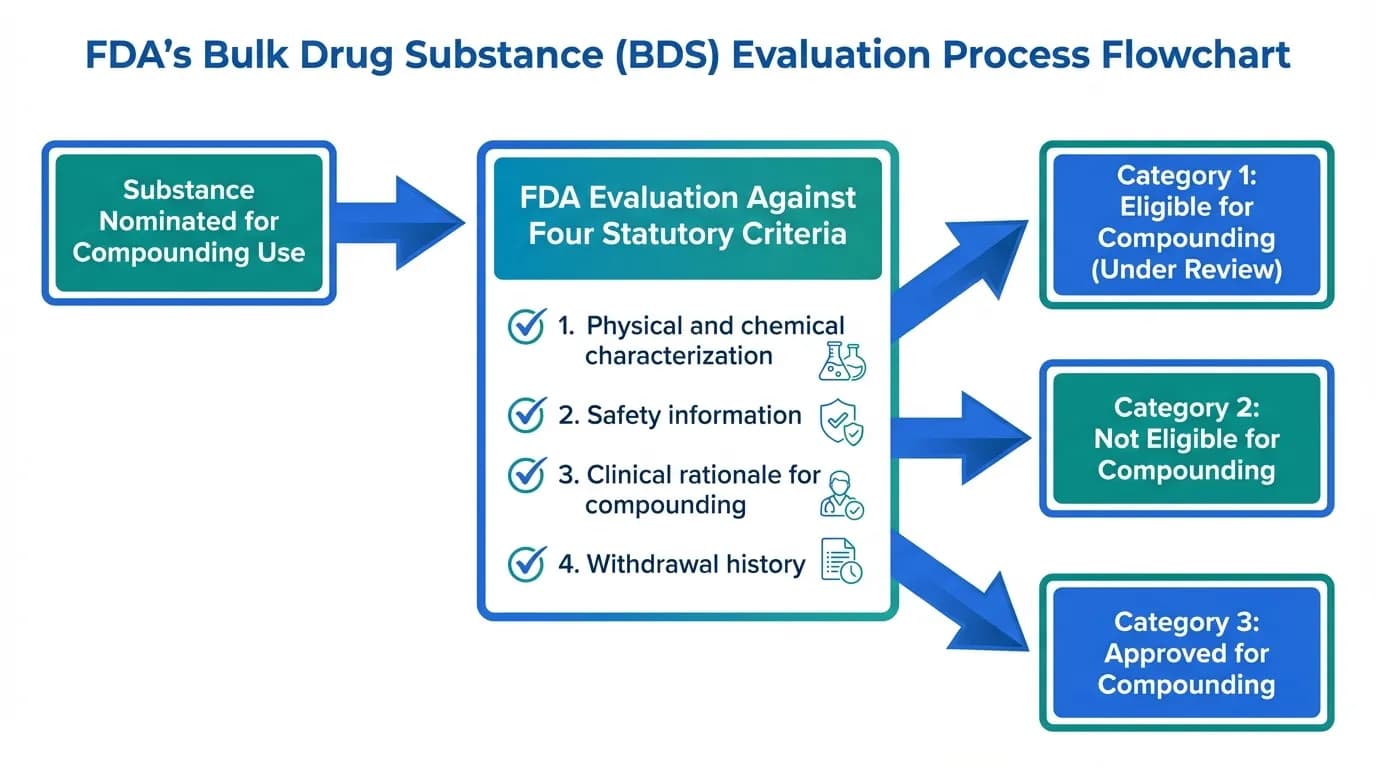
FDA Peptide Categories Explained: Category 1 vs Category 2 (2026)
Understand the FDA peptide classification system. Learn the difference between Category 1, Category 2, and Category 3 peptides and what the 2024-2026 regulatory changes mean for researchers.
Peptide Stacking Guide 2026: Best Combinations by Goal
The definitive 2026 guide to peptide stacking organized by goal. Fat loss, muscle growth, healing, anti-aging, and cognitive stacks with evidence levels, dosing timing, and safety considerations.
Most Popular Therapeutic Peptides in 2026: 15 Ranked by Research Interest
The 15 most popular therapeutic peptides in 2026, ranked by clinical trial activity, search interest, and research community adoption. From semaglutide to BPC-157.
You Might Also Like
Related content you may find interesting