Peptides for Physical Performance and Endurance: What the Research Shows

Introduction#
Physical performance depends on a complex interplay of energy metabolism, muscle contractility, recovery capacity, and body composition. While no peptide is a substitute for training, several are being studied for their effects on the biological systems that underlie exercise capacity and recovery.
This guide examines six peptides with research relevant to physical performance, from the exercise-mimetic effects of MOTS-c to the muscle-buffering capacity of carnosine and the recovery-promoting properties of BPC-157. For muscle growth-specific peptides, see Top Peptides for Muscle Recovery and Growth. For myostatin inhibitors that preserve muscle during weight loss, see Next-Generation Myostatin Inhibitors.
Important note: None of these peptides are approved for athletic performance enhancement. Several are on WADA prohibited lists. This article reviews research data for educational purposes only.
1. MOTS-c: The Exercise Mimetic#
Evidence Level: Preclinical with strong translational rationale Performance Pathway: Mitochondrial efficiency, metabolic flexibility, endurance capacity WADA Status: Not explicitly listed but falls under peptide hormones category
MOTS-c is a 16-amino-acid peptide encoded in mitochondrial DNA that has emerged as one of the most compelling exercise-related peptides in current research. It is naturally produced by skeletal muscle during exercise, and exogenous administration in animal models reproduces many of the metabolic benefits of physical activity.
Key Research Findings#
- Endurance enhancement: Mice treated with MOTS-c showed substantially enhanced running capacity on accelerating treadmills, including in aged animals. One study demonstrated that MOTS-c treatment effectively doubled running capacity in mice
- Exercise-induced secretion: MOTS-c levels in skeletal muscle increase nearly 12-fold during exercise and remain partially elevated after a 4-hour rest period. Plasma levels increase by approximately 50% during and after exercise
- Endurance training response: Long-term endurance training induces adaptive increases in endogenous MOTS-c levels in both serum and skeletal muscle. MOTS-c may enhance mitochondrial respiratory function by activating the AMPK/PGC-1alpha pathway
- Mechanism: MOTS-c directly binds and activates casein kinase 2 (CK2) in skeletal muscle, improving glucose utilization and metabolic flexibility -- allowing more efficient energy production during sustained activity
- Aging relevance: MOTS-c levels decline with age. Treatment of old mice with MOTS-c improved physical performance on rotating rod and treadmill tests, suggesting it can partially reverse age-related performance decline
Limitations#
No human clinical trials for MOTS-c in exercise performance. The exercise-mimetic effects in mice may not translate directly to humans who already exercise. Optimal dosing, timing relative to exercise, and long-term safety are unknown. For detailed MOTS-c research, see our Mitochondrial Peptides article and MOTS-c profile.
2. Carnosine: The Muscle Buffer#
Evidence Level: High (human RCTs for beta-alanine supplementation) Performance Pathway: Intracellular pH buffering, antioxidant defense WADA Status: Not prohibited
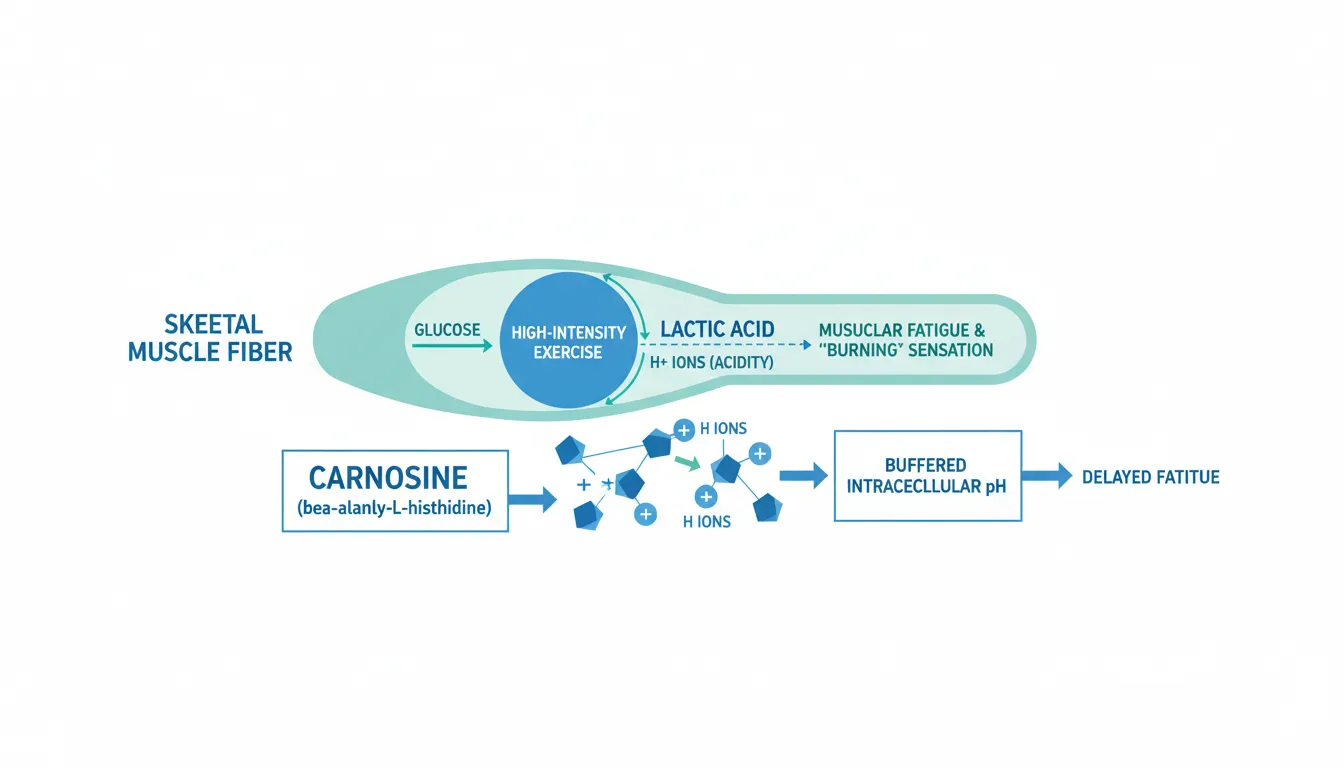
Carnosine (beta-alanyl-L-histidine) is a naturally occurring dipeptide found at high concentrations in skeletal muscle, particularly in fast-twitch (type II) fibers. It serves as the primary intracellular pH buffer during high-intensity exercise, neutralizing hydrogen ions that accumulate from anaerobic metabolism and contribute to the "burning" sensation and muscular fatigue.
Key Research Findings#
- Ergogenic potential: Beta-alanine supplementation (2-6 g/day) increases muscle carnosine concentrations by 20-80% within 2-10 weeks. Higher muscle carnosine improves capacity during activities where metabolic acidosis limits performance
- High-intensity exercise: The greatest performance benefits are seen in efforts lasting 1-4 minutes -- the duration range most limited by acid-base disturbance. This includes repeated sprints, middle-distance running, and high-intensity interval training
- Acute supplementation: Acute ingestion of 30 mg/kg carnosine and anserine 60 minutes before exercise may improve short-duration sprint performance and maximal muscle contractions
- Additional mechanisms: Beyond pH buffering, carnosine has antioxidant properties, influences sarcoplasmic reticulum calcium regulation, and may modulate enzyme activity in muscle tissue
- Human muscle correlation: Serum MOTS-c concentration positively correlates with lower-body muscle strength, and muscle carnosine content varies with fiber type composition and training history
Limitations#
Carnosine itself is poorly absorbed orally (rapidly hydrolyzed by carnosinase in plasma). The practical approach is beta-alanine supplementation, which increases intramuscular carnosine. Performance effects are modest and most relevant to specific exercise domains (high-intensity, acidosis-limited). The main side effect of beta-alanine is paresthesia (tingling), which is dose-dependent and harmless. Endurance performance at lower intensities is less affected.
3. Tesamorelin: Body Composition Optimization#
Evidence Level: High (FDA-approved for lipodystrophy) Performance Pathway: Visceral fat reduction, body composition, GH-mediated effects WADA Status: Prohibited (growth hormone releasing factors)
Tesamorelin is a GHRH (growth hormone-releasing hormone) analog that is FDA-approved for the treatment of HIV-associated lipodystrophy. It stimulates endogenous growth hormone release from the pituitary, leading to reductions in visceral adipose tissue (VAT) and improvements in body composition.
Relevance to Performance#
- Visceral fat reduction: Tesamorelin reduces trunk fat by approximately 15-18% in clinical trials, without the side effects associated with exogenous GH administration
- IGF-1 increase: Tesamorelin increases IGF-1 levels, which supports muscle protein synthesis and repair
- Physiological GH pulsatility: Unlike exogenous GH injection, tesamorelin preserves the natural pulsatile pattern of GH secretion and maintains negative feedback, potentially offering a safer GH-enhancing approach
- Metabolic improvements: Reductions in triglycerides and improvements in lipid profiles contribute to overall metabolic health
Limitations#
Tesamorelin is approved only for HIV-associated lipodystrophy. Use for body composition or performance enhancement is off-label. GH-related side effects (joint pain, edema, carpal tunnel syndrome) can occur. Tesamorelin is prohibited by WADA under the growth hormone releasing factors category. For dosing information, see the Tesamorelin profile and Dosing Calculator.
4. AOD-9604: Fat Metabolism#
Evidence Level: Limited (Phase 2 data; some equivocal results) Performance Pathway: Fat oxidation without anabolic GH effects WADA Status: Prohibited (growth hormone fragment)
AOD-9604 is a modified fragment of human growth hormone (amino acids 177-191) designed to retain the fat-metabolizing properties of GH while eliminating its anabolic and diabetogenic effects. It acts through a mechanism distinct from the GH receptor, involving the beta-3 adrenergic receptor and fat cell lipolysis.
Key Research Findings#
- Fat oxidation: Preclinical studies demonstrated increased fat oxidation and reduced body fat accumulation in obese animal models
- No anabolic effects: Unlike full-length GH, AOD-9604 does not stimulate IGF-1 production, increase blood glucose, or promote organ growth
- GRAS status: AOD-9604 received Generally Recognized as Safe (GRAS) status from the FDA as a food supplement ingredient, though this is not an efficacy approval
- Clinical results: Phase 2 obesity trials showed modest but inconsistent results. The compound was not advanced to Phase 3 for obesity
Limitations#
Clinical evidence for AOD-9604 in body composition is limited and somewhat disappointing compared to preclinical promise. No head-to-head comparisons with approved fat-loss agents exist. The mechanism is less well-characterized than other GH-related peptides. For broader context on GH-related peptides, see Growth Hormone Secretagogues Compared.
5. Cortistatin: Recovery and Inflammation#
Evidence Level: Preclinical Performance Pathway: Anti-inflammatory signaling, sleep regulation, neuroendocrine balance WADA Status: Not listed
Cortistatin is a neuropeptide that shares structural homology with somatostatin but has distinct biological activities. It is expressed in the cerebral cortex and immune cells, and its name derives from its cortical expression and sleep-inducing ("statin") properties.
Relevance to Performance Recovery#
- Sleep promotion: Cortistatin promotes slow-wave sleep (SWS), the deep sleep phase most important for physical recovery, GH release, and tissue repair
- Anti-inflammatory effects: Cortistatin suppresses inflammatory mediators (TNF-alpha, IL-6, IL-12) and has shown efficacy in preclinical models of inflammatory bowel disease, sepsis, and arthritis
- Neuroendocrine regulation: Cortistatin modulates the hypothalamic-pituitary axis, potentially influencing GH secretion patterns, cortisol regulation, and stress response
- Immune modulation: By regulating T-cell responses and macrophage activation, cortistatin may support the immune function that is often compromised during heavy training periods
Limitations#
Cortistatin research is entirely preclinical. No human performance or recovery trials exist. The peptide's short half-life in circulation poses delivery challenges. The relationship between cortistatin and somatostatin receptor signaling is complex. See the Cortistatin profile for detailed mechanism information.
6. BPC-157: Tissue Repair and Recovery#
Evidence Level: Extensive preclinical; no published human RCTs Performance Pathway: Tendon, muscle, and ligament repair; angiogenesis WADA Status: Not explicitly listed (not classified)
BPC-157 (Body Protection Compound-157) is a 15-amino-acid peptide derived from human gastric juice that has an extensive preclinical evidence base for tissue repair. Its relevance to performance centers on injury recovery rather than direct performance enhancement.
Key Research Findings#
- Tendon healing: BPC-157 accelerates tendon-to-bone healing in preclinical models, including Achilles tendon transection, rotator cuff tears, and medial collateral ligament injuries
- Muscle repair: In rodent models, BPC-157 promotes muscle healing after crush injuries and accelerates recovery of contractile function
- Angiogenesis: BPC-157 promotes blood vessel formation (angiogenesis) in injured tissue, supporting the delivery of nutrients and immune cells to damaged areas
- Gastrointestinal protection: The original BPC-157 research focused on gut healing, including protection against NSAID-induced damage -- relevant for athletes who frequently use anti-inflammatory medications
Limitations#
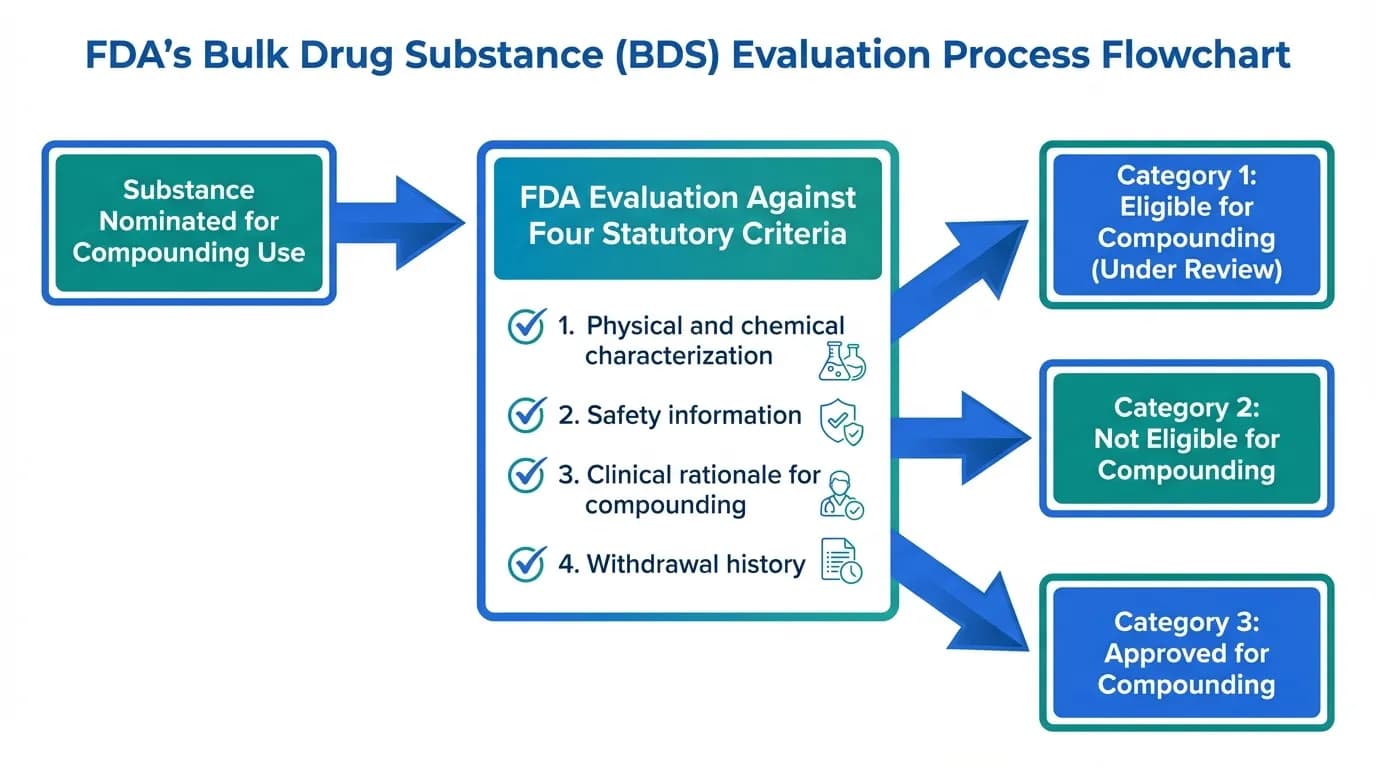
Despite extensive preclinical data, no human randomized controlled trials have been published for BPC-157 in any indication. The preclinical evidence is almost entirely from a single research group (Sikiric et al.). BPC-157 has been placed in FDA Category 2 (banned from compounding in the US). For detailed analysis, see the BPC-157 profile and Best Healing Peptides guide.
Performance Pathway Comparison#
| Peptide | Performance Pathway | Evidence Level | Human Data | WADA Status |
|---|---|---|---|---|
| MOTS-c | Endurance / metabolism | Preclinical | No RCTs | Peptide hormones |
| Carnosine | pH buffering / sprints | High (via beta-alanine) | Extensive RCTs | Not prohibited |
| Tesamorelin | Body composition / GH | High (FDA-approved) | Phase 3 | Prohibited |
| AOD-9604 | Fat oxidation | Limited | Phase 2 | Prohibited |
| Cortistatin | Recovery / sleep | Preclinical | None | Not listed |
| BPC-157 | Tissue repair | Extensive preclinical | No RCTs | Not classified |
What the Evidence Actually Supports#
Looking across these peptides, the evidence base for performance applications varies enormously:
Strongest evidence: Carnosine (via beta-alanine supplementation) has the most robust human evidence, with numerous RCTs confirming modest ergogenic effects for high-intensity, acidosis-limited exercise. This is the only peptide on this list with a mature, replicated human evidence base.
Strongest preclinical signal: MOTS-c has the most compelling preclinical data for endurance enhancement, with a clear physiological mechanism (exercise-induced secretion, mitochondrial function) that positions it as a potential translational target. However, no human trials exist.
FDA-approved (for different indication): Tesamorelin is the only FDA-approved compound here, though not for performance. Its body composition effects are well-documented.
Extensive but unreplicated: BPC-157 has hundreds of preclinical publications but no human RCTs, and most data comes from a single research group.
Early-stage: Cortistatin's performance relevance is theoretical, based on its sleep-promoting and anti-inflammatory properties in preclinical models.
Conclusion#
Peptide research relevant to physical performance spans from well-validated human data (beta-alanine/carnosine for high-intensity exercise) to entirely preclinical concepts (MOTS-c as an exercise mimetic, cortistatin for recovery). The most scientifically exciting development is MOTS-c's role as a mitochondrial-derived exercise factor, which could eventually lead to therapies for age-related performance decline.
For athletes and researchers, the key distinction is between peptides with replicated human evidence (carnosine) and those with strong preclinical data that has not yet been clinically validated (MOTS-c, BPC-157). Responsible evaluation requires acknowledging this evidence hierarchy rather than extrapolating animal data to human performance.
For related reading, see Mitochondrial Peptides: The Next Frontier in Longevity, Top Peptides for Muscle Recovery and Growth, and Growth Hormone Secretagogues Compared.
Related Peptide Profiles#
Learn more about the peptides discussed in this article:
- MOTS-c Overview and Research Guide
- MOTS-c Dosing Protocols
- MOTS-c Side Effects and Safety
- Carnosine Overview and Research Guide
- Carnosine Dosing Protocols
- Carnosine Side Effects and Safety
- Tesamorelin Overview and Research Guide
- Tesamorelin Dosing Protocols
- Tesamorelin Side Effects and Safety
- AOD-9604 Overview and Research Guide
- AOD-9604 Dosing Protocols
- AOD-9604 Side Effects and Safety
- Cortistatin Overview and Research Guide
- Cortistatin Dosing Protocols
- Cortistatin Side Effects and Safety
- BPC-157 Overview and Research Guide
- BPC-157 Dosing Protocols
- BPC-157 Side Effects and Safety

Frequently Asked Questions About Peptides for Physical Performance and Endurance: What the Research Shows
What does this article cover?
An evidence-based guide to peptides studied for physical performance, endurance, and exercise capacity — including MOTS-c, carnosine, tesamorelin, AOD-9604, cortistatin, and BPC-157. This guide is for educational purposes only and does not constitute medical advice.
Which peptides are discussed in this article?
This article covers MOTS-c, Carnosine, Tesamorelin, AOD-9604, Cortistatin, BPC-157. Key context: MOTS-c (Mitochondrial-derived peptide that functions as an exercise mimetic, enhancing endurance and meta...); Carnosine (Intracellular dipeptide that buffers muscle pH during high-intensity exercise, with ergogenic eff...); Tesamorelin (FDA-approved GHRH analog that reduces visceral fat and improves body composition, relevant to met...). Each peptide is discussed based on available research evidence.
Who is this guide written for?
This guide is written for researchers and individuals seeking an evidence-based overview of the topic covered in "Peptides for Physical Performance and Endurance: What the Research Shows." It summarizes available research data without making treatment recommendations. Always consult a healthcare provider for medical decisions.
What are the key takeaways from this article?
The main findings covered in this article include: Mitochondrial-derived peptide that functions as an exercise mimetic, enhancing endurance and meta.... Intracellular dipeptide that buffers muscle pH during high-intensity exercise, with ergogenic eff.... FDA-approved GHRH analog that reduces visceral fat and improves body composition, relevant to met.... These takeaways are based on the research data available at the time of publication.
What is MOTS-c and why is it significant?
MOTS-c is a peptide discussed in this article because: Mitochondrial-derived peptide that functions as an exercise mimetic, enhancing endurance and metabolic flexibility in animal models. For a complete profile of MOTS-c, see the dedicated peptide page on this site.
Continue reading this research review
Free access to the complete analysis with citations and evidence ratings.
150+ peptide profiles · 30+ comparisons · 18 research tools
Medical Disclaimer
This website is for educational and informational purposes only. The information provided is not intended to diagnose, treat, cure, or prevent any disease. Always consult with a qualified healthcare professional before using any peptide or supplement.
Join 2,000+ researchers getting biweekly updates
Enjoyed this article?
The Research Briefing delivers deep-dives like this biweekly — plus new study breakdowns, safety updates, and tool announcements.
Free forever. No spam. Unsubscribe in one click.
Where to Find These Peptides
Continue Exploring
Peptide Profiles
Keep Reading
Best Peptides to Stack with Retatrutide (2026 Research Guide)
A 2026 research-focused review of the peptides most often discussed alongside retatrutide for GI side effects, lean-mass preservation, hair and skin changes, sleep, and adjunct fat loss — what the literature does and does not support.
FDA Peptide Categories Explained: Category 1 vs Category 2 (2026)
Understand the FDA peptide classification system. Learn the difference between Category 1, Category 2, and Category 3 peptides and what the 2024-2026 regulatory changes mean for researchers.
Peptide Stacking Guide 2026: Best Combinations by Goal
The definitive 2026 guide to peptide stacking organized by goal. Fat loss, muscle growth, healing, anti-aging, and cognitive stacks with evidence levels, dosing timing, and safety considerations.
You Might Also Like
Related content you may find interesting