BPC-157 vs GHK-Cu: Comprehensive Comparison
A detailed comparison of BPC-157 and GHK-Cu covering mechanisms of action, healing applications, dosing protocols, side effects, and research evidence for these two prominent healing peptides.
Verdict at a Glance
BPC-157 for deep tissue, GI, and musculoskeletal healing research; GHK-Cu for skin rejuvenation, wound healing, and accessible topical applications
| Best for | Pick | Why |
|---|---|---|
| Gut and GI Protection | BPC-157 | BPC-157 is derived from gastric juice proteins and has extensive preclinical data showing gastroprotective effects, ulcer healing, and intestinal barrier repair |
| Skin Anti-Aging | GHK-Cu | GHK-Cu stimulates collagen and elastin synthesis, is commercially available in topical formulations, and has human data supporting skin improvement |
| Tendon and Ligament Repair | BPC-157 | BPC-157 shows strong preclinical evidence for accelerating tendon-to-bone healing, ligament repair, and muscle injury recovery |
| Hair Growth Stimulation | GHK-Cu | GHK-Cu has demonstrated ability to stimulate hair follicle growth and increase hair follicle size in research studies |
| Broad Tissue Protection | BPC-157 | BPC-157 demonstrates protective effects across liver, brain, heart, and gut tissues in preclinical models, offering wider systemic coverage |
| Wound Healing (Topical) | GHK-Cu | GHK-Cu can be applied topically for wound healing, making it more practical for surface-level tissue repair without injection |
| Category | BPC-157 | GHK-Cu | Advantage |
|---|---|---|---|
| Mechanism of Action | Promotes angiogenesis, modulates nitric oxide system, upregulates growth factor receptors, and activates FAK-paxillin pathway for tissue repair | Chelates copper(II) ions, stimulates collagen/glycosaminoglycan synthesis, modulates ~4,000 human genes, and activates TGF-beta/BMP pathways | Comparable |
| Research Evidence | 100+ published preclinical studies across multiple tissue types; no completed human clinical trials | 50+ studies with some human skin trials; commercially used in cosmetic formulations | BPC-157 |
| Side Effect Profile | Well-tolerated in animal studies with minimal reported adverse effects | Generally well-tolerated; topical formulations have established safety profiles in cosmetic use | GHK-Cu |
| Dosing Complexity | Requires subcutaneous or oral administration; typical research doses 200-800 mcg/day | Available in topical, subcutaneous, and oral forms; topical application is straightforward | GHK-Cu |
| Scope of Applications | GI protection, tendon/ligament repair, muscle healing, neuroprotection, organ protection | Skin rejuvenation, wound healing, hair growth, anti-aging, tissue remodeling | BPC-157 |
| Regulatory Status | Research compound only; not approved for human therapeutic use in any jurisdiction | Used in cosmetic formulations; not approved as therapeutic drug but has wider commercial availability | GHK-Cu |

Introduction#
BPC-157 and GHK-Cu represent two of the most widely studied peptides in regenerative medicine research, yet they approach tissue healing through fundamentally different mechanisms. BPC-157, a 15-amino acid peptide derived from human gastric juice, has been investigated primarily for its broad systemic healing properties across gastrointestinal, musculoskeletal, and neurological tissues. GHK-Cu, a naturally occurring copper-binding tripeptide found in human plasma, operates through copper-mediated gene modulation and has found practical applications in skin rejuvenation and wound care.
Understanding the distinctions between these peptides is valuable for researchers and clinicians evaluating their respective roles in tissue repair. While both promote healing, their molecular targets, routes of administration, evidence bases, and practical applications differ substantially.
Mechanism of Action Comparison#
BPC-157#
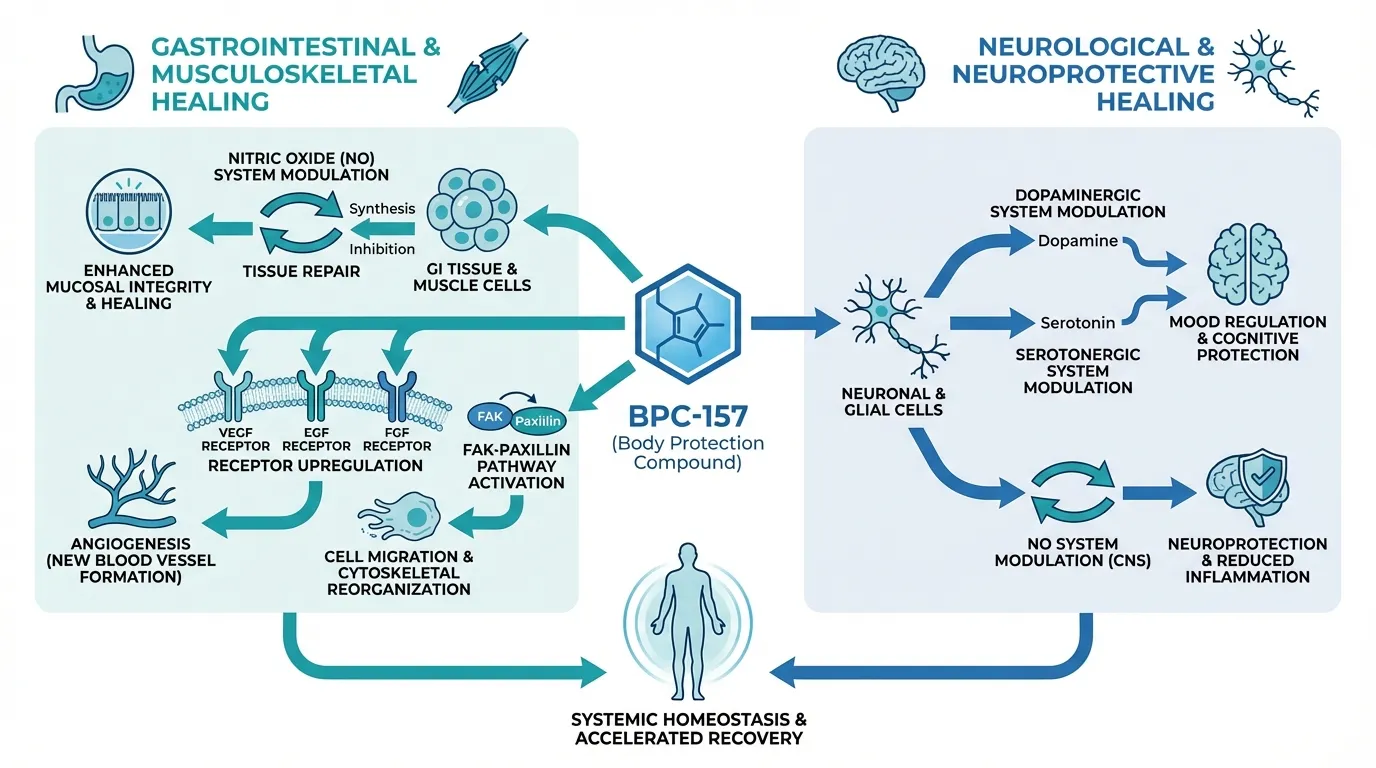
BPC-157 (Body Protection Compound-157) exerts its healing effects through multiple interconnected pathways. Central to its mechanism is the modulation of the nitric oxide (NO) system, where it can either promote or inhibit NO synthesis depending on tissue context. This bidirectional NO modulation contributes to its vascular protective effects.
The peptide upregulates growth factor receptors, including VEGF, EGF, and FGF receptors, promoting angiogenesis and new blood vessel formation at injury sites. BPC-157 also activates the FAK-paxillin pathway, which is critical for cell migration and adhesion during wound repair. Its effects on tendon healing appear mediated through increased expression of growth hormone receptor and upregulation of tendon-specific markers.
Additionally, BPC-157 interacts with the dopaminergic and serotonergic systems, which may explain its observed neuroprotective properties in preclinical models of traumatic brain injury and nerve damage.
GHK-Cu#
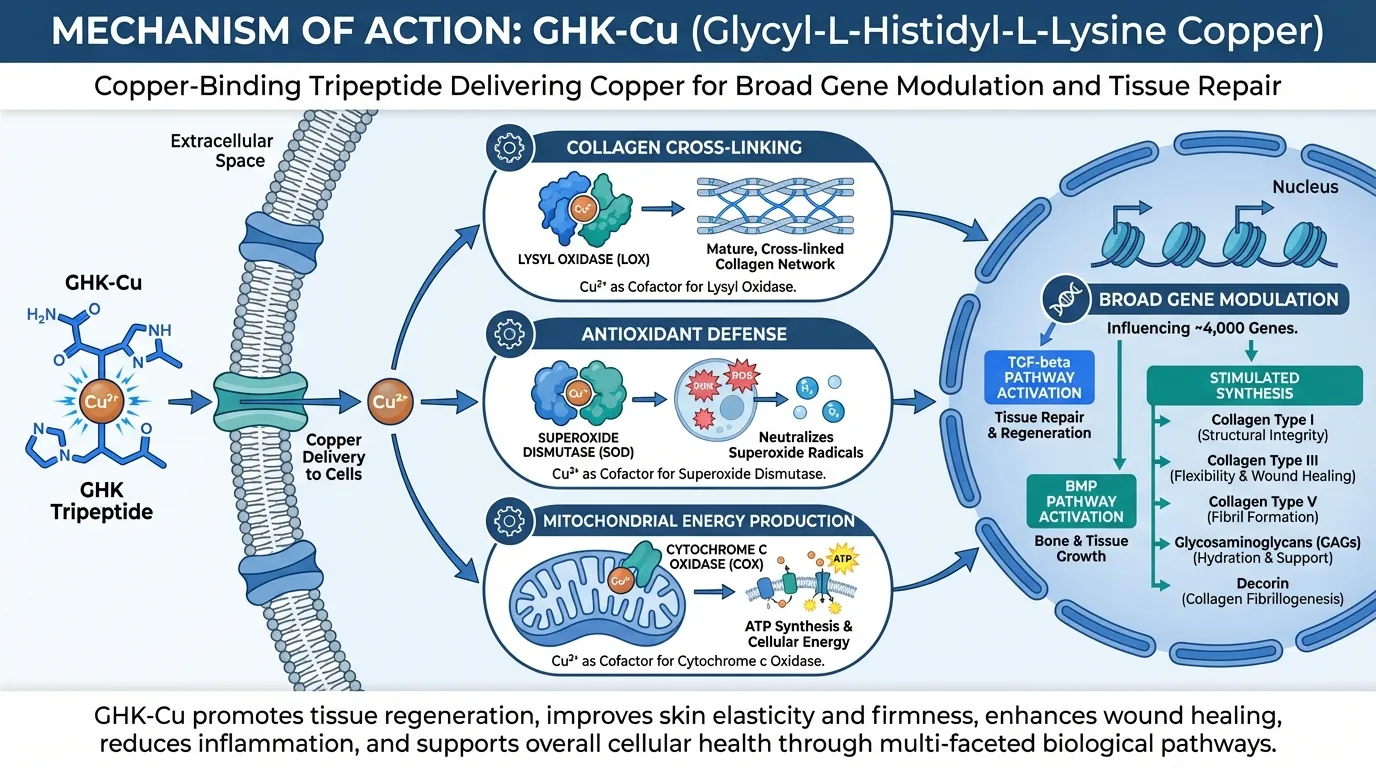
GHK-Cu (glycyl-L-histidyl-L-lysine:copper(II)) functions primarily through its copper-chelating properties and broad gene-modulatory effects. Research has identified that GHK-Cu modulates approximately 4,000 human genes, representing roughly 6% of the human genome. Many of these genes are involved in tissue remodeling, inflammation, and cellular defense mechanisms.
The peptide stimulates the synthesis of collagen types I, III, and V, as well as glycosaminoglycans, decorin, and other extracellular matrix components essential for tissue structure. GHK-Cu activates TGF-beta superfamily signaling and bone morphogenetic protein (BMP) pathways, promoting tissue remodeling and repair.
Its copper delivery function is biologically significant because copper is a cofactor for lysyl oxidase (essential for collagen cross-linking), superoxide dismutase (antioxidant defense), and cytochrome c oxidase (mitochondrial energy production). By delivering copper to tissues, GHK-Cu supports multiple enzymatic processes simultaneously.
Dosing Comparison#
BPC-157 Dosing#
In preclinical research, BPC-157 has been studied across a range of administration routes:
- Subcutaneous injection: Typical research doses range from 200-800 mcg/day in human-equivalent calculations
- Oral administration: BPC-157 shows stability in gastric acid, with studies demonstrating oral bioavailability
- Local injection: Site-specific injection near injury areas has been used in tendon and ligament studies
- Intraperitoneal: Common route in rodent studies at doses of 10 mcg/kg to 10 ng/kg
BPC-157 is typically reconstituted from lyophilized powder with bacteriostatic water for injection protocols. Its relative stability across pH ranges is notable among peptides.
GHK-Cu Dosing#
GHK-Cu offers more diverse administration options:
- Topical application: Most common route; commercially available in creams and serums at concentrations of 1-3%
- Subcutaneous injection: Research doses typically 100-200 mcg administered locally
- Iontophoresis: Electrical delivery through skin has been studied for enhanced penetration
- Microneedling combination: Topical application combined with microneedling for deeper delivery
The topical availability of GHK-Cu makes it significantly more accessible than BPC-157 for surface-level applications. No reconstitution is needed for topical formulations.
Side Effects Comparison#
BPC-157 Side Effects#
BPC-157 has demonstrated a favorable safety profile in preclinical studies. Across hundreds of animal studies, serious adverse effects have not been commonly reported. The peptide does not appear to affect blood pressure, heart rate, or standard laboratory values in studied animal models.
Potential considerations include:
- Theoretical concern about promoting angiogenesis in existing tumors (not demonstrated but mechanistically plausible)
- Possible interactions with dopaminergic medications
- Limited human safety data due to absence of completed clinical trials
GHK-Cu Side Effects#
GHK-Cu has an established safety profile, particularly for topical use:
- Topical formulations are generally well-tolerated with low irritation potential
- Allergic reactions are rare but possible, particularly in individuals with copper sensitivity
- Injection site reactions (redness, swelling) can occur with subcutaneous administration
- No significant systemic side effects reported at standard research doses
The extensive commercial use of GHK-Cu in cosmetic products provides a broader real-world safety dataset compared to BPC-157.
Research Evidence Comparison#
BPC-157 Research#
BPC-157 has an extensive preclinical research base with over 100 published studies. Key areas of investigation include:
- Gastrointestinal: Demonstrated protection against NSAID-induced ulcers, inflammatory bowel disease models, and esophageal damage in multiple animal studies
- Musculoskeletal: Accelerated healing of transected Achilles tendons, quadriceps muscles, and medial collateral ligaments in rat models
- Neurological: Neuroprotective effects in models of traumatic brain injury, nerve crush injury, and dopaminergic system damage
- Organ protection: Hepatoprotective, cardioprotective, and nephroprotective effects demonstrated in various toxicity models
The primary limitation is that all evidence comes from animal models. No completed randomized controlled human clinical trials have been published as of early 2026.
GHK-Cu Research#
GHK-Cu research spans both laboratory and limited human studies:
- Wound healing: Accelerated wound closure in animal models and small human studies
- Skin rejuvenation: Human studies demonstrating improved skin thickness, elasticity, and collagen density with topical application
- Hair growth: Studies showing increased hair follicle size and proliferation
- Gene modulation: Comprehensive genomic studies mapping its effects on ~4,000 genes
- Anti-fibrotic effects: Research suggesting reduction of scar tissue formation
GHK-Cu benefits from some human data in dermatological applications and a longer history of commercial use, though large-scale clinical trials remain limited.
Key Differences Summary#
- Origin: BPC-157 is derived from gastric juice protein; GHK-Cu is a naturally occurring plasma peptide
- Size: BPC-157 is a 15-amino acid peptide (1419.53 Da); GHK-Cu is a tripeptide-copper complex (403.93 Da)
- Primary target tissue: BPC-157 targets deep tissues (GI, musculoskeletal, neurological); GHK-Cu targets skin and surface tissues
- Administration: BPC-157 typically requires injection; GHK-Cu is effective topically
- Metal involvement: GHK-Cu specifically involves copper delivery; BPC-157 does not involve metal cofactors
- Commercial availability: GHK-Cu is widely available in cosmetic products; BPC-157 is primarily a research compound
- Evidence quality: Both lack large human clinical trials, but GHK-Cu has more human data for skin applications
Conclusion#
BPC-157 and GHK-Cu serve complementary rather than competing roles in tissue healing research. BPC-157 appears better suited for systemic and deep tissue applications, particularly gastrointestinal protection, musculoskeletal repair, and neuroprotection, where its multi-pathway mechanism of action addresses complex healing processes. GHK-Cu excels in dermatological and surface tissue applications, where its topical bioavailability, established safety profile, and collagen-stimulating properties offer practical advantages.
Researchers and clinicians should consider the specific tissue target, desired route of administration, and available evidence base when evaluating these peptides. Both require further human clinical trials to fully establish their therapeutic potential, though GHK-Cu's existing commercial use in dermatology provides some real-world validation of its skin-related applications.
Further Reading#

Which Is Better For...
Gut and GI Protection
BPC-157
BPC-157 is derived from gastric juice proteins and has extensive preclinical data showing gastroprotective effects, ulcer healing, and intestinal barrier repair
Skin Anti-Aging
GHK-Cu
GHK-Cu stimulates collagen and elastin synthesis, is commercially available in topical formulations, and has human data supporting skin improvement
Tendon and Ligament Repair
BPC-157
BPC-157 shows strong preclinical evidence for accelerating tendon-to-bone healing, ligament repair, and muscle injury recovery
Hair Growth Stimulation
GHK-Cu
GHK-Cu has demonstrated ability to stimulate hair follicle growth and increase hair follicle size in research studies
Broad Tissue Protection
BPC-157
BPC-157 demonstrates protective effects across liver, brain, heart, and gut tissues in preclinical models, offering wider systemic coverage
Wound Healing (Topical)
GHK-Cu
GHK-Cu can be applied topically for wound healing, making it more practical for surface-level tissue repair without injection
Continue Your Research
Get comparison updates
We publish new head-to-head comparisons regularly. Subscribe to see them first.
Frequently Asked Questions About BPC-157 vs GHK-Cu: Comprehensive Comparison
What are the key differences between BPC-157 and GHK-Cu?
The main differences across comparison categories are: Mechanism of Action: advantage goes to neither (tie); Research Evidence: advantage goes to BPC-157; Side Effect Profile: advantage goes to GHK-Cu. 3 additional categories are analyzed in the full comparison. Each category evaluates a different dimension of the two peptides.
When should I consider BPC-157 over GHK-Cu?
For the scenario of "Gut and GI Protection," research data suggests BPC-157 may be more relevant. BPC-157 is derived from gastric juice proteins and has extensive preclinical data showing gastroprotective effects, ulcer healing, and intestinal barrier repair. This is based on currently available evidence and individual circumstances may differ.
How do BPC-157 and GHK-Cu differ in their mechanisms of action?
BPC-157: Promotes angiogenesis, modulates nitric oxide system, upregulates growth factor receptors, and activates FAK-paxillin pathway for tissue repair. GHK-Cu: Chelates copper(II) ions, stimulates collagen/glycosaminoglycan synthesis, modulates ~4,000 human genes, and activates TGF-beta/BMP pathways.
Which has fewer side effects, BPC-157 or GHK-Cu?
In terms of side effects and tolerability, the advantage goes to GHK-Cu. BPC-157: Well-tolerated in animal studies with minimal reported adverse effects. GHK-Cu: Generally well-tolerated; topical formulations have established safety profiles in cosmetic use.
Medical Disclaimer
This website is for educational and informational purposes only. The information provided is not intended to diagnose, treat, cure, or prevent any disease. Always consult with a qualified healthcare professional before using any peptide or supplement.