Top 10 Peptides for Muscle Recovery and Growth: Evidence-Based Research Guide

Introduction#
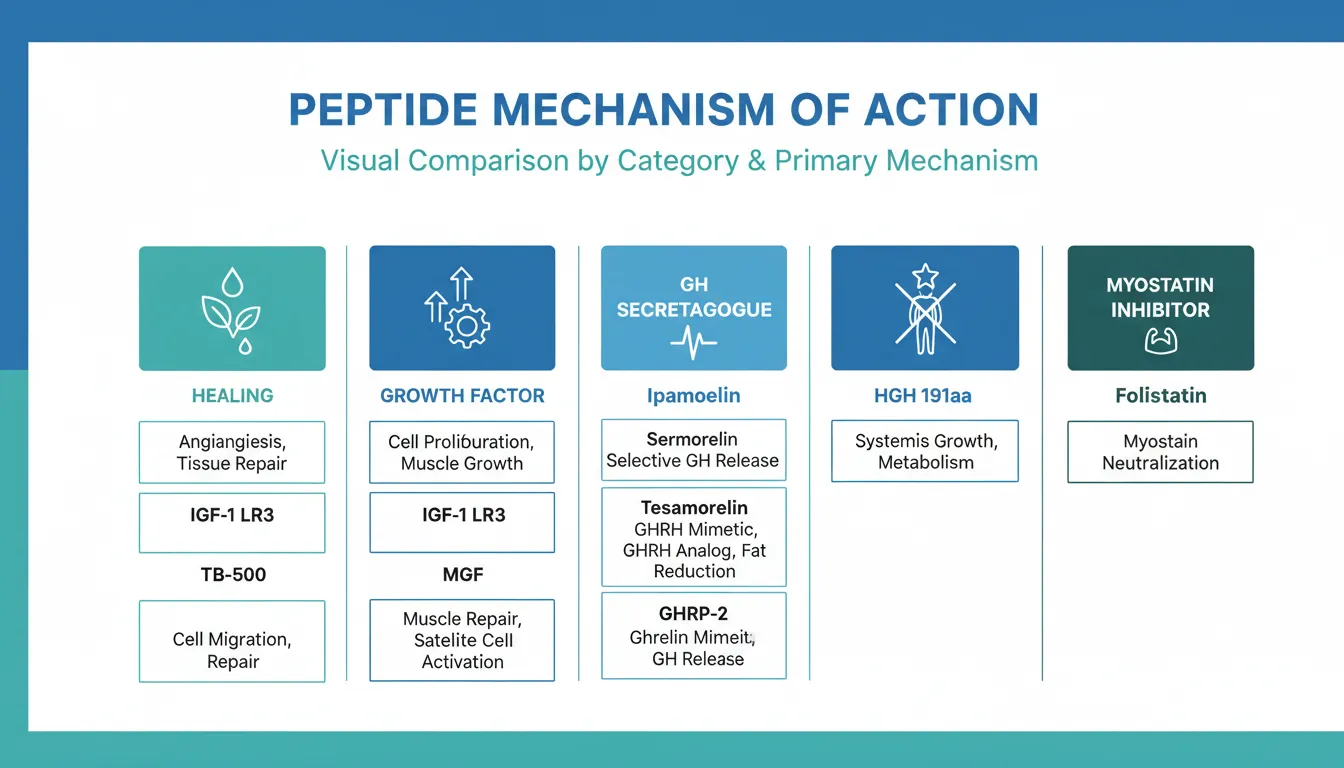
Peptides related to muscle recovery and growth represent one of the most actively researched areas in peptide science. From growth hormone secretagogues that stimulate the body's own anabolic hormones to growth factors that directly activate muscle satellite cells, the range of peptides investigated for musculoskeletal applications spans multiple categories and mechanisms.
This guide examines the 10 most studied peptides for muscle recovery and growth, evaluating each on the strength of its evidence base, mechanism of action, and relevance to muscle biology. We distinguish clearly between FDA-approved compounds with extensive clinical data, investigational peptides with human trial results, and preclinical compounds with only animal or cell culture evidence. Understanding these distinctions is critical for evaluating the realistic potential of each compound.
For a foundational understanding of peptide categories, see our guide on understanding peptide categories. For background on how peptides work, visit what are peptides.
How Peptides Affect Muscle Recovery and Growth#
Before examining individual peptides, it helps to understand the key biological pathways involved in muscle recovery and hypertrophy:
Growth hormone / IGF-1 axis: Growth hormone (GH) stimulates the liver to produce IGF-1, which in turn drives muscle protein synthesis, satellite cell proliferation, and anabolic signaling through PI3K/Akt/mTOR pathways. Several peptides on this list work by stimulating GH release or mimicking IGF-1 signaling.
Satellite cell activation: Muscle satellite cells are stem cells that reside between the muscle fiber membrane and the basal lamina. When activated by damage or growth signals, they proliferate, differentiate, and fuse with existing muscle fibers to support repair and hypertrophy. Growth factors like IGF-1, MGF, and myostatin inhibitors all influence this process.
Angiogenesis and tissue repair: Adequate blood supply is essential for muscle recovery. Peptides that promote new blood vessel formation (angiogenesis) and accelerate tissue repair can support faster recovery from exercise-induced muscle damage or injury.
Myostatin inhibition: Myostatin (GDF-8) is the primary negative regulator of muscle mass. Compounds that inhibit myostatin signaling remove this brake on muscle growth, allowing greater hypertrophic response.
1. BPC-157 -- The Tissue Repair Peptide#
Category: Healing | Research status: Preclinical | Evidence level: Extensive animal data, no human clinical trials
BPC-157 (Body Protection Compound-157) is a 15-amino acid peptide derived from human gastric juice proteins with over 100 published preclinical studies demonstrating tissue repair effects across multiple tissue types.
Mechanism for Muscle Recovery#
BPC-157 promotes muscle healing through several interconnected mechanisms:
- Upregulation of VEGF (vascular endothelial growth factor) promoting angiogenesis at injury sites
- Activation of the FAK-paxillin pathway essential for cell migration during repair
- Modulation of the nitric oxide system supporting vascular function
- Growth factor receptor upregulation (EGF, FGF, HGF receptors)
Key Research#
In rodent models, BPC-157 has accelerated healing of transected quadriceps muscles, crushed muscles, and denervated muscle tissue. It has also demonstrated protective effects against muscle damage from NSAIDs and corticosteroids. Studies show accelerated tendon-to-bone healing in rotator cuff models and faster Achilles tendon repair, which are directly relevant to musculoskeletal recovery.
Evidence Assessment#
BPC-157 has the broadest preclinical evidence base of any healing peptide, but all data comes from animal models. No completed randomized controlled human clinical trials have been published. The consistency across dozens of independent studies is notable, but the translation to human outcomes remains unconfirmed.
2. TB-500 (Thymosin Beta-4) -- The Cell Migration Peptide#
Category: Healing | Research status: Phase 2 | Evidence level: Preclinical + some human trial data
TB-500 is a synthetic version of thymosin beta-4, a naturally occurring 43-amino acid peptide present in virtually all human and animal cells. It has been investigated in Phase 2 clinical trials for dermal wounds, corneal injuries, and cardiac repair.
Mechanism for Muscle Recovery#
TB-500 promotes tissue repair primarily through:
- G-actin sequestration, which regulates cytoskeletal dynamics and enables cell migration to injury sites
- Promotion of angiogenesis and new blood vessel formation
- Anti-inflammatory effects through inhibition of NF-kB signaling
- Upregulation of laminin-5, which promotes cell adhesion and wound repair
Key Research#
Animal studies demonstrate that TB-500 accelerates wound healing, promotes cardiac repair after ischemic injury, and supports muscle tissue recovery. The RGN-259 formulation (a synthetic thymosin beta-4 eye drop) reached Phase 3 clinical trials for dry eye disease, demonstrating the peptide's regenerative properties in human tissue. Equine studies have shown improved recovery from tendon injuries, contributing to TB-500's reputation in sports medicine research.
Evidence Assessment#
TB-500 has an advantage over purely preclinical peptides in that thymosin beta-4 has entered human clinical trials, providing some human safety and efficacy data. However, most muscle-specific evidence comes from animal models.
3. IGF-1 LR3 -- The Enhanced Growth Factor#
Category: Growth Factor | Research status: Preclinical | Evidence level: Extensive in vitro and animal data
IGF-1 LR3 (Long R3 Insulin-like Growth Factor-1) is an 83-amino acid modified version of endogenous IGF-1 with an arginine substitution at position 3 and a 13-amino acid N-terminal extension. These modifications dramatically reduce binding to IGF binding proteins (IGFBPs), resulting in greatly enhanced bioavailability and potency.
Mechanism for Muscle Growth#
IGF-1 LR3 directly activates the IGF-1 receptor (IGF-1R), triggering:
- PI3K/Akt/mTOR pathway activation for muscle protein synthesis
- MAPK/ERK pathway stimulation for cell proliferation
- Satellite cell activation, proliferation, and differentiation into myoblasts
- Inhibition of protein degradation pathways (reduced FoxO-mediated atrophy genes)
Key Research#
IGF-1 LR3 is one of the most potent stimulators of cell proliferation and is widely used in cell culture and bioprocessing for this reason. In muscle biology research, IGF-1 signaling is established as a primary driver of muscle hypertrophy. Overexpression of IGF-1 in mouse skeletal muscle produces significant muscle hypertrophy and prevents age-related muscle loss. The LR3 variant's enhanced bioavailability makes it approximately 2-3 times more potent than native IGF-1 in cellular assays.
Evidence Assessment#
IGF-1 biology is among the most well-characterized in muscle physiology, with thousands of studies establishing its role in muscle growth and repair. However, most research with the LR3 variant specifically is in vitro or in animal models. Safety considerations include the theoretical concern about promoting cell growth in individuals with pre-existing malignancies due to IGF-1's mitogenic properties.
4. MGF (Mechano Growth Factor) -- The Exercise-Induced Repair Signal#
Category: Growth Factor | Research status: Preclinical | Evidence level: Moderate animal and cell culture data
MGF (Mechano Growth Factor) is a 24-amino acid peptide corresponding to the unique C-terminal E-domain of the IGF-1Ec splice variant. Unlike systemic IGF-1, MGF is expressed locally in muscle tissue specifically in response to mechanical loading and muscle damage.
Mechanism for Muscle Recovery#
MGF's role in muscle recovery is distinct from other IGF-1 variants:
- Activates muscle satellite cells, initiating the repair cascade after exercise-induced damage
- Expressed locally at the site of muscle damage rather than circulating systemically
- Acts as an early-response factor, with expression peaking within hours of mechanical loading
- Promotes satellite cell proliferation without immediately driving differentiation, expanding the available repair cell pool
Key Research#
Research has shown that MGF mRNA expression increases significantly in human skeletal muscle following resistance exercise, particularly in the early recovery phase. Animal studies demonstrate that MGF administration can enhance muscle repair in damage models and activate satellite cells. The PEGylated form (PEG-MGF) has an extended half-life compared to native MGF, which degrades rapidly in circulation.
Evidence Assessment#
MGF's biological role in exercise-induced muscle repair is well-established through gene expression studies in humans, but the efficacy of exogenous MGF peptide administration is less well-characterized. The distinction between endogenous MGF expression (proven to occur after exercise) and exogenous administration (less studied) is important.
5. Ipamorelin -- The Selective GH Secretagogue#
Category: Growth Hormone Secretagogue | Research status: Phase 2 | Evidence level: Human clinical trial data available
Ipamorelin is a synthetic pentapeptide that selectively stimulates growth hormone release via the ghrelin receptor (GHS-R1a). It is notable for its selectivity: it produces dose-dependent GH release without significantly elevating cortisol, ACTH, or prolactin at effective doses.
Mechanism for Muscle Recovery#
Ipamorelin supports muscle recovery indirectly through GH-mediated pathways:
- Stimulates endogenous GH release from the anterior pituitary
- GH in turn stimulates hepatic IGF-1 production
- The GH/IGF-1 axis promotes muscle protein synthesis, lipolysis, and recovery
- Preserves physiological pulsatile GH secretion patterns
Key Research#
Phase 1 and 2 clinical trials have demonstrated dose-dependent GH release in humans. In postoperative ileus studies, ipamorelin showed improvements in GI recovery and feeding behavior. Ipamorelin's selectivity for GH release (without cortisol or prolactin elevation) is well-documented in swine and human studies. When combined with GHRH-pathway peptides like sermorelin, synergistic GH release 2-3 times greater than either agent alone has been observed in preclinical models.
Evidence Assessment#
Ipamorelin has the advantage of human clinical trial data confirming its pharmacological action (GH release). However, the direct muscle-specific outcomes of ipamorelin administration have not been evaluated in published human trials. The muscle recovery benefit is inferred from its GH-stimulating action and the established role of GH in muscle biology.
6. Sermorelin -- The GHRH Analog#
Category: Growth Hormone Secretagogue | Research status: Previously FDA-approved (discontinued for commercial reasons) | Evidence level: Extensive human data
Sermorelin is a synthetic 29-amino acid peptide corresponding to the first 29 amino acids of human growth hormone-releasing hormone (GHRH). It was previously FDA-approved (as Geref) for diagnostic testing and treatment of growth hormone deficiency in children.
Mechanism for Muscle Recovery#
Sermorelin stimulates GH release through the GHRH receptor pathway:
- Directly activates GHRH receptors on pituitary somatotroph cells
- Triggers GH release that follows natural pulsatile patterns
- Preserves negative feedback regulation (unlike exogenous GH administration)
- The resulting GH/IGF-1 elevation supports protein synthesis and recovery
Key Research#
Sermorelin has been studied extensively in human trials for GH deficiency. Studies in aging adults have demonstrated that sermorelin can increase GH secretion, improve body composition (increased lean mass, decreased fat mass), and enhance sleep quality. Its safety profile is well-characterized from clinical use, including in pediatric populations.
Evidence Assessment#
Sermorelin has the strongest human evidence base of any GH secretagogue for body composition effects. Its previous FDA approval (discontinued for commercial, not safety, reasons) provides additional confidence in its safety profile. For muscle recovery specifically, evidence is indirect through GH-mediated mechanisms.
7. Follistatin -- The Myostatin Inhibitor#
Category: Musculoskeletal | Research status: Phase 1/3 (gene therapy) | Evidence level: Human gene therapy trial data
Follistatin is a naturally occurring glycoprotein that binds and neutralizes members of the TGF-beta superfamily, particularly myostatin (GDF-8) and activin. By inhibiting myostatin -- the primary negative regulator of muscle mass -- follistatin removes the biological brake on muscle growth.
Mechanism for Muscle Growth#
Follistatin promotes muscle growth through myostatin inhibition:
- Binds and neutralizes circulating myostatin, preventing it from activating its receptor (ActRIIB)
- Also inhibits activin A and other TGF-beta family members that suppress muscle growth
- The removal of myostatin signaling allows enhanced satellite cell proliferation and muscle fiber hypertrophy
- Animal models with follistatin overexpression show dramatic (2-3x) increases in muscle mass
Key Research#
Gene therapy clinical trials using AAV-delivered follistatin have been conducted for Becker muscular dystrophy (BMD) and inclusion body myositis (IBM). In the Mendell et al. IBM trial, AAV1-FS344 gene therapy showed improvements in walking distance (6-minute walk test) at 6 months in a small cohort. Follistatin's mechanism is validated by the natural experiment of myostatin-null animals (Belgian Blue cattle, myostatin knockout mice), which show extreme muscle hypertrophy.
Evidence Assessment#
Follistatin has strong mechanistic validation and human gene therapy trial data. However, exogenous follistatin peptide has challenges with short half-life and delivery. Most human data comes from gene therapy (continuous expression) rather than peptide administration. The myostatin inhibition mechanism is one of the most powerful known drivers of muscle growth.
8. HGH 191aa -- Recombinant Human Growth Hormone#
Category: Growth Hormone | Research status: FDA-approved | Evidence level: Extensive human clinical data
HGH 191aa is recombinant human growth hormone, identical to the endogenous 191-amino acid protein produced by the anterior pituitary. Multiple FDA-approved formulations exist for various indications.
Mechanism for Muscle Recovery#
Exogenous GH directly activates growth hormone receptors:
- Stimulates hepatic and local IGF-1 production
- Promotes muscle protein synthesis via GH receptor and downstream JAK/STAT signaling
- Enhances lipolysis (fat breakdown) for energy partitioning favoring lean mass
- Supports connective tissue repair (collagen synthesis)
- Improves nitrogen retention and amino acid uptake in muscle
Key Research#
Decades of clinical data establish GH's effects on body composition, including increased lean mass and decreased fat mass. Studies in GH-deficient adults consistently demonstrate improvements in muscle mass, exercise capacity, and body composition with GH replacement. In elderly populations, GH administration has shown modest increases in lean body mass, though the translation to functional strength gains is debated.
Evidence Assessment#
HGH has the strongest clinical evidence of any compound on this list, with FDA approval and decades of human data. However, GH therapy has significant cost, requires daily injections, and carries side effects including fluid retention, joint pain, carpal tunnel syndrome, and potential effects on glucose metabolism. It is a controlled substance in many jurisdictions and is prohibited in competitive sports.
9. Tesamorelin -- The FDA-Approved GHRH Analog#
Category: Growth Hormone Secretagogue | Research status: FDA-approved | Evidence level: Phase 3 human clinical trial data
Tesamorelin (Egrifta) is a synthetic 44-amino acid GHRH analog approved by the FDA for reduction of excess visceral abdominal fat in HIV-infected patients with lipodystrophy. It is the only FDA-approved growth hormone secretagogue.
Mechanism for Muscle Recovery#
Tesamorelin stimulates endogenous GH release through the GHRH receptor:
- Produces robust, pulsatile GH elevation
- The resulting GH/IGF-1 signaling supports protein synthesis and body composition
- Clinical trials demonstrate significant visceral fat reduction (-15% to -18%) and improved trunk fat distribution
- Maintains physiological GH feedback regulation
Key Research#
Phase 3 clinical trials in HIV-associated lipodystrophy demonstrated significant reductions in visceral adipose tissue, improvements in triglyceride levels, and favorable changes in body composition. These body composition changes reflect the anabolic and lipolytic effects of GH stimulation. Tesamorelin has a well-characterized safety profile from regulatory-grade clinical trials.
Evidence Assessment#
Tesamorelin has the advantage of FDA approval and Phase 3 clinical data. While approved specifically for HIV lipodystrophy, its mechanism of action (GH stimulation) has broader relevance to body composition and potentially muscle recovery. It is one of the few GH secretagogues with regulatory-quality human data.
10. GHRP-2 -- The Ghrelin Receptor Agonist#
Category: Growth Hormone Secretagogue | Research status: Phase 2 | Evidence level: Human clinical trial data available
GHRP-2 (pralmorelin) is a synthetic hexapeptide that acts as a potent ghrelin receptor (GHS-R1a) agonist, triggering rapid GH release from the pituitary within 15-30 minutes of administration.
Mechanism for Muscle Recovery#
GHRP-2 supports muscle recovery through GH-mediated pathways:
- Potent GH secretagogue producing sharp GH pulses that exceed natural peaks
- Stimulates appetite through ghrelin-pathway activation, supporting caloric intake for recovery
- Synergistic with GHRH-pathway agents (combining GHRP-2 with sermorelin produces 2-3x greater GH release)
- Some studies suggest direct effects on body composition beyond GH-mediated mechanisms
Key Research#
GHRP-2 has been studied in Phase 2 clinical trials and as a diagnostic tool for GH deficiency testing. Human studies confirm dose-dependent GH release. Unlike ipamorelin, GHRP-2 also stimulates cortisol and prolactin release at higher doses, reflecting its less selective receptor profile. The appetite-stimulating effect through the ghrelin pathway can support nutritional recovery in catabolic states.
Evidence Assessment#
GHRP-2 has human pharmacological data confirming GH release but is less selective than ipamorelin. The broader hormonal effects (cortisol, prolactin elevation) may be undesirable depending on the research context. For muscle recovery purposes, it represents a well-characterized GH secretagogue with decades of research history.
Comparison Table#
| Rank | Peptide | Category | Evidence Level | Mechanism | Key Advantage |
|---|---|---|---|---|---|
| 1 | BPC-157 | Healing | Preclinical (extensive) | Angiogenesis, growth factor upregulation | Broadest preclinical healing data |
| 2 | TB-500 | Healing | Phase 2 | Actin regulation, cell migration | Some human trial data |
| 3 | IGF-1 LR3 | Growth Factor | Preclinical | Direct IGF-1R activation, protein synthesis | Most potent IGF-1 analog |
| 4 | MGF | Growth Factor | Preclinical | Satellite cell activation | Exercise-specific repair signal |
| 5 | Ipamorelin | GH Secretagogue | Phase 2 | Selective GH release | GH release without cortisol elevation |
| 6 | Sermorelin | GH Secretagogue | Previously approved | GHRH receptor activation | Extensive human safety data |
| 7 | Follistatin | Musculoskeletal | Phase 1/3 (gene therapy) | Myostatin inhibition | Most powerful myostatin inhibitor |
| 8 | HGH 191aa | Growth Hormone | FDA-approved | Direct GH receptor activation | Strongest clinical evidence |
| 9 | Tesamorelin | GH Secretagogue | FDA-approved | GHRH receptor stimulation | FDA-approved, Phase 3 data |
| 10 | GHRP-2 | GH Secretagogue | Phase 2 | Ghrelin receptor agonism | Potent GH release, appetite stimulation |
How to Evaluate These Peptides#
When assessing peptides for muscle recovery and growth research, consider these factors:
Evidence Hierarchy#
- FDA-approved with clinical trial data (HGH, tesamorelin): Strongest evidence base
- Human clinical trials published (ipamorelin, GHRP-2, TB-500, sermorelin): Moderate evidence with human pharmacological data
- Preclinical only (BPC-157, IGF-1 LR3, MGF): Promising animal data but unconfirmed in humans
Direct vs. Indirect Mechanisms#
- Direct muscle effects: IGF-1 LR3, MGF, follistatin act directly on muscle tissue
- Indirect via GH/IGF-1 axis: Ipamorelin, sermorelin, GHRP-2, tesamorelin stimulate GH, which then drives muscle effects
- Tissue repair/recovery: BPC-157, TB-500 promote healing of damaged muscle and connective tissue
Practical Considerations#
- Regulatory status: Only HGH and tesamorelin are FDA-approved; others are investigational or research-only
- Administration route: Most require subcutaneous injection; follistatin requires gene therapy for sustained effects
- Safety profile: FDA-approved compounds have the best-characterized safety data
- Cost and accessibility: Varies dramatically across compounds
Conclusion#
The peptides most studied for muscle recovery and growth span a range from FDA-approved therapeutics with decades of clinical data to preclinical research compounds with compelling but unconfirmed animal evidence. The field breaks down into three main approaches: direct growth factor signaling (IGF-1 LR3, MGF, follistatin), GH axis stimulation (ipamorelin, sermorelin, GHRP-2, tesamorelin, HGH), and tissue repair promotion (BPC-157, TB-500).
The most important distinction for anyone evaluating these compounds is the evidence level. HGH 191aa and tesamorelin have FDA approval and extensive Phase 3 clinical data. Ipamorelin, sermorelin, and GHRP-2 have human pharmacological data confirming their mechanisms. BPC-157, IGF-1 LR3, and MGF have preclinical data only. Follistatin occupies a unique position with gene therapy trial data but limited peptide administration studies.
Preclinical results, no matter how consistent, do not guarantee human efficacy. The translation from animal models to human clinical outcomes has a high failure rate across all areas of drug development. Readers should weigh the evidence accordingly and consult qualified healthcare providers for clinical decisions.
For more on peptide therapy fundamentals, see our guide on what is peptide therapy. To explore individual compounds in depth, visit our peptide directory. For dosing information, see our dosing calculator and individual peptide dosing pages.
Related Peptide Profiles#
Learn more about the peptides discussed in this article:
- BPC-157 Overview and Research Guide
- BPC-157 Dosing Protocols
- BPC-157 Side Effects and Safety
- TB-500 Overview and Research Guide
- TB-500 Dosing Protocols
- TB-500 Side Effects and Safety
- IGF-1 LR3 Overview and Research Guide
- IGF-1 LR3 Dosing Protocols
- IGF-1 LR3 Side Effects and Safety
- MGF Overview and Research Guide
- MGF Dosing Protocols
- MGF Side Effects and Safety
- Ipamorelin Overview and Research Guide
- Ipamorelin Dosing Protocols
- Ipamorelin Side Effects and Safety
- Sermorelin Overview and Research Guide
- Sermorelin Dosing Protocols
- Sermorelin Side Effects and Safety
- Follistatin Overview and Research Guide
- Follistatin Dosing Protocols
- Follistatin Side Effects and Safety
- HGH 191aa Overview and Research Guide
- HGH 191aa Dosing Protocols
- HGH 191aa Side Effects and Safety
- Tesamorelin Overview and Research Guide
- Tesamorelin Dosing Protocols
- Tesamorelin Side Effects and Safety
- GHRP-2 Overview and Research Guide
- GHRP-2 Dosing Protocols
- GHRP-2 Side Effects and Safety

Frequently Asked Questions About Top 10 Peptides for Muscle Recovery and Growth: Evidence-Based Research Guide
What does this article cover?
The 10 most studied peptides for muscle recovery and growth, including BPC-157, TB-500, IGF-1 LR3, ipamorelin, and follistatin, with mechanisms, evidence levels, and key research data. This guide is for educational purposes only and does not constitute medical advice.
Which peptides are discussed in this article?
This article covers BPC-157, TB-500, IGF-1 LR3, MGF, Ipamorelin, Sermorelin, Follistatin, HGH 191aa, Tesamorelin, GHRP-2. Key context: BPC-157 (Healing peptide with extensive preclinical evidence for muscle and tendon repair through angiogen...); TB-500 (Thymosin beta-4 derivative studied for tissue repair, cell migration, and muscle recovery through...); IGF-1 LR3 (Modified growth factor with enhanced bioavailability that directly stimulates muscle protein synt...). Each peptide is discussed based on available research evidence.
Who is this guide written for?
This guide is written for researchers and individuals seeking an evidence-based overview of the topic covered in "Top 10 Peptides for Muscle Recovery and Growth: Evidence-Based Research Guide." It summarizes available research data without making treatment recommendations. Always consult a healthcare provider for medical decisions.
What are the key takeaways from this article?
The main findings covered in this article include: Healing peptide with extensive preclinical evidence for muscle and tendon repair through angiogen.... Thymosin beta-4 derivative studied for tissue repair, cell migration, and muscle recovery through.... Modified growth factor with enhanced bioavailability that directly stimulates muscle protein synt.... These takeaways are based on the research data available at the time of publication.
What is BPC-157 and why is it significant?
BPC-157 is a peptide discussed in this article because: Healing peptide with extensive preclinical evidence for muscle and tendon repair through angiogenesis and growth factor upregulation. For a complete profile of BPC-157, see the dedicated peptide page on this site.
Continue reading this research review
Free access to the complete analysis with citations and evidence ratings.
150+ peptide profiles · 30+ comparisons · 18 research tools
Medical Disclaimer
This website is for educational and informational purposes only. The information provided is not intended to diagnose, treat, cure, or prevent any disease. Always consult with a qualified healthcare professional before using any peptide or supplement.
Join 2,000+ researchers getting biweekly updates
Enjoyed this article?
The Research Briefing delivers deep-dives like this biweekly — plus new study breakdowns, safety updates, and tool announcements.
Free forever. No spam. Unsubscribe in one click.
Where to Find These Peptides
Continue Exploring
Peptide Profiles
Keep Reading
Best Growth Hormone Peptides Ranked: 2026 Evidence-Based Guide
A ranked comparison of 8 growth hormone secretagogues and related peptides — from FDA-approved tesamorelin to IGF-1 LR3 — evaluating each on mechanism of action, clinical evidence strength, key advantages, and known drawbacks.
Peptide Stacking Guide 2026: Best Combinations by Goal
The definitive 2026 guide to peptide stacking organized by goal. Fat loss, muscle growth, healing, anti-aging, and cognitive stacks with evidence levels, dosing timing, and safety considerations.
Peptide Stacking Safety: Synergies, Interactions, and Protocol Design
A safety-focused guide to combining peptides — covering known synergistic combinations, contraindicated pairings, timing and administration principles, recommended bloodwork monitoring, and red flags to watch for during stacked protocols.
You Might Also Like
Related content you may find interesting