The Complete Guide to Peptide Stacks: Popular Combinations Explained

Introduction#
Peptide stacking — the practice of combining two or more peptides in a research protocol — is one of the most discussed topics in the peptide research community. The underlying principle is that peptides acting through complementary mechanisms may produce additive or synergistic effects when used together.
However, there is a critical distinction that researchers must understand: the evidence base for most peptide combinations is significantly thinner than for individual compounds. While the pharmacological rationale for certain combinations is strong, published data specifically studying these combinations in controlled settings is often limited or absent.
This guide covers the most popular peptide stacks, the scientific rationale behind each, what evidence exists (and what does not), and important safety considerations. Use the Stack Checker to evaluate potential peptide combinations for known interactions.
The Science Behind Peptide Stacking#
Synergy vs. Additive Effects#
Not all peptide combinations are created equal. Understanding the difference between synergistic and additive effects helps evaluate the rationale for specific stacks.
Additive effects occur when two compounds produce combined results equal to the sum of their individual effects. If Peptide A produces effect X and Peptide B produces effect Y, the combination produces X + Y.
Synergistic effects occur when the combination produces results greater than the sum of individual effects — the "1 + 1 = 3" principle. This typically happens when compounds activate complementary pathways that amplify each other's signaling cascades.
The most well-documented example of synergy in peptide research involves combining GHRH-pathway and ghrelin-pathway peptides for growth hormone release, where the combined GH output significantly exceeds the sum of individual responses.
Why Combinations May Work#
Several pharmacological principles support combining peptides:
- Complementary receptor activation — targeting different receptors in the same biological system (e.g., GHRH receptor + GHS-R1a for GH release)
- Multi-pathway coverage — addressing different aspects of a complex biological process (e.g., angiogenesis + anti-inflammation for tissue repair)
- Temporal sequencing — one peptide creating conditions that enhance another's effects (e.g., promoting blood vessel formation to improve delivery of repair signals)
- Dose optimization — using lower doses of each compound while achieving equivalent or superior effects through synergy
Popular Healing Stacks#
The Wolverine Stack: BPC-157 + TB-500#
Rationale: Multi-pathway tissue repair Evidence for combination: Primarily theoretical; limited published combination data Popularity: Very high — the most discussed healing peptide combination
The combination of BPC-157 and TB-500 is colloquially known as the "Wolverine Stack" — a reference to the fictional character's regenerative abilities. It is by far the most popular healing peptide combination in the research community.
Why it makes pharmacological sense:
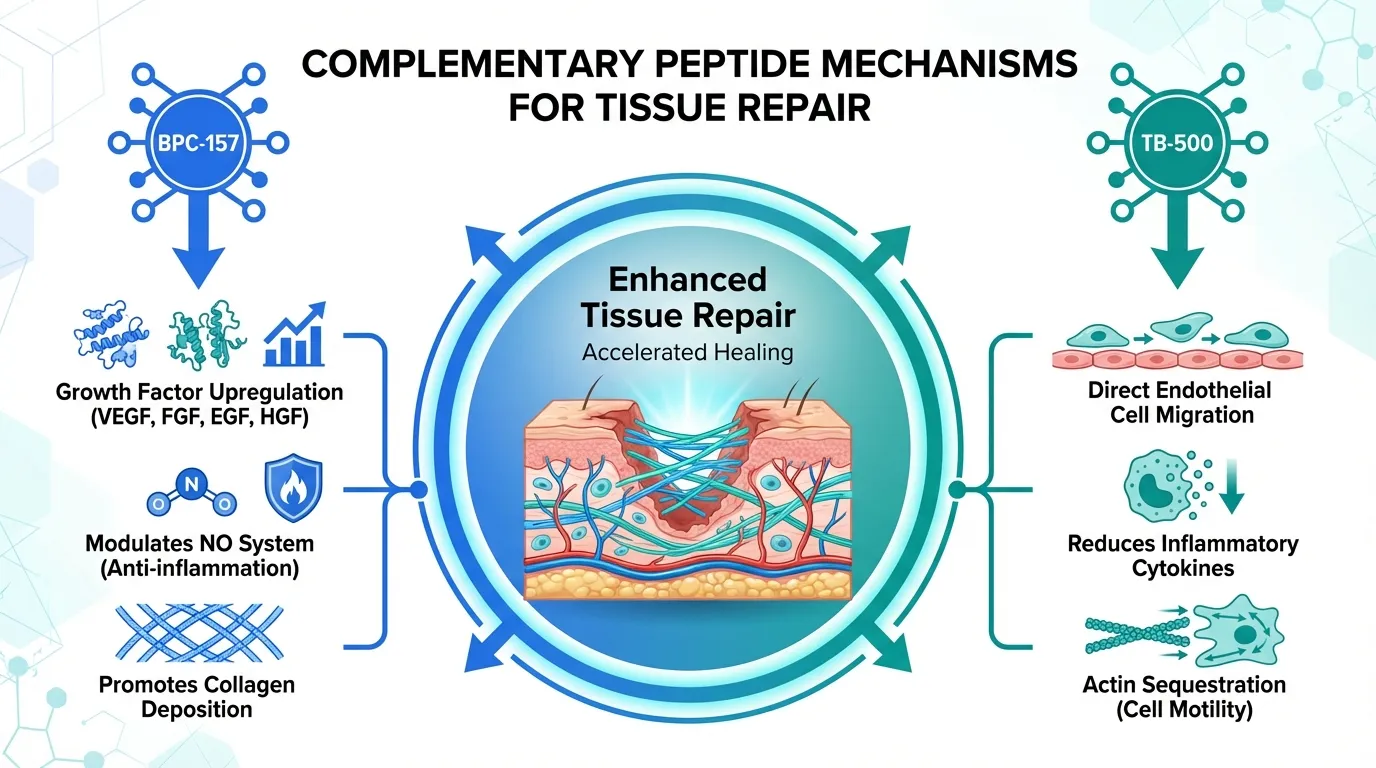
BPC-157 and TB-500 promote tissue repair through distinct mechanisms:
| Mechanism | BPC-157 | TB-500 |
|---|---|---|
| Angiogenesis | VEGF and FGF upregulation | Promotes endothelial cell migration |
| Inflammation | Modulates NO system | Reduces inflammatory cytokines |
| Cell migration | Indirect (via growth factors) | Direct (actin sequestration via thymosin beta-4) |
| Growth factors | Upregulates EGF, FGF, HGF receptors | Promotes laminin-5 for cell adhesion |
| Collagen | Promotes collagen deposition | Promotes matrix metalloproteinase balance |
The theoretical rationale is strong: BPC-157's growth factor upregulation and vasculogenic properties could complement TB-500's direct cell migration and anti-inflammatory effects, providing broader coverage of the tissue repair cascade.
Evidence limitations: No published studies have directly compared BPC-157 + TB-500 in combination against either compound alone in a controlled setting. The combination rationale is based on the independent mechanisms of each peptide, not on combination-specific data.
For a detailed breakdown of these two peptides, see BPC-157 vs TB-500 and our article on the BPC-157 and TB-500 blend.
Healing + Copper Peptide: BPC-157 + TB-500 + GHK-Cu#
Rationale: Extended multi-pathway repair with gene expression modulation Evidence for combination: Theoretical only
Some protocols extend the Wolverine Stack by adding GHK-Cu, a copper-binding tripeptide that modulates the expression of over 4,000 genes involved in tissue remodeling. The rationale is that GHK-Cu's gene expression effects (particularly collagen synthesis, decorin production, and antioxidant gene upregulation) provide a third dimension of repair signaling alongside BPC-157's growth factor effects and TB-500's cell migration properties.
This triple combination has no published research data. It represents an extrapolation from the individual mechanisms of each compound.
Growth Hormone Secretagogue Stacks#
CJC-1295 (No DAC) + Ipamorelin#
Rationale: Synergistic GH release through dual-pathway activation Evidence for combination principle: Strong (GHRH + GHRP synergy is well-documented) Popularity: The most popular GH secretagogue combination
The combination of CJC-1295 (No DAC) and ipamorelin is the most widely studied and discussed GH secretagogue stack. It combines a GHRH-pathway peptide (CJC-1295) with a ghrelin-pathway peptide (ipamorelin).
Why it works:
The GHRH and ghrelin pathways converge on pituitary somatotroph cells through different signaling cascades. GHRH activation increases cAMP (via Gs-coupled receptor), while ghrelin/GHS-R1a activation signals through IP3/DAG (via Gq-coupled receptor). The convergence of these two intracellular signaling pathways on GH gene transcription and secretion produces synergistic rather than merely additive effects.
This synergy has been documented in published research: studies combining GHRH analogs with ghrelin-receptor agonists consistently show GH release exceeding the mathematical sum of individual responses.
Why ipamorelin is preferred: Among ghrelin-pathway peptides, ipamorelin is chosen for combination protocols because of its selectivity — it stimulates GH release without significant cortisol, prolactin, or ACTH elevation. This clean profile is preserved in the combination context.
For more details on this combination, see the CJC-1295 + Ipamorelin Stack guide.
Sermorelin + GHRP-2#
Rationale: Same dual-pathway principle with different selectivity tradeoffs Evidence for combination principle: Strong
Sermorelin paired with GHRP-2 follows the same GHRH + ghrelin pathway logic. The key difference is that GHRP-2 produces more robust GH release than ipamorelin but with greater cortisol and prolactin elevation. This combination trades selectivity for potency.
Sermorelin's short half-life (~10-20 minutes) is a limitation that CJC-1295 addresses with its longer duration. Some researchers prefer the CJC-1295 + ipamorelin combination for this reason.
GH Secretagogue + GH Amplifier: Ipamorelin + Tesamorelin#
Rationale: FDA-approved GHRH analog combined with selective ghrelin agonist Evidence: Strongest individual evidence base (tesamorelin is FDA-approved)
This combination pairs tesamorelin — the only FDA-approved GH secretagogue — with ipamorelin. The rationale is the same as CJC-1295 + ipamorelin, but using a compound with Phase 3 clinical data and regulatory approval.
Cognitive Stacks#
Selank + Semax#
Rationale: Complementary nootropic mechanisms (anxiolytic + neurotrophic) Evidence for combination: Limited; individual compound data from Russian clinical research Popularity: The most popular nootropic peptide combination
The combination of selank and semax is popular in the nootropic research community because the two peptides target complementary aspects of cognitive function.
Selank is primarily anxiolytic, working through the enkephalin system and BDNF modulation to reduce anxiety while improving cognitive performance under stress. Semax is primarily neurotrophic, upregulating BDNF and NGF to promote neuronal health, neuroprotection, and direct cognitive enhancement.
The proposed synergy is that selank creates an optimal emotional baseline (reduced anxiety, improved stress resilience) while semax provides direct cognitive enhancement through neurotrophic factor upregulation. Both peptides influence BDNF through different mechanisms, potentially producing complementary effects on synaptic plasticity.
Evidence limitations: No published studies have specifically evaluated the selank + semax combination against individual compounds. The rationale is based on their non-overlapping mechanisms. For a detailed comparison, see Selank vs Semax.
Weight Management Stacks#
CagriSema: Cagrilintide + Semaglutide#
Rationale: Dual amylin + GLP-1 receptor agonism Evidence for combination: Phase 3 clinical trials (Novo Nordisk) Distinction: This is a pharmaceutical combination, not a research stack
CagriSema represents the gold standard for evidence-based peptide combinations. Developed by Novo Nordisk, it combines cagrilintide (an amylin receptor agonist) with semaglutide (a GLP-1 receptor agonist) in a single injection.
Phase 3 clinical trials have demonstrated that the combination produces greater weight loss than either compound alone, supporting the complementary mechanism hypothesis: GLP-1 agonism reduces appetite and improves metabolic function through the gut-brain axis, while amylin agonism provides additional satiety signaling and gastric emptying regulation.
For more on this combination, see our Cagrilintide + Semaglutide Stack article.
What to Consider Before Stacking#
1. Evidence Quality#
The evidence for most peptide stacks is significantly weaker than for individual compounds. The strongest combination evidence exists for:
- GH secretagogue dual-pathway combinations (GHRH + ghrelin agonist synergy is published)
- CagriSema (Phase 3 clinical trials)
Most other stacks are based on theoretical rationale from individual compound mechanisms, not on controlled combination studies.
2. Interaction Risks#
While most research peptides have favorable safety profiles individually, combining compounds introduces additional variables:
- Overlapping effects — combining peptides that affect the same hormone (e.g., multiple GH secretagogues) could produce excessive stimulation
- Metabolic competition — peptides sharing similar degradation pathways may affect each other's pharmacokinetics
- Injection site considerations — mixing peptides in the same syringe may cause degradation or precipitation
The Stack Checker tool can help evaluate known interactions between specific peptide combinations.
3. Dose Adjustments#
When combining peptides with overlapping effects, starting at lower individual doses is a common research approach. The synergistic effects of combination protocols may mean that full individual doses are unnecessary or could produce excessive responses.
4. Regulatory Status#
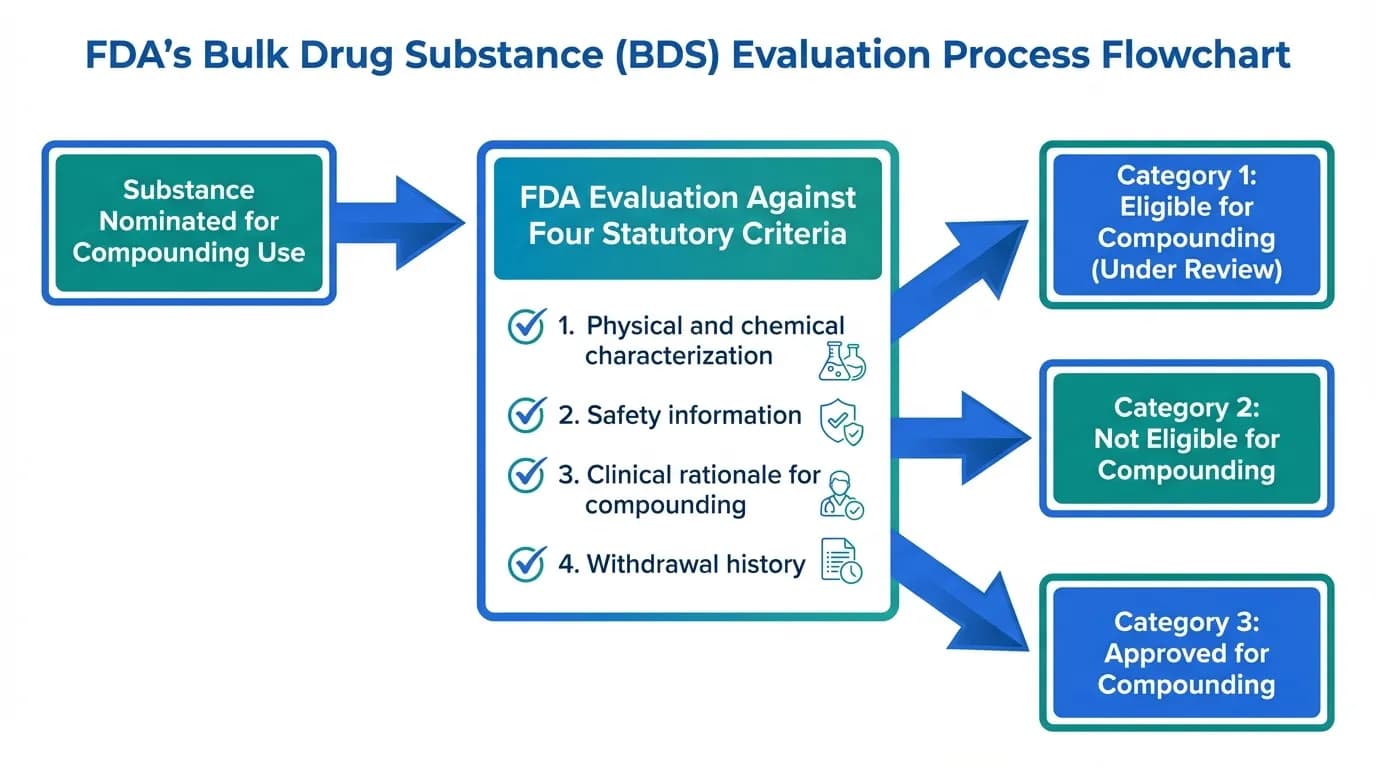
Many popular stacking combinations involve peptides that are not FDA-approved, placed in Category 2, or available only as research chemicals. Understanding the regulatory status of each component is essential. See our peptide regulatory guide for current status information.
Common Stacking Mistakes#
Stacking without clear rationale: Combining peptides simply because they are available, without a specific mechanistic reason for the combination, provides no advantage and increases complexity and cost.
Using overlapping mechanisms: Combining multiple ghrelin-pathway peptides (e.g., ipamorelin + GHRP-2 + hexarelin) does not follow the synergy principle. True synergy requires complementary, not overlapping, pathways.
Ignoring individual compound evidence: Before evaluating a combination, researchers should first understand the evidence for each component individually. A stack cannot be stronger than its weakest link.
Extrapolating clinical data: Pharmaceutical combinations like CagriSema have been specifically tested as combinations. Extrapolating this validation to research peptide stacks that have not been formally studied is not scientifically justified.
Conclusion#
Peptide stacking is pharmacologically rational when it follows the principle of complementary pathway activation. The GHRH + ghrelin pathway synergy for GH release is the best-documented example, and the pharmaceutical development of CagriSema validates the multi-target approach in metabolic disease.
However, the evidence gap between theoretical rationale and published combination data is significant for most popular stacks. The Wolverine Stack (BPC-157 + TB-500) is pharmacologically logical but lacks published combination-specific data. Cognitive stacks (selank + semax) follow complementary mechanism principles but have not been formally evaluated together.
For researchers, the most responsible approach is to understand the individual evidence for each compound, recognize the theoretical rationale for the combination, and acknowledge where combination-specific data is lacking. As always, the Dosing Calculator and Stack Checker tools can assist with protocol planning, and the Safety page provides essential guidance on risk evaluation.
Related Peptide Profiles#
Learn more about the peptides discussed in this article:
- BPC-157 Overview and Research Guide
- BPC-157 Dosing Protocols
- BPC-157 Side Effects and Safety
- TB-500 Overview and Research Guide
- TB-500 Dosing Protocols
- TB-500 Side Effects and Safety
- Ipamorelin Overview and Research Guide
- Ipamorelin Dosing Protocols
- Ipamorelin Side Effects and Safety
- CJC-1295 (No DAC) Overview and Research Guide
- CJC-1295 (No DAC) Dosing Protocols
- CJC-1295 (No DAC) Side Effects and Safety
- Sermorelin Overview and Research Guide
- Sermorelin Dosing Protocols
- Sermorelin Side Effects and Safety
- Selank Overview and Research Guide
- Selank Dosing Protocols
- Selank Side Effects and Safety
- Semax Overview and Research Guide
- Semax Dosing Protocols
- Semax Side Effects and Safety

Frequently Asked Questions About The Complete Guide to Peptide Stacks: Popular Combinations Explained
What does this article cover?
Guide to peptide stacking — the science behind combining peptides, popular stacks for healing and GH release, plus safety considerations. This guide is for educational purposes only and does not constitute medical advice.
Which peptides are discussed in this article?
This article covers BPC-157, TB-500, Ipamorelin, CJC-1295 (No DAC), Sermorelin, Selank, Semax. Key context: BPC-157 (Core component of healing stacks, most commonly paired with TB-500 in the Wolverine Stack); TB-500 (Thymosin beta-4 fragment that complements BPC-157 through different tissue repair mechanisms); Ipamorelin (Selective GH secretagogue commonly stacked with GHRH-pathway peptides for synergistic GH release). Each peptide is discussed based on available research evidence.
Who is this guide written for?
This guide is written for researchers and individuals seeking an evidence-based overview of the topic covered in "The Complete Guide to Peptide Stacks: Popular Combinations Explained." It summarizes available research data without making treatment recommendations. Always consult a healthcare provider for medical decisions.
What are the key takeaways from this article?
The main findings covered in this article include: Core component of healing stacks, most commonly paired with TB-500 in the Wolverine Stack. Thymosin beta-4 fragment that complements BPC-157 through different tissue repair mechanisms. Selective GH secretagogue commonly stacked with GHRH-pathway peptides for synergistic GH release. These takeaways are based on the research data available at the time of publication.
What is BPC-157 and why is it significant?
BPC-157 is a peptide discussed in this article because: Core component of healing stacks, most commonly paired with TB-500 in the Wolverine Stack. For a complete profile of BPC-157, see the dedicated peptide page on this site.
Continue reading this research review
Free access to the complete analysis with citations and evidence ratings.
150+ peptide profiles · 30+ comparisons · 18 research tools
Medical Disclaimer
This website is for educational and informational purposes only. The information provided is not intended to diagnose, treat, cure, or prevent any disease. Always consult with a qualified healthcare professional before using any peptide or supplement.
Join 2,000+ researchers getting biweekly updates
Enjoyed this article?
The Research Briefing delivers deep-dives like this biweekly — plus new study breakdowns, safety updates, and tool announcements.
Free forever. No spam. Unsubscribe in one click.
Where to Find These Peptides
Continue Exploring
Peptide Profiles
Keep Reading
Peptide Stacking Guide 2026: Best Combinations by Goal
The definitive 2026 guide to peptide stacking organized by goal. Fat loss, muscle growth, healing, anti-aging, and cognitive stacks with evidence levels, dosing timing, and safety considerations.
FDA Peptide Categories Explained: Category 1 vs Category 2 (2026)
Understand the FDA peptide classification system. Learn the difference between Category 1, Category 2, and Category 3 peptides and what the 2024-2026 regulatory changes mean for researchers.
Most Popular Therapeutic Peptides in 2026: 15 Ranked by Research Interest
The 15 most popular therapeutic peptides in 2026, ranked by clinical trial activity, search interest, and research community adoption. From semaglutide to BPC-157.
You Might Also Like
Related content you may find interesting