BPC-157 vs Semaglutide: Healing Peptide vs GLP-1 Agonist
BPC-157 vs semaglutide compared: gastric healing peptide vs GLP-1 agonist — mechanisms, GI protection, weight loss, and evidence.
Verdict at a Glance
These peptides serve entirely different purposes and are not interchangeable. Semaglutide is an FDA-approved pharmaceutical with massive clinical validation for diabetes and obesity. BPC-157 is a preclinical research peptide studied for tissue healing without any human clinical trials. The comparison highlights the enormous evidence gap between a fully validated drug and a promising preclinical compound. For metabolic disease, semaglutide has unequivocal evidence. For tissue healing research, BPC-157 has intriguing preclinical data that awaits human translation.
| Best for | Pick | Why |
|---|---|---|
| Weight management and obesity treatment | Semaglutide | FDA-approved with 15-17% body weight reduction demonstrated in Phase 3 STEP trials; extensive safety database |
| Tissue repair and GI healing research | BPC-157 | Hundreds of preclinical studies demonstrating cytoprotective and healing effects across multiple tissue types |
| Type 2 diabetes management | Semaglutide | FDA-approved as Ozempic with proven HbA1c reduction and cardiovascular risk reduction (SELECT trial) |
| Musculoskeletal healing investigation | BPC-157 | Preclinical evidence for tendon, ligament, and muscle repair via growth factor and angiogenic signaling pathways |
| Category | BPC-157 | Semaglutide | Advantage |
|---|---|---|---|
| Mechanism of Action | Gastric pentadecapeptide promoting tissue repair through VEGF, NO system modulation, FAK-paxillin pathway, and gut-brain axis effects; broad cytoprotective and healing activity across tissues | GLP-1 receptor agonist activating Gs-cAMP-PKA signaling for glucose- dependent insulin secretion, central appetite suppression, and delayed gastric emptying; C18 fatty diacid enables weekly dosing | Comparable |
| Research Evidence | Extensive preclinical evidence across hundreds of animal studies; no completed human clinical trials; not FDA-approved for any indication | FDA-approved for T2D (Ozempic), obesity (Wegovy), and oral formulation (Rybelsus); extensive Phase 3 programs (STEP, SUSTAIN, SELECT trials) | Semaglutide |
| Side Effect Profile | Favorable safety in animal studies; no reported serious adverse effects at research doses; unknown long-term human safety profile | GI side effects common (nausea 44%, diarrhea, vomiting); pancreatitis risk; gallbladder events; thyroid C-cell tumor warning; well- characterized from large clinical trials | BPC-157 |
| GI Effects | Protective effects on gastric mucosa; studied for NSAID-induced ulcer prevention, inflammatory bowel models, and gut healing in animals; stable in gastric acid | Slows gastric emptying; GI side effects are the most common adverse events; not designed for GI healing but affects gut motility significantly | BPC-157 |
| Clinical Validation | No FDA approval; no completed Phase 1-3 human trials; evidence limited to preclinical animal and in vitro studies | Three FDA approvals across diabetes, obesity, and oral delivery; cardiovascular outcome data (SELECT trial); millions of prescriptions written | Semaglutide |

Introduction#
BPC-157 and semaglutide both interact with the gastrointestinal system, but from entirely different angles. BPC-157 is derived from gastric juice proteins and studied for tissue healing. Semaglutide is a GLP-1 receptor agonist FDA-approved for diabetes and obesity. Comparing them highlights the gulf between preclinical promise and clinical validation in peptide therapeutics.
Quick Comparison#
| Feature | BPC-157 | Semaglutide |
|---|---|---|
| Structure | 15 amino acids, 1.4 kDa | 31 amino acids, 4.1 kDa |
| Class | Gastric peptide / cytoprotectant | GLP-1 receptor agonist |
| Primary Use | Tissue healing research | Diabetes and weight management |
| FDA Status | Not approved | 3 approvals (Ozempic, Wegovy, Rybelsus) |
| Human Trials | None completed | Extensive Phase 3 programs |
| GI Effects | Protective/healing | Slows emptying; GI side effects common |
| Administration | SC or oral in research | SC weekly or oral daily |
| Weight Loss | Not studied for this | 14.9-16.0% body weight reduction |
Mechanism of Action Comparison#
BPC-157#
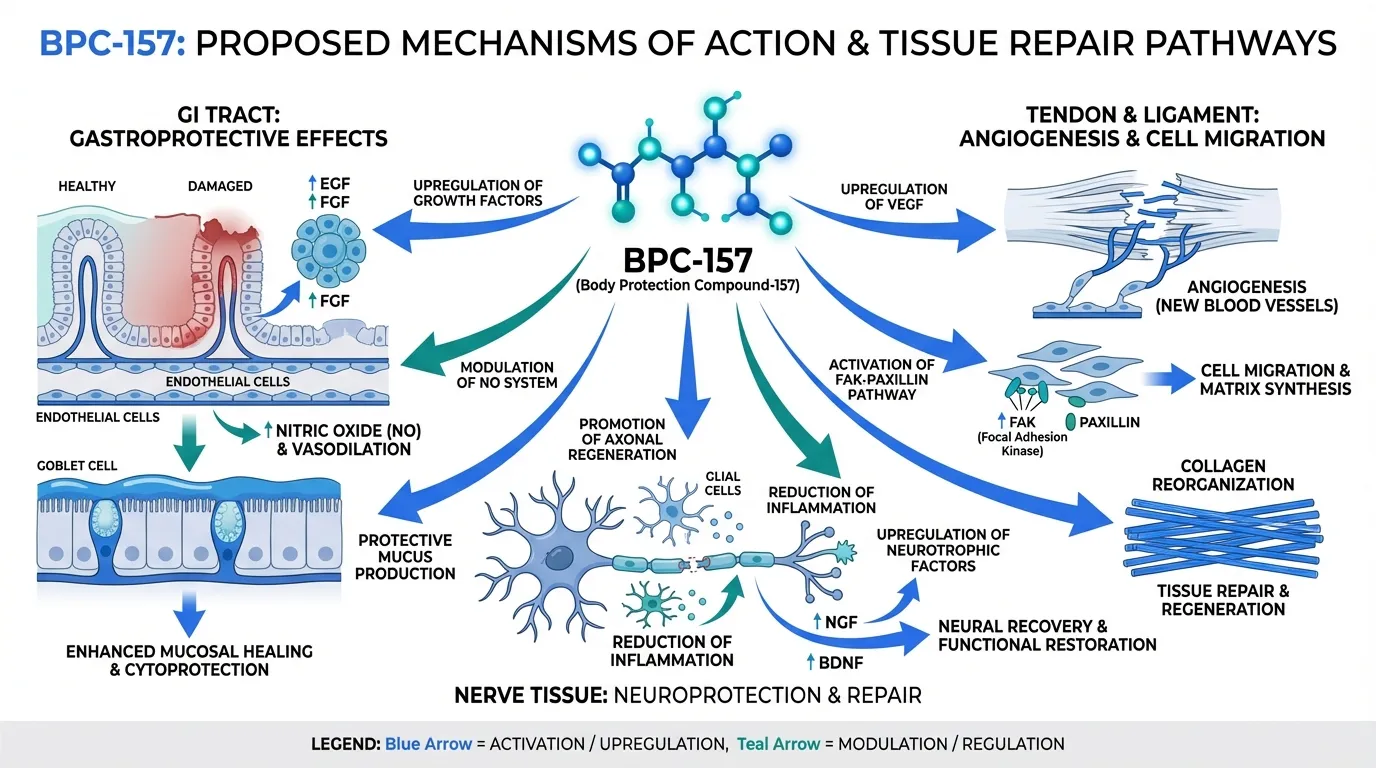
BPC-157 is a synthetic pentadecapeptide derived from a protective protein in human gastric juice. Its proposed mechanisms involve multiple cytoprotective pathways including upregulation of VEGF and growth factors promoting angiogenesis, modulation of the nitric oxide system, activation of the FAK-paxillin pathway for cell migration and tissue repair, interaction with the gut-brain axis affecting dopaminergic and serotonergic systems, and gastroprotective effects against NSAID and alcohol-induced mucosal damage. BPC-157 is notably stable in gastric acid, unusual for a peptide.
Semaglutide#
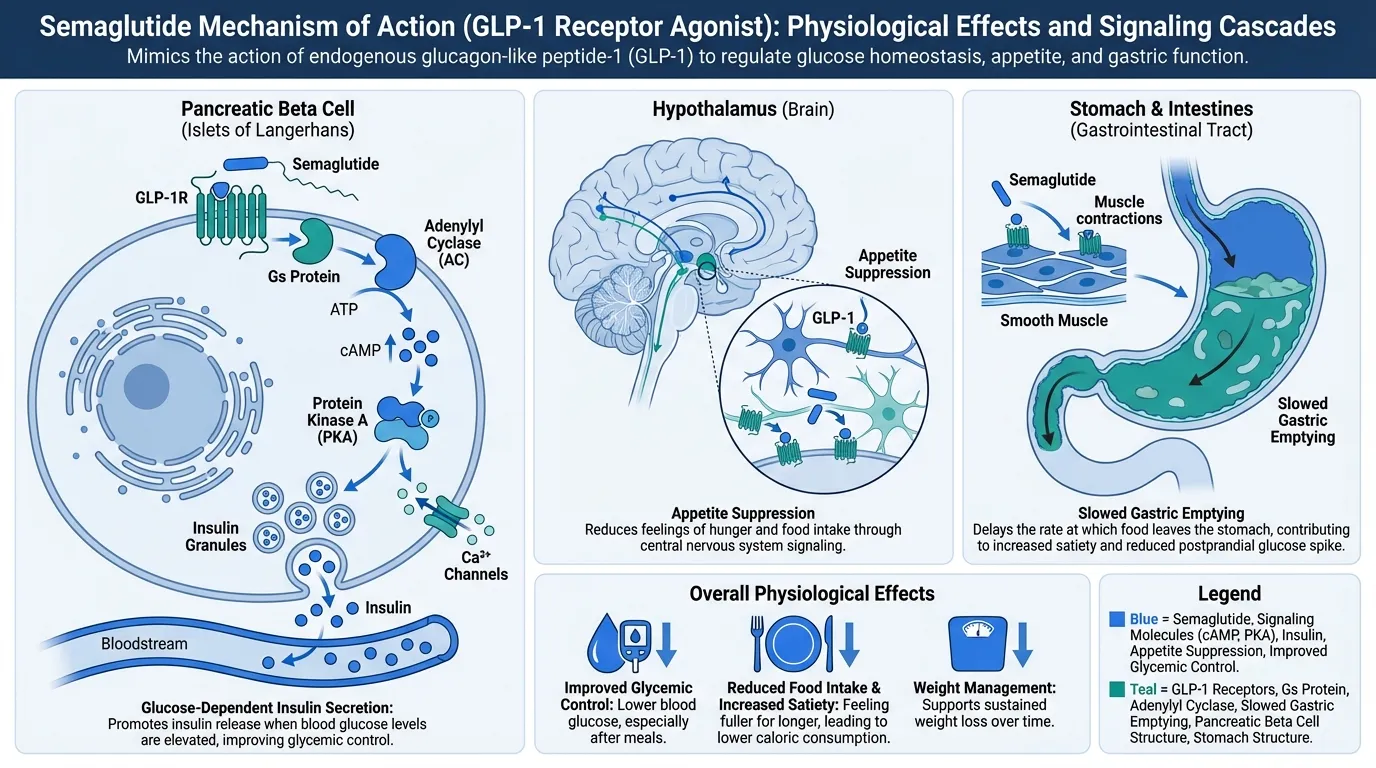
Semaglutide is a 31-amino acid GLP-1 receptor agonist with a C18 fatty diacid enabling albumin binding and a 7-day half-life. It activates GLP-1R (class B GPCR) to stimulate Gs-cAMP-PKA signaling in pancreatic beta cells for glucose-dependent insulin secretion, suppress appetite through hypothalamic GLP-1R activation, and slow gastric emptying via vagal pathways. The STEP 1 trial demonstrated 14.9% body weight reduction, and the SELECT trial showed 20% MACE reduction.
Evidence and Research Comparison#
BPC-157 Research#
BPC-157 has an extensive preclinical literature spanning hundreds of animal studies across multiple tissue types (GI tract, tendon, muscle, bone, nerve, liver). Effects include accelerated healing of gastric ulcers, anastomoses, tendon transection, and ligament injuries in rodent models. However, no completed human clinical trials exist, and the compound has not entered formal drug development. The evidence remains entirely preclinical.
Semaglutide Research#
Semaglutide has one of the most comprehensive clinical evidence bases of any peptide: SUSTAIN trials (7 Phase 3 studies in T2D), STEP trials (4+ Phase 3 studies in obesity), SELECT trial (cardiovascular outcomes), and FLOW trial (kidney outcomes). Over 10,000 patients were studied in the STEP program alone. Three FDA approvals and multiple international approvals confirm its clinical utility.
Side Effects and Safety Comparison#
BPC-157 Side Effects#
Animal studies report no significant adverse effects at standard research doses. However, the absence of human clinical trials means the safety profile in humans is completely unknown. No long-term data, drug interaction data, or rare adverse event data exist.
Semaglutide Side Effects#
Well-characterized from large Phase 3 programs: nausea (44%), diarrhea (30%), vomiting (24%), and constipation are most common. Serious but rare risks include pancreatitis, gallbladder events, and a thyroid C-cell tumor boxed warning from rodent studies. The safety database includes millions of real-world prescriptions.
Dosing and Administration Comparison#
BPC-157 Dosing#
| Parameter | Details |
|---|---|
| Route | SC injection or oral in research |
| Research doses | 200-500 mcg/day (SC) in research |
| Oral stability | Stable in gastric acid (unusual for peptides) |
| Standardized dosing | None (no approved protocol) |
Semaglutide Dosing#
| Parameter | Details |
|---|---|
| Route | SC weekly (Ozempic/Wegovy) or oral daily (Rybelsus) |
| Diabetes (Ozempic) | 0.25 mg escalating to 1-2 mg weekly |
| Obesity (Wegovy) | 0.25 mg escalating to 2.4 mg weekly |
| Oral (Rybelsus) | 3 mg escalating to 7-14 mg daily |
Can They Be Combined?#
BPC-157 and semaglutide target different systems. BPC-157's gastroprotective properties have theoretical appeal alongside semaglutide, given that GI side effects are semaglutide's most common adverse event. Some researchers have speculated that BPC-157 could mitigate GI discomfort from GLP-1 agonists, but this has not been studied. No combination data exist, and combining an unapproved research compound with an FDA-approved drug introduces unknown risks.
For validated healing peptides, see our profiles on TB-500 and GHK-Cu. For metabolic peptide comparisons, see mazdutide vs semaglutide.
Verdict#
Semaglutide and BPC-157 are not competing for the same space. Semaglutide is a validated pharmaceutical for metabolic disease. BPC-157 is a preclinical research compound for tissue healing. The comparison illustrates the difference between extensive clinical validation and promising but unvalidated preclinical data.
For metabolic applications, semaglutide has no equal among currently available GLP-1 agonists in terms of combined evidence. For tissue healing research, BPC-157 remains one of the most studied preclinical peptides, awaiting the human clinical trials needed to validate its remarkable animal data. Explore our GLP-1 saturation calculator for semaglutide pharmacokinetic modeling.
Detailed Category Analysis#
Mechanism of Action#
BPC-157: Gastric pentadecapeptide promoting tissue repair through VEGF, NO system modulation, FAK-paxillin pathway, and gut-brain axis effects; broad cytoprotective and healing activity across tissues
Semaglutide: GLP-1 receptor agonist activating Gs-cAMP-PKA signaling for glucose- dependent insulin secretion, central appetite suppression, and delayed gastric emptying; C18 fatty diacid enables weekly dosing
Advantage: Neither (tie)
Research Evidence#
BPC-157: Extensive preclinical evidence across hundreds of animal studies; no completed human clinical trials; not FDA-approved for any indication
Semaglutide: FDA-approved for T2D (Ozempic), obesity (Wegovy), and oral formulation (Rybelsus); extensive Phase 3 programs (STEP, SUSTAIN, SELECT trials)
Advantage: Semaglutide
Side Effect Profile#
BPC-157: Favorable safety in animal studies; no reported serious adverse effects at research doses; unknown long-term human safety profile
Semaglutide: GI side effects common (nausea 44%, diarrhea, vomiting); pancreatitis risk; gallbladder events; thyroid C-cell tumor warning; well- characterized from large clinical trials
Advantage: BPC-157
GI Effects#
BPC-157: Protective effects on gastric mucosa; studied for NSAID-induced ulcer prevention, inflammatory bowel models, and gut healing in animals; stable in gastric acid
Semaglutide: Slows gastric emptying; GI side effects are the most common adverse events; not designed for GI healing but affects gut motility significantly
Advantage: BPC-157
Clinical Validation#
BPC-157: No FDA approval; no completed Phase 1-3 human trials; evidence limited to preclinical animal and in vitro studies
Semaglutide: Three FDA approvals across diabetes, obesity, and oral delivery; cardiovascular outcome data (SELECT trial); millions of prescriptions written
Advantage: Semaglutide
Summary and Verdict#
These peptides serve entirely different purposes and are not interchangeable. Semaglutide is an FDA-approved pharmaceutical with massive clinical validation for diabetes and obesity. BPC-157 is a preclinical research peptide studied for tissue healing without any human clinical trials. The comparison highlights the enormous evidence gap between a fully validated drug and a promising preclinical compound. For metabolic disease, semaglutide has unequivocal evidence. For tissue healing research, BPC-157 has intriguing preclinical data that awaits human translation.
Best For Recommendations#
Weight management and obesity treatment#
Recommendation: Semaglutide
Reason: FDA-approved with 15-17% body weight reduction demonstrated in Phase 3 STEP trials; extensive safety database
Tissue repair and GI healing research#
Recommendation: BPC-157
Reason: Hundreds of preclinical studies demonstrating cytoprotective and healing effects across multiple tissue types
Type 2 diabetes management#
Recommendation: Semaglutide
Reason: FDA-approved as Ozempic with proven HbA1c reduction and cardiovascular risk reduction (SELECT trial)
Musculoskeletal healing investigation#
Recommendation: BPC-157
Reason: Preclinical evidence for tendon, ligament, and muscle repair via growth factor and angiogenic signaling pathways
Further Reading#

Which Is Better For...
Weight management and obesity treatment
Semaglutide
FDA-approved with 15-17% body weight reduction demonstrated in Phase 3 STEP trials; extensive safety database
Tissue repair and GI healing research
BPC-157
Hundreds of preclinical studies demonstrating cytoprotective and healing effects across multiple tissue types
Type 2 diabetes management
Semaglutide
FDA-approved as Ozempic with proven HbA1c reduction and cardiovascular risk reduction (SELECT trial)
Musculoskeletal healing investigation
BPC-157
Preclinical evidence for tendon, ligament, and muscle repair via growth factor and angiogenic signaling pathways
Continue Your Research
Get comparison updates
We publish new head-to-head comparisons regularly. Subscribe to see them first.
Frequently Asked Questions About BPC-157 vs Semaglutide: Healing Peptide vs GLP-1 Agonist
Which is better, BPC-157 or Semaglutide?
These peptides serve entirely different purposes and are not interchangeable. Semaglutide is an FDA-approved pharmaceutical with massive clinical validation for diabetes and obesity. BPC-157 is a preclinical research peptide studied for tissue healing without any human clinical trials. The comparison highlights the enormous evidence gap between a fully validated drug and a promising preclinical compound. For metabolic disease, semaglutide has unequivocal evidence. For tissue healing research,... Individual responses may vary, and this comparison is based on available research data, not a treatment recommendation.
What are the key differences between BPC-157 and Semaglutide?
The main differences across comparison categories are: Mechanism of Action: advantage goes to neither (tie); Research Evidence: advantage goes to Semaglutide; Side Effect Profile: advantage goes to BPC-157. 2 additional categories are analyzed in the full comparison. Each category evaluates a different dimension of the two peptides.
When should I consider Semaglutide over BPC-157?
For the scenario of "Weight management and obesity treatment," research data suggests Semaglutide may be more relevant. FDA-approved with 15-17% body weight reduction demonstrated in Phase 3 STEP trials; extensive safety database. This is based on currently available evidence and individual circumstances may differ.
How do BPC-157 and Semaglutide differ in their mechanisms of action?
BPC-157: Gastric pentadecapeptide promoting tissue repair through VEGF, NO system modulation, FAK-paxillin pathway, and gut-brain axis effects; broad cytoprotective and healing activity across tissues. Semaglutide: GLP-1 receptor agonist activating Gs-cAMP-PKA signaling for glucose- dependent insulin secretion, central appetite suppression, and delayed gastric emptying; C18 fatty diacid enables weekly dosing.
Which has fewer side effects, BPC-157 or Semaglutide?
In terms of side effects and tolerability, the advantage goes to BPC-157. BPC-157: Favorable safety in animal studies; no reported serious adverse effects at research doses; unknown long-term human safety profile. Semaglutide: GI side effects common (nausea 44%, diarrhea, vomiting); pancreatitis risk; gallbladder events; thyroid C-cell tumor warning; well- characterized f....
Medical Disclaimer
This website is for educational and informational purposes only. The information provided is not intended to diagnose, treat, cure, or prevent any disease. Always consult with a qualified healthcare professional before using any peptide or supplement.