Anti-Aging Peptides by Mechanism: Senolytics, Telomeres, Mitochondria, and Hormones

Introduction#
Aging is not a single process but a convergence of multiple biological mechanisms, each contributing to the progressive decline in tissue function, disease resistance, and regenerative capacity. The "hallmarks of aging" framework, first proposed by Lopez-Otin et al. in 2013 and updated in 2023, identifies twelve interconnected mechanisms that drive the aging process. Peptides have emerged as research tools targeting several of these hallmarks with varying degrees of evidence.
This research review organizes anti-aging peptides by their primary mechanism of action rather than by individual compound, providing a mechanistic framework for evaluating where each peptide fits in the broader aging landscape. The evidence ranges from SS-31's clinical trial program to FOXO4-DRI's single preclinical study. For each mechanism class, we evaluate the biological rationale, available evidence, and critical limitations.
Important note: No peptide has been proven to slow or reverse aging in human clinical trials. The hallmarks of aging framework is descriptive, not prescriptive -- targeting a single hallmark does not necessarily translate to meaningful lifespan or healthspan extension. This article is for researchers and informed individuals seeking mechanistic understanding.
For a ranked overview, see Best Anti-Aging Peptides 2026. For mitochondria-specific coverage, see Mitochondrial Peptides and Longevity.
The Hallmarks of Aging: Where Peptides Intervene#
Before examining individual peptides, mapping the aging hallmarks to available peptide interventions provides a structural overview:
| Hallmark of Aging | Peptide(s) | Mechanism | Evidence Level |
|---|---|---|---|
| Cellular senescence | FOXO4-DRI | Selective senolysis via p53 release | Preclinical (single study) |
| Telomere attrition | Epitalon | Telomerase activation | Limited clinical (Russian) |
| Mitochondrial dysfunction | SS-31, MOTS-c, Humanin | Cardiolipin stabilization, AMPK activation | Clinical trials (SS-31) |
| Loss of proteostasis | GHK-Cu | Gene expression modulation, chaperone support | In vitro, topical human |
| Deregulated nutrient sensing | MOTS-c, NAD+ | AMPK activation, NAD+ repletion | Preclinical + supplementation |
| Altered intercellular communication | GHK-Cu, Thymalin | Gene expression modulation, immune rebalancing | In vitro + Russian clinical |
| Stem cell exhaustion | GHK-Cu (indirect) | Growth factor modulation | In vitro |
| Epigenetic alterations | Pinealon (proposed) | Bioregulator gene interaction | Very limited |
This map reveals that no single peptide addresses all hallmarks, and most peptide interventions target only one or two mechanisms. The evidence quality varies dramatically across hallmarks, from SS-31's clinical trials to pinealon's theoretical framework.
Senolytic Peptides: FOXO4-DRI and Clearing Senescent Cells#
The Senescence Problem#
Cellular senescence is a state in which damaged cells permanently stop dividing but resist programmed cell death (apoptosis). While senescence originally evolved as a tumor-suppression mechanism, senescent cells accumulate with age and secrete a cocktail of pro-inflammatory cytokines, proteases, and growth factors collectively known as the senescence-associated secretory phenotype (SASP). The SASP drives chronic inflammation, disrupts tissue architecture, and promotes age-related disease.
The field of senolytics -- drugs that selectively kill senescent cells -- emerged from the demonstration that clearance of senescent cells in mouse models improved physical function and extended healthspan. Small-molecule senolytics (dasatinib + quercetin, navitoclax) were the first to be studied, but peptide-based approaches offer the potential for greater selectivity.
FOXO4-DRI#
Evidence Level: Single preclinical study (2017) | FDA Status: Not approved; not FDA-evaluated
FOXO4-DRI is a D-retro-inverso (DRI) peptide designed by Baar et al. at Erasmus University Medical Center in the Netherlands. The DRI modification uses D-amino acids in reverse sequence, which preserves the side-chain topology of the original peptide while conferring resistance to protease degradation.
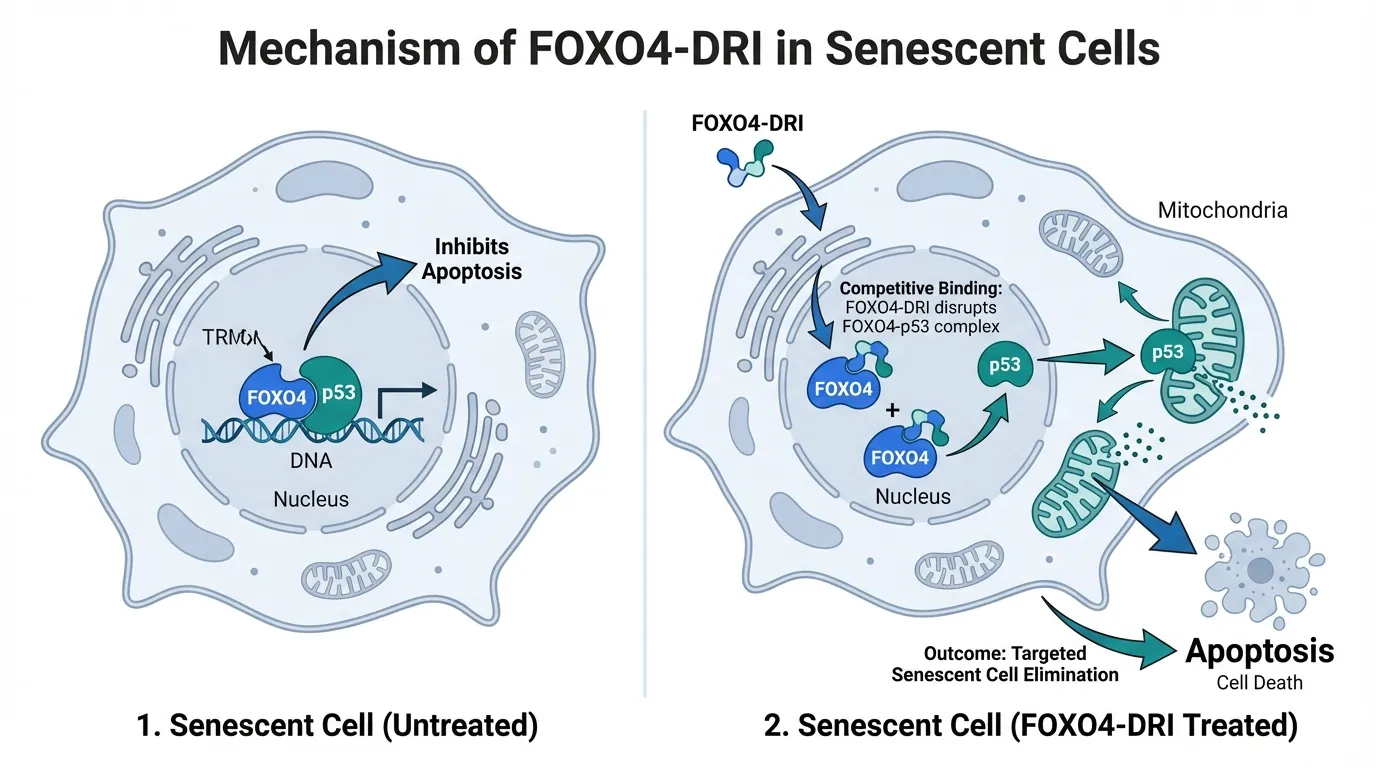
Mechanism of action. In senescent cells, the transcription factor FOXO4 binds to p53, preventing p53 from triggering apoptosis. This FOXO4-p53 interaction is what keeps senescent cells alive despite their damaged state. FOXO4-DRI competitively disrupts this interaction, releasing p53 to the mitochondria where it activates the intrinsic apoptotic pathway, killing the senescent cell.
The critical feature of this mechanism is selectivity: FOXO4-DRI primarily affects cells where FOXO4-p53 binding maintains senescent viability. Non-senescent cells, which do not depend on this interaction for survival, are relatively spared.
The 2017 Study. Baar et al. published in Cell (2017) demonstrated that FOXO4-DRI:
- Selectively induced apoptosis in senescent cells while sparing proliferating cells in culture
- Restored fitness (running wheel activity), fur density, and kidney function in naturally aged mice
- Reduced senescent cell burden in multiple tissues
- Counteracted the effects of chemotherapy-induced senescence when administered after doxorubicin treatment
Limitations. Despite the high impact of these findings, FOXO4-DRI has significant limitations as a therapeutic candidate. Only a single preclinical study has been published -- no replication studies from independent groups have appeared. The long-term safety of systemic senescent cell clearance is unknown. Some senescent cells serve beneficial functions in wound healing, embryonic development, and tumor suppression. The dose-response relationship and therapeutic window have not been characterized in multiple species. The peptide requires large doses (5 mg/kg in mice), is expensive to synthesize, and its pharmacokinetics in humans are entirely unknown.
For comparison with telomere-based approaches, see Epitalon vs FOXO4-DRI.
Telomere Peptides: Epitalon and Telomerase Activation#
The Telomere-Aging Connection#
Telomeres are repetitive DNA sequences (TTAGGG in humans) capping chromosome ends that shorten with each cell division. When telomeres reach a critically short length, cells enter senescence or apoptosis, contributing to tissue aging. Telomerase, the enzyme that extends telomeres, is active in germ cells and some stem cells but largely absent in differentiated somatic cells.
The telomere-aging connection is supported by multiple lines of evidence: telomere length correlates with biological age across species, genetic disorders of short telomeres (dyskeratosis congenita) cause premature aging phenotypes, and telomerase reactivation in aged mice reversed some aging phenotypes. However, the relationship is complex -- telomerase activation also carries theoretical cancer risk, as most cancers reactivate telomerase to achieve immortality.
Epitalon#
Evidence Level: Limited clinical data from Russian research groups | FDA Status: Not approved; not FDA-evaluated
Epitalon (Ala-Glu-Asp-Gly) is a synthetic tetrapeptide from the Khavinson bioregulator program. Its primary anti-aging claim centers on telomerase activation, though it is also studied for pineal gland function and melatonin regulation.
Telomerase evidence. Khavinson et al. published data showing that epitalon activated telomerase in human somatic cell cultures (fetal fibroblasts and adult epithelial cells), increasing the number of population doublings before senescence. The proposed mechanism involves peptide-DNA interaction at regulatory regions of the telomerase gene (hTERT), though the exact molecular pathway has not been fully characterized.
Longevity observations. The Khavinson group published long-term observational data from elderly populations in St. Petersburg, Russia, where subjects treated with epitalon and thymalin showed reduced mortality over 6 and 12 year follow-up periods compared to age-matched controls. These observations, while suggestive, were not randomized controlled trials and are subject to significant confounding.
Melatonin and circadian regulation. Epitalon's effects on the pineal gland and melatonin synthesis (discussed in detail in Peptides for Sleep) represent a separate mechanism relevant to aging. Melatonin decline is a feature of aging, and melatonin itself has antioxidant properties that may contribute to cellular protection.
Limitations. Research comes predominantly from the Khavinson group with minimal independent replication. The mechanism by which a four-amino-acid peptide activates telomerase through direct DNA interaction has not been validated by Western molecular biology standards. No randomized controlled trials have specifically measured telomere length as a primary endpoint. The theoretical cancer risk of telomerase activation has not been addressed in any safety study.
Mitochondrial Peptides: SS-31, MOTS-c, and Humanin#
Mitochondrial dysfunction is among the most well-characterized hallmarks of aging. As the cellular powerhouses responsible for ATP production, mitochondria accumulate damage over time -- mutations in mitochondrial DNA, impaired electron transport chain function, increased ROS production, and loss of membrane potential. The brain, heart, and skeletal muscle are particularly vulnerable to mitochondrial decline due to their high energy demands.
SS-31 (Elamipretide)#
Evidence Level: Phase 2/3 clinical trials | FDA Status: Not approved; investigational
SS-31 is the most clinically advanced anti-aging peptide by conventional drug development standards. The tetrapeptide (D-Arg-Dmt-Lys-Phe-NH2) accumulates in the inner mitochondrial membrane independent of mitochondrial membrane potential, distinguishing it from other mitochondria-targeted agents.
Mechanism of action. SS-31 binds cardiolipin, a phospholipid unique to the inner mitochondrial membrane that is essential for the organization and function of electron transport chain complexes. By stabilizing cardiolipin:
- Electron transport chain efficiency improves, reducing electron leak and ROS generation
- ATP production is maintained or enhanced
- Cytochrome c release (the trigger for apoptosis) is prevented
- The overall capacity for oxidative phosphorylation is preserved
Clinical evidence. SS-31 has been evaluated in several clinical trials:
- Primary mitochondrial myopathy -- the MMPOWER trials evaluated SS-31 in patients with mitochondrial disease, measuring exercise capacity (6-minute walk test). While the primary endpoint was not met in the Phase 3 MMPOWER-3 trial, subgroup analyses and patient-reported outcomes showed improvements
- Heart failure with preserved ejection fraction (HFpEF) -- Phase 2 data showed improvements in left ventricular volumes and cardiac function
- Age-related macular degeneration -- Phase 2 data in non-exudative AMD showed some improvements in visual function measures
- Barth syndrome -- improvements in cardiac and exercise outcomes in this mitochondrial cardiomyopathy
Aging relevance. While clinical trials target disease states, SS-31's mechanism addresses the fundamental mitochondrial dysfunction that underlies many age-related conditions. Preclinical aging studies in mice showed that SS-31 treatment improved cardiac function, skeletal muscle endurance, and cognitive performance in aged animals.
MOTS-c#
Evidence Level: Preclinical; observational human correlations | FDA Status: Not approved; not FDA-evaluated
MOTS-c (mitochondrial open reading frame of the 12S rRNA-c) is a 16-amino-acid peptide encoded by mitochondrial DNA -- one of several recently discovered mitochondria-derived peptides (MDPs). Unlike SS-31, which is a synthetic peptide targeting mitochondria, MOTS-c is naturally produced by mitochondria and functions as a signaling molecule.
Mechanism of action. MOTS-c activates AMP-activated protein kinase (AMPK), the master metabolic sensor that responds to cellular energy status. AMPK activation:
- Promotes glucose uptake independent of insulin (relevant to insulin resistance in aging)
- Enhances fatty acid oxidation
- Inhibits mTOR signaling, which has been linked to longevity in multiple species
- Promotes mitochondrial biogenesis, potentially counteracting age-related mitochondrial loss
Age-related decline. Circulating MOTS-c levels decline with age in humans, and lower levels correlate with metabolic dysfunction and sarcopenia. This age-related decline suggests that MOTS-c may be both a biomarker and a mediator of metabolic aging.
Preclinical evidence. In mouse studies, MOTS-c administration improved exercise performance, enhanced insulin sensitivity, reduced diet-induced obesity, and improved thermoregulation in aged mice. A notable 2020 study showed that MOTS-c treatment in elderly mice improved their physical capacity comparable to exercise training.
Limitations. All evidence is preclinical or correlational. No human clinical trials have been conducted. The pharmacokinetics, optimal dosing, and long-term safety profile in humans are unknown.
For a direct comparison, see MOTS-c vs SS-31.
Humanin#
Evidence Level: Preclinical; human correlational studies | FDA Status: Not approved; not FDA-evaluated
Humanin is a 24-amino-acid peptide also encoded by mitochondrial DNA (16S rRNA). First discovered in 2001 in the context of Alzheimer's disease research, humanin has cytoprotective properties that extend beyond neurodegeneration to metabolic aging and cellular stress responses.
Mechanism of action. Humanin acts through:
- Formyl peptide receptor-like 1 (FPRL1) and IL-6 receptor/STAT3 pathway activation, promoting cell survival signaling
- BAX inhibition -- humanin directly binds the pro-apoptotic protein BAX, preventing it from permeabilizing the mitochondrial outer membrane and triggering cell death
- Insulin sensitization -- humanin enhances insulin sensitivity through AMPK-like signaling pathways
Aging relevance. Circulating humanin levels decline with age. In centenarian populations and their offspring, humanin levels tend to be higher than in age-matched controls, suggesting a potential protective role. In animal models, humanin analogs improved cognitive function, reduced atherosclerosis, and improved metabolic parameters.
Limitations. Humanin research is earlier-stage than SS-31 and MOTS-c. No clinical trials have been conducted. The relative contributions of humanin decline versus other age-related changes remain unclear.
NAD+ Context#
While NAD+ (nicotinamide adenine dinucleotide) is not a peptide, its inclusion provides essential context for the mitochondrial aging discussion. NAD+ is a coenzyme required for mitochondrial electron transport, sirtuin activation, and DNA repair. NAD+ levels decline approximately 50% between ages 40 and 60, directly impairing mitochondrial function.
NAD+ precursors -- nicotinamide mononucleotide (NMN) and nicotinamide riboside (NR) -- are the subject of ongoing clinical trials examining effects on metabolic health, exercise capacity, and aging biomarkers. These supplementation approaches are complementary to mitochondria-targeted peptides: while SS-31 stabilizes existing mitochondrial machinery, NAD+ repletion provides the substrate these machines need to function.
Tissue-Remodeling Peptides: GHK-Cu#
Evidence Level: In vitro gene expression studies; topical human use; limited systemic data | FDA Status: Not approved for anti-aging; used in cosmetic formulations
GHK-Cu (glycyl-L-histidyl-L-lysine copper complex) is a naturally occurring copper-binding tripeptide first isolated from human plasma in 1973. It is unique among anti-aging peptides in that it operates primarily through broad gene expression modulation rather than targeting a single aging mechanism.
Mechanism of Action#
GHK-Cu's anti-aging relevance stems from gene expression studies by Loren Pickart and subsequent researchers showing that the peptide modulates the expression of over 4,000 human genes, many of which shift toward patterns associated with younger tissue. Key gene expression changes include:
- Collagen and extracellular matrix -- upregulates collagen types I and III, decorin, and other ECM components, promoting structural tissue integrity
- Antioxidant defense -- upregulates superoxide dismutase, glutathione-related enzymes, and other antioxidant genes
- DNA repair -- modulates expression of DNA damage response genes
- Anti-inflammatory -- suppresses expression of pro-inflammatory cytokines including IL-6 and TGF-beta
- Proteasome function -- supports proteasome subunit expression, relevant to proteostasis maintenance
- Stem cell markers -- some studies report effects on stem cell-related gene expression
Evidence by Application#
Skin aging (topical). GHK-Cu has the longest track record in topical skincare, where it has been shown to improve skin density, thickness, and elasticity in controlled studies. Its copper-dependent stimulation of collagen synthesis and wound healing have made it a widely used cosmetic ingredient.
Wound healing. GHK-Cu promotes wound healing through multiple mechanisms: angiogenesis, collagen synthesis, anti-inflammatory signaling, and nerve growth factor production. This healing capacity indirectly supports tissue maintenance against age-related decline.
Systemic anti-aging. While the gene expression data is compelling, most GHK-Cu anti-aging evidence comes from in vitro studies. The peptide naturally circulates in human plasma (declining from approximately 200 ng/mL in youth to 80 ng/mL by age 60), suggesting systemic relevance, but clinical trials measuring anti-aging endpoints (biological age markers, functional outcomes) following systemic GHK-Cu administration have not been conducted.
Limitations. The gap between impressive in vitro gene expression data and clinical validation is significant. Whether the gene expression changes observed in cell culture translate to meaningful anti-aging effects in vivo at achievable plasma concentrations remains undemonstrated. Topical efficacy for skin does not predict systemic anti-aging benefit.
For more on GHK-Cu, see Peptides for Skin Health and Collagen Peptides and Skin Rejuvenation.
Bioregulator Peptides: Pinealon, Thymalin, and the Khavinson Tradition#
The bioregulator peptide framework, developed by Professor Vladimir Khavinson at the Saint Petersburg Institute of Bioregulation and Gerontology, proposes that short peptides (2-4 amino acids) can regulate gene expression in specific organ systems. This approach to anti-aging is distinct from Western pharmacology and has generated both the longest-running observational longevity data and the most significant independent validation challenges.
Pinealon (CNS Bioregulator)#
Pinealon (Glu-Asp-Arg) is proposed to target the pineal gland and central nervous system. Its anti-aging relevance includes proposed neuroprotection and pineal function restoration. In vitro studies from the Khavinson group show neuroprotective effects on cortical neurons under oxidative stress. However, no clinical trials for anti-aging, cognitive, or neuroprotective endpoints have been published.
Thymalin (Immune Bioregulator)#
Thymalin is a thymic peptide extract proposed to restore immune function in aging. Its anti-aging significance is supported by the longest-running observational data in the bioregulator field. In a published observational study, elderly individuals in St. Petersburg treated with thymalin and epitalon over 6 years showed mortality rates approximately 2-fold lower than untreated age-matched controls. A 12-year follow-up continued to show reduced mortality in the treatment group.
These longevity observations, while striking, have significant limitations: they are observational (not randomized), subject to selection bias, and have not been replicated by independent groups outside the Khavinson program.
Critical Assessment of the Bioregulator Framework#
The bioregulator approach faces several fundamental challenges:
- Mechanism -- the proposed mechanism (short peptides interacting directly with DNA regulatory regions) has not been validated by independent molecular biology research
- Tissue specificity -- how tripeptides achieve organ-specific effects without a known receptor is unexplained
- Replication -- nearly all published data comes from the Khavinson group, with minimal independent verification
- Study quality -- Russian clinical studies often lack the methodological rigor (randomization, double-blinding, intention-to-treat analysis) required by Western regulatory standards
Despite these limitations, the longevity observations are noteworthy and cannot be dismissed entirely. Independent replication studies would significantly advance the field.
For more context, see Bioregulator Peptides and Aging Guide.
Evidence Quality Comparison Across Mechanisms#
| Mechanism Class | Representative Peptide | Highest Evidence | Human Data | Independent Replication | Overall Confidence |
|---|---|---|---|---|---|
| Senolytics | FOXO4-DRI | 1 mouse study | None | None | Very Low |
| Telomere | Epitalon | Cell culture + Russian clinical | Observational | None | Low |
| Mitochondrial | SS-31 | Phase 2/3 RCTs | Yes (disease) | Yes | Moderate-High |
| Mitochondrial (MDP) | MOTS-c | Mouse studies | Correlational | Partial | Low-Moderate |
| Tissue Remodeling | GHK-Cu | Gene expression + topical | Yes (skin) | Yes (in vitro) | Moderate (skin), Low (systemic) |
| Bioregulator | Thymalin + Epitalon | Russian clinical | Observational | None | Low |
| NAD+ Repletion | NMN/NR | Phase 2 RCTs | Yes | Yes | Moderate |
Research Gaps and Future Directions#
-
Translation gap -- the most mechanistically compelling compounds (FOXO4-DRI, MOTS-c) lack human data, while the most clinically advanced (SS-31) targets disease states rather than aging per se.
-
Combination approaches -- aging involves multiple simultaneous mechanisms, yet all research has studied peptides individually. Whether targeting multiple hallmarks simultaneously (e.g., senolytics + mitochondrial support + telomere maintenance) produces additive or synergistic benefits is entirely unexplored.
-
Biomarkers -- validated biomarkers of biological aging (epigenetic clocks, proteomics-based aging measures) could enable clinical trials with aging itself as the endpoint, but such trials have not yet been conducted with peptide interventions.
-
Safety -- long-term safety data is lacking for all compounds. Senolytic therapy raises questions about beneficial senescent cells. Telomerase activation raises cancer concerns. Chronic AMPK activation could have unintended metabolic effects.
-
Independent replication -- the bioregulator peptide framework and epitalon's telomerase claims urgently require independent Western replication.
Key Takeaways#
-
Anti-aging peptides target distinct hallmarks of aging, and understanding which hallmark each peptide addresses is essential for evaluating relevance and evidence quality.
-
SS-31 has the most advanced clinical development with Phase 2/3 trials, though these target disease states (mitochondrial myopathy, heart failure) rather than aging itself.
-
FOXO4-DRI represents the most mechanistically elegant approach (selective senolysis) but has only a single published preclinical study and no human data.
-
GHK-Cu uniquely operates through broad gene expression modulation with proven topical skin benefits and compelling in vitro data, but systemic anti-aging effects remain clinically unvalidated.
-
Mitochondria-derived peptides (MOTS-c, humanin) represent an emerging class of endogenous aging modulators whose decline with age may be both diagnostic and therapeutic targets.
-
The bioregulator peptide tradition (epitalon, thymalin, pinealon) presents intriguing longevity observations but faces fundamental challenges in mechanism validation and independent replication.
-
No peptide has been proven to slow aging in humans. The most honest assessment is that peptide anti-aging research is at an early stage, with several promising mechanisms identified but no validated interventions established.
-
Combination approaches targeting multiple aging hallmarks simultaneously represent the logical next step but remain entirely unexplored in clinical research.
This article is for educational and informational purposes only. It does not constitute medical advice. Aging research is an evolving field and conclusions may change as new data emerges. Always consult a qualified healthcare provider before considering any peptide therapy.
Related Reading#

Frequently Asked Questions About Anti-Aging Peptides by Mechanism: Senolytics, Telomeres, Mitochondria, and Hormones
What are the hallmarks of aging and how do peptides address them?
The hallmarks of aging include genomic instability, telomere attrition, epigenetic alterations, loss of proteostasis, deregulated nutrient sensing, mitochondrial dysfunction, cellular senescence, stem cell exhaustion, and altered intercellular communication. Peptides in this review target several of these hallmarks directly. FOXO4-DRI targets cellular senescence. Epitalon targets telomere attrition. SS-31 and MOTS-c target mitochondrial dysfunction. GHK-Cu targets altered intercellular communication. No single peptide addresses all hallmarks.
What is the most evidence-based anti-aging peptide?
SS-31 (elamipretide) has the most advanced clinical development among anti-aging peptides, with Phase 2 and Phase 3 clinical trials for mitochondrial myopathy and heart failure. However, these trials target disease states rather than aging itself. GHK-Cu has the longest history of human use in topical skincare applications. No peptide has been proven to slow aging in human clinical trials.
Can FOXO4-DRI reverse aging?
FOXO4-DRI was shown to selectively clear senescent cells in aged mice, restoring fitness, fur density, and kidney function in a 2017 study. However, this is a single preclinical study with no human trials. Senescent cell clearance is one component of aging, not a reversal of aging itself. Long-term safety, including effects on beneficial senescent cells in wound healing, is unknown.
How does GHK-Cu differ from other anti-aging peptides?
GHK-Cu works through gene expression modulation rather than targeting a single aging mechanism. Research has identified over 4,000 genes affected by GHK-Cu, including genes involved in collagen synthesis, antioxidant defense, DNA repair, and anti-inflammatory responses. Unlike most peptides in this review, GHK-Cu is available in topical formulations and has a long history of cosmetic use, though systemic anti-aging effects require injection and remain less characterized.
Is NAD+ a peptide?
NAD+ (nicotinamide adenine dinucleotide) is not technically a peptide. It is a coenzyme -- a small organic molecule essential for metabolic reactions. It is included in this review because NAD+ decline is a central driver of age-related mitochondrial dysfunction, and NAD+ precursor supplementation (NMN, NR) is frequently discussed alongside mitochondrial peptides in the longevity research community. Its inclusion provides context for the mitochondrial aging pathway.
Continue reading this research review
Free access to the complete analysis with citations and evidence ratings.
150+ peptide profiles · 30+ comparisons · 18 research tools
Medical Disclaimer
This website is for educational and informational purposes only. The information provided is not intended to diagnose, treat, cure, or prevent any disease. Always consult with a qualified healthcare professional before using any peptide or supplement.
Join 2,000+ researchers getting biweekly updates
Enjoyed this article?
The Research Briefing delivers deep-dives like this biweekly — plus new study breakdowns, safety updates, and tool announcements.
Free forever. No spam. Unsubscribe in one click.
Where to Find These Peptides
Continue Exploring
Peptide Profiles
Keep Reading

13 Best Anti-Aging Peptides (2026): Ranked by Clinical Evidence
From senolytic FOXO4-DRI to mitochondrial SS-31, we ranked 13 anti-aging peptides by clinical trial evidence across 6 mechanisms. See which have human data vs. animal-only studies.

Mitochondrial Peptides: The Next Frontier in Longevity
Mitochondrial peptides MOTS-c, SS-31, and Epitalon reviewed for their roles in cellular energy, aging, and longevity research.

The Hallmarks of Aging: Which Peptides Target Which?
Definitive mapping of the 12 hallmarks of aging to specific peptide interventions including Epitalon, FOXO4-DRI, SS-31, MOTS-c, and NAD+.
You Might Also Like
Related content you may find interesting