Peptide Therapy Side Effects: What to Expect by Category

Introduction#
Every peptide has the potential to cause side effects. The difference between FDA-approved peptides and research peptides is not the presence or absence of side effects -- it is how well those side effects have been documented and studied.
For FDA-approved peptides like semaglutide and tirzepatide, thousands of patients have been monitored in clinical trials, providing detailed data on side effect frequency, severity, and timing. For research peptides like BPC-157 or ipamorelin, the side effect picture is far less complete, relying heavily on animal data and anecdotal reports.
This guide covers the known and reported side effects organized by peptide category, with clear distinctions between clinically documented effects and anecdotally reported ones.
For general safety principles, see our peptide safety guide. To compare side effects across specific peptides, use our side effects comparison tool.
Universal Side Effects of Injectable Peptides#
Before examining category-specific effects, several side effects are common to virtually all injectable peptides regardless of their pharmacology:
Injection Site Reactions#
| Reaction | Frequency | Description |
|---|---|---|
| Pain at injection site | Common | Brief stinging during or immediately after injection |
| Redness | Common | Localized redness lasting minutes to hours |
| Swelling | Occasional | Mild swelling at injection site |
| Bruising | Occasional | Small bruises, especially with poor technique |
| Itching | Occasional | Localized itching at injection site |
| Nodules | Rare | Small hard lumps from repeated injection in the same area |
These reactions are typically mild and self-limiting. They can be minimized by rotating injection sites, using proper technique, and allowing alcohol prep to dry fully before injecting.
For injection technique guidance, see our injection route guide.
Infection Risk#
Any time the skin is punctured, there is a risk of introducing bacteria. Signs of injection site infection include:
- Increasing redness, warmth, or swelling over 24-48 hours
- Pain that worsens rather than improves
- Pus or discharge
- Fever or chills
Injection site infections require medical attention and typically require antibiotics.
GLP-1 Receptor Agonists#
Semaglutide and Tirzepatide#
The side effect profiles of semaglutide and tirzepatide are the most well-documented of any peptide class, with data from trials involving tens of thousands of patients.
Gastrointestinal effects (most common):
| Side Effect | Semaglutide 2.4 mg | Tirzepatide 15 mg | Notes |
|---|---|---|---|
| Nausea | 40-45% | 25-30% | Most common during dose escalation; usually improves |
| Diarrhea | 25-30% | 20-25% | Variable onset |
| Vomiting | 20-25% | 10-15% | Most common during dose escalation |
| Constipation | 20-25% | 15-20% | Can be persistent |
| Abdominal pain | 15-20% | 10-15% | Usually mild |
These GI effects are mechanism-related -- they result from the same GLP-1 receptor activation that suppresses appetite and slows gastric emptying. The dose titration schedule is designed to minimize these effects by allowing gradual adaptation.
Other documented side effects:
- Headache: Reported in 10-15% of patients
- Fatigue: Reported in 5-10%
- Dizziness: Reported in 5-10%
- Gallbladder events: Cholelithiasis (gallstones) occurs at higher rates with rapid weight loss
- Pancreatitis: Rare but serious; patients with a history of pancreatitis should use caution
- Hypoglycemia: Primarily a risk when combined with insulin or sulfonylureas
Serious but rare concerns:
- Thyroid C-cell tumors: Observed in rodent studies; clinical significance in humans unclear. GLP-1 agonists carry a boxed warning regarding thyroid tumors
- Medullary thyroid carcinoma risk: Contraindicated in patients with personal or family history of MTC or MEN2
- Suicidal ideation: Under investigation by regulators; causal link not established
For a detailed review of semaglutide's mechanism, see our semaglutide weight loss guide.
Growth Hormone Secretagogues#
Ipamorelin#
Ipamorelin is generally considered the most selective and well-tolerated of the GH secretagogues, with fewer side effects than GHRP-2 or GHRP-6.
Reported side effects:
| Side Effect | Evidence Source | Frequency |
|---|---|---|
| Water retention | Clinical/anecdotal | Common in early use |
| Tingling or numbness in extremities | Anecdotal | Occasional |
| Headache | Anecdotal | Occasional |
| Increased hunger | Mild (unlike GHRP-6) | Occasional |
| Transient fatigue | Anecdotal | Occasional |
| Joint pain | Anecdotal (may indicate GH effect) | Occasional |
GHRP-6 and GHRP-2#
These older GH secretagogues have more pronounced side effects:
- Intense hunger (GHRP-6): Stimulates ghrelin pathway, causing significant appetite increase
- Cortisol and prolactin elevation (GHRP-2 > GHRP-6): Can affect stress hormones and potentially suppress reproductive function at high doses
- Water retention: More pronounced than with ipamorelin
- Numbness and tingling: Related to GH effects
CJC-1295 Variants#
CJC-1295 side effects primarily relate to sustained GH elevation:
- Flushing and warmth: Reported shortly after injection
- Headache: Occasional
- Water retention: Related to GH effects
- The DAC variant (CJC-1295 with DAC) produces more sustained GH elevation, which may increase the frequency of GH-related side effects like water retention and joint discomfort
Side Effects Related to Elevated Growth Hormone#
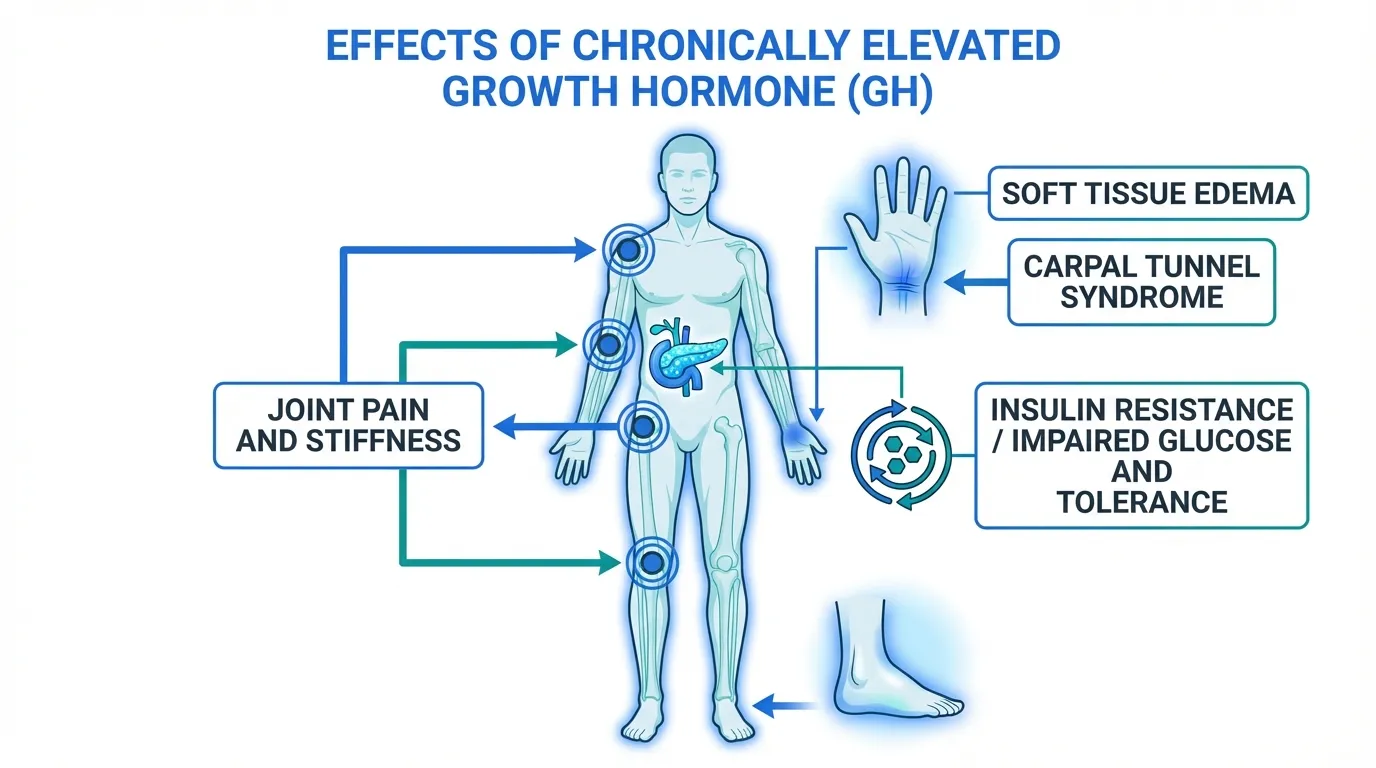
Regardless of which GH secretagogue is used, chronically elevated GH levels can produce:
- Carpal tunnel syndrome: Fluid retention in the carpal tunnel compresses the median nerve
- Joint pain and stiffness: From fluid retention in joint spaces
- Insulin resistance: GH is counter-regulatory to insulin; chronically elevated GH can impair glucose tolerance
- Soft tissue edema: Particularly in hands and feet
These effects are more likely with sustained high-dose protocols and are generally reversible upon dose reduction or discontinuation.
Healing Peptides#
BPC-157#
BPC-157 has the most limited formal safety data of the commonly used peptides. With fewer than 15 total human subjects in published studies, the side effect profile is primarily based on animal data and anecdotal reports.
From animal studies: BPC-157 has shown a remarkably clean safety profile in animal models, with no reported toxic effects even at high doses. However, animal safety does not guarantee human safety.
From anecdotal reports:
| Side Effect | Frequency (Anecdotal) | Notes |
|---|---|---|
| Nausea | Occasional | More common with higher doses |
| Dizziness | Occasional | Usually brief |
| Headache | Occasional | |
| GI discomfort | Occasional | Somewhat paradoxical given its GI-protective properties |
| Fatigue | Rare |
Important: The absence of documented serious side effects for BPC-157 does not mean they do not exist. It means they have not been systematically studied in humans. This is a critical distinction.
TB-500#
TB-500 anecdotal side effect reports include:
- Fatigue and lethargy: One of the more commonly reported effects, particularly in the first few days of use
- Headache: Occasional
- Injection site pain: Can be more pronounced than with other peptides
- Flu-like symptoms: Reported occasionally, possibly related to immune modulation
Tanning and Melanocortin Peptides#
Melanotan-2#
Melanotan-2 has a relatively well-characterized side effect profile from clinical studies and extensive anecdotal data:
| Side Effect | Frequency | Notes |
|---|---|---|
| Nausea | Very common | Especially at initial doses; tends to diminish |
| Facial flushing | Very common | Warmth and redness of the face, usually brief |
| Fatigue | Common | |
| Mole darkening | Common | Existing moles and freckles may darken significantly |
| Appetite suppression | Common | Melanocortin system involvement in appetite |
| Spontaneous erections (males) | Common | Due to melanocortin MC4R activation |
| New mole formation | Occasional | Requires dermatological monitoring |
| Yawning/stretching | Occasional | Unusual but well-documented melanocortin effect |
Serious concerns:
- Mole changes and melanoma risk: The darkening of moles and potential for new mole formation raises concerns about melanoma. While Melanotan-2 has not been proven to cause melanoma, it stimulates the same pathway (melanocortin signaling) involved in melanocyte biology. Anyone with a personal or family history of melanoma should avoid melanocortin agonists.
- Cardiovascular effects: Blood pressure changes have been reported, and melanocortin receptors are expressed in the cardiovascular system.
- Priapism: Prolonged, painful erections have been reported rarely but represent a medical emergency.
For a detailed review, see our Melanotan tanning peptides risks guide.
PT-141 (Bremelanotide)#
PT-141, approved as Vyleesi, has a well-documented side effect profile from its FDA approval trials:
- Nausea: ~40% of patients; the most common side effect
- Flushing: ~20%
- Headache: ~10%
- Injection site reactions: Common
- Transient blood pressure increase: Noted in clinical trials; contraindicated in uncontrolled hypertension
Immune and Neuroprotective Peptides#
Thymosin Alpha-1#
Thymosin Alpha-1 has been studied in over 11,000 human subjects internationally, providing a relatively robust safety dataset:
- Injection site reactions: The most commonly reported side effect
- Mild fever: Reported in some patients, possibly indicating immune activation
- Generally well-tolerated: International clinical experience suggests a favorable safety profile
Selank and Semax#
These nootropic peptides, administered intranasally, have limited English-language safety data. Russian pharmaceutical data reports:
- Nasal irritation: From the intranasal administration route
- Mild sedation (Selank): Related to anxiolytic effects
- Headache: Reported occasionally with both peptides
When to Seek Medical Attention#
Certain symptoms warrant immediate medical evaluation regardless of which peptide is being used:
| Symptom | Possible Concern | Urgency |
|---|---|---|
| Severe abdominal pain | Pancreatitis, bowel obstruction | Emergency |
| Difficulty breathing or swelling of face/throat | Anaphylaxis | Emergency |
| Chest pain or rapid heartbeat | Cardiovascular event | Emergency |
| Signs of injection site infection (spreading redness, pus, fever) | Bacterial infection | Urgent |
| Severe, persistent vomiting | Dehydration, pancreatitis | Urgent |
| New or changing moles (with melanocortin peptides) | Melanoma concern | Schedule dermatology visit |
| Persistent numbness or tingling | Carpal tunnel, neuropathy | Schedule evaluation |
| Mood changes, depression, or suicidal thoughts | CNS effects | Seek mental health evaluation |
Managing Common Side Effects#
GI Side Effects (GLP-1 Agonists)#
- Eat smaller, more frequent meals
- Avoid high-fat and greasy foods
- Stay well-hydrated
- Follow the prescribed dose titration schedule -- do not increase dose faster than recommended
- Ginger or peppermint may help with nausea
Water Retention (GH Secretagogues)#
- Reduce sodium intake
- Stay hydrated (counterintuitive but effective)
- Monitor for carpal tunnel symptoms (numbness in fingers)
- Consider dose reduction if retention is significant
Injection Site Reactions#
- Rotate injection sites systematically
- Allow alcohol prep to dry before injecting
- Inject at room temperature (not cold from refrigerator)
- Use proper technique -- see our injection guide
Key Takeaways#
-
FDA-approved peptides have well-documented side effect profiles from clinical trials involving thousands of patients. Research peptides do not.
-
GI side effects dominate the GLP-1 agonist class. Nausea, vomiting, and diarrhea are mechanism-related and typically improve with dose titration.
-
GH secretagogues primarily cause water retention and related effects. Joint pain, numbness, and insulin resistance are possible with sustained high-dose use.
-
Research peptide side effect data is largely anecdotal. The absence of documented serious side effects does not mean they do not exist -- it means they have not been adequately studied.
-
Melanocortin peptides require dermatological monitoring. Mole darkening and new mole formation warrant regular skin checks.
-
Certain symptoms always warrant medical attention regardless of which peptide is being used -- severe abdominal pain, difficulty breathing, chest pain, and signs of infection.
Related Peptide Profiles#
Learn more about the peptides discussed in this article:
- Semaglutide Overview and Research Guide
- Semaglutide Dosing Protocols
- Semaglutide Side Effects and Safety
- Tirzepatide Overview and Research Guide
- Tirzepatide Dosing Protocols
- Tirzepatide Side Effects and Safety
- BPC-157 Overview and Research Guide
- BPC-157 Dosing Protocols
- BPC-157 Side Effects and Safety
- Ipamorelin Overview and Research Guide
- Ipamorelin Dosing Protocols
- Ipamorelin Side Effects and Safety
- Melanotan-2 Overview and Research Guide
- Melanotan-2 Dosing Protocols
- Melanotan-2 Side Effects and Safety

Frequently Asked Questions About Peptide Therapy Side Effects: What to Expect by Category
What does this article cover?
Peptide therapy side effects by category: GLP-1 agonists, GH secretagogues, healing peptides, and tanning peptides — when to seek care. This guide is for educational purposes only and does not constitute medical advice.
Which peptides are discussed in this article?
This article covers Semaglutide, Tirzepatide, BPC-157, Ipamorelin, Melanotan-2. Key context: Semaglutide (GLP-1 agonist with the most extensively documented side effect profile from large clinical trial ...); Tirzepatide (Dual agonist with a similar but distinct side effect profile to semaglutide, documented in SURMOU...); BPC-157 (Widely used healing peptide with limited formal side effect data, illustrating the evidence gap f...). Each peptide is discussed based on available research evidence.
Who is this guide written for?
This guide is written for researchers and individuals seeking an evidence-based overview of the topic covered in "Peptide Therapy Side Effects: What to Expect by Category." It summarizes available research data without making treatment recommendations. Always consult a healthcare provider for medical decisions.
What are the key takeaways from this article?
The main findings covered in this article include: GLP-1 agonist with the most extensively documented side effect profile from large clinical trial .... Dual agonist with a similar but distinct side effect profile to semaglutide, documented in SURMOU.... Widely used healing peptide with limited formal side effect data, illustrating the evidence gap f.... These takeaways are based on the research data available at the time of publication.
What is Semaglutide and why is it significant?
Semaglutide is a peptide discussed in this article because: GLP-1 agonist with the most extensively documented side effect profile from large clinical trial programs. For a complete profile of Semaglutide, see the dedicated peptide page on this site.
Continue reading this research review
Free access to the complete analysis with citations and evidence ratings.
150+ peptide profiles · 30+ comparisons · 18 research tools
Medical Disclaimer
This website is for educational and informational purposes only. The information provided is not intended to diagnose, treat, cure, or prevent any disease. Always consult with a qualified healthcare professional before using any peptide or supplement.
Join 2,000+ researchers getting biweekly updates
Enjoyed this article?
The Research Briefing delivers deep-dives like this biweekly — plus new study breakdowns, safety updates, and tool announcements.
Free forever. No spam. Unsubscribe in one click.
Where to Find These Peptides
Continue Exploring
Peptide Profiles
Keep Reading
Core Peptides Review 2026: COAs, Finnrick Controversy, and Whether the Score Holds Up
An honest 2026 review of Core Peptides covering product range, payment flexibility, shipping, COA transparency, and how the Finnrick Analytics controversy should change how you read vendor ratings. Includes 8-dimension scoring.
Understanding Peptide Side Effects: A Comprehensive Safety Guide
A thorough, evidence-based guide to peptide side effects by category — covering GLP-1 agonists, GH secretagogues, tissue repair peptides, and melanocortins — with serious risk flags, drug interactions, monitoring recommendations, and guidance on when to stop.
Most Popular Therapeutic Peptides in 2026: 15 Ranked by Research Interest
The 15 most popular therapeutic peptides in 2026, ranked by clinical trial activity, search interest, and research community adoption. From semaglutide to BPC-157.
You Might Also Like
Related content you may find interesting