The Hallmarks of Aging: Which Peptides Target Which?

Introduction#
In 2013, Lopez-Otin and colleagues published a landmark framework identifying nine hallmarks of aging -- the fundamental biological processes that drive age-related decline. Updated in 2023, the framework now encompasses twelve hallmarks organized into three tiers: primary causes of cellular damage, antagonistic responses that become harmful when chronic, and integrative hallmarks that affect tissue and organism function.
This guide maps each hallmark to the specific peptides that target it, assessing the quality of evidence for each intervention. For an overview of anti-aging peptides ranked by evidence level, see Best Anti-Aging Peptides in 2026. For the mitochondrial hallmark specifically, see Mitochondrial Peptides: The Next Frontier in Longevity.
Important note: No peptide is FDA-approved for anti-aging. Evidence levels vary dramatically -- from robust clinical trials (SS-31) to single-group preclinical data (Epitalon). This article is for educational and research purposes only.
The Framework: Three Tiers of Aging#
The twelve hallmarks are organized hierarchically:
Primary hallmarks (causes of damage): Genomic instability, telomere attrition, epigenetic alterations, loss of proteostasis, disabled macroautophagy
Antagonistic hallmarks (responses that become harmful): Deregulated nutrient sensing, mitochondrial dysfunction, cellular senescence
Integrative hallmarks (culprits of the aging phenotype): Stem cell exhaustion, altered intercellular communication, chronic inflammation, dysbiosis
Each peptide intervention targets one or more of these hallmarks. Some, like NAD+, affect multiple hallmarks simultaneously. Others, like FOXO4-DRI, are highly specific to a single hallmark.
Primary Hallmarks#
1. Genomic Instability#
The biology: Aging is accompanied by accumulating DNA damage from endogenous sources (reactive oxygen species, replication errors, spontaneous hydrolysis) and exogenous insults (UV radiation, environmental toxins). While cells possess DNA repair machinery, its efficiency declines with age, leading to mutations, chromosomal rearrangements, and gene copy number variations. Nuclear architecture also deteriorates -- lamin A/C dysfunction (as seen in progeria) accelerates this process.
Peptide interventions:
-
NAD+: NAD+ is a critical cofactor for PARP enzymes (PARP1, PARP2) that detect and repair single-strand DNA breaks. NAD+ also activates SIRT1, which deacetylates and activates key DNA repair proteins including Ku70 and Werner helicase. Age-related NAD+ decline (approximately 50% reduction between ages 40 and 60) directly impairs DNA repair capacity. NAD+ precursor supplementation (NMN, NR) has been shown to restore DNA repair in aged mice and in human cells exposed to radiation damage. Evidence: Moderate -- strong mechanistic data, multiple animal studies, early human trials showing NAD+ restoration but limited direct DNA repair endpoints in humans.
-
Carnosine: Carnosine has demonstrated antioxidant activity that reduces oxidative DNA damage. It scavenges reactive oxygen species and chelates pro-oxidant metal ions, thereby reducing a major source of genomic instability. In cell culture, carnosine treatment reduced 8-hydroxydeoxyguanosine (8-OHdG) levels, a biomarker of oxidative DNA damage. Evidence: Preliminary -- in vitro antioxidant data; no direct genomic stability endpoints in aging models.
Evidence quality for this hallmark: Limited. No peptide has been shown to directly reverse age-related genomic instability in controlled human studies. NAD+ has the strongest mechanistic rationale through PARP-dependent repair.
2. Telomere Attrition#
The biology: Telomeres are repetitive TTAGGG sequences at chromosome ends that shorten by 50-200 base pairs per cell division due to the end-replication problem. When telomeres reach a critical length (approximately 4 kb in humans), cells enter replicative senescence or undergo apoptosis. Telomere length is predictive of biological age and correlates with mortality risk. Telomerase, the enzyme that extends telomeres, is active in germ cells and stem cells but silenced in most somatic cells.
Peptide interventions:
- Epitalon: Epitalon (Ala-Glu-Asp-Gly) is the primary peptide studied for telomerase activation. Research by Khavinson and colleagues showed that epitalon upregulates hTERT gene expression in human fetal fibroblasts and pulmonary cells, increasing telomerase activity. Treated cells exceeded the Hayflick limit by approximately 10 additional population doublings with measurable telomere elongation. In SHR mice, epitalon extended mean lifespan by 12-13%. A 2025 study confirmed telomere-lengthening effects across multiple human cell lines. Evidence: Moderate preclinical -- consistent results across multiple studies but predominantly from a single research group (Khavinson Institute). No independent replication by other laboratories. No human clinical trials.
Evidence quality for this hallmark: Moderate preclinical. Epitalon is the only peptide with direct telomerase activation data, but the evidence base is geographically concentrated. For a comparison with other anti-aging approaches, see Epitalon vs NAD+.
3. Epigenetic Alterations#
The biology: Aging produces progressive changes in DNA methylation patterns, histone modifications, and chromatin remodeling. These epigenetic drifts alter gene expression without changing DNA sequence. DNA methylation "clocks" (Horvath, GrimAge, DunedinPACE) can predict biological age with remarkable accuracy. Age-related epigenetic changes include global DNA hypomethylation, CpG island hypermethylation at tumor suppressors, loss of repressive histone marks (H3K9me3, H4K20me3), and altered chromatin accessibility.
Peptide interventions:
-
NAD+: Sirtuins (SIRT1-7) are NAD+-dependent deacetylases that directly modify the epigenetic landscape. SIRT1 deacetylates histones H3K9, H4K16, and H1K26, promoting heterochromatin formation and gene silencing. SIRT6 specifically maintains telomeric chromatin and deacetylates H3K9 and H3K56 at DNA damage sites. Age-related NAD+ decline impairs sirtuin activity, contributing to epigenetic drift. In mice, NAD+ precursor supplementation restored SIRT1 activity and partially reversed age-associated histone acetylation patterns. Evidence: Moderate -- clear mechanistic link through sirtuins; animal data showing partial reversal; limited human epigenetic clock data.
-
Epitalon: Khavinson's bioregulator theory proposes that short peptides regulate gene expression by binding DNA in the minor groove at specific sequences. Studies reported that epitalon activates genes previously silenced in aged cells. However, the proposed mechanism of direct DNA binding by a tetrapeptide lacks independent validation and detailed structural characterization. Evidence: Preliminary -- interesting hypothesis but mechanistically unvalidated beyond the originating group.
Evidence quality for this hallmark: Moderate for NAD+ via sirtuins. The sirtuin-epigenetics connection is well established; the gap is clinical demonstration of epigenetic age reversal.
4. Loss of Proteostasis#
The biology: Proteostasis -- the maintenance of a functional proteome -- depends on proper protein folding (chaperones), the ubiquitin-proteasome system, and autophagy-lysosomal pathways. With aging, all three decline. Misfolded proteins accumulate, forming aggregates associated with Alzheimer's (amyloid-beta, tau), Parkinson's (alpha-synuclein), and other age-related diseases. Heat shock protein (HSP) expression drops, proteasomal activity decreases, and chaperone-mediated autophagy slows.
Peptide interventions:
-
Carnosine: Carnosine directly addresses proteostasis through anti-glycation activity. It scavenges reactive carbonyl species (methylglyoxal, glyoxal) that cross-link and damage proteins, forming advanced glycation end products (AGEs). AGE accumulation is a major driver of proteostasis failure in long-lived proteins like collagen, crystallin, and myelin. Carnosine also demonstrates anti-aggregation properties -- in vitro studies show inhibition of alpha-crystallin glycation and protection against protein cross-linking. Evidence: Moderate -- well-characterized anti-glycation biochemistry; supplement-level human evidence for beta-alanine/carnosine; no clinical trials specifically targeting age-related proteostasis.
-
Tat-Beclin-1: By inducing autophagy (detailed under Hallmark 5 below), Tat-Beclin-1 enhances clearance of misfolded proteins and aggregates. Studies showed reduced polyglutamine aggregate accumulation in treated cells. Autophagy is a key proteostasis mechanism, and its enhancement is one path to improved protein quality control. Evidence: Preclinical -- demonstrated aggregate clearance in cell models; no human data.
Evidence quality for this hallmark: Moderate for Carnosine. Anti-glycation is well-studied biochemically. Tat-Beclin-1 addresses proteostasis indirectly through autophagy enhancement.
5. Disabled Macroautophagy#
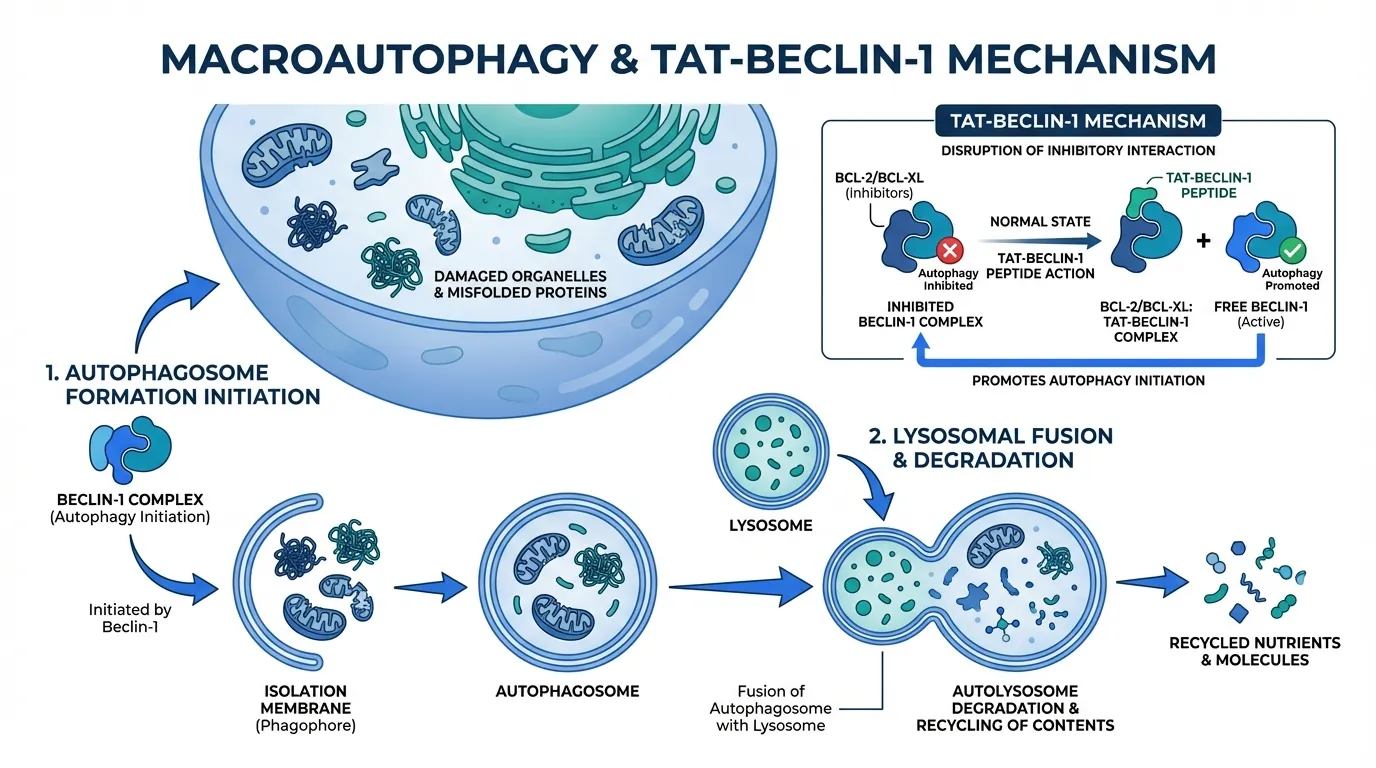
The biology: Macroautophagy (hereafter "autophagy") is the cell's primary recycling system -- sequestering damaged organelles, misfolded proteins, and intracellular pathogens in double-membrane autophagosomes for lysosomal degradation. Autophagy declines with aging due to reduced expression of autophagy genes (ATG5, ATG7, Beclin-1), impaired autophagosome-lysosome fusion, and decreased lysosomal function. This decline is causally linked to aging: genetic enhancement of autophagy extends lifespan in yeast, worms, flies, and mice.
Peptide interventions:
-
Tat-Beclin-1: This is the most direct peptide intervention for autophagy. Tat-Beclin-1 disrupts the inhibitory interaction between beclin-1 and BCL-2/BCL-XL, freeing beclin-1 to initiate autophagosome formation. Mice engineered with a constitutive disruption of the beclin 1-BCL2 interaction (the F121A knock-in) showed increased basal autophagy, improved healthspan metrics, and extended lifespan (Fernandez et al., Nature 2018). Separately, serum beclin-1 levels above 1.5 ng/mL are associated with a 3.4-fold increased odds of being a healthy centenarian, providing human correlative evidence. Tat-Beclin-1 also reduced viral mortality in mice and cleared polyglutamine aggregates. Evidence: Strong preclinical -- lifespan extension in genetic models; human centenarian biomarker data supporting the pathway; but no clinical trials of the peptide itself.
-
NAD+: SIRT1 activation by NAD+ promotes autophagy through deacetylation of autophagy regulators including ATG5, ATG7, and LC3. NAD+ also activates AMPK (indirectly, through the SIRT1-LKB1 axis), which phosphorylates ULK1 to initiate autophagy. Thus, restoring NAD+ levels can address the age-related decline in autophagic flux. Evidence: Moderate -- well-established SIRT1-autophagy connection; animal data; indirect evidence in humans.
Evidence quality for this hallmark: Strong preclinical for Tat-Beclin-1. The beclin 1-BCL2 axis is one of the most validated autophagy-longevity connections. For a direct comparison of approaches, see FOXO4-DRI vs Tat-Beclin-1.
Antagonistic Hallmarks#
6. Deregulated Nutrient Sensing#
The biology: Nutrient sensing pathways -- mTOR, AMPK, sirtuins, and insulin/IGF-1 signaling (IIS) -- coordinate cellular metabolism with nutrient availability. With aging, these pathways become chronically dysregulated. mTOR remains aberrantly active even under nutrient scarcity, IIS signaling becomes resistant, AMPK activation blunts, and sirtuin activity declines. Caloric restriction, the most robust longevity intervention across species, works primarily by recalibrating nutrient sensing.
Peptide interventions:
-
NAD+: NAD+ sits at the intersection of multiple nutrient sensing pathways. It directly activates sirtuins (SIRT1-7), which are master metabolic regulators. SIRT1 deacetylates PGC-1alpha to boost mitochondrial biogenesis, activates AMPK through LKB1, and inhibits mTOR through TSC2 activation. By restoring NAD+ levels, the cascade recalibrates nutrient sensing toward the "fasted" state that mimics caloric restriction. NMN supplementation in aged mice improved insulin sensitivity, enhanced physical activity, and improved lipid profiles. In humans, NMN and NR supplementation have shown NAD+ restoration and improvements in some metabolic parameters, though results vary across trials. Evidence: Strong -- extensive mechanistic data; multiple animal models; several human RCTs with NAD+ restoration endpoints.
-
MOTS-c: MOTS-c activates AMPK, a central energy sensor that promotes catabolic pathways when cellular energy is low. AMPK activation inhibits mTOR, stimulates fatty acid oxidation, and promotes glucose uptake -- effects that broadly recalibrate nutrient sensing. MOTS-c also activates the AMPK-PGC-1alpha axis for mitochondrial biogenesis. In mice, exogenous MOTS-c prevented age-related insulin resistance and improved metabolic homeostasis. Evidence: Moderate preclinical -- clear AMPK activation; metabolic improvement in aged mice; no human trials.
Evidence quality for this hallmark: Strong for NAD+. The NAD+-sirtuin-nutrient sensing axis is one of the best-characterized longevity pathways.
7. Mitochondrial Dysfunction#
The biology: Mitochondria deteriorate with aging through multiple mechanisms: accumulation of mtDNA mutations, reduced electron transport chain (ETC) efficiency, increased ROS production, impaired mitophagy, altered mitochondrial dynamics (fission/fusion imbalance), and decreased membrane potential. This bioenergetic decline affects virtually every tissue, particularly those with high energy demands (brain, heart, skeletal muscle). Mitochondrial dysfunction is both a cause and consequence of other hallmarks.
Peptide interventions:
-
SS-31: SS-31 (elamipretide) is the most clinically advanced mitochondrial peptide. It concentrates 1,000-5,000 fold in the inner mitochondrial membrane, where it binds cardiolipin and interacts with the adenine nucleotide translocator (ANT) to improve ADP sensitivity and ATP production. SS-31 restores mitochondrial cristae structure, reduces ROS production from Complex I and III, and improves mitochondrial coupling. In aged mice, SS-31 reversed age-related redox stress and restored exercise tolerance within hours. Phase 2/3 clinical trials have been conducted for Barth syndrome, primary mitochondrial myopathy, heart failure, and dry AMD. Evidence: Strong -- the most clinically advanced anti-aging peptide with human trial data, though the FDA rejected the Barth syndrome NDA in 2021.
-
MOTS-c: As an endogenous mitochondrial-derived peptide, MOTS-c directly regulates mitochondrial function. It enhances mitochondrial biogenesis through AMPK/PGC-1alpha activation, improves mitochondrial membrane potential, and restores metabolic flexibility in aged cells. Skeletal muscle MOTS-c levels increase approximately 12-fold during exercise, suggesting it mediates exercise-induced mitochondrial adaptations. Exogenous MOTS-c doubled running capacity in mice and reversed age-related physical decline. Evidence: Moderate preclinical -- endogenous biology well characterized; exercise connection compelling; no human clinical trials.
-
Humanin: Humanin is a 24-amino-acid peptide encoded in the 16S rRNA region of mtDNA. It protects against mitochondrial dysfunction through both intracellular and extracellular mechanisms. Intracellularly, humanin binds IGFBP-3 and Bax to prevent mitochondrial apoptosis. Extracellularly, it signals through FPRL1 and the CNTFR/WSX-1/gp130 tripartite receptor to activate STAT3-mediated survival pathways. Endogenous humanin levels decline with age, correlating with increased disease susceptibility. In animal models, humanin analogs (HNG, S14G-humanin) improved mitochondrial membrane potential, reduced infarct size after ischemia, and enhanced insulin sensitivity. Evidence: Moderate -- strong mechanistic data; translational biomarker correlations; no dedicated aging clinical trials.
-
NAD+: NAD+ supports mitochondrial function through SIRT3 (the primary mitochondrial sirtuin), which deacetylates and activates ETC complexes and mitochondrial enzymes. NAD+ decline impairs SIRT3 activity, contributing to hyperacetylation of mitochondrial proteins and reduced bioenergetic function. SIRT1-mediated PGC-1alpha activation also drives mitochondrial biogenesis. Evidence: Moderate -- well-established mechanism; human trials showing NAD+ restoration but inconsistent mitochondrial endpoints.
Evidence quality for this hallmark: Strong for SS-31. This is the best-served hallmark in terms of peptide interventions. See Mitochondrial Peptides: The Next Frontier in Longevity for detailed coverage.
8. Cellular Senescence#
The biology: Senescent cells are permanently growth-arrested cells that accumulate with age and resist apoptosis. They secrete a complex mix of pro-inflammatory cytokines, chemokines, matrix metalloproteinases, and growth factors called the senescence-associated secretory phenotype (SASP). While transient senescence serves beneficial roles (wound healing, tumor suppression, embryonic development), chronic senescent cell accumulation drives tissue dysfunction, sterile inflammation, and contributes to virtually every age-related disease. Transplanting senescent cells into young mice accelerates aging.
Peptide interventions:
-
FOXO4-DRI: FOXO4-DRI is the definitive senolytic peptide. In senescent cells, FOXO4 accumulates in the nucleus and sequesters p53, preventing apoptosis. FOXO4-DRI is a D-Retro-Inverso peptide that competitively disrupts this interaction, releasing p53 to trigger apoptosis selectively in senescent cells. In naturally aged mice, FOXO4-DRI restored fitness, fur density, and renal function (Baar et al., Cell 2017). Subsequent studies expanded to chondrocyte rejuvenation, age-related testosterone restoration, and keloid fibroblast clearance. Evidence: Strong preclinical -- landmark Cell publication; consistent results across tissue types; but no human trials and pharmacokinetic challenges due to large peptide size. For a detailed comparison of senolytic versus autophagic clearance, see FOXO4-DRI vs Tat-Beclin-1.
-
Epitalon: By maintaining telomere length, epitalon may prevent or delay cells from entering replicative senescence in the first place. This is a preventive rather than interventional approach to the senescence hallmark. Animal studies showed reduced senescence markers in epitalon-treated aged animals. Evidence: Indirect -- telomere maintenance is a validated upstream target, but the anti-senescence effect is inferred rather than directly demonstrated. See Epitalon vs FOXO4-DRI for the preventive versus interventional comparison.
Evidence quality for this hallmark: Strong preclinical for FOXO4-DRI. The senolytic field is one of the most active in aging research, with FOXO4-DRI as the leading peptide-based intervention.
Integrative Hallmarks#
9. Stem Cell Exhaustion#
The biology: Tissue regenerative capacity depends on resident stem cell populations that decline in number and function with age. Hematopoietic stem cells shift toward myeloid differentiation, muscle satellite cells lose quiescence regulation, neural stem cells decrease in neurogenic niches, and intestinal stem cells accumulate mutations. Stem cell exhaustion is a downstream consequence of primary hallmarks -- DNA damage, telomere attrition, epigenetic drift, and mitochondrial dysfunction all impair stem cell function.
Peptide interventions:
No peptide directly targets stem cell exhaustion as its primary mechanism. However, several peptides address upstream hallmarks that contribute to stem cell decline:
-
NAD+: NMN supplementation restored the function of aged muscle stem cells in mice by improving mitochondrial function through SIRT1 activation. Aged hematopoietic stem cells also showed functional improvement after NAD+ repletion. Evidence: Moderate preclinical -- clear stem cell improvements in animal models.
-
Epitalon: By maintaining telomere length, epitalon could theoretically preserve stem cell replicative capacity, since telomere attrition is a primary driver of stem cell exhaustion. Some animal data suggest improved hematopoietic parameters in aged, epitalon-treated animals. Evidence: Indirect preclinical -- plausible mechanism but not directly demonstrated.
Evidence quality for this hallmark: Limited. Stem cell exhaustion remains the least directly targetable hallmark by peptides. Indirect approaches through upstream hallmarks (NAD+ for mitochondrial function, epitalon for telomeres) are the most plausible strategies.
10. Altered Intercellular Communication#
The biology: Aging changes the signals cells send to each other. The endocrine system shifts (reduced growth hormone, altered cortisol rhythms, declining sex hormones), paracrine signaling is distorted by the SASP, and the extracellular matrix stiffens with cross-linking. Young blood parabiosis experiments (Conboy, Wyss-Coray) demonstrated that circulating factors profoundly influence tissue aging, with young blood factors restoring function in aged tissues and aged blood factors accelerating aging in young tissues.
Peptide interventions:
-
Humanin: Humanin functions as an endocrine mitochondrial-derived peptide -- it is secreted into circulation and signals systemically through cell-surface receptors (FPRL1, CNTFR/WSX-1/gp130). Circulating humanin levels decline with age and correlate inversely with disease risk. By supplementing this declining intercellular signal, exogenous humanin may restore protective paracrine and endocrine communication. Evidence: Moderate -- clear endocrine function; age-related decline documented; receptor-mediated signaling well characterized.
-
MOTS-c: MOTS-c is also secreted by mitochondria and functions as a circulating signaling molecule. It mediates communication between skeletal muscle and other tissues (muscle-to-other organ crosstalk), functioning as a mitokine. Its levels change with exercise and aging, suggesting it is part of the intercellular communication network that deteriorates with age. Evidence: Moderate preclinical -- mitokine biology is emerging; communication function plausible but incompletely characterized.
-
FOXO4-DRI: By eliminating senescent cells, FOXO4-DRI removes a major source of aberrant intercellular signaling (the SASP). This indirectly improves the tissue signaling environment. Evidence: Indirect -- SASP reduction is a consequence of senolysis rather than a direct communication-targeted mechanism.
Evidence quality for this hallmark: Moderate for Humanin. The mitochondrial-derived peptide paradigm (humanin and MOTS-c as circulating signals) provides the most direct peptide-based approach to altered intercellular communication.
11. Chronic Inflammation (Inflammaging)#
The biology: Sterile chronic low-grade inflammation -- termed "inflammaging" -- is a hallmark of aged tissues. Sources include SASP from senescent cells, increased gut permeability (microbial translocation), misplaced self-molecules (cell-free DNA, damaged mitochondria), accumulated DAMPs, and dysregulated immune cells. Inflammaging drives atherosclerosis, neurodegeneration, insulin resistance, and cancer. Elevated IL-6, TNF-alpha, and CRP are consistent biomarkers of biological aging.
Peptide interventions:
-
FOXO4-DRI: Senescent cell clearance removes a primary source of inflammaging -- the SASP. In aged mice, FOXO4-DRI treatment reduced inflammatory markers alongside its tissue-rejuvenating effects. Evidence: Strong preclinical -- SASP is a well-established inflammaging driver, and FOXO4-DRI effectively targets it.
-
Carnosine: Carnosine demonstrates anti-inflammatory activity through multiple mechanisms: inhibition of NF-kB signaling, reduction of AGE-RAGE axis activation (AGEs are potent pro-inflammatory stimuli), and suppression of inflammatory cytokine release. AGE accumulation is a significant contributor to inflammaging, making carnosine's anti-glycation activity relevant here. Evidence: Moderate -- biochemical anti-inflammatory mechanisms well characterized; human supplementation data for beta-alanine; limited aging-specific inflammatory endpoint data.
-
Humanin: Humanin has demonstrated anti-inflammatory effects in multiple models, reducing neuroinflammation, vascular inflammation, and metabolic inflammation. It suppresses NLRP3 inflammasome activation and reduces IL-6 and TNF-alpha production. Evidence: Moderate preclinical -- anti-inflammatory effects demonstrated in disease models but not specifically in inflammaging context.
Evidence quality for this hallmark: Moderate. Multiple peptides address inflammation through different routes. FOXO4-DRI (removing SASP source) and carnosine (AGE-mediated inflammation) provide the most direct approaches.
12. Dysbiosis#
The biology: The gut microbiome changes with aging -- microbial diversity decreases, beneficial taxa decline, and pathobiont populations expand. Aged gut microbiota produce less short-chain fatty acids, have increased intestinal permeability ("leaky gut"), and contribute to systemic inflammation through bacterial translocation. Fecal microbiota transplant from young to aged mice improves cognitive function and reduces inflammation, demonstrating causality.
Peptide interventions:
No peptide in the current anti-aging research pipeline directly targets gut dysbiosis as its primary mechanism. This remains a significant gap in peptide-based aging interventions. Indirect effects through anti-inflammatory peptides (reduced gut inflammation may improve barrier function) and metabolic peptides (MOTS-c, NAD+) are plausible but undemonstrated.
Evidence quality for this hallmark: None. This represents a clear unmet need in anti-aging peptide research.
Multi-Hallmark Coverage Map#
| Peptide | Primary Hallmark(s) | Secondary Hallmark(s) | Evidence Level |
|---|---|---|---|
| Epitalon | Telomere attrition | Epigenetic alterations, cellular senescence (preventive) | Moderate preclinical |
| FOXO4-DRI | Cellular senescence | Chronic inflammation, altered communication | Strong preclinical |
| SS-31 | Mitochondrial dysfunction | -- | Strong (clinical trials) |
| MOTS-c | Mitochondrial dysfunction, deregulated nutrient sensing | Altered communication | Moderate preclinical |
| Humanin | Mitochondrial dysfunction | Altered communication, chronic inflammation | Moderate |
| Tat-Beclin-1 | Disabled macroautophagy | Loss of proteostasis | Strong preclinical |
| NAD+ | Deregulated nutrient sensing | Genomic instability, epigenetic alterations, mitochondrial dysfunction, autophagy, stem cell exhaustion | Strong |
| Carnosine | Loss of proteostasis | Chronic inflammation, genomic instability | Moderate |
Which Hallmarks Are Best Served?#
Well-served hallmarks (strong peptide candidates exist):
- Mitochondrial dysfunction -- SS-31, MOTS-c, Humanin, NAD+
- Disabled macroautophagy -- Tat-Beclin-1
- Cellular senescence -- FOXO4-DRI
- Deregulated nutrient sensing -- NAD+, MOTS-c
Moderately served hallmarks (peptide candidates with caveats):
- Telomere attrition -- Epitalon (limited independent validation)
- Loss of proteostasis -- Carnosine (well-characterized but indirect)
- Chronic inflammation -- multiple peptides with indirect effects
Underserved hallmarks (gaps in peptide research):
- Genomic instability -- no direct peptide intervention
- Epigenetic alterations -- NAD+/sirtuins address this partially
- Stem cell exhaustion -- no direct peptide intervention
- Altered intercellular communication -- emerging data for mitochondrial-derived peptides
- Dysbiosis -- completely unaddressed
The Case for Multi-Target Strategies#
No single peptide covers all twelve hallmarks. The table above makes this clear -- even NAD+, which touches the most hallmarks, has limited evidence for several of them. The emerging consensus in geroscience is that aging is a multi-factorial process requiring multi-target interventions.
Theoretically rational combinations based on hallmark coverage might include:
- Upstream prevention + downstream clearance: Epitalon (prevent senescence via telomere maintenance) + FOXO4-DRI (clear existing senescent cells)
- Mitochondrial protection + autophagy enhancement: SS-31 (restore mitochondrial function) + Tat-Beclin-1 (enhance clearance of damaged mitochondria via mitophagy)
- Metabolic recalibration + proteostasis: NAD+ (sirtuin activation, nutrient sensing) + Carnosine (anti-glycation, protein protection)
These are theoretical frameworks, not clinical recommendations. No combination studies have been conducted in aging models.
Conclusion#
Mapping peptide interventions to the hallmarks of aging reveals both the promise and the limitations of the current research landscape. Several hallmarks -- particularly mitochondrial dysfunction, autophagy, and cellular senescence -- have strong peptide candidates backed by meaningful preclinical evidence. Others -- genomic instability, stem cell exhaustion, dysbiosis -- remain largely unaddressed by peptide approaches.
NAD+ emerges as the broadest-spectrum intervention, touching at least six hallmarks through its role as a sirtuin cofactor, while SS-31 represents the most clinically advanced candidate for a single hallmark. The field increasingly recognizes that rational multi-hallmark targeting will likely be necessary for meaningful lifespan and healthspan extension.
For further reading, see Best Anti-Aging Peptides in 2026, Bioregulator Peptides for Aging, and Peptides for Cellular Longevity.
Related Peptide Profiles#
Learn more about the peptides discussed in this article:
- Carnosine Overview and Research Guide
- Carnosine Dosing Protocols
- Carnosine Side Effects and Safety
- Epitalon Overview and Research Guide
- Epitalon Dosing Protocols
- Epitalon Side Effects and Safety
- FOXO4-DRI Overview and Research Guide
- FOXO4-DRI Dosing Protocols
- FOXO4-DRI Side Effects and Safety
- Humanin Overview and Research Guide
- Humanin Dosing Protocols
- Humanin Side Effects and Safety
- MOTS-c Overview and Research Guide
- MOTS-c Dosing Protocols
- MOTS-c Side Effects and Safety
- NAD+ Overview and Research Guide
- NAD+ Dosing Protocols
- NAD+ Side Effects and Safety
- SS-31 Overview and Research Guide
- SS-31 Dosing Protocols
- SS-31 Side Effects and Safety
- Tat-Beclin-1 Overview and Research Guide
- Tat-Beclin-1 Dosing Protocols
- Tat-Beclin-1 Side Effects and Safety

Frequently Asked Questions About The Hallmarks of Aging: Which Peptides Target Which?
What does this article cover?
Definitive mapping of the 12 hallmarks of aging to specific peptide interventions including Epitalon, FOXO4-DRI, SS-31, MOTS-c, and NAD+. This guide is for educational purposes only and does not constitute medical advice.
Which peptides are discussed in this article?
This article covers Carnosine, Epitalon, FOXO4-DRI, Humanin, MOTS-c, NAD+, SS-31, Tat-Beclin-1. Key context: Carnosine (Endogenous dipeptide that combats loss of proteostasis through anti-glycation activity and scaven...); Epitalon (Tetrapeptide bioregulator studied for telomerase activation and telomere elongation in human soma...); FOXO4-DRI (Senolytic peptide that selectively eliminates senescent cells by disrupting the FOXO4-p53 nuclear...). Each peptide is discussed based on available research evidence.
Who is this guide written for?
This guide is written for researchers and individuals seeking an evidence-based overview of the topic covered in "The Hallmarks of Aging: Which Peptides Target Which?." It summarizes available research data without making treatment recommendations. Always consult a healthcare provider for medical decisions.
What are the key takeaways from this article?
The main findings covered in this article include: Endogenous dipeptide that combats loss of proteostasis through anti-glycation activity and scaven.... Tetrapeptide bioregulator studied for telomerase activation and telomere elongation in human soma.... Senolytic peptide that selectively eliminates senescent cells by disrupting the FOXO4-p53 nuclear.... These takeaways are based on the research data available at the time of publication.
What is Carnosine and why is it significant?
Carnosine is a peptide discussed in this article because: Endogenous dipeptide that combats loss of proteostasis through anti-glycation activity and scavenging of reactive carbonyl species. For a complete profile of Carnosine, see the dedicated peptide page on this site.
Continue reading this research review
Free access to the complete analysis with citations and evidence ratings.
150+ peptide profiles · 30+ comparisons · 18 research tools
Medical Disclaimer
This website is for educational and informational purposes only. The information provided is not intended to diagnose, treat, cure, or prevent any disease. Always consult with a qualified healthcare professional before using any peptide or supplement.
Join 2,000+ researchers getting biweekly updates
Enjoyed this article?
The Research Briefing delivers deep-dives like this biweekly — plus new study breakdowns, safety updates, and tool announcements.
Free forever. No spam. Unsubscribe in one click.
Where to Find These Peptides
Continue Exploring
Peptide Profiles
Keep Reading

13 Best Anti-Aging Peptides (2026): Ranked by Clinical Evidence
From senolytic FOXO4-DRI to mitochondrial SS-31, we ranked 13 anti-aging peptides by clinical trial evidence across 6 mechanisms. See which have human data vs. animal-only studies.

Anti-Aging Peptides by Mechanism: Senolytics, Telomeres, Mitochondria, and Hormones
Research review of anti-aging peptides organized by mechanism of action including senolytic peptides (FOXO4-DRI), telomere peptides (epitalon), mitochondrial peptides (SS-31, MOTS-c), tissue remodelers (GHK-Cu), and bioregulators (pinealon, thymalin). Evidence quality assessment for each approach.

Mitochondrial Peptides: The Next Frontier in Longevity
Mitochondrial peptides MOTS-c, SS-31, and Epitalon reviewed for their roles in cellular energy, aging, and longevity research.
You Might Also Like
Related content you may find interesting