Peptides for Energy and Mitochondrial Health: What the Research Shows

Introduction#
Energy at the cellular level depends on mitochondrial function -- the ability of mitochondria to produce ATP efficiently, manage oxidative stress, and maintain quality control through biogenesis and mitophagy. When mitochondrial function declines with age, illness, or metabolic stress, the result is fatigue, reduced exercise capacity, and accelerated aging across multiple organ systems.
This guide covers 7 peptides that influence cellular energy through three distinct mechanisms: direct mitochondrial targeting, metabolic pathway modulation, and hormonal optimization of the growth hormone axis. The compounds range from FDA-approved therapeutics (tesamorelin) to preclinical research peptides (MOTS-c), with evidence levels spanning decades of clinical use to early animal studies.
For mitochondrial peptides in the context of longevity, see Mitochondrial Peptides: The Next Frontier in Longevity. For broader anti-aging coverage, see Best Anti-Aging Peptides in 2026.
Important note: Tesamorelin is the only FDA-approved compound in this guide, and only for HIV-associated lipodystrophy. None of these peptides are approved for fatigue, energy enhancement, or general mitochondrial support. This article is for educational and research purposes only.
Direct Mitochondrial Targeting#
These peptides act directly on or within mitochondria to improve energy production, reduce oxidative damage, and support mitochondrial function.
SS-31 (Elamipretide) -- Clinical-Stage Mitochondrial Rescue#
Evidence Level: Phase 2/3 clinical trials | FDA Status: Investigational
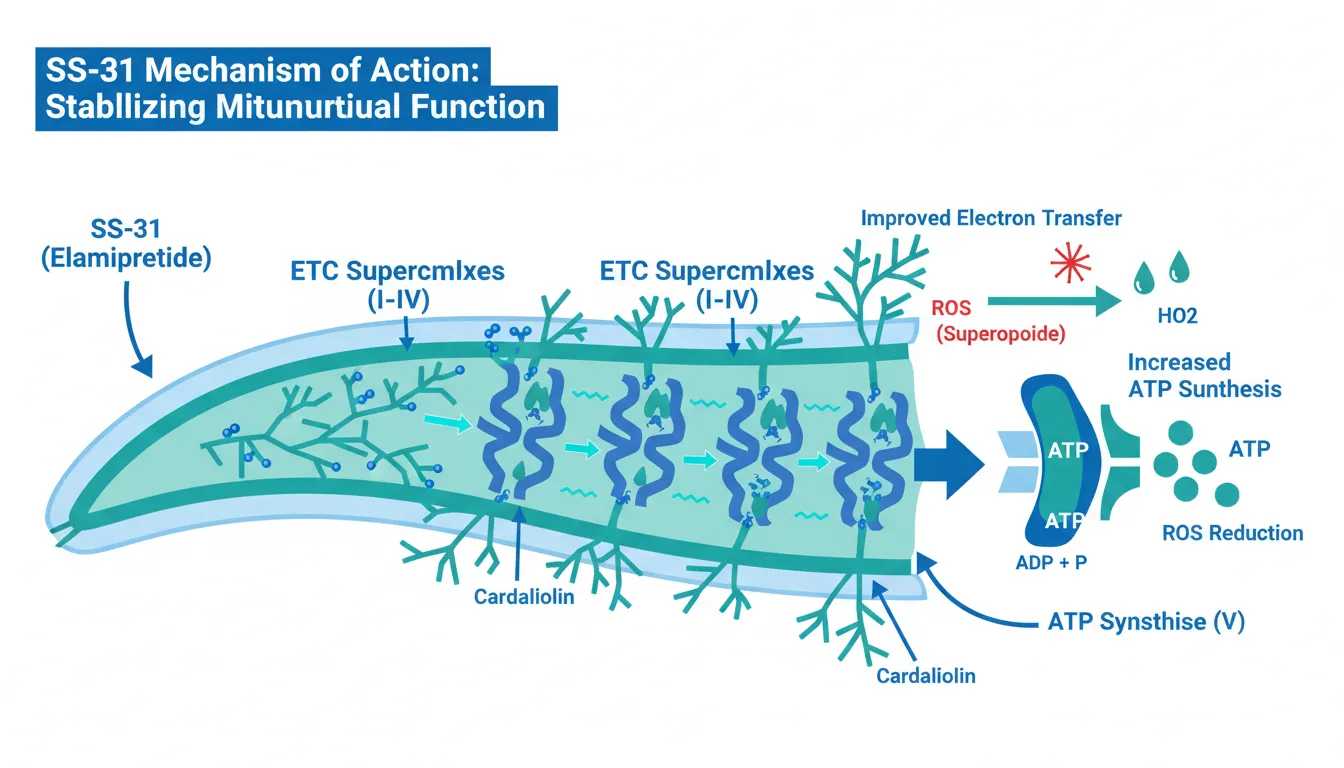
SS-31 (D-Arg-Dmt-Lys-Phe-NH2) is the most clinically advanced mitochondria-targeted peptide. It concentrates 1,000-5,000 fold in the inner mitochondrial membrane by binding to cardiolipin, a phospholipid essential for electron transport chain (ETC) organization and cristae structure.
How it supports energy production:
- Stabilizes cardiolipin-dependent ETC supercomplex assembly, improving electron transfer efficiency
- Enhances ADP sensitivity through the adenine nucleotide translocator (ANT), allowing faster ATP synthesis in response to energy demand
- Reduces mitochondrial reactive oxygen species (ROS) production at the source, protecting ETC components from oxidative damage
- Reverses age-related redox stress and improves exercise tolerance in aged animal models
Clinical status: SS-31 has been tested in Phase 2/3 trials for Barth syndrome (TAZPOWER), primary mitochondrial myopathy, heart failure with preserved ejection fraction, and age-related mitochondrial dysfunction. The FDA rejected the Barth syndrome NDA in 2021 on efficacy grounds, but trials in other mitochondrial disease populations continue.
Energy relevance: SS-31 is the only peptide in this guide that directly targets the ATP production machinery. In aging models, it restores mitochondrial function to near-youthful levels, suggesting relevance to age-related fatigue.
Humanin -- Mitochondrial Stress Protection#
Evidence Level: Preclinical with translational data | FDA Status: Not approved
Humanin is a 24-amino-acid mitochondrial-derived peptide (MDP) encoded in mitochondrial DNA (mtDNA). Discovered in surviving neurons from Alzheimer's disease brains, it functions as an endogenous stress-response signal produced by mitochondria under threat.
How it supports energy:
- Protects mitochondria from stress-induced membrane permeabilization through direct Bax interaction, preventing the mitochondrial apoptosis cascade
- Activates AKT and STAT3 signaling through its tripartite receptor complex (CNTFR/WSX-1/gp130), promoting cell survival under metabolic stress
- Improves insulin sensitivity and glucose homeostasis in animal models, optimizing substrate availability for mitochondrial energy production
- Reduces myocardial infarct size in preclinical models, demonstrating protection of high-energy-demand tissue
Age-related decline: Circulating humanin levels decrease with age, correlating with increased disease risk and potentially contributing to the energy deficit of aging. This makes humanin restoration an attractive theoretical target, though no clinical trials have been conducted.
Key limitation: The synthetic analog S14G-humanin (HNG) is approximately 1,000-fold more potent than native humanin, but both remain preclinical. Humanin's energy benefits are inferred from its cytoprotective mechanism rather than directly measured ATP production effects.
MOTS-c -- The Exercise Mimetic#
Evidence Level: Preclinical | FDA Status: Category 2 (banned from compounding); WADA prohibited
MOTS-c is a 16-amino-acid MDP that functions as a mitochondrial retrograde signal, communicating mitochondrial status to the nuclear genome. It is the most studied peptide "exercise mimetic" -- a compound that activates exercise-related signaling pathways without physical activity.
How it supports energy:
- Activates the AMPK/PGC-1alpha pathway, the master regulator of mitochondrial biogenesis and cellular energy sensing
- Skeletal muscle MOTS-c levels increase nearly 12-fold during exercise, suggesting it mediates some of exercise's metabolic benefits
- Directly binds casein kinase 2 (CK2) in skeletal muscle, activating a kinase that regulates hundreds of cellular substrates
- Doubled running capacity in mice and reversed age-related physical decline in aged animal models
- Improves glucose uptake independent of insulin through GLUT4 translocation
Practical context: MOTS-c's exercise-mimetic effects are compelling in sedentary or aged animal models, but it is unknown whether they would add benefit to already-active humans. Its WADA prohibition (as of 2024) reflects concern about performance-enhancing potential despite the absence of human trials. MOTS-c is also classified as FDA Category 2, meaning it cannot be compounded in the US.
Metabolic Support#
These peptides support energy indirectly through anti-glycation, pH buffering, immune optimization, and metabolic homeostasis.
Carnosine -- Muscle Energy Buffer#
Evidence Level: Human data (as beta-alanine supplement) | FDA Status: Supplement ingredient
Carnosine (beta-alanyl-L-histidine) is an endogenous dipeptide found at high concentrations in skeletal muscle (20-30 mM) and brain tissue. It is one of the few peptides in this guide available as a dietary supplement.
How it supports energy:
- Provides 10-20% of skeletal muscle's intracellular pH buffering capacity, directly supporting sustained high-intensity energy output by neutralizing hydrogen ions produced during anaerobic metabolism
- Scavenges reactive carbonyl species that form advanced glycation end products (AGEs), protecting mitochondrial and metabolic enzymes from glycation-induced inactivation
- Acts as a metal chelator, particularly for copper and zinc, preventing metal-catalyzed oxidative damage to mitochondrial membranes
- Muscle carnosine levels decline with age, potentially contributing to reduced exercise capacity and energy in aging
Supplementation: Oral carnosine is rapidly hydrolyzed by serum carnosinase (CN1), so beta-alanine supplementation (the rate-limiting precursor) is the established approach to increasing muscle carnosine levels. This is one of the best-supported ergogenic aids in sports nutrition, with consistent evidence for improved high-intensity exercise performance.
Phase 2 clinical data: Carnosine supplementation (1-2 g/day) has been studied in Phase 2 trials for glycemic control in prediabetes and type 2 diabetes, with preliminary evidence for improved fasting glucose and HbA1c. Metabolic health directly influences perceived energy levels.
For exercise-specific applications, see Peptides for Physical Performance and Endurance.
Thymosin Alpha-1 -- Immune-Mediated Energy Support#
Evidence Level: Approved in 35+ countries | FDA Status: Category 2 (US); approved internationally
Thymosin alpha-1 (Zadaxin) is a 28-amino-acid peptide originally isolated from thymic tissue. While not a direct energy peptide, it addresses a significant contributor to fatigue: immune dysregulation and chronic inflammatory burden.
How it supports energy:
- Enhances T-cell maturation and NK cell activity, supporting immune surveillance that reduces subclinical infection burden
- Stimulates dendritic cell maturation and toll-like receptor signaling, optimizing immune efficiency
- Modulates cytokine production toward balanced Th1/Th2 responses, potentially reducing the chronic low-grade inflammation (inflammaging) that drives fatigue in aging and chronic disease
- Approved in 35+ countries for hepatitis B and as an immune adjuvant, with decades of clinical safety data
Energy connection: Chronic immune activation and subclinical inflammation are increasingly recognized as drivers of fatigue in aging populations. By optimizing immune function, thymosin alpha-1 may reduce the metabolic cost of chronic immune activation, though direct energy-outcome studies are lacking.
Limitation: Thymosin alpha-1 was classified as FDA Category 2 in 2024, restricting compounding in the US. It remains available as Zadaxin in approved markets.
Growth Hormone Axis Optimization#
The growth hormone (GH) / IGF-1 axis is a major determinant of body composition, metabolic rate, and subjective energy levels. These GHRH analogs stimulate physiological GH release rather than providing exogenous GH.
Tesamorelin (Egrifta) -- FDA-Approved GHRH Analog#
Evidence Level: FDA-approved | FDA Status: Approved (HIV lipodystrophy)
Tesamorelin is a 44-amino-acid synthetic GHRH analog with a trans-3-hexenoic acid modification that improves stability. It is the only FDA-approved GHRH analog and the only compound in this guide with an approved US indication.
How it supports energy:
- Stimulates physiological pulsatile GH release from the pituitary, raising IGF-1 levels while preserving feedback mechanisms
- Reduces visceral adipose tissue (VAT) -- the metabolically active fat depot most associated with insulin resistance, inflammation, and fatigue
- Improves lipid profiles (reduced triglycerides, improved HDL) in clinical trials, supporting cardiovascular metabolic health
- Unlike exogenous GH, preserves normal GH pulsatility and somatostatin feedback, reducing risk of supraphysiological GH side effects
Clinical data: In Phase 3 trials for HIV lipodystrophy, tesamorelin 2 mg daily reduced trunk fat by approximately 18% vs placebo at 26 weeks. IGF-1 levels increased to normal ranges. Tesamorelin has also been studied for cognitive function in mild cognitive impairment and for NAFLD/NASH, with encouraging preliminary results.
Practical advantage: As an FDA-approved drug, tesamorelin has the most rigorous safety data of any GHRH analog. Daily subcutaneous injection at 2 mg is the standard protocol.
Sermorelin -- GHRH(1-29) Fragment#
Evidence Level: Previously FDA-approved (discontinued) | FDA Status: Available via compounding
Sermorelin is the first 29 amino acids of endogenous GHRH -- the minimum fragment that retains full biological activity at the GHRH receptor. It was previously FDA-approved as Geref for diagnostic evaluation of GH deficiency, though the commercial product was voluntarily discontinued.
How it supports energy:
- Stimulates endogenous GH release through the physiological GHRH receptor on pituitary somatotrophs
- Maintains normal GH pulsatility -- studies show sermorelin restores the nighttime GH surge that declines with age
- Synergistic with GHRP peptides (ipamorelin, GHRP-2) when combined, amplifying GH release beyond what either achieves alone
- Age-related GH decline (somatopause) is associated with increased body fat, decreased lean mass, reduced exercise capacity, and fatigue -- all targets of GH restoration
Context vs tesamorelin: Sermorelin has a shorter half-life than tesamorelin and is susceptible to DPP-IV degradation, requiring more frequent dosing. However, it is widely available through compounding pharmacies and has a long track record of clinical use. Tesamorelin's trans-hexenoic acid modification provides improved stability.
Limitation: Sermorelin is not currently FDA-approved for any indication. Evidence for energy-specific benefits comes from GH restoration studies rather than direct fatigue trials.
Evidence Comparison#
| Peptide | Mechanism | Evidence Level | Human Data | Energy Relevance |
|---|---|---|---|---|
| SS-31 | Cardiolipin binding, ETC optimization | Phase 2/3 | Clinical trials | Direct ATP production |
| Humanin | Mitochondrial stress protection | Preclinical+ | Observational | Cytoprotection of energy-producing organelles |
| MOTS-c | AMPK activation, exercise mimetic | Preclinical | Observational | Mitochondrial biogenesis, glucose metabolism |
| Carnosine | pH buffering, anti-glycation | Human (supplement) | Phase 2 trials | Muscle energy buffering, metabolic enzyme protection |
| Thymosin alpha-1 | Immune optimization | Approved (35+ countries) | Extensive | Reduced inflammatory fatigue burden |
| Tesamorelin | GHRH analog, GH stimulation | FDA-approved | Phase 3 | Body composition, metabolic optimization |
| Sermorelin | GHRH(1-29), GH stimulation | Previously approved | Clinical use | GH axis restoration, somatopause reversal |
Mechanism Summary#
The 7 peptides in this guide target energy through three layers:
-
Mitochondrial layer (SS-31, humanin, MOTS-c): Direct action on the organelles that produce ATP. SS-31 optimizes existing mitochondrial function; MOTS-c promotes new mitochondria through biogenesis; humanin protects mitochondria from stress-induced failure.
-
Metabolic layer (carnosine, thymosin alpha-1): Support the cellular environment for energy production. Carnosine buffers the acidosis and oxidative damage that impair metabolic enzymes; thymosin alpha-1 reduces the energy-draining chronic inflammatory state.
-
Hormonal layer (tesamorelin, sermorelin): Optimize the GH/IGF-1 axis that governs body composition, lean mass, and metabolic rate. Both work through physiological GHRH receptor stimulation rather than exogenous GH replacement.
Conclusion#
The peptide landscape for energy and mitochondrial health spans from well-validated clinical compounds to early-stage research molecules. Tesamorelin has the strongest regulatory backing as the only FDA-approved compound, while SS-31 represents the most direct approach to mitochondrial energy rescue in clinical trials. MOTS-c offers the most novel mechanism as an exercise mimetic but remains preclinical and faces regulatory restrictions.
For most research contexts, the strongest evidence base exists for the GH axis peptides (tesamorelin, sermorelin) given their decades of clinical data, and for carnosine given its established supplement evidence. The mitochondrial-derived peptides (humanin, MOTS-c) are scientifically compelling but require human clinical trials to validate their energy-specific benefits.
For related reading, see Mitochondrial Peptides: The Next Frontier in Longevity, Best Anti-Aging Peptides in 2026, Peptides for Physical Performance and Endurance, and the Peptide Finder Quiz for personalized recommendations.
Related Peptide Profiles#
Learn more about the peptides discussed in this article:
- SS-31 Overview and Research Guide
- SS-31 Dosing Protocols
- SS-31 Side Effects and Safety
- MOTS-c Overview and Research Guide
- MOTS-c Dosing Protocols
- MOTS-c Side Effects and Safety
- Humanin Overview and Research Guide
- Humanin Dosing Protocols
- Humanin Side Effects and Safety
- Carnosine Overview and Research Guide
- Carnosine Dosing Protocols
- Carnosine Side Effects and Safety
- Thymosin Alpha-1 Overview and Research Guide
- Thymosin Alpha-1 Dosing Protocols
- Thymosin Alpha-1 Side Effects and Safety
- Tesamorelin Overview and Research Guide
- Tesamorelin Dosing Protocols
- Tesamorelin Side Effects and Safety
- Sermorelin Overview and Research Guide
- Sermorelin Dosing Protocols
- Sermorelin Side Effects and Safety

Frequently Asked Questions About Peptides for Energy and Mitochondrial Health: What the Research Shows
What does this article cover?
Research guide to 7 peptides targeting energy and mitochondrial health — SS-31 (elamipretide), MOTS-c, humanin, carnosine, thymosin alpha-1, tesamorelin, and sermorelin — with clinical evidence, mechanisms, and practical context. This guide is for educational purposes only and does not constitute medical advice.
Which peptides are discussed in this article?
This article covers SS-31, MOTS-c, Humanin, Carnosine, Thymosin Alpha-1, Tesamorelin, Sermorelin. Key context: SS-31 (Mitochondria-targeted tetrapeptide in Phase 2/3 clinical trials that concentrates in the inner mi...); MOTS-c (Mitochondrial-derived exercise mimetic peptide that activates AMPK and reverses age-related metab...); Humanin (Mitochondrial-derived peptide with cytoprotective effects that protects mitochondria from stress-...). Each peptide is discussed based on available research evidence.
Who is this guide written for?
This guide is written for researchers and individuals seeking an evidence-based overview of the topic covered in "Peptides for Energy and Mitochondrial Health: What the Research Shows." It summarizes available research data without making treatment recommendations. Always consult a healthcare provider for medical decisions.
What are the key takeaways from this article?
The main findings covered in this article include: Mitochondria-targeted tetrapeptide in Phase 2/3 clinical trials that concentrates in the inner mi.... Mitochondrial-derived exercise mimetic peptide that activates AMPK and reverses age-related metab.... Mitochondrial-derived peptide with cytoprotective effects that protects mitochondria from stress-.... These takeaways are based on the research data available at the time of publication.
What is SS-31 and why is it significant?
SS-31 is a peptide discussed in this article because: Mitochondria-targeted tetrapeptide in Phase 2/3 clinical trials that concentrates in the inner mitochondrial membrane to improve ATP production and reduce oxidative stress. For a complete profile of SS-31, see the dedicated peptide page on this site.
Continue reading this research review
Free access to the complete analysis with citations and evidence ratings.
150+ peptide profiles · 30+ comparisons · 18 research tools
Medical Disclaimer
This website is for educational and informational purposes only. The information provided is not intended to diagnose, treat, cure, or prevent any disease. Always consult with a qualified healthcare professional before using any peptide or supplement.
Join 2,000+ researchers getting biweekly updates
Enjoyed this article?
The Research Briefing delivers deep-dives like this biweekly — plus new study breakdowns, safety updates, and tool announcements.
Free forever. No spam. Unsubscribe in one click.
Where to Find These Peptides
Continue Exploring
Peptide Profiles
Keep Reading

13 Best Anti-Aging Peptides (2026): Ranked by Clinical Evidence
From senolytic FOXO4-DRI to mitochondrial SS-31, we ranked 13 anti-aging peptides by clinical trial evidence across 6 mechanisms. See which have human data vs. animal-only studies.

The Hallmarks of Aging: Which Peptides Target Which?
Definitive mapping of the 12 hallmarks of aging to specific peptide interventions including Epitalon, FOXO4-DRI, SS-31, MOTS-c, and NAD+.
Peptide Stacking Guide 2026: Best Combinations by Goal
The definitive 2026 guide to peptide stacking organized by goal. Fat loss, muscle growth, healing, anti-aging, and cognitive stacks with evidence levels, dosing timing, and safety considerations.
You Might Also Like
Related content you may find interesting