Peptides for Wound Healing & Tissue Repair: What the Research Shows (2026)
Key Takeaways
- For broad soft-tissue injury in preclinical evidence, BPC-157 has the widest footprint; for skin and dermal repair, GHK-Cu has the deepest molecular data; for chronic wound closure, thymosin beta-4 (parent of TB-500) has the strongest human trial evidence.
- KPV is the standout for gut mucosal inflammation in animal IBD models, and Thymosin Alpha-1 supports repair indirectly through immune coordination rather than direct tissue regeneration.
- None of these peptides are FDA-approved for wound healing indications, and four of the five were placed in FDA Category 2 (banned from compounding) in 2024.
Which Peptides Support Wound Healing?#
Five peptides dominate the wound healing and tissue repair conversation in current research: BPC-157, TB-500, GHK-Cu, KPV, and Thymosin Alpha-1. Each targets a different mechanism, and each carries a different evidence tier. This guide is an educational overview — not a treatment recommendation — of what the published research actually shows and where the gaps are.
Regulatory reality check: none of these compounds is FDA-approved for wound healing in the United States. In 2024 the FDA placed BPC-157, GHK-Cu, KPV, and Thymosin Alpha-1 into Category 2, prohibiting compounding-pharmacy production. Nothing in this article is medical advice.
The Biology of Peptide-Driven Wound Healing#
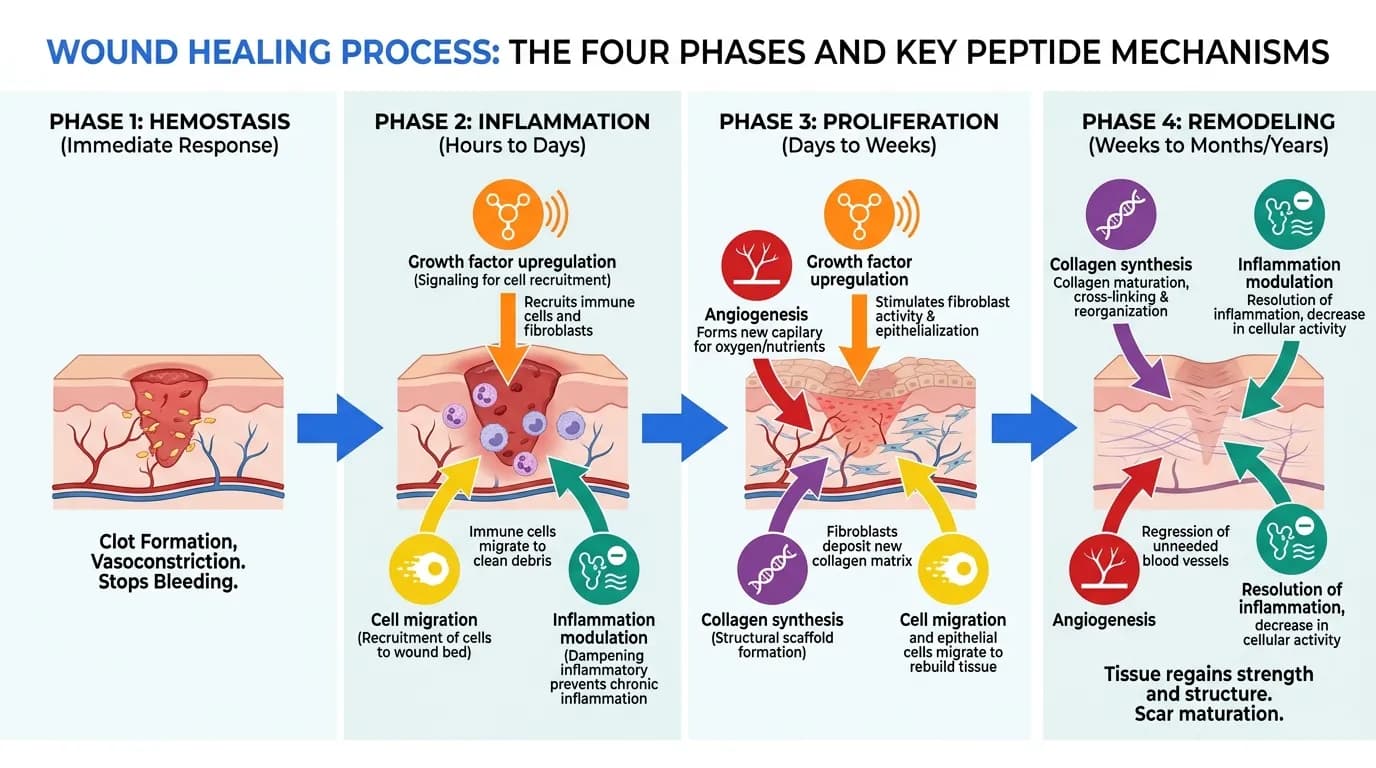
Wound healing is a coordinated four-phase process: hemostasis, inflammation, proliferation, and remodeling. Peptides investigated for healing typically act on the last three phases through a small set of shared mechanisms:
- Angiogenesis — promotion of new blood vessel growth to supply oxygen and nutrients to the wound bed. BPC-157 and GHK-Cu both modulate angiogenic pathways in preclinical models.
- Growth factor upregulation — increased signaling through VEGF, FGF, EGF, and related pathways to recruit fibroblasts and endothelial cells.
- Collagen synthesis — direct or indirect stimulation of collagen I and III production, which forms the structural scaffold of new tissue. GHK-Cu has the deepest evidence here at the gene-expression level.
- Cell migration — recruitment of fibroblasts, keratinocytes, and immune cells into the wound bed. Thymosin beta-4 (and its fragment TB-500) act through actin sequestration to modulate cell migration.
- Inflammation modulation — dampening excessive pro-inflammatory signaling (NF-κB, IL-8) so healing can transition from inflammation to proliferation. KPV and Thymosin Alpha-1 both operate here.
The important framing: a peptide can be biochemically plausible without having strong human evidence. Most of the excitement around these compounds comes from animal and in-vitro data. Translation to human clinical outcomes is uneven.
The 5 Main Healing Peptides#
1. BPC-157 — Broad Preclinical Tissue Repair#
Mechanism. BPC-157 (Body Protection Compound-157) is a 15-amino-acid peptide derived from a protective protein in human gastric juice. In preclinical models it upregulates growth hormone receptors, promotes angiogenesis, activates the nitric oxide system, and modulates VEGF, EGF, and FGF signaling.
Evidence status. Predominantly preclinical. Animal studies span tendon, ligament, muscle, bone, skin, and gut tissue repair — but human clinical data is extremely limited (fewer than 15 published subjects across all trials). A 2019 systematic review found consistent improvements across musculoskeletal injury models in animals, and a 2025 systematic review of 36 studies confirmed the same directional signal.
Best-use scenario. Researchers investigating musculoskeletal soft-tissue injury (tendon, ligament, muscle) or gut mucosal repair in preclinical contexts. The mismatch between the volume of animal data and the near-absence of human data is the single most important thing to weigh.
Read more: BPC-157 overview · BPC-157 research · BPC-157 risks
2. TB-500 — Cell Migration and Dermal Repair#
Mechanism. TB-500 is a synthetic fragment (amino acids 17–23) of thymosin beta-4, a naturally occurring 43-amino-acid peptide. It acts through actin sequestration to regulate cell migration, promotes angiogenesis, reduces inflammation, and upregulates laminin-5 for cell adhesion.
Evidence status. The parent compound (thymosin beta-4) has stronger evidence than the TB-500 fragment itself. A Phase 2 clinical trial showed thymosin beta-4 accelerated healing of chronic stasis and pressure ulcers versus placebo. The foundational 1999 wound-healing study also used the full peptide. Evidence for the TB-500 fragment specifically is thinner and largely preclinical.
Best-use scenario. Researchers focused on dermal or chronic wound-closure models. The most important caveat: do not conflate TB-500 (fragment) evidence with thymosin beta-4 (full peptide) evidence — they are related but not identical molecules.
Read more: TB-500 overview · TB-500 research · TB-500 risks
3. GHK-Cu — Skin Regeneration at the Gene Level#
Mechanism. GHK-Cu is a naturally occurring tripeptide-copper complex found in human plasma. It binds and delivers copper to tissue sites, stimulates collagen I and III synthesis, promotes decorin production, increases angiogenesis, and dampens TGF-beta signaling.
Evidence status. Extensive in-vitro and gene-expression data — a landmark 2015 study demonstrated modulation of 4,000+ human genes involved in skin regeneration. Clinical human data is more limited, and injectable forms are not approved. Topical copper peptide products are widely sold as cosmetics.
Best-use scenario. Skin regeneration, dermal aging, and collagen synthesis research. The gap between molecular data and clinical outcomes remains the primary limitation.
Read more: GHK-Cu overview · GHK-Cu research · GHK-Cu risks
4. KPV — Anti-Inflammatory for Gut Mucosal Repair#
Mechanism. KPV (Lys-Pro-Val) is a tripeptide derived from the C-terminal end of alpha-melanocyte-stimulating hormone (α-MSH). It inhibits NF-κB activation, suppresses IL-8 production, and reduces pro-inflammatory cytokine release. Its small size allows oral bioavailability via the PepT1 transporter, which is unusual for peptides.
Evidence status. Entirely preclinical. Murine studies of DSS- and TNBS-induced colitis have shown reduced intestinal inflammation, and KPV has been reported to be more potent than the parent α-MSH for anti-inflammatory effects. No human clinical trials have been conducted.
Best-use scenario. Researchers investigating gut mucosal inflammation or IBD models. Any claim about human IBD outcomes should be qualified as extrapolation from animal data only.
Read more: KPV overview · KPV research · KPV risks
5. Thymosin Alpha-1 — Immune-Mediated Repair#
Mechanism. Thymosin Alpha-1 is a 28-amino-acid peptide that enhances T-cell maturation, promotes dendritic cell function through Toll-like receptor signaling, and modulates cytokine production. Its healing role is indirect: better immune coordination supports the transition from inflammation to repair.
Evidence status. Extensive clinical data exists — over 11,000 human subjects across 30+ clinical trials — but primarily for immune indications rather than wound healing specifically. Approved in 35+ countries as Zadaxin. Not FDA-approved in the US, and placed in Category 2 in 2024.
Best-use scenario. Researchers interested in immune-mediated repair, particularly in immunocompromised contexts. This is the least direct "healing" peptide of the five — its repair effects are secondary to its immune effects.
Read more: Thymosin Alpha-1 overview · Thymosin Alpha-1 research · Thymosin Alpha-1 risks
Comparison Table#
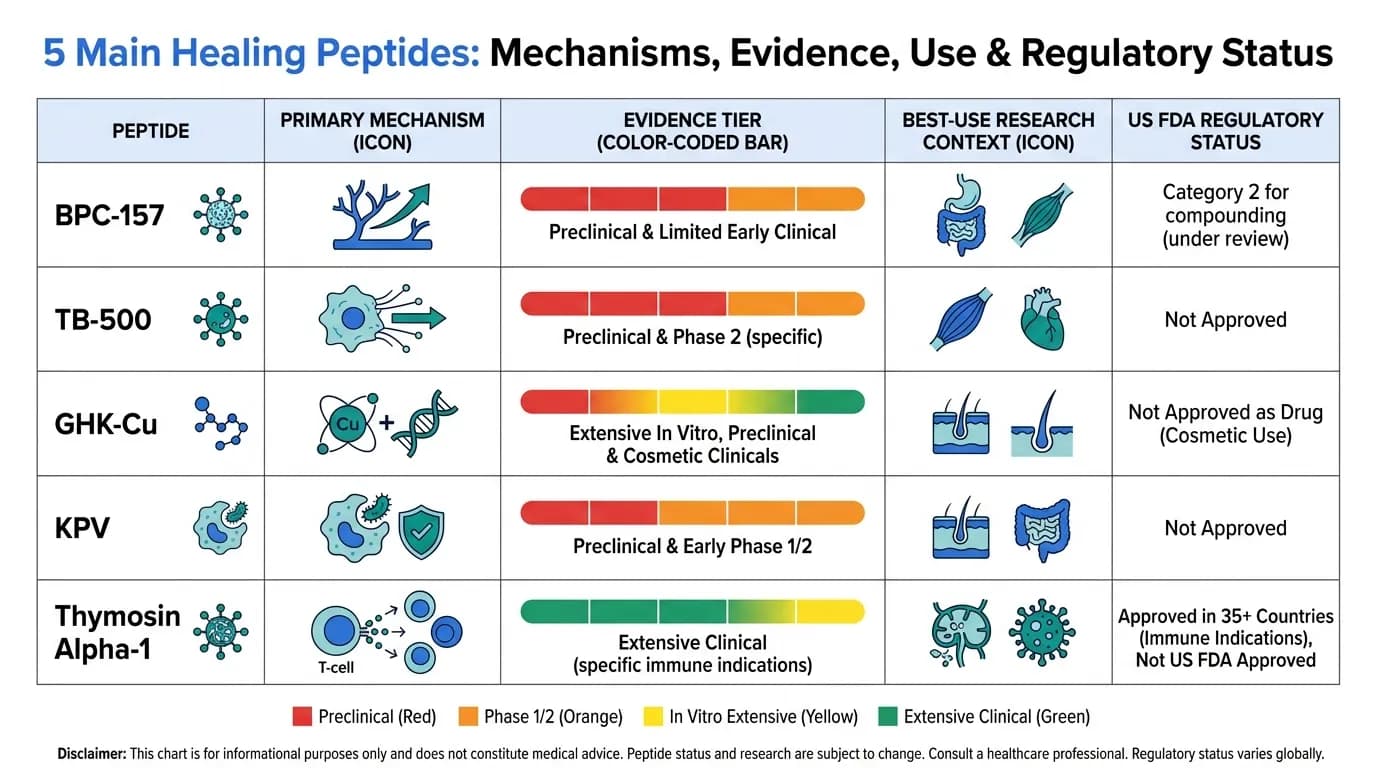
| Peptide | Primary Mechanism | Evidence Tier | Best-For (Research Context) | Typical Route | Notes |
|---|---|---|---|---|---|
| BPC-157 | Angiogenesis + growth factor upregulation | Preclinical (broad) | Musculoskeletal soft tissue, gut | Subcutaneous, oral | Human n < 15 across all studies |
| TB-500 | Actin sequestration, cell migration | Preclinical + Phase 2 (parent compound) | Dermal, chronic wound closure | Subcutaneous, intramuscular | Fragment ≠ full thymosin beta-4 |
| GHK-Cu | Collagen synthesis, gene modulation | In vitro extensive; limited clinical | Skin regeneration | Topical, subcutaneous | Injectable forms not approved |
| KPV | NF-κB and IL-8 suppression | Preclinical only | Gut mucosal inflammation | Oral, subcutaneous | No human trials |
| Thymosin Alpha-1 | Immune modulation via TLR pathway | Extensive clinical (immune) | Immune-mediated repair | Subcutaneous | 11,000+ human subjects, immune indications |
For head-to-head detail, see the dedicated comparisons: BPC-157 vs TB-500, BPC-157 vs GHK-Cu, and GHK-Cu vs TB-500.
Stacking Considerations#
Community protocols frequently combine BPC-157 and TB-500 ("healing stack") on the theory that mechanisms are complementary — BPC-157 driving angiogenesis and growth factor signaling, TB-500 driving cell migration. Peer-reviewed data on peptide combinations for healing is virtually nonexistent, so any stacking claim is extrapolation from single-agent studies.
Before combining any peptides, run the pair through the Stack Compatibility Checker to review documented interactions and category-level rules. That tool does not replace clinical guidance — it is a reference layer for known pairwise concerns.
Two general stacking principles from the literature:
- Don't stack for the sake of stacking. If a single peptide has plausible evidence for the target tissue, adding a second molecule increases variables without a proportional increase in evidence.
- Match the mechanism to the tissue. GHK-Cu for skin, thymosin beta-4 / TB-500 for dermal chronic wounds, BPC-157 for connective tissue — the choice should be driven by which mechanism plausibly matches the injury.
Safety and Sourcing#
Every peptide in this article is sold in the US only for research use. Product quality varies enormously between suppliers because the market is unregulated. Two priorities matter more than any dosing question:
- Third-party lab testing. Any legitimate research supplier should provide a certificate of analysis (COA) from an independent lab — Janoshik Analytical is the most-cited reference in the segment — covering HPLC purity and mass-spec identity confirmation.
- Vendor track record. A supplier's community reputation, transparency, and shipping/payment structure matter as much as headline pricing. For a worked example of vendor evaluation methodology, see our best Canadian peptide vendors 2026 guide.
For the side-effect profile and contraindication list of each compound, always read the linked risks pages before starting any protocol. Common issues across this class include injection-site reactions, transient nausea, and (for TB-500) rare cardiac and lethargy reports in high-dose contexts. None of this replaces a conversation with a qualified clinician.
FAQ#
The five questions above cover the most common research and buyer queries. For deeper dives, use the linked peptide profile pages — each has dedicated dosing, side-effect, research, and risks sub-pages built from the same source literature this article draws on.
This article is for educational purposes only and does not constitute medical advice. None of the compounds discussed are FDA-approved for wound healing indications in the United States. Consult a qualified healthcare provider before beginning any peptide protocol.
Frequently Asked Questions About Peptides for Wound Healing & Tissue Repair: What the Research Shows (2026)
Which peptide is best for wound healing?
There is no single "best" peptide because the answer depends on the tissue involved and the type of evidence a researcher weighs most heavily. BPC-157 has the broadest preclinical footprint across musculoskeletal and gut tissue in animal studies. Thymosin beta-4 (the parent compound TB-500 is derived from) has the strongest published human wound-healing data, including a Phase 2 trial in chronic pressure and stasis ulcers. GHK-Cu has the deepest molecular-level evidence for skin regeneration and collagen synthesis. None of these compounds are FDA-approved for healing indications, and evidence quality varies dramatically between them.
How long does it take for BPC-157 to heal an injury?
Published human data on BPC-157 healing timelines is extremely limited — total human subjects across all published studies is under 15. Timeline claims circulating in community discussions are drawn primarily from rodent studies of tendon, ligament, and muscle injury, which do not necessarily translate to human recovery times. Animal models typically show measurable healing improvements over 2–4 weeks of daily administration, but the extrapolation to humans is unvalidated. See the full [BPC-157 research summary](/peptides/bpc-157/research) for what the published literature actually reports.
Can peptides speed up tissue repair after surgery?
Peer-reviewed human evidence for peptides accelerating post-surgical healing is limited. The strongest case sits with thymosin beta-4, where a Phase 2 trial demonstrated faster closure of chronic ulcers compared with placebo. BPC-157's post-surgical claims are almost entirely from animal models, and GHK-Cu's post-surgical evidence sits primarily at the gene-expression and in-vitro level. No peptide in this class is FDA-cleared for post-surgical use in humans. Researchers considering these compounds should review the [risks page](/peptides/bpc-157/risks) for each and consult a qualified clinician.
Are wound healing peptides FDA approved?
No. As of 2026, none of the five most commonly discussed healing peptides — BPC-157, TB-500, GHK-Cu, KPV, or Thymosin Alpha-1 — are FDA-approved for wound healing or tissue repair indications in the United States. In 2024 the FDA placed BPC-157, GHK-Cu, KPV, and Thymosin Alpha-1 into Category 2, which prohibits compounding pharmacies from producing them. Thymosin Alpha-1 is approved in 35+ other countries for immune indications but not for wound healing specifically. All of these compounds are sold in the US only for research use.
What's the difference between BPC-157 and TB-500 for healing?
BPC-157 is a 15-amino-acid peptide derived from human gastric juice with the broadest preclinical evidence across tendon, ligament, muscle, bone, skin, and gut injury in animals. TB-500 is a synthetic fragment (amino acids 17–23) of the naturally occurring thymosin beta-4 peptide and is studied primarily for cell migration and dermal healing — with most human data coming from the parent compound (thymosin beta-4) rather than TB-500 itself. In community protocols the two are often stacked, but no peer-reviewed human trials of the combination exist. Compare them directly in the [BPC-157 vs TB-500 comparison](/blog/comparisons/bpc-157-vs-tb500).
Continue reading this research review
Free access to the complete analysis with citations and evidence ratings.
150+ peptide profiles · 30+ comparisons · 18 research tools
Medical Disclaimer
This website is for educational and informational purposes only. The information provided is not intended to diagnose, treat, cure, or prevent any disease. Always consult with a qualified healthcare professional before using any peptide or supplement.
Join 2,000+ researchers getting biweekly updates
Enjoyed this article?
The Research Briefing delivers deep-dives like this biweekly — plus new study breakdowns, safety updates, and tool announcements.
Free forever. No spam. Unsubscribe in one click.
Where to Find These Peptides
Continue Exploring
Peptide Profiles
Keep Reading
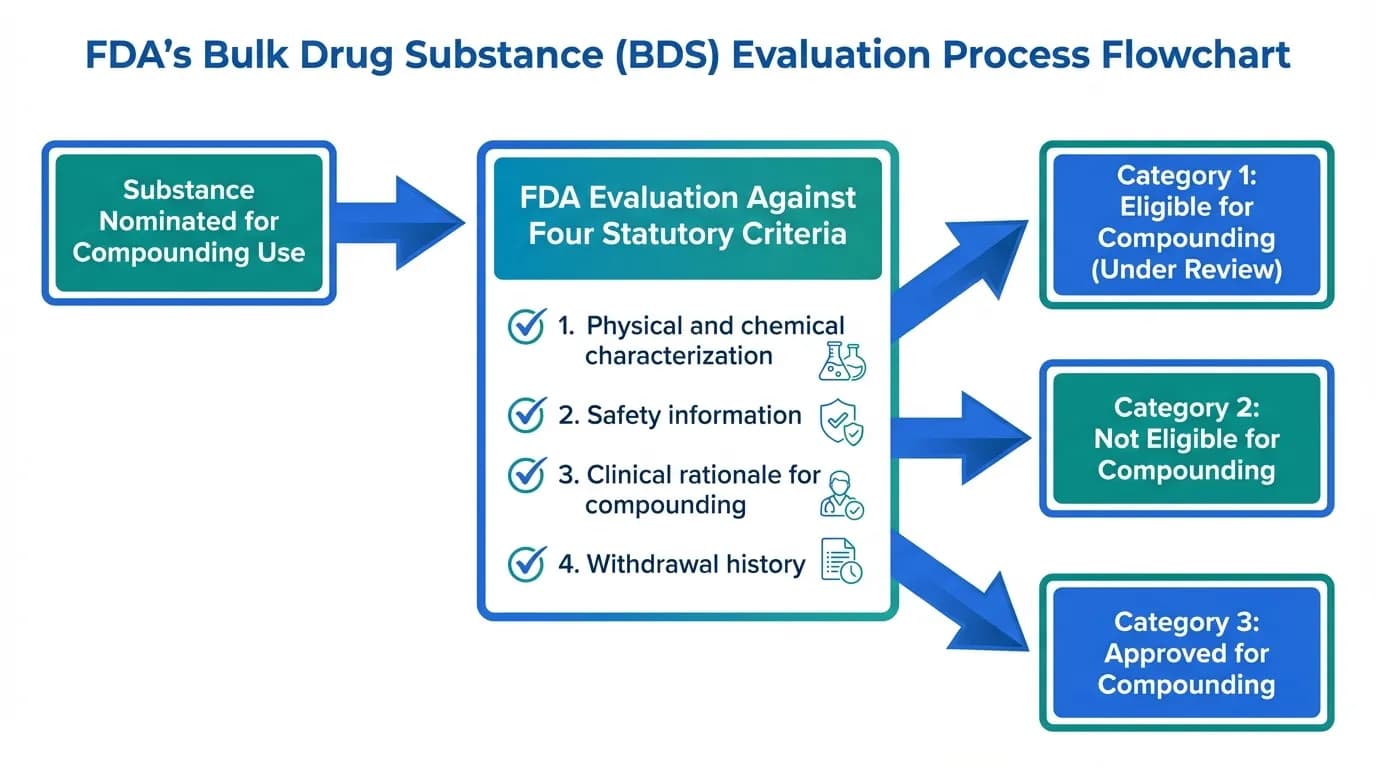
FDA Peptide Categories Explained: Category 1 vs Category 2 (2026)
Understand the FDA peptide classification system. Learn the difference between Category 1, Category 2, and Category 3 peptides and what the 2024-2026 regulatory changes mean for researchers.

Best Healing Peptides: BPC-157, TB-500, and Beyond
A comprehensive review of the top healing peptides in research, including BPC-157, TB-500, GHK-Cu, Thymosin Alpha-1, and KPV, with evidence levels, mechanisms, and key study citations for each.
Peptide Stacking Guide 2026: Best Combinations by Goal
The definitive 2026 guide to peptide stacking organized by goal. Fat loss, muscle growth, healing, anti-aging, and cognitive stacks with evidence levels, dosing timing, and safety considerations.
You Might Also Like
Related content you may find interesting