Peptide Therapy for Hair Loss: GHK-Cu, TB-500, and Research Evidence

Introduction#
Hair loss affects approximately 50% of men and 25% of women by age 50, driven primarily by androgenetic alopecia (pattern hair loss) but also by autoimmune conditions (alopecia areata), telogen effluvium, and other causes. The hair follicle is a complex mini-organ that undergoes cyclical phases of growth (anagen), regression (catagen), and rest (telogen), with hair loss resulting from shortened anagen phases, follicular miniaturization, or immune-mediated follicle destruction.
Established treatments -- minoxidil (FDA-approved, topical), finasteride (FDA-approved, oral), and low-level laser therapy -- have demonstrated clinical efficacy but have limitations in terms of response rates, side effects, and the degree of regrowth achievable. This has driven interest in peptide-based approaches that target different aspects of hair follicle biology.
This research review examines four peptides with evidence relevant to hair loss. The evidence ranges from GHK-Cu's gene expression studies and topical use history to the more theoretical connections of BPC-157 to follicle regeneration. For each compound, we evaluate the specific mechanism, quality of evidence, and critical limitations.
Important note: No peptide discussed in this review is FDA-approved for hair loss treatment. Hair loss can indicate underlying medical conditions and should be evaluated by a dermatologist. This article is for educational purposes only and does not constitute medical advice.
For related skin health content, see Peptides for Skin Health.
Hair Follicle Biology: Where Peptides Might Intervene#
Understanding the hair growth cycle and follicle biology is essential for evaluating peptide claims.
The Hair Growth Cycle#
- Anagen (growth phase) -- active hair growth lasting 2-7 years, determined by the hair follicle dermal papilla cells. In androgenetic alopecia, anagen duration progressively shortens
- Catagen (regression phase) -- a brief transition period (2-3 weeks) where the follicle shrinks and detaches from the dermal papilla
- Telogen (rest phase) -- the follicle rests for 2-4 months before shedding the hair and re-entering anagen
Key Molecular Pathways#
Several signaling pathways control hair follicle cycling, and peptides theoretically could influence any of these:
- WNT/beta-catenin pathway -- the master regulator of hair follicle development and anagen initiation. WNT activation promotes hair growth; WNT inhibition causes follicle regression. This is the pathway most relevant to GHK-Cu
- Growth factors -- VEGF (angiogenesis to nourish follicles), FGF (fibroblast growth factor), IGF-1 (insulin-like growth factor), and KGF (keratinocyte growth factor) all play roles in follicle maintenance
- DHT/androgen receptor -- in androgenetic alopecia, dihydrotestosterone (DHT) binds androgen receptors in susceptible follicles, causing miniaturization. Finasteride blocks DHT production
- Immune regulation -- in alopecia areata, cytotoxic T cells attack the hair follicle immune privilege, causing rapid hair loss. Immune-modulating peptides may be relevant here
GHK-Cu: Copper Peptide Evidence for Hair Growth#
Evidence Level: In vitro gene expression studies; topical human use for skin; limited hair-specific clinical data | FDA Status: Not FDA-approved for hair loss; available in cosmetic products
GHK-Cu (glycyl-L-histidyl-L-lysine copper complex) is the peptide with the most directly relevant evidence for hair growth among the compounds reviewed. Its relevance spans gene expression, growth factor modulation, and practical topical application.
Mechanisms Relevant to Hair Growth#
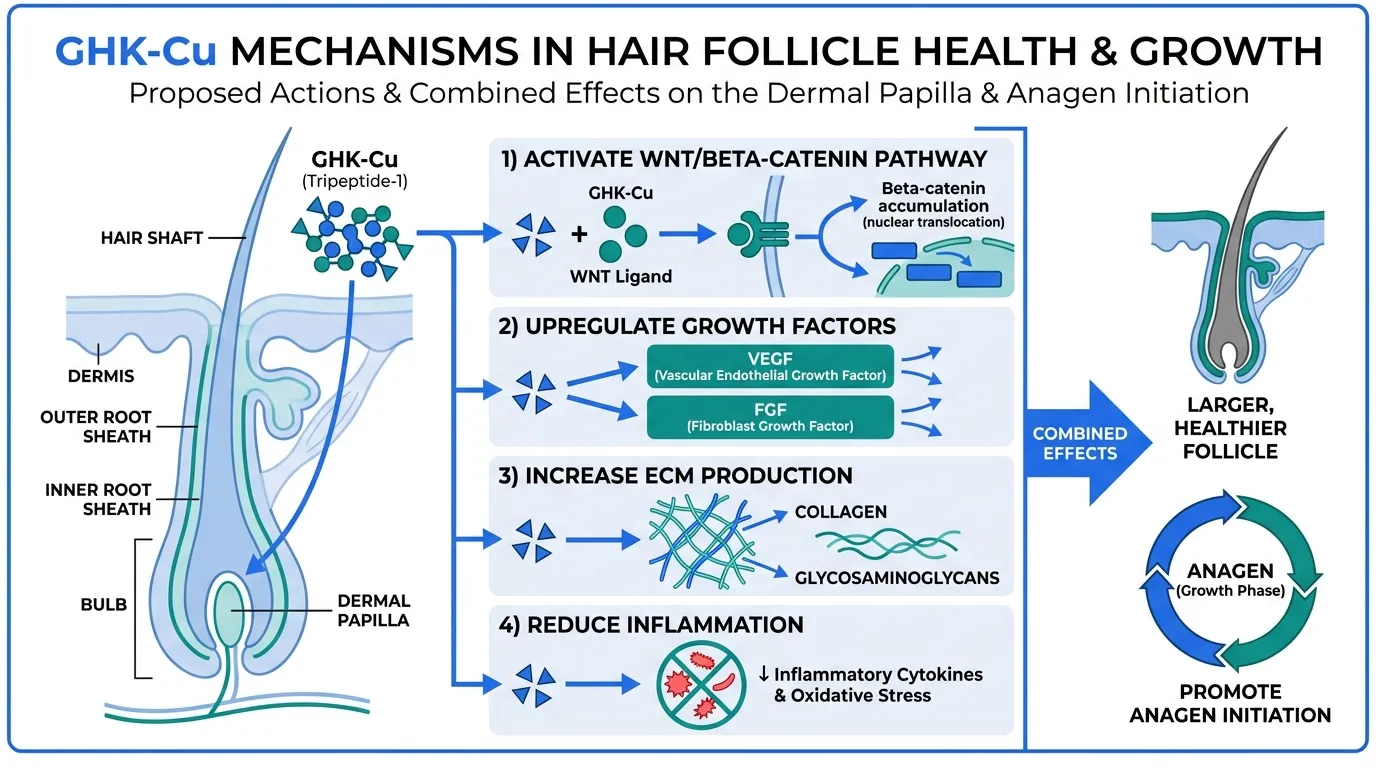
WNT pathway activation. Gene expression studies have shown that GHK-Cu modulates the WNT signaling pathway, the central regulator of hair follicle cycling. Specifically, GHK-Cu has been reported to upregulate WNT ligands and downstream targets including beta-catenin, which promotes anagen initiation and hair follicle neogenesis.
Hair follicle gene expression. Broad gene expression profiling studies have identified GHK-Cu modulation of multiple genes associated with hair follicle biology:
- Increased expression of genes involved in extracellular matrix production (collagen, glycosaminoglycans) that support the dermal papilla
- Upregulation of growth factors (VEGF, FGF) that support follicle vascularization and growth
- Modulation of genes involved in stem cell activation and tissue remodeling
Follicle size effects. Early studies demonstrated that copper peptides could enlarge hair follicles when applied topically, increasing both follicle diameter and the depth of follicular anchoring in the dermis. These morphological changes are consistent with reversal of follicular miniaturization (the hallmark of androgenetic alopecia).
Anti-inflammatory effects. GHK-Cu's well-documented anti-inflammatory properties (suppression of IL-6, TGF-beta) may support follicle health by reducing the perifollicular microinflammation that is increasingly recognized as a contributor to pattern hair loss.
Evidence Limitations#
Despite the mechanistic relevance, GHK-Cu's hair loss evidence has significant gaps:
- No large-scale randomized controlled trials have evaluated GHK-Cu specifically for hair growth outcomes (hair count, density, diameter)
- Most gene expression data comes from in vitro studies on cell cultures, not from human scalp tissue in vivo
- The optimal concentration, formulation, and application protocol for scalp use have not been established
- Whether topical GHK-Cu achieves sufficient penetration to reach the dermal papilla (the key target for hair growth signaling) is unclear
- No head-to-head comparisons with minoxidil or finasteride exist
For more on GHK-Cu's broader profile, see GHK-Cu Overview.
TB-500: Thymosin Beta-4 and Hair Follicle Stem Cells#
Evidence Level: Animal studies (parent protein thymosin beta-4); no direct TB-500 hair studies | FDA Status: Not FDA-approved; not FDA-evaluated for hair loss
TB-500 is a synthetic peptide fragment of thymosin beta-4, a 43-amino-acid protein involved in cell migration, wound healing, and tissue repair. The hair growth connection comes from published research on the parent protein.
The Thymosin Beta-4 Hair Growth Study#
A notable 2004 study by Philp et al. published in the FASEB Journal demonstrated that transgenic mice overexpressing thymosin beta-4 in keratinocytes exhibited accelerated hair growth. The proposed mechanism involves activation of hair follicle stem cells located in the bulge region of the follicle:
- Thymosin beta-4 promoted stem cell migration from the bulge to the dermal papilla, a key step in anagen initiation
- Overexpressing mice showed earlier and more robust hair growth after shaving compared to wild-type controls
- The effect was linked to beta-4's known role in cell migration and cytoskeletal organization through G-actin sequestration
TB-500 vs. Thymosin Beta-4#
A critical distinction must be made: the published hair growth research used full-length thymosin beta-4, not the TB-500 fragment. TB-500 consists of the active region of thymosin beta-4 (amino acids 17-23, centered on the actin-binding domain), but whether this fragment retains the specific hair follicle stem cell-activating properties of the full protein is unknown. The actin-binding activity is preserved, but other regions of thymosin beta-4 may contribute to the hair growth effect.
Evidence Limitations#
- The primary hair growth evidence is from transgenic overexpression models, not exogenous peptide administration
- No studies have tested topical or injected TB-500 specifically for hair growth outcomes
- The transgenic model produces sustained, high-level thymosin beta-4 expression -- whether intermittent exogenous administration achieves the same effect is unknown
- No human studies for hair loss have been conducted with either thymosin beta-4 or TB-500
Thymosin Alpha-1: Autoimmune Alopecia Considerations#
Evidence Level: Theoretical rationale based on immune modulation properties; no direct alopecia studies | FDA Status: Not FDA-approved in the US; approved in 35+ countries for immune conditions
Thymosin alpha-1 is included in this review for its potential relevance to autoimmune hair loss (alopecia areata) rather than pattern hair loss. Alopecia areata is an autoimmune condition in which cytotoxic T cells attack the hair follicle immune privilege, causing patchy or complete hair loss.
Theoretical Rationale#
Thymosin alpha-1's immune-modulating properties are theoretically relevant to alopecia areata:
- Regulatory T cell induction -- thymosin alpha-1 promotes Treg development, which could help restore immune tolerance to hair follicle antigens
- Immune rebalancing -- thymosin alpha-1 modulates the Th1/Th2/Th17 balance, and dysregulated Th1 and Th17 responses are implicated in alopecia areata pathogenesis
- NK cell modulation -- NKG2D-expressing NK cells contribute to follicle immune privilege collapse in alopecia areata; thymosin alpha-1's effects on NK cell regulation could be relevant
Evidence Status#
No clinical trials or even preclinical studies have specifically evaluated thymosin alpha-1 for alopecia areata. The rationale is entirely based on extrapolation from its known immune-modulating mechanisms to the immunopathology of autoimmune hair loss. Current alopecia areata treatments include JAK inhibitors (baricitinib, ritlecitinib -- FDA-approved), corticosteroids, and contact immunotherapy, all with established clinical evidence.
BPC-157: Tissue Regeneration and Follicle Support#
Evidence Level: Preclinical tissue healing data; no hair-specific studies | FDA Status: Category 2 (banned from compounding)
BPC-157 is a 15-amino-acid peptide derived from gastric juice protein, extensively studied for tissue healing. Its connection to hair loss is the most indirect among the peptides reviewed, based on its broad regenerative properties rather than hair-specific research.
Theoretical Mechanisms for Hair Support#
- Angiogenesis -- BPC-157 promotes new blood vessel formation at tissue repair sites. Adequate blood supply to the dermal papilla is essential for hair follicle health, and reduced vascularization accompanies follicular miniaturization in pattern hair loss
- Growth factor modulation -- BPC-157 influences multiple growth factors (VEGF, FGF, EGF) that play roles in hair follicle cycling
- Anti-inflammatory effects -- BPC-157's anti-inflammatory properties could address perifollicular inflammation
- Wound healing acceleration -- BPC-157's ability to accelerate tissue repair could theoretically support follicle regeneration
Evidence Status#
No studies -- preclinical or clinical -- have specifically tested BPC-157 for hair growth or hair loss. The rationale is entirely based on extrapolation from general tissue healing properties. Additionally, BPC-157 is FDA Category 2, restricting its availability.
Comparison with Established Treatments#
| Feature | Minoxidil | Finasteride | GHK-Cu | TB-500 | Thymosin Alpha-1 | BPC-157 |
|---|---|---|---|---|---|---|
| FDA Approved | Yes (topical) | Yes (oral, male) | No | No | No (US) | No (Category 2) |
| Hair-Specific RCTs | Multiple large trials | Multiple large trials | None | None | None | None |
| Mechanism | Vasodilation, potassium channel | DHT reduction | WNT activation, gene modulation | Stem cell migration | Immune modulation | Angiogenesis, healing |
| Alopecia Type | Androgenetic | Androgenetic (male) | Theoretical (androgenetic) | Theoretical (general) | Theoretical (areata) | Theoretical (general) |
| Route | Topical | Oral | Topical or injection | Injection | SC injection | SC injection |
| Evidence Level | High (FDA-approved) | High (FDA-approved) | Low-Moderate (in vitro) | Low (animal, parent protein) | Very Low (theoretical) | Very Low (theoretical) |
Realistic Expectations from Current Evidence#
The gap between peptide research and clinical hair loss treatment is substantial.
What the evidence supports:
- GHK-Cu modulates gene expression pathways relevant to hair follicle biology, including WNT signaling
- Thymosin beta-4 (the parent protein of TB-500) activates hair follicle stem cells in transgenic mouse models
- Several peptides have anti-inflammatory and pro-angiogenic properties that are mechanistically relevant to follicle health
What the evidence does not support:
- No peptide has demonstrated hair regrowth in human clinical trials
- No peptide has been compared against established treatments (minoxidil, finasteride) in controlled studies
- The optimal formulations, concentrations, and treatment protocols for any peptide in hair loss are unknown
- Long-term safety for chronic scalp application of most peptides is uncharacterized
Bottom line: Peptides for hair loss remain at the research stage. For individuals experiencing hair loss, FDA-approved treatments (minoxidil, finasteride, and for alopecia areata, JAK inhibitors) represent the current standard of care. Peptide research is advancing the understanding of follicle biology but has not yet produced clinically validated treatments.
Key Takeaways#
-
GHK-Cu has the most directly relevant research for hair growth among the peptides reviewed, with documented effects on WNT pathway activation, follicle gene expression, and follicle morphology. However, no hair-specific clinical trials have been conducted.
-
Thymosin beta-4 (parent protein of TB-500) demonstrated hair follicle stem cell activation in a notable animal study, but this used transgenic overexpression, not exogenous peptide administration. Whether TB-500 retains this activity is unconfirmed.
-
Thymosin alpha-1 has theoretical relevance to autoimmune alopecia (alopecia areata) through its immune-modulating properties, but no direct research connects it to hair loss treatment.
-
BPC-157's hair loss connection is the most indirect, based entirely on extrapolation from general tissue healing properties.
-
No peptide replaces established treatments. Minoxidil and finasteride remain the evidence-based standard for androgenetic alopecia, and JAK inhibitors are the emerging standard for alopecia areata.
-
Future research should focus on controlled human studies measuring objective hair growth endpoints (hair count, diameter, density) rather than relying on gene expression data and animal models.
This article is for educational and informational purposes only. It does not constitute medical advice. Hair loss should be evaluated by a dermatologist who can identify the underlying cause and recommend appropriate treatment. Always consult a qualified healthcare provider before considering any peptide therapy.
Related Reading#

Frequently Asked Questions About Peptide Therapy for Hair Loss: GHK-Cu, TB-500, and Research Evidence
Can peptides regrow hair?
Current evidence for peptide-mediated hair regrowth is limited and largely preclinical. GHK-Cu has the most relevant research, with studies showing hair follicle enlargement and gene expression changes associated with hair growth. Thymosin beta-4 (the parent protein of TB-500) has animal data showing hair follicle stem cell activation. However, no peptide has been proven to regrow hair in rigorous human clinical trials. Results from animal and in vitro studies do not reliably predict efficacy in humans.
How does GHK-Cu compare to minoxidil for hair loss?
Minoxidil (Rogaine) is FDA-approved for hair loss with decades of clinical evidence demonstrating efficacy. GHK-Cu has not been evaluated in head-to-head trials against minoxidil for hair growth. While GHK-Cu has relevant in vitro data (WNT pathway activation, follicle gene expression changes), it lacks the large-scale human clinical trials that support minoxidil's approval. The two have different mechanisms, which theoretically could be complementary, but this has not been studied.
Is TB-500 effective for hair loss?
TB-500 (a fragment of thymosin beta-4) has not been directly studied for hair loss. The hair growth evidence comes from the parent protein thymosin beta-4, which was shown to promote hair growth in mouse models by activating hair follicle stem cells. Whether TB-500 retains this specific activity and whether it translates to human hair regrowth are unknown. No clinical trials for hair loss have been conducted with either compound.
Are copper peptides safe for topical use on the scalp?
Copper peptides (GHK-Cu) have a long track record of topical use in skincare and wound healing products. Topical application is generally well-tolerated, though individual sensitivity varies. However, most commercial copper peptide products are formulated for facial skin, not specifically for scalp application or hair growth. The concentration and formulation that would be optimal for hair follicle stimulation have not been established in clinical research.
What is the best peptide for hair loss?
No peptide has sufficient clinical evidence to be recommended for hair loss treatment. Among the peptides reviewed, GHK-Cu has the most relevant research through its effects on hair follicle gene expression and WNT pathway activation. However, established FDA-approved treatments (minoxidil, finasteride) remain the evidence-based standard of care. Peptides should be considered experimental and are not substitutes for proven therapies.
Continue reading this research review
Free access to the complete analysis with citations and evidence ratings.
150+ peptide profiles · 30+ comparisons · 18 research tools
Medical Disclaimer
This website is for educational and informational purposes only. The information provided is not intended to diagnose, treat, cure, or prevent any disease. Always consult with a qualified healthcare professional before using any peptide or supplement.
Join 2,000+ researchers getting biweekly updates
Enjoyed this article?
The Research Briefing delivers deep-dives like this biweekly — plus new study breakdowns, safety updates, and tool announcements.
Free forever. No spam. Unsubscribe in one click.
Where to Find These Peptides
Continue Exploring
Peptide Profiles
Keep Reading
Peptides for Wound Healing & Tissue Repair: What the Research Shows (2026)
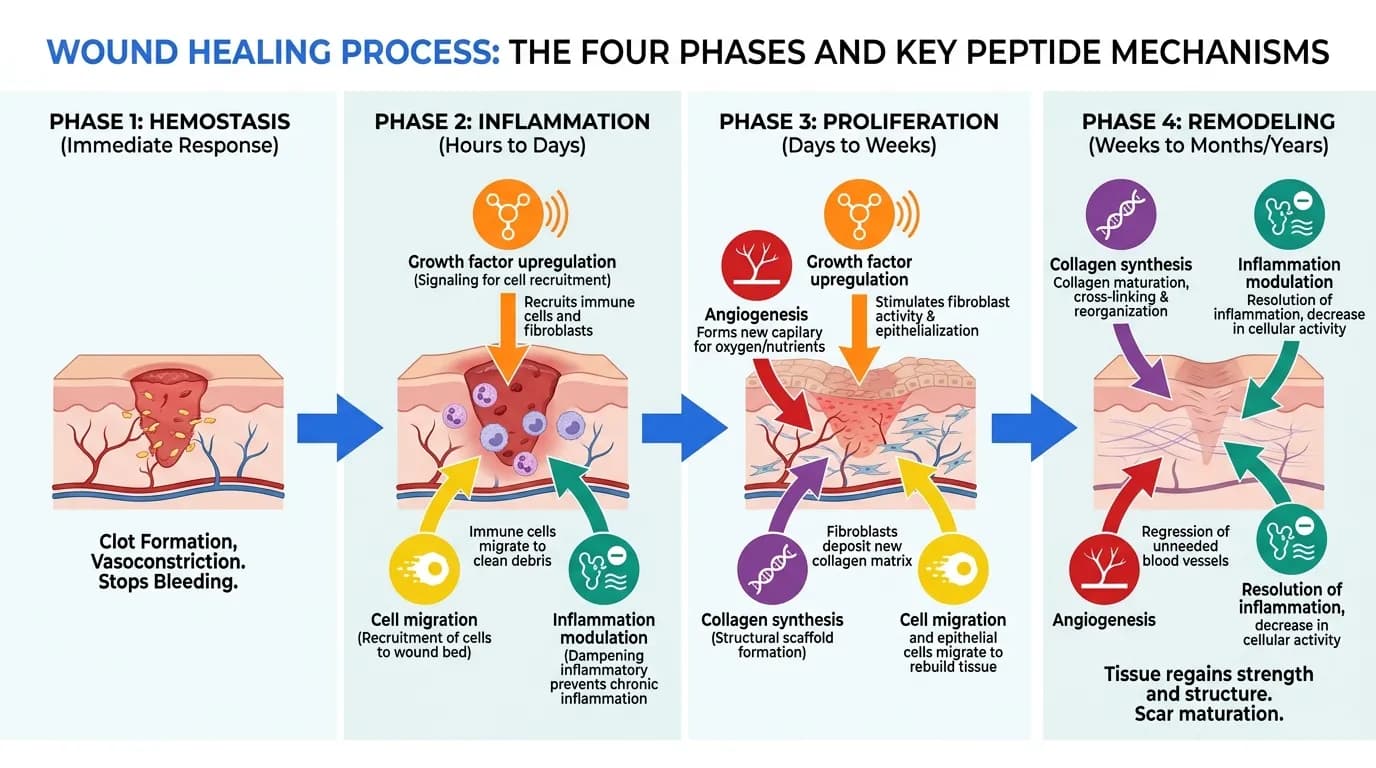
Which peptides support wound healing? An educational overview of BPC-157, TB-500, GHK-Cu, KPV, and Thymosin Alpha-1 — mechanisms, evidence status, best-use scenarios, and safety context for tissue repair research.
FDA Peptide Categories Explained: Category 1 vs Category 2 (2026)
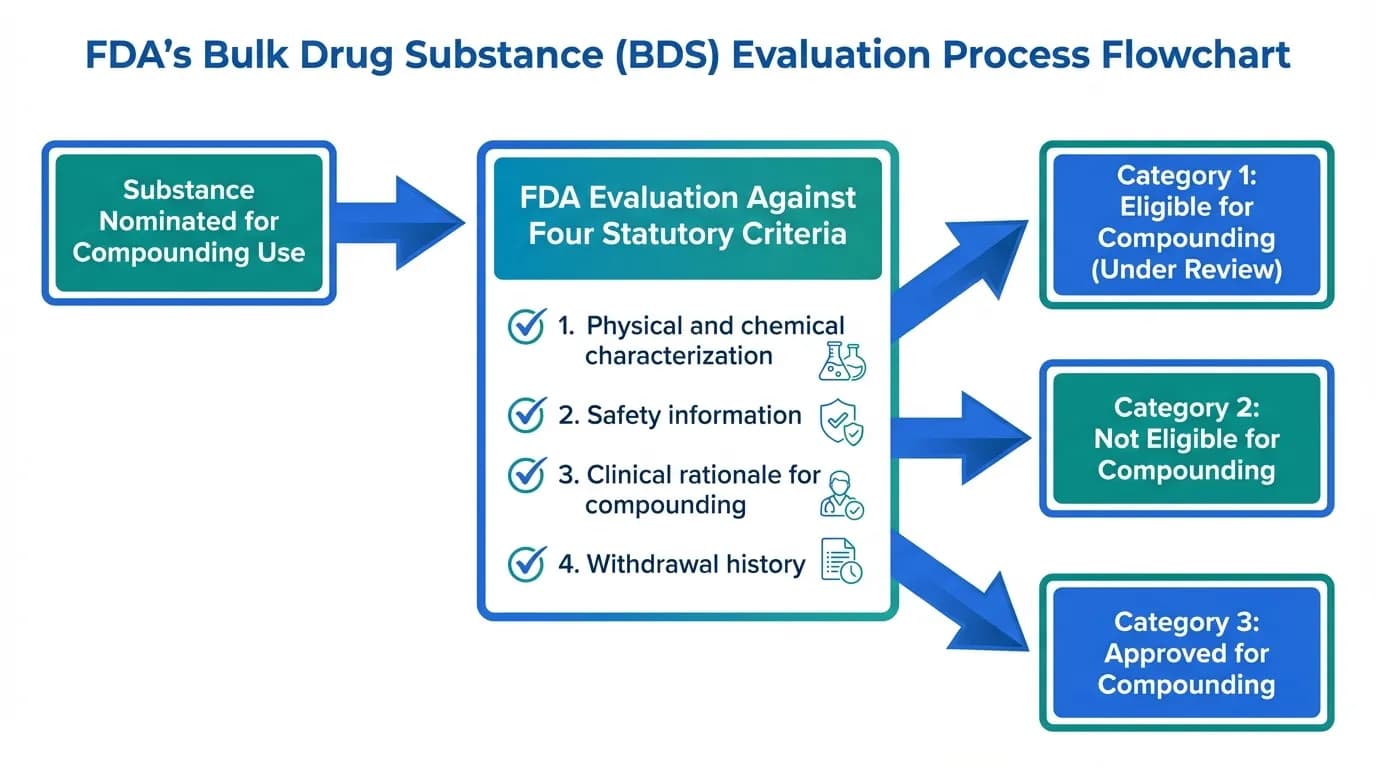
Understand the FDA peptide classification system. Learn the difference between Category 1, Category 2, and Category 3 peptides and what the 2024-2026 regulatory changes mean for researchers.
Peptide Stacking Guide 2026: Best Combinations by Goal
The definitive 2026 guide to peptide stacking organized by goal. Fat loss, muscle growth, healing, anti-aging, and cognitive stacks with evidence levels, dosing timing, and safety considerations.
You Might Also Like
Related content you may find interesting