Peptide Therapy for Brain Health: Neuroprotection, Cognition, and Recovery

Introduction#
The brain presents unique challenges for peptide-based therapeutics. The blood-brain barrier (BBB) restricts most large molecules from reaching neural tissue, neurodegenerative conditions involve complex, multi-pathway processes, and cognitive function itself is notoriously difficult to measure in clinical trials. Despite these challenges, a growing body of research explores peptides that may support brain health through neurotrophic signaling, neuroprotection, mitochondrial support, and neurotransmitter modulation.
This guide covers eight peptides with research profiles relevant to brain health, organized by their primary mechanism of action. The evidence ranges from cerebrolysin's extensive clinical trial program to dihexa's purely preclinical animal studies. For each compound, we evaluate the mechanism, evidence quality, and critical limitations.
Important note: No peptide in this guide is FDA-approved for cognitive enhancement, neuroprotection, or brain injury treatment. Neurological conditions require professional medical evaluation and management. This article is for educational purposes only.
For a ranked overview, see Best Nootropic Peptides for Cognitive Enhancement. For mood-specific applications, see Peptides for Depression and Anxiety.
How Peptides Interact with the Brain#
Before examining individual peptides, understanding how peptides reach and affect the brain provides essential context.
The Blood-Brain Barrier Challenge#
The BBB is a selective barrier formed by tight junctions between endothelial cells in brain capillaries. It protects the brain from pathogens and toxins but also blocks most peptides due to their molecular size and polarity. Strategies to overcome this barrier include:
- Intranasal administration -- the nasal cavity provides a direct route to the brain along olfactory and trigeminal nerve pathways, bypassing the BBB. Semax and selank use this route
- Low molecular weight fragments -- peptide mixtures like cerebrolysin contain small fragments (below ~10 kDa) that may partially penetrate the BBB
- Lipophilic design -- some peptides like dihexa are specifically designed for BBB permeability
- Peripheral signaling -- some peptides may influence brain function indirectly through peripheral mechanisms (vagal nerve signaling, cytokine modulation, gut-brain axis)
Neurotrophic Factors#
Neurotrophic factors are proteins that support neuronal survival, growth, and differentiation. Key neurotrophins relevant to peptide therapy include:
- BDNF (brain-derived neurotrophic factor) -- supports learning, memory, and neuronal plasticity. Multiple peptides in this guide modulate BDNF levels
- NGF (nerve growth factor) -- supports survival and maintenance of sensory and sympathetic neurons
- CNTF (ciliary neurotrophic factor) -- supports motor neuron survival
- HGF (hepatocyte growth factor) -- involved in neuronal growth and synaptogenesis. Dihexa activates this pathway
Neurotrophic Peptides: Cerebrolysin and Semax#
Cerebrolysin#
Evidence Level: Multiple RCTs; approved in 40+ countries | FDA Status: Not FDA-approved in the US
Cerebrolysin is a peptide preparation derived from porcine brain tissue, consisting of low-molecular-weight neuropeptides and free amino acids. It is the most extensively studied brain health peptide, with clinical trials spanning stroke, traumatic brain injury (TBI), vascular dementia, and Alzheimer's disease.
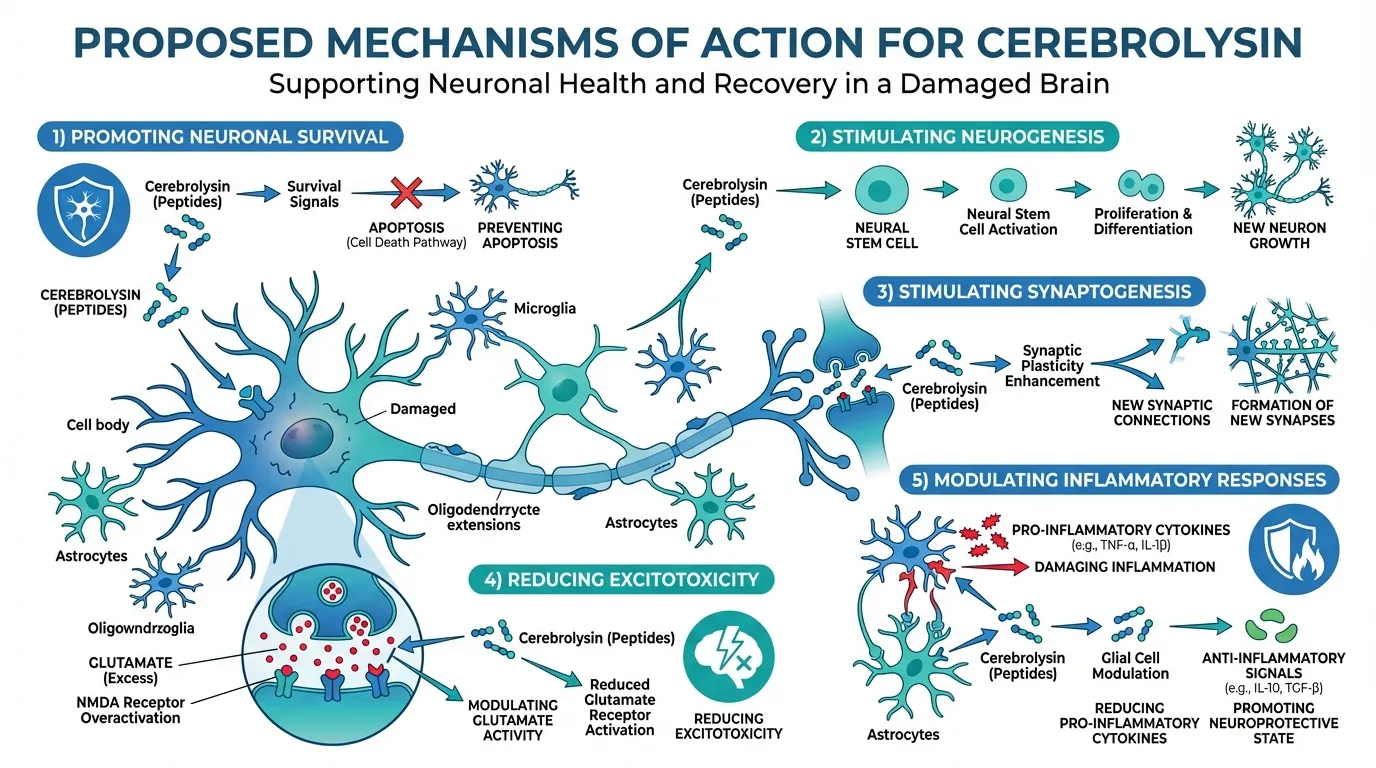
Mechanism of action. Cerebrolysin contains neurotrophic peptide fragments that mimic the activity of endogenous neurotrophins, particularly BDNF and NGF. Its proposed mechanisms include promoting neuronal survival, stimulating neurogenesis and synaptogenesis, reducing excitotoxicity, and modulating inflammatory responses in damaged brain tissue.
Clinical evidence in stroke. The CASTA trial (Cerebrolysin in Acute Stroke Treatment in Asia) enrolled 1,070 patients with acute ischemic stroke and evaluated cerebrolysin alongside standard care. While the primary endpoint did not reach statistical significance, subgroup analyses suggested benefits in patients with more severe strokes. Multiple smaller RCTs have reported improvements in neurological function scores in post-stroke patients.
Traumatic brain injury. The CAPTAIN trial evaluated cerebrolysin in moderate-to-severe TBI patients and reported improvements in cognitive outcomes compared to placebo at 90 days. Additional studies have shown benefits in TBI recovery measures, though sample sizes have been relatively small.
Dementia. Clinical trials in both vascular dementia and Alzheimer's disease have reported improvements in cognitive assessment scores (ADAS-cog) with cerebrolysin treatment. A Cochrane review noted that while individual trials showed positive results, the overall evidence quality was moderate and larger confirmatory trials were needed.
Limitations. Cerebrolysin is administered intravenously, limiting accessibility. As a biological product derived from animal brain tissue, batch-to-batch consistency can vary. The peptide has not received FDA approval in the United States, and some reviews have questioned whether the clinical trial results are robust enough to establish clear efficacy.
Semax#
Evidence Level: Clinical approval in Russia; limited Western clinical data | FDA Status: Not FDA-approved in the US
Semax is a synthetic heptapeptide analog of the ACTH(4-10) fragment (Met-Glu-His-Phe-Pro-Gly-Pro) with additional modifications that extend its half-life. It was developed at the Institute of Molecular Genetics in Moscow and is approved in Russia for stroke, cognitive disorders, and as a nootropic.
Mechanism of action. Semax modulates multiple pathways relevant to brain health:
- BDNF upregulation -- semax has been shown to increase BDNF expression in the hippocampus and cortex in animal studies, directly supporting neuronal plasticity and survival
- Neurotransmitter modulation -- research suggests effects on dopaminergic and serotonergic signaling, potentially contributing to cognitive and mood effects
- Anti-inflammatory -- semax reduces pro-inflammatory cytokine expression in brain tissue following ischemic injury in animal models
- Neuroprotection -- in stroke models, semax reduced infarct volume and preserved neuronal function in penumbral tissue
Clinical evidence. In Russia, semax is used clinically for post-stroke recovery and cognitive enhancement. Published clinical studies (primarily in Russian-language journals) report improvements in cognitive function, attention, and memory in patients with cerebrovascular disease. Studies in healthy volunteers have reported enhanced attention and information processing speed.
Administration. Semax is administered intranasally, which provides direct access to brain tissue via olfactory nerve pathways, bypassing the BBB. This route of administration is a significant practical advantage over intravenous peptides.
Limitations. Most clinical evidence comes from Russian research groups, with limited independent replication in Western settings. Published studies often have small sample sizes and methodological limitations by current Western clinical trial standards. The nasal bioavailability and exact brain concentrations achieved remain incompletely characterized.
For a direct comparison with its anxiolytic counterpart, see Selank vs Semax.
Anxiolytic and Mood Peptides: Selank and Rapastinel#
Selank#
Evidence Level: Clinical approval in Russia; limited Western data | FDA Status: Not FDA-approved in the US
Selank is a synthetic heptapeptide derived from the endogenous immunomodulatory peptide tuftsin (Thr-Lys-Pro-Arg) with the addition of the Pro-Gly-Pro sequence. Developed at the same institute as semax, selank targets the anxiolytic rather than the cognitive enhancement axis of brain health.
Mechanism of action. Selank's anxiolytic effects are proposed to operate through:
- GABA system modulation -- selank influences GABAergic neurotransmission, the brain's primary inhibitory system. It may enhance GABA-A receptor sensitivity without the tolerance and dependence associated with benzodiazepines
- Serotonin metabolism -- research suggests selank affects serotonin metabolism and the expression of serotonin transporter genes
- Enkephalin stabilization -- selank may inhibit the degradation of endogenous enkephalins, contributing to anxiolytic and analgesic effects
- BDNF expression -- like semax, selank has been reported to modulate BDNF expression, connecting its anxiolytic effects to broader neurotrophic support
Clinical evidence. Russian clinical studies have evaluated selank in patients with generalized anxiety disorder (GAD), reporting anxiolytic effects comparable to medazepam (a benzodiazepine) but without the sedation, cognitive impairment, or dependence risk. Studies have also reported improvements in cognitive function under stress, suggesting that anxiety reduction may unmask underlying cognitive capacity.
Limitations. Like semax, selank's clinical evidence comes primarily from Russian research groups. Independent Western replication is limited. The exact pharmacokinetic profile following intranasal administration requires further characterization.
Rapastinel#
Evidence Level: Phase 2/3 clinical trials | FDA Status: Not approved; clinical development discontinued
Rapastinel (GLYX-13) is a tetrapeptide (Thr-Pro-Pro-Thr) that modulates the NMDA receptor, acting as a partial agonist at the glycine binding site. It was developed as a rapid-acting antidepressant -- an alternative to ketamine that targets the same receptor system without the dissociative and abuse-liability concerns.
Mechanism of action. NMDA receptor modulation by rapastinel is proposed to:
- Enhance synaptic plasticity -- by partially activating the NMDA receptor at the glycine site, rapastinel may promote long-term potentiation (LTP), the cellular mechanism underlying learning and memory
- Trigger BDNF release -- NMDA receptor activation stimulates BDNF-dependent signaling cascades that support neuronal survival and synaptic connectivity
- Rapid antidepressant effects -- like ketamine, NMDA modulation can produce rapid mood improvements, potentially within hours rather than the weeks required for traditional antidepressants
Clinical evidence. Phase 2 trials of rapastinel as an adjunct to standard antidepressant therapy showed statistically significant improvements in depression scores (HDRS-17) within 24 hours of a single intravenous dose, with effects persisting for approximately one week. However, Phase 3 trials (the LANTERN studies) failed to meet their primary endpoints, and the clinical development program was discontinued. Despite the clinical failure, the Phase 2 data demonstrated that the NMDA-modulation mechanism can produce rapid antidepressant effects, and the research has informed ongoing development of next-generation glutamate-targeted therapies.
Cognitive relevance. Beyond mood, rapastinel's enhancement of LTP in preclinical models suggests potential cognitive benefits. Animal studies showed improvements in hippocampal-dependent learning and memory tasks. However, these cognitive effects were not specifically evaluated in the clinical trial program, which focused on depression endpoints.
Neuroprotective Peptides: BPC-157 and SS-31#
BPC-157 in Brain Injury Models#
Evidence Level: Extensive preclinical; no human brain health data | FDA Status: Category 2 (banned from compounding)
BPC-157 is a 15-amino-acid peptide derived from human gastric juice protein, extensively studied for tissue healing applications. Its brain health relevance comes from a growing body of preclinical research in TBI, neurotoxicity, and neuroprotection models.
Neuroprotective evidence. Animal studies have demonstrated:
- Traumatic brain injury -- BPC-157 reduced brain edema, improved neurological deficit scores, and promoted blood vessel formation in brain tissue following experimental TBI in rats
- Neurotoxicity protection -- BPC-157 showed protective effects against neurotoxicity induced by cuprizone (a model for demyelination), methamphetamine, and other neurotoxic compounds in animal models
- Dopaminergic system -- BPC-157 demonstrated protective effects on dopaminergic neurons in models relevant to Parkinson's disease-like pathology
- NO system involvement -- BPC-157's neuroprotective effects appear to involve modulation of the nitric oxide system, consistent with its mechanisms in peripheral tissue healing
Limitations. All brain health evidence for BPC-157 is preclinical. No human studies have evaluated its effects on brain injury, cognitive function, or neuroprotection. The peptide's ability to cross the blood-brain barrier in humans is unknown. BPC-157 is FDA Category 2, which restricts its availability. Translating preclinical neuroprotection results to human applications has historically been extremely challenging across many drug classes, not just peptides.
For detailed mechanisms, see BPC-157 Mechanisms of Action. For brain injury applications specifically, see Peptides for Brain Injury and Neuroprotection.
SS-31: Mitochondrial Neuroprotection#
Evidence Level: Clinical trials for non-brain indications; preclinical brain data | FDA Status: Not approved; investigational (elamipretide)
SS-31 (elamipretide) is a mitochondria-targeted tetrapeptide (D-Arg-Dmt-Lys-Phe-NH2) that accumulates in the inner mitochondrial membrane. Its brain health relevance stems from the brain's extraordinary energy demands -- the brain consumes approximately 20% of the body's oxygen despite representing only 2% of body weight, making it particularly vulnerable to mitochondrial dysfunction.
Mechanism of action. SS-31 binds cardiolipin in the inner mitochondrial membrane, stabilizing the electron transport chain and reducing the generation of reactive oxygen species (ROS). In neural tissue, this translates to:
- Reduced oxidative stress -- a primary driver of neuronal damage in aging, ischemia, and neurodegenerative disease
- Preserved mitochondrial function -- maintaining ATP production in energy-demanding neurons
- Prevention of cytochrome c release -- inhibiting the apoptotic cascade that leads to neuronal death
Preclinical brain evidence. Animal studies have demonstrated neuroprotective effects of SS-31 in models of cerebral ischemia (stroke), Alzheimer's-like pathology, and age-related cognitive decline. Treated animals showed reduced infarct volume, preserved synaptic density, and improved performance on cognitive tasks.
Clinical status. SS-31 (as elamipretide) has been evaluated in clinical trials for mitochondrial myopathy, heart failure, and age-related macular degeneration. These trials provide safety data but do not directly address brain health endpoints. The peptide's ability to reach brain mitochondria following systemic administration in humans requires further characterization.
For more on mitochondrial peptides, see Mitochondrial Peptides and Longevity.
Experimental Cognitive Enhancers: Dihexa and Pinealon#
Dihexa#
Evidence Level: Preclinical only; no human data | FDA Status: Not approved; not FDA-evaluated
Dihexa is a synthetic hexapeptide analog of angiotensin IV that was designed to be orally active and BBB-permeable. It has attracted significant attention in nootropic communities due to extraordinary potency claims in animal cognitive studies, but it remains entirely preclinical.
Mechanism of action. Dihexa activates the hepatocyte growth factor (HGF)/c-Met receptor system with exceptional potency -- approximately 10 million times more potent than BDNF in promoting neuronal connectivity in cell culture studies. The HGF/c-Met system is involved in:
- Synaptogenesis -- formation of new synaptic connections between neurons
- Dendritic spine formation -- increasing the surface area available for synaptic signaling
- Neuronal survival -- HGF signaling supports neuronal survival under stress conditions
Animal evidence. In rodent studies, dihexa restored cognitive function in aged rats to levels comparable to young animals on hippocampal-dependent tasks. The peptide improved performance in water maze tests (spatial learning) and novel object recognition (memory) at remarkably low doses.
Critical safety concerns. The HGF/c-Met pathway is implicated in several cancers, where it promotes tumor growth, metastasis, and angiogenesis. Potent activation of this pathway raises theoretical but serious concerns about oncogenic risk with chronic use. No long-term safety studies have been conducted. No human pharmacokinetic or pharmacodynamic data exists. Dihexa should be considered highly experimental with unknown risk.
Pinealon#
Evidence Level: Very limited; single research group | FDA Status: Not approved; not FDA-evaluated
Pinealon is a synthetic tripeptide (Glu-Asp-Arg) from the Khavinson bioregulator framework. While primarily discussed in the context of sleep (see Peptides for Sleep), pinealon also has limited neuroprotective data.
Neuroprotective evidence. In vitro studies from the Khavinson group have shown that pinealon reduced oxidative stress-induced cell death in cortical neuron cultures. The proposed mechanism involves regulation of gene expression in CNS cells, though the specific molecular targets remain uncharacterized.
Limitations. Evidence comes exclusively from a single research group, with no independent validation. No animal behavioral studies or human clinical trials for cognitive or neuroprotective outcomes have been published. The mechanism remains theoretical.
Clinical Evidence Summary#
| Peptide | Clinical Trials | Regulatory Status | Primary Brain Indication | Evidence Quality |
|---|---|---|---|---|
| Cerebrolysin | Multiple RCTs (CASTA, CAPTAIN) | Approved in 40+ countries | Stroke recovery, TBI, dementia | Moderate-High |
| Semax | Russian clinical studies | Approved in Russia | Stroke, cognitive enhancement | Moderate |
| Selank | Russian clinical studies | Approved in Russia | Generalized anxiety | Moderate |
| Rapastinel | Phase 2/3 (LANTERN) | Development discontinued | Rapid-acting antidepressant | Moderate (Phase 2) |
| BPC-157 | None for brain health | Category 2 | Neuroprotection (preclinical) | Low (preclinical only) |
| SS-31 | Trials for other indications | Investigational | Mitochondrial neuroprotection | Low (for brain) |
| Dihexa | None | Not evaluated | Cognitive enhancement | Very Low (preclinical) |
| Pinealon | None | Not evaluated | Neuroprotection | Very Low |
Brain Health Peptides by Goal#
Different brain health goals align with different peptides based on available evidence:
Cognitive Enhancement (Nootropic)#
For research into improving memory, focus, and processing speed in healthy individuals, semax has the most relevant clinical data (Russian studies showing improvements in attention and information processing). Dihexa shows extraordinary preclinical potency but has no human data and carries theoretical safety concerns.
Neuroprotection After Injury#
Cerebrolysin has the strongest clinical evidence for post-stroke and post-TBI recovery. BPC-157 has promising preclinical neuroprotection data but no human evidence. SS-31's mitochondrial protection is mechanistically relevant but has not been tested for brain indications in humans.
Anxiety and Stress#
Selank has clinical data from Russian studies showing anxiolytic effects comparable to benzodiazepines without the cognitive impairment, sedation, or dependence risk. Rapastinel demonstrated rapid antidepressant effects in Phase 2 but failed in Phase 3.
Age-Related Cognitive Decline#
The intersection of neuroprotection and cognitive enhancement is most relevant here. SS-31's mitochondrial support, cerebrolysin's neurotrophic activity, and semax's BDNF modulation each address different aspects of age-related brain decline, though none has been specifically validated for this indication in large clinical trials.
Research Gaps and Future Directions#
- BBB penetration quantification -- for most peptides, the actual brain concentrations achieved following peripheral or intranasal administration remain poorly characterized
- Independent replication -- semax, selank, and bioregulator peptide data require independent Western replication
- Long-term safety -- chronic use data is limited for all compounds, and the HGF/c-Met activation by dihexa requires careful safety evaluation
- Combination approaches -- whether combining peptides targeting different mechanisms (neurotrophic + mitochondrial + anxiolytic) produces additive or synergistic effects is unexplored
- Biomarker development -- objective measures of neuroprotection and cognitive enhancement in humans remain limited, complicating clinical trial design
Key Takeaways#
-
Cerebrolysin has the strongest clinical evidence for brain health applications, with multiple RCTs in stroke, TBI, and dementia, though it is not FDA-approved in the US.
-
Semax and selank offer complementary mechanisms -- semax for cognitive enhancement and neuroprotection, selank for anxiolytic effects -- both with Russian clinical data but limited Western validation.
-
BPC-157 and SS-31 show preclinical neuroprotective promise but lack human data for brain-specific applications.
-
Dihexa is the most potent experimental cognitive enhancer in preclinical models but has no human data and carries theoretical oncogenic risk from HGF/c-Met pathway activation.
-
Rapastinel demonstrated proof-of-concept for rapid NMDA-based antidepressant effects but failed in Phase 3, highlighting the difficulty of translating preclinical brain research to clinical outcomes.
-
The blood-brain barrier remains the central challenge for peptide-based brain therapeutics, and intranasal administration (semax, selank) represents the most practical delivery route currently available.
This article is for educational and informational purposes only. It does not constitute medical advice. Always consult a qualified healthcare provider for neurological conditions.
Related Reading#

Frequently Asked Questions About Peptide Therapy for Brain Health: Neuroprotection, Cognition, and Recovery
Which brain health peptide has the most clinical evidence?
Cerebrolysin has the most extensive clinical trial data among brain health peptides, with multiple randomized controlled trials in stroke recovery, traumatic brain injury, and vascular dementia. It is approved in over 40 countries but not in the United States. Semax has clinical approval in Russia for stroke and cognitive conditions.
Can peptides cross the blood-brain barrier?
Most peptides have limited ability to cross the blood-brain barrier (BBB) due to their size and polarity. However, some peptides in this guide use specific strategies to reach the brain. Semax and selank are administered intranasally to bypass the BBB. Cerebrolysin contains low-molecular-weight fragments that may partially cross it. SS-31 targets mitochondria broadly including in neural tissue. Dihexa was designed to be BBB-permeable.
What is the difference between nootropic and neuroprotective peptides?
Nootropic peptides aim to enhance cognitive function in healthy individuals (memory, focus, processing speed). Neuroprotective peptides aim to prevent or reduce neuronal damage from injury, ischemia, or neurodegeneration. Some peptides like semax may serve both functions. The distinction is important because evidence for neuroprotection (preventing damage) does not automatically imply cognitive enhancement in healthy brains.
Are brain health peptides FDA-approved?
No peptide discussed in this guide is FDA-approved for cognitive enhancement, neuroprotection, or brain injury treatment in the United States. Cerebrolysin is approved in over 40 countries outside the US. Semax and selank are approved in Russia. Rapastinel was investigated in Phase 3 clinical trials for depression but did not receive FDA approval. BPC-157 is FDA Category 2 (banned from compounding).
Is dihexa safe to use?
Dihexa has only been studied in animal models. No human clinical trials have been conducted. Its potent activation of the HGF/c-Met pathway raises theoretical concerns about uncontrolled cell growth, as this pathway is implicated in certain cancers. Dihexa should be considered highly experimental with an unknown safety profile in humans.
Continue reading this research review
Free access to the complete analysis with citations and evidence ratings.
150+ peptide profiles · 30+ comparisons · 18 research tools
Medical Disclaimer
This website is for educational and informational purposes only. The information provided is not intended to diagnose, treat, cure, or prevent any disease. Always consult with a qualified healthcare professional before using any peptide or supplement.
Join 2,000+ researchers getting biweekly updates
Enjoyed this article?
The Research Briefing delivers deep-dives like this biweekly — plus new study breakdowns, safety updates, and tool announcements.
Free forever. No spam. Unsubscribe in one click.
Where to Find These Peptides
Continue Exploring
Peptide Profiles
Keep Reading

Nootropic Peptide Stacks: What Research Says About Combining Cognitive Peptides
Evidence-based review of nootropic peptide stacking, including Semax+Selank combinations, BDNF upregulation stacks, and neuroprotective synergies.

Best Nootropic Peptides for Cognitive Enhancement: 2026 Guide
Comprehensive 2026 guide to 9 nootropic peptides for cognitive enhancement — dihexa, semax, selank, cerebrolysin, PE-22-28, davunetide, pinealon, humanin, and DSIP — grouped by mechanism including BDNF upregulation, synaptogenesis, neuroprotection, and anxiolytic/sleep pathways.

Peptides for Brain Injury and Neuroprotection: TBI, Stroke, and Neurodegeneration Research
Research review of neuroprotective peptides for TBI, stroke, and neurodegeneration, including Semax, Davunetide, BPC-157, and Dihexa.
You Might Also Like
Related content you may find interesting