What Peptides Did the FDA Ban? A Complete Regulatory Timeline

Introduction#
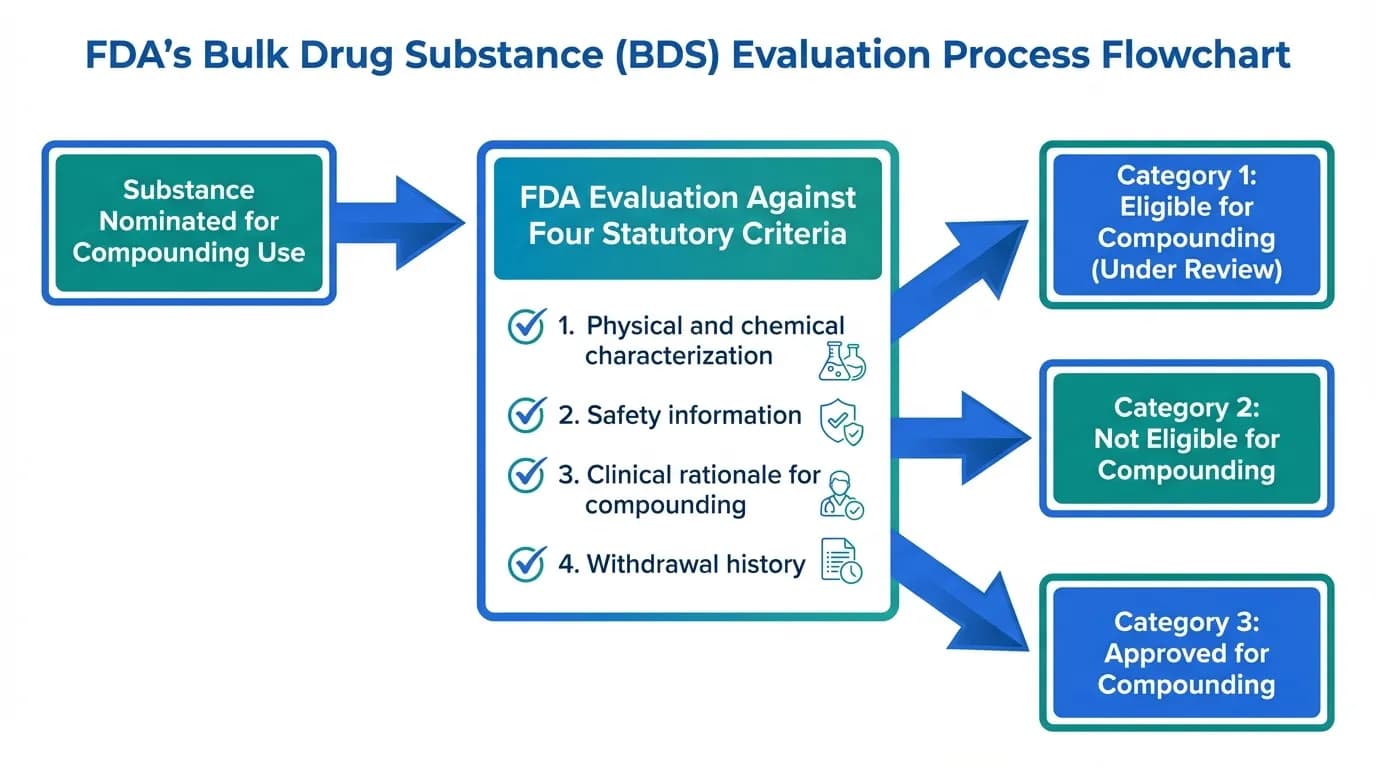
Beginning in 2023 and accelerating through 2024, the FDA issued a series of decisions that effectively banned numerous peptides from being compounded by US pharmacies. These decisions were made through the FDA's bulk drug substance evaluation process, where peptides were placed in "Category 2" -- meaning they are not eligible for compounding under sections 503A or 503B of the Federal Food, Drug, and Cosmetic Act.
This article provides a comprehensive list of the peptides affected, the timeline of key decisions, the FDA's stated reasoning, and the impact on the peptide community.
For a broader overview of the current regulatory framework, see our FDA peptide regulation guide.
Understanding the Ban: What Category 2 Means#
When the FDA places a substance in Category 2, it means the agency has reviewed the substance and determined it should not be used by compounding pharmacies to make compounded drug products. This effectively bans the substance from the legal compounding supply chain.
Category 2 designation does not make it illegal to possess or purchase the substance for legitimate research purposes. It specifically prohibits compounding pharmacies from using it as an ingredient in compounded medications. For a full breakdown of how the FDA category system works, see our FDA Peptide Categories Explained.
The FDA evaluates substances based on four statutory criteria:
- Physical and chemical characterization
- Safety information
- A rationale for compounding, including evidence of clinical need
- Information about whether the substance has already been withdrawn from the market for safety or efficacy reasons
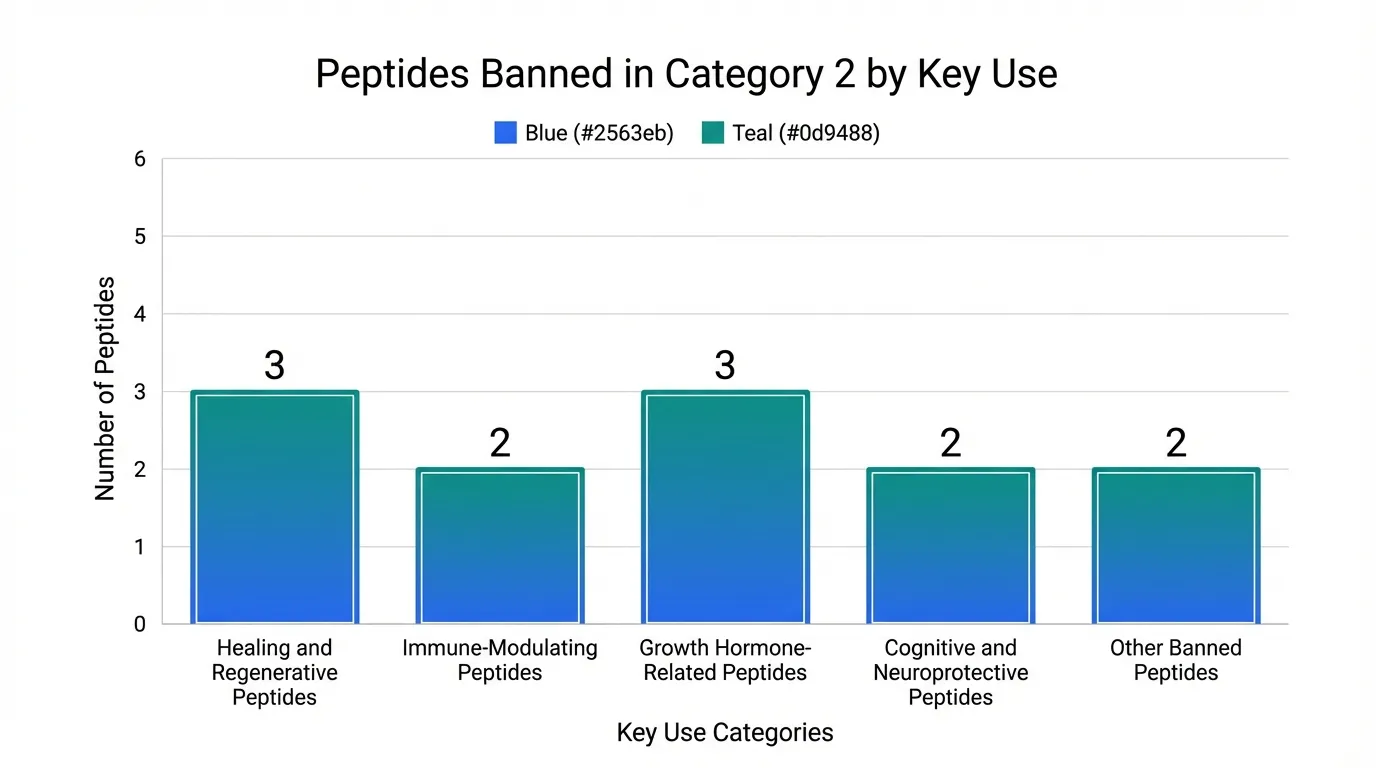
Complete List of Banned Peptides (Category 2)#
The following peptides have been placed in FDA Category 2. This list reflects the status as of early 2026.
Healing and Regenerative Peptides#
Immune-Modulating Peptides#
| Peptide | Key Use | Category 2 Date | FDA Rationale |
|---|---|---|---|
| Thymosin Alpha-1 | Immune modulation | 2024 | No US-approved drug product (despite 35+ country approvals) |
| Thymosin Beta-4 | Wound healing, immune function | 2024 | No approved drug product |
Growth Hormone-Related Peptides#
Cognitive and Neuroprotective Peptides#
Other Banned Peptides#
Note: This list may not be exhaustive. The FDA continues to review additional bulk drug substances, and the status of some peptides remains under active evaluation. Always check the FDA's official bulk drug substance evaluation page for the most current information.
Timeline of Key Regulatory Events#
2020-2022: Building Pressure#
- FDA begins to increase scrutiny of compounding pharmacies producing peptide products
- Warning letters issued to several compounding pharmacies for quality violations
- The FDA Pharmacy Compounding Advisory Committee begins reviewing nominated bulk drug substances more aggressively
2023: First Restrictions#
- FDA begins formal evaluation of multiple peptide nominations
- Several peptides moved from "under review" to preliminary denial
- Compounding pharmacy industry begins organizing legal and legislative responses
2024: The Major Category 2 Wave#
- BPC-157 placed in Category 2 -- the most widely compounded research peptide is banned
- Thymosin Alpha-1 placed in Category 2 -- triggering significant controversy due to its international approval status
- AOD-9604, GHK-Cu, KPV, and several others also placed in Category 2
- Compounding pharmacies begin removing affected peptides from their offerings
- Legal challenges filed against several Category 2 designations
2024-2025: The Semaglutide/Tirzepatide Compounding Battle#
- Separate from the Category 2 process, the FDA moves to restrict compounding of semaglutide and tirzepatide as drug shortages are declared resolved
- Compounding pharmacies and patient advocacy groups file legal challenges
- Courts issue temporary orders allowing some compounding to continue while litigation proceeds
2025-2026: Ongoing Developments#
- Some Category 2 designations face legal challenges
- Legislative proposals to reform compounding regulations introduced in Congress
- Industry groups advocate for expedited review pathways for peptides with international safety records
The Most Controversial Decisions#
Thymosin Alpha-1#
The ban on Thymosin Alpha-1 stands out as the most controversial Category 2 decision for several reasons:
- Approved in over 35 countries under the brand name Zadaxin
- Studied in over 11,000 human subjects across 30+ clinical trials
- Extensive international safety record spanning decades
- Used clinically for hepatitis B and C, cancer immunotherapy support, and immune deficiency
The FDA's rationale focused narrowly on the absence of an approved New Drug Application (NDA) in the United States, not on safety or efficacy concerns. Critics argue this approach prioritizes regulatory process over patient access and scientific evidence.
BPC-157#
BPC-157 was the most widely used compounded research peptide before its ban. The controversy centers on:
- Over 100 published animal studies showing healing benefits
- Growing interest from the sports medicine and regenerative therapy communities
- Very limited human data (approximately 67 participants across a small number of trials), which the FDA cited as the primary concern
- No pharmaceutical company pursuing FDA approval for the molecule
Supporters argue that the FDA's standard effectively prevents any peptide from being compounded unless a pharmaceutical company invests in the expensive NDA process, which is unlikely for molecules that cannot be patented.
What the Ban Does NOT Cover#
Understanding the scope of the ban is important:
The ban applies to compounding pharmacies. It does not make peptides illegal in all contexts.
Research chemicals remain available. Peptides sold as "for research use only" are not covered by compounding regulations. These products are marketed as laboratory research chemicals, not as drugs. However, they are not intended for human use.
FDA-approved peptide drugs are unaffected. Prescription peptide medications like semaglutide, tirzepatide, tesamorelin, and PT-141 remain fully legal and available through standard pharmaceutical channels.
International availability varies. Peptides banned from US compounding may be available in other countries through different regulatory pathways. See our regulatory overview for international context.
Impact on Patients and Researchers#
Patients#
Patients who were receiving compounded peptide therapies have been directly affected. Many had been using BPC-157, Thymosin Alpha-1, or other now-banned peptides under the supervision of healthcare providers. These patients face the challenge of:
- Transitioning to alternative treatments where available
- Losing access to therapies they found beneficial
- Navigating confusion about what is still legally available
Researchers#
The research community faces practical obstacles including difficulty sourcing pharmaceutical-grade material for studies and increased regulatory burden for clinical trials involving banned peptides.
Compounding Pharmacies#
Many compounding pharmacies had significant revenue streams from peptide products. The Category 2 designations required them to discontinue these products, leading to business model adjustments and, in some cases, legal challenges to the FDA's decisions.
What Comes Next#
The regulatory landscape remains in flux. Several factors will shape the future:
- Court decisions on pending legal challenges to Category 2 designations and compounding restrictions
- Legislative action on proposed reforms to the compounding framework
- New FDA approvals of peptides currently in clinical trials, which would expand legal access
- International regulatory developments that may influence US policy
For the latest regulatory news and analysis, see our FDA regulation guide. For information about which peptides remain FDA-approved, see our FDA-approved peptides guide.
Key Takeaways#
-
The FDA placed numerous peptides in Category 2 in 2024, banning them from compounding by US pharmacies. BPC-157 and Thymosin Alpha-1 were the most prominent.
-
The bans are based on the absence of approved US drug products, not necessarily on safety or efficacy concerns.
-
Thymosin Alpha-1's ban is particularly controversial given its approval in 35+ countries and over 11,000 human subjects studied.
-
The ban applies specifically to compounding pharmacies. Research chemicals sold "for research use only" are a separate market not covered by compounding regulations.
-
FDA-approved peptide drugs are unaffected. Semaglutide, tirzepatide, and other approved peptides remain fully legal.
-
Legal challenges and legislative proposals are ongoing and may change the regulatory landscape in the coming years.
To compare the pharmacokinetic properties of banned and approved peptides, use the half-life comparison tool.
Related Peptide Profiles#
Learn more about the peptides discussed in this article:
- BPC-157 Overview and Research Guide
- BPC-157 Dosing Protocols
- BPC-157 Side Effects and Safety
- Thymosin Alpha-1 Overview and Research Guide
- Thymosin Alpha-1 Dosing Protocols
- Thymosin Alpha-1 Side Effects and Safety
- AOD-9604 Overview and Research Guide
- AOD-9604 Dosing Protocols
- AOD-9604 Side Effects and Safety
- CJC-1295 DAC Overview and Research Guide
- CJC-1295 DAC Dosing Protocols
- CJC-1295 DAC Side Effects and Safety
- CJC-1295 (No DAC) Overview and Research Guide
- CJC-1295 (No DAC) Dosing Protocols
- CJC-1295 (No DAC) Side Effects and Safety

Frequently Asked Questions About What Peptides Did the FDA Ban? A Complete Regulatory Timeline
What does this article cover?
Complete list of peptides banned from compounding by the FDA, including Category 2 timelines, reasoning, and researcher implications. This news article is for educational purposes only and does not constitute medical advice.
Which peptides are discussed in this article?
This article covers BPC-157, Thymosin Alpha-1, AOD-9604, CJC-1295 DAC, CJC-1295 (No DAC). Key context: BPC-157 (The most widely discussed banned peptide, placed in Category 2 despite extensive preclinical rese...); Thymosin Alpha-1 (Placed in Category 2 despite being approved in over 35 countries, making it the most controversia...); AOD-9604 (Anti-obesity peptide fragment banned from compounding under Category 2 designation). Each peptide is discussed based on available research evidence.
How current is the information in this article?
This article was published on 2026-02-10 and last updated on 2026-02-10. The peptide research landscape evolves rapidly, so readers should verify time-sensitive information such as regulatory status or clinical trial progress.
What are the key takeaways from this article?
The main findings covered in this article include: The most widely discussed banned peptide, placed in Category 2 despite extensive preclinical rese.... Placed in Category 2 despite being approved in over 35 countries, making it the most controversia.... Anti-obesity peptide fragment banned from compounding under Category 2 designation. These takeaways are based on the research data available at the time of publication.
What is BPC-157 and why is it significant?
BPC-157 is a peptide discussed in this article because: The most widely discussed banned peptide, placed in Category 2 despite extensive preclinical research. For a complete profile of BPC-157, see the dedicated peptide page on this site.
Continue reading this research review
Free access to the complete analysis with citations and evidence ratings.
150+ peptide profiles · 30+ comparisons · 18 research tools
Medical Disclaimer
This website is for educational and informational purposes only. The information provided is not intended to diagnose, treat, cure, or prevent any disease. Always consult with a qualified healthcare professional before using any peptide or supplement.
Join 2,000+ researchers getting biweekly updates
Enjoyed this article?
The Research Briefing delivers deep-dives like this biweekly — plus new study breakdowns, safety updates, and tool announcements.
Free forever. No spam. Unsubscribe in one click.
Where to Find These Peptides
Continue Exploring
Peptide Profiles
Keep Reading
FDA Peptide Categories Explained: Category 1 vs Category 2 (2026)
Understand the FDA peptide classification system. Learn the difference between Category 1, Category 2, and Category 3 peptides and what the 2024-2026 regulatory changes mean for researchers.

5 Peptides Under FDA Scrutiny: What You Need to Know
Five research peptides facing FDA scrutiny — BPC-157, Thymosin Alpha-1, AOD-9604, CJC-1295 DAC, and Selank — with current legal status.
Peptide Stacking Guide 2026: Best Combinations by Goal
The definitive 2026 guide to peptide stacking organized by goal. Fat loss, muscle growth, healing, anti-aging, and cognitive stacks with evidence levels, dosing timing, and safety considerations.
You Might Also Like
Related content you may find interesting