The Glow Blend: GHK-Cu, BPC-157, and TB-500 for Skin and Tissue Regeneration

Introduction#
The "Glow Blend" is a multi-peptide formulation combining GHK-Cu (copper peptide), BPC-157, and TB-500 that has gained attention in regenerative research contexts. The blend targets skin and tissue regeneration through three peptides with distinct but potentially complementary mechanisms: gene-level modulation of regenerative pathways (GHK-Cu), growth factor-driven angiogenesis (BPC-157), and actin-mediated cell migration (TB-500).
This guide reviews the individual research for each component, examines the theoretical rationale for their combination, and clearly identifies where evidence exists and where it does not.
Regulatory Note: GHK-Cu and BPC-157 were placed in FDA Category 2 (banned from compounding) in 2024. TB-500 is not FDA-approved. None of the components in this blend are approved for therapeutic use in the United States.
Component 1: GHK-Cu (Copper Peptide)#
What It Is#
GHK-Cu is a naturally occurring tripeptide-copper complex (glycyl-L-histidyl-L-lysine:copper(II)) found in human plasma, saliva, and urine. Plasma levels of GHK-Cu are approximately 200 ng/mL at age 20 but decline to approximately 80 ng/mL by age 60, a reduction that correlates with age-related declines in regenerative capacity.
Research on Skin Regeneration#
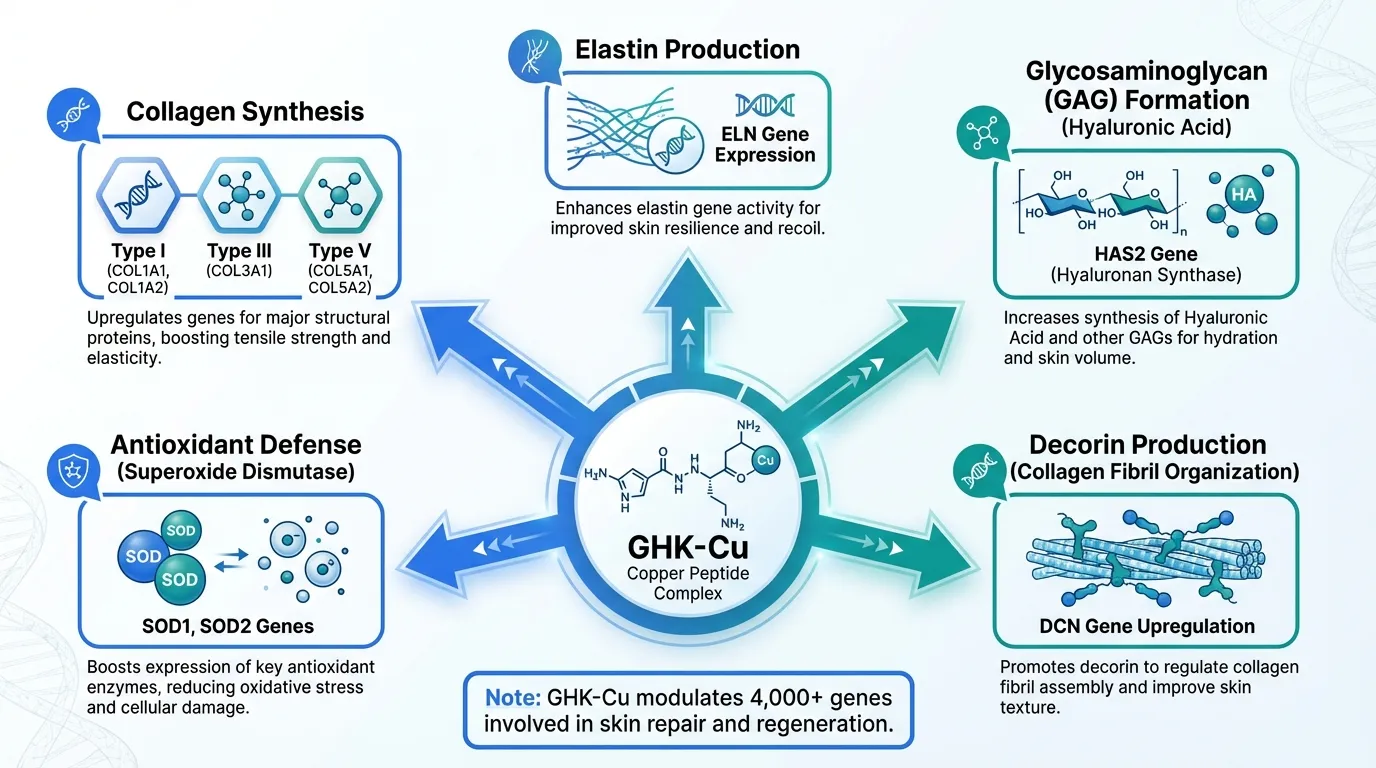
GHK-Cu is one of the most extensively studied peptides at the molecular level for skin-related applications. A landmark 2015 study demonstrated that GHK modulates over 4,000 human genes involved in skin regeneration, representing approximately 6% of the human genome 1. The affected gene networks include:
- Collagen synthesis: Upregulation of collagen types I, III, and V, the primary structural proteins of skin
- Elastin production: Increased elastin gene expression, supporting skin elasticity
- Glycosaminoglycan (GAG) formation: Enhanced production of hyaluronic acid and other GAGs that maintain skin hydration
- Decorin production: Increased expression of decorin, which regulates collagen fibril assembly and organization
- Antioxidant defense: Upregulation of superoxide dismutase and other antioxidant genes
A 2018 follow-up study provided additional gene expression data supporting GHK-Cu's regenerative and protective properties, including suppression of genes associated with tissue destruction and fibrosis 2.
Mechanism of Action#
GHK-Cu works by binding to copper ions and delivering them to tissue sites where they are required for enzymatic processes. Copper is a cofactor for lysyl oxidase (critical for collagen cross-linking), superoxide dismutase (antioxidant defense), and cytochrome c oxidase (mitochondrial energy production). Beyond copper delivery, GHK itself acts as a signaling molecule that influences gene expression through mechanisms that are not yet fully characterized.
The peptide also suppresses TGF-beta signaling, which may reduce excessive scar formation and fibrosis while promoting organized tissue regeneration rather than disordered repair.
Evidence Level and Caveats#
While the gene expression data is extensive, most evidence comes from in vitro studies and gene expression analyses. The gap between molecular data and clinical outcomes remains significant. Topical copper peptide products are available as cosmetics, but injectable forms have been banned from compounding.
Component 2: BPC-157 (Body Protection Compound)#
Role in the Glow Blend#
BPC-157 contributes to the blend through its well-documented effects on angiogenesis and growth factor signaling. In the context of skin and tissue regeneration, its primary contributions are:
- Vascularization of healing tissue: BPC-157 promotes new blood vessel formation through VEGFR2 upregulation and nitric oxide modulation, delivering oxygen and nutrients to regenerating skin 34.
- Growth factor amplification: The peptide upregulates multiple growth factors (VEGF, EGF, FGF) that are essential for keratinocyte proliferation and fibroblast activity in skin repair 5.
- Inflammatory modulation: BPC-157 reduces pro-inflammatory cytokines that, when chronically elevated, impair skin healing and promote premature aging 5.
A 2025 systematic review confirmed BPC-157's tissue repair effects across 36 studies, though the vast majority involved musculoskeletal models rather than skin-specific studies 5.
Skin-Specific Research#
While BPC-157 is primarily studied in musculoskeletal contexts, several animal studies have examined its effects on skin tissue:
- Acceleration of burn wound healing in rat models
- Improved healing of skin flaps with compromised blood supply
- Enhanced granulation tissue formation in chronic wound models
The skin-specific evidence is a subset of the broader BPC-157 literature and shares the same limitation: it is almost entirely preclinical.
Component 3: TB-500 (Thymosin Beta-4 Fragment)#
Role in the Glow Blend#
TB-500, the active fragment of thymosin beta-4, contributes through its unique ability to promote cell migration via actin dynamics. In skin regeneration contexts:
- Keratinocyte migration: Thymosin beta-4 promotes the directed migration of keratinocytes to wound margins, a critical step in reepithelialization 6.
- Endothelial cell migration: The peptide drives endothelial cell migration for angiogenesis through a mechanism distinct from BPC-157's VEGFR2 pathway 6.
- Reduced scarring: By promoting organized cell migration rather than disorganized proliferation, thymosin beta-4 may support more organized tissue architecture 7.
Clinical Evidence in Dermal Healing#
Thymosin beta-4 (the parent compound) has the strongest clinical data of the three blend components for skin applications. Phase 2 clinical trials demonstrated that topical thymosin beta-4 accelerated healing of chronic stasis and pressure ulcers by approximately one month compared to placebo 7. In preclinical models, topical application increased reepithelialization by 42-61% compared to controls 6.
The peptide also promotes angiogenesis, hair follicle development, and epithelial stem cell mobilization in skin tissue 8.
Critical distinction: Clinical data exists for thymosin beta-4 (the full 43-amino-acid peptide), not TB-500 (the 7-amino-acid synthetic fragment). The two should not be conflated in evidence claims.
Theoretical Synergy: How the Three Components May Interact#
Multi-Layer Regeneration Hypothesis#
The rationale for combining these three peptides targets different layers of the skin regeneration process:
| Regeneration Layer | Primary Contributor | Mechanism |
|---|---|---|
| Gene expression reprogramming | GHK-Cu | Modulates 4,000+ genes toward regenerative phenotype |
| Vascular supply | BPC-157 | VEGFR2/NO-mediated angiogenesis |
| Cell migration to wound site | TB-500 | Actin sequestration and cytoskeletal reorganization |
| Collagen architecture | GHK-Cu | Decorin upregulation for organized fibril assembly |
| Growth factor signaling | BPC-157 | VEGF, EGF, FGF upregulation |
| Inflammatory resolution | BPC-157 + TB-500 | Cytokine modulation + anti-apoptotic effects |
| Extracellular matrix | GHK-Cu | GAG synthesis, collagen cross-linking via copper delivery |
| Stem cell mobilization | TB-500 | Epithelial and dermal stem cell recruitment |
Where the Hypothesis Falls Short#
Despite the appealing theoretical framework, several critical points must be acknowledged:
- No combination studies exist. No published research has tested GHK-Cu, BPC-157, and TB-500 together in any model system.
- Potential interactions are unknown. Copper ions from GHK-Cu could theoretically affect the stability or activity of the other peptides, but this has not been studied.
- Dose optimization has not been performed. The optimal ratio and total dose for a three-peptide blend is entirely undetermined.
- Route of administration matters. GHK-Cu is primarily studied topically, while BPC-157 and TB-500 are primarily studied via injection. Whether all three are effective via the same route is unclear.
The KPV Addition: Extended Glow / Klow Blend#
Some commercial formulations add KPV (Lys-Pro-Val), a tripeptide derived from alpha-melanocyte-stimulating hormone, to create a four-peptide "Klow Blend." KPV contributes anti-inflammatory properties through NF-kappaB inhibition and has been studied for gut mucosal healing 9.
In the skin context, alpha-MSH (KPV's parent peptide) is known to modulate melanocyte activity, skin inflammation, and UV-induced damage. KPV's anti-inflammatory mechanism through NF-kappaB suppression could theoretically complement the other three peptides by addressing chronic low-grade inflammation that impairs skin regeneration 9.
However, the same evidence limitations apply: KPV has no human clinical data, and the four-peptide combination has not been studied.
Evidence Summary Table#
| Peptide | Skin-Specific Evidence | Human Data | Primary Skin Mechanism |
|---|---|---|---|
| GHK-Cu | Extensive in vitro gene data | Limited (topical cosmetics) | Gene modulation of 4,000+ regenerative genes |
| BPC-157 | Animal wound/burn models | Very limited (n < 15 total) | Angiogenesis via VEGFR2/NO pathways |
| TB-500 | Phase 2 wound healing trials* | Phase 2 data (parent compound) | Cell migration via actin regulation |
| KPV (optional) | Limited preclinical | None | Anti-inflammatory via NF-kappaB inhibition |
*Phase 2 data is for thymosin beta-4, not TB-500 specifically.
Safety Considerations#
Individual Safety Profiles#
GHK-Cu: Has a long history of topical use in cosmetic products. Systemic (injectable) safety data is limited. As a naturally occurring peptide that declines with age, it is generally considered to have a favorable safety profile at physiological concentrations.
BPC-157: A 2025 pilot study found no adverse effects on cardiac, hepatic, renal, thyroid, or glucose biomarkers at IV doses of 10-20 mg in 2 healthy adults 10. Animal studies have not identified significant toxicity.
TB-500 / Thymosin beta-4: Phase 2 clinical trials reported the peptide as safe and well tolerated in wound healing applications 7.
Combination Concerns#
- No safety data exists for any two- or three-peptide combination from this blend
- Copper from GHK-Cu could potentially catalyze oxidation of the other peptides, affecting stability
- Combining three peptides that all promote tissue growth raises theoretical questions about effects on abnormal tissue
- Commercial blend quality varies significantly, and multi-peptide formulations present additional stability challenges
Key Takeaways for Researchers#
-
GHK-Cu has the deepest molecular data of the three components, with 4,000+ gene targets mapped, but the gap between gene expression changes and clinical outcomes has not been bridged for most applications.
-
TB-500's parent compound has the strongest clinical evidence in skin healing, with Phase 2 trial data showing meaningful acceleration of wound closure. However, this data applies to thymosin beta-4, not the TB-500 fragment.
-
BPC-157 contributes vascular support that is well-documented in preclinical models but has minimal human evidence, particularly in skin-specific applications.
-
The combination is theoretically compelling but empirically untested. No published studies have evaluated any two- or three-peptide combination from this blend.
-
Regulatory barriers are significant. Two of three components (GHK-Cu and BPC-157) are banned from compounding in the US as of 2024, limiting legitimate clinical investigation.
-
Route of administration is a complicating factor. The blend combines peptides with different optimal delivery methods, and whether all three are effective via the same route has not been determined.
References#
Related Peptide Profiles#
Learn more about the peptides discussed in this article:
- GHK-Cu Overview and Research Guide
- GHK-Cu Dosing Protocols
- GHK-Cu Side Effects and Safety
- BPC-157 Overview and Research Guide
- BPC-157 Dosing Protocols
- BPC-157 Side Effects and Safety
- TB-500 Overview and Research Guide
- TB-500 Dosing Protocols
- TB-500 Side Effects and Safety
Footnotes#
-
GHK Peptide as a Natural Modulator of Multiple Cellular Pathways in Skin Regeneration. PMID: 26236730. 2015. ↩
-
Regenerative and Protective Actions of the GHK-Cu Peptide in the Light of New Gene Data. PMID: 29986520. 2018. ↩
-
Modulatory effects of BPC 157 on vasomotor tone and the activation of Src-Caveolin-1-endothelial nitric oxide synthase pathway. Scientific Reports. PMID: 33051481. 2020. ↩
-
BPC 157 Therapy: Targeting Angiogenesis and Nitric Oxide's Cytotoxic and Damaging Actions. Pharmaceuticals. PMC: 12567428. 2025. ↩
-
Emerging Use of BPC-157 in Orthopaedic Sports Medicine: A Systematic Review. PMID: 40756949. 2025. ↩ ↩2 ↩3
-
Thymosin beta4 accelerates wound healing. PMID: 10469335. 1999. ↩ ↩2 ↩3
-
The regenerative peptide thymosin beta-4 accelerates the rate of dermal healing in preclinical models and patients. PMID: 23050815. 2012. ↩ ↩2 ↩3
-
Thymosin beta4 promotes angiogenesis, wound healing, and hair follicle development. PMID: 15037013. 2004. ↩
-
PepT1-mediated tripeptide KPV uptake reduces intestinal inflammation. PMID: 18061177. 2008. ↩ ↩2
-
Safety of Intravenous Infusion of BPC157 in Humans: A Pilot Study. PMID: 40131143. 2025. ↩

Frequently Asked Questions About The Glow Blend: GHK-Cu, BPC-157, and TB-500 for Skin and Tissue Regeneration
What does this article cover?
A research-based guide to the GHK-Cu, BPC-157, and TB-500 peptide blend, examining the evidence for each component's role in skin regeneration, wound healing, and tissue repair, plus what the combination data actually shows. This guide is for educational purposes only and does not constitute medical advice.
Which peptides are discussed in this article?
This article covers GHK-Cu, BPC-157, TB-500. Key context: GHK-Cu (Primary component studied for skin regeneration via gene modulation of 4,000+ genes and collagen ...); BPC-157 (Blend component studied for broad tissue repair and angiogenesis through VEGF and NO pathways); TB-500 (Blend component studied for wound healing through actin regulation and cell migration). Each peptide is discussed based on available research evidence.
Who is this guide written for?
This guide is written for researchers and individuals seeking an evidence-based overview of the topic covered in "The Glow Blend: GHK-Cu, BPC-157, and TB-500 for Skin and Tissue Regeneration." It summarizes available research data without making treatment recommendations. Always consult a healthcare provider for medical decisions.
What are the key takeaways from this article?
The main findings covered in this article include: Primary component studied for skin regeneration via gene modulation of 4,000+ genes and collagen .... Blend component studied for broad tissue repair and angiogenesis through VEGF and NO pathways. Blend component studied for wound healing through actin regulation and cell migration. These takeaways are based on the research data available at the time of publication.
What is GHK-Cu and why is it significant?
GHK-Cu is a peptide discussed in this article because: Primary component studied for skin regeneration via gene modulation of 4,000+ genes and collagen synthesis. For a complete profile of GHK-Cu, see the dedicated peptide page on this site.
Continue reading this research review
Free access to the complete analysis with citations and evidence ratings.
150+ peptide profiles · 30+ comparisons · 18 research tools
Medical Disclaimer
This website is for educational and informational purposes only. The information provided is not intended to diagnose, treat, cure, or prevent any disease. Always consult with a qualified healthcare professional before using any peptide or supplement.
Join 2,000+ researchers getting biweekly updates
Enjoyed this article?
The Research Briefing delivers deep-dives like this biweekly — plus new study breakdowns, safety updates, and tool announcements.
Free forever. No spam. Unsubscribe in one click.
Where to Find These Peptides
Continue Exploring
Peptide Profiles
Keep Reading
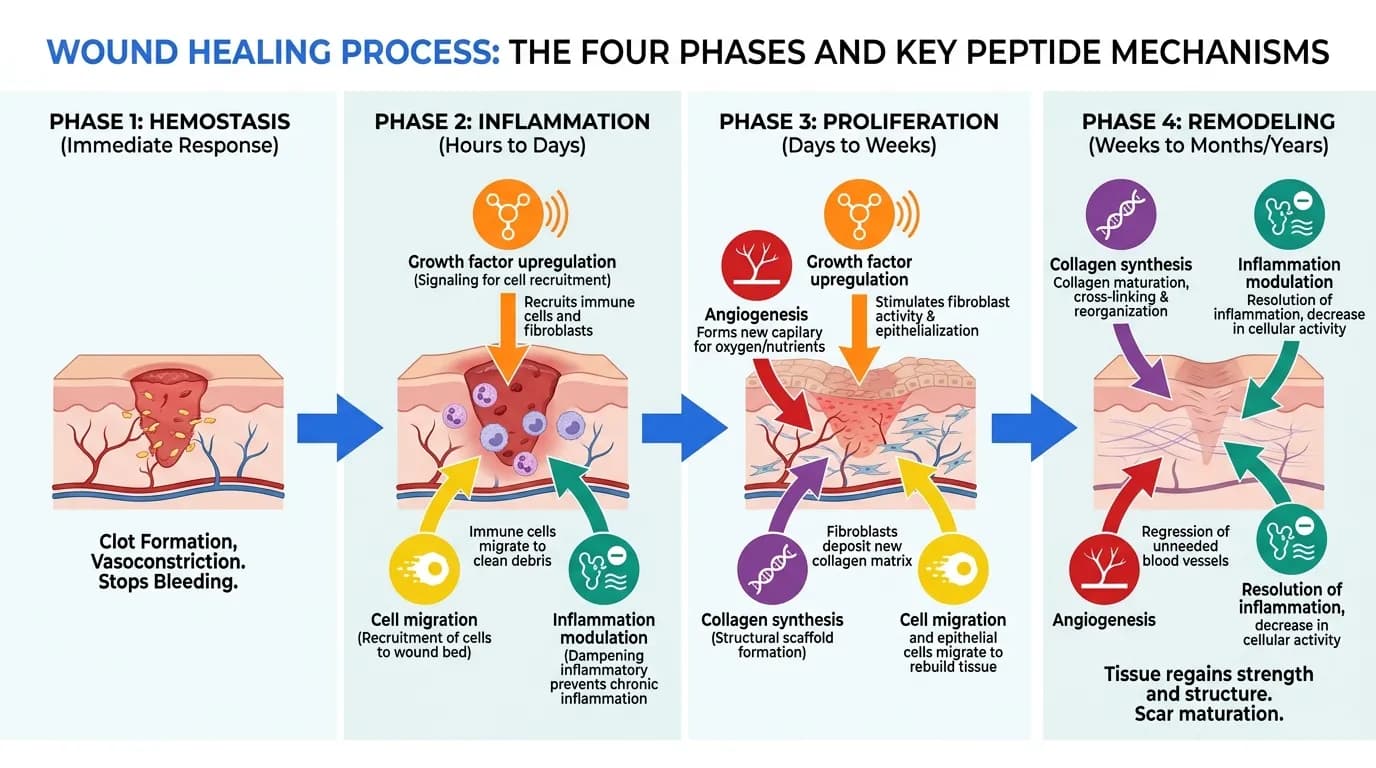
Peptides for Wound Healing & Tissue Repair: What the Research Shows (2026)
Which peptides support wound healing? An educational overview of BPC-157, TB-500, GHK-Cu, KPV, and Thymosin Alpha-1 — mechanisms, evidence status, best-use scenarios, and safety context for tissue repair research.
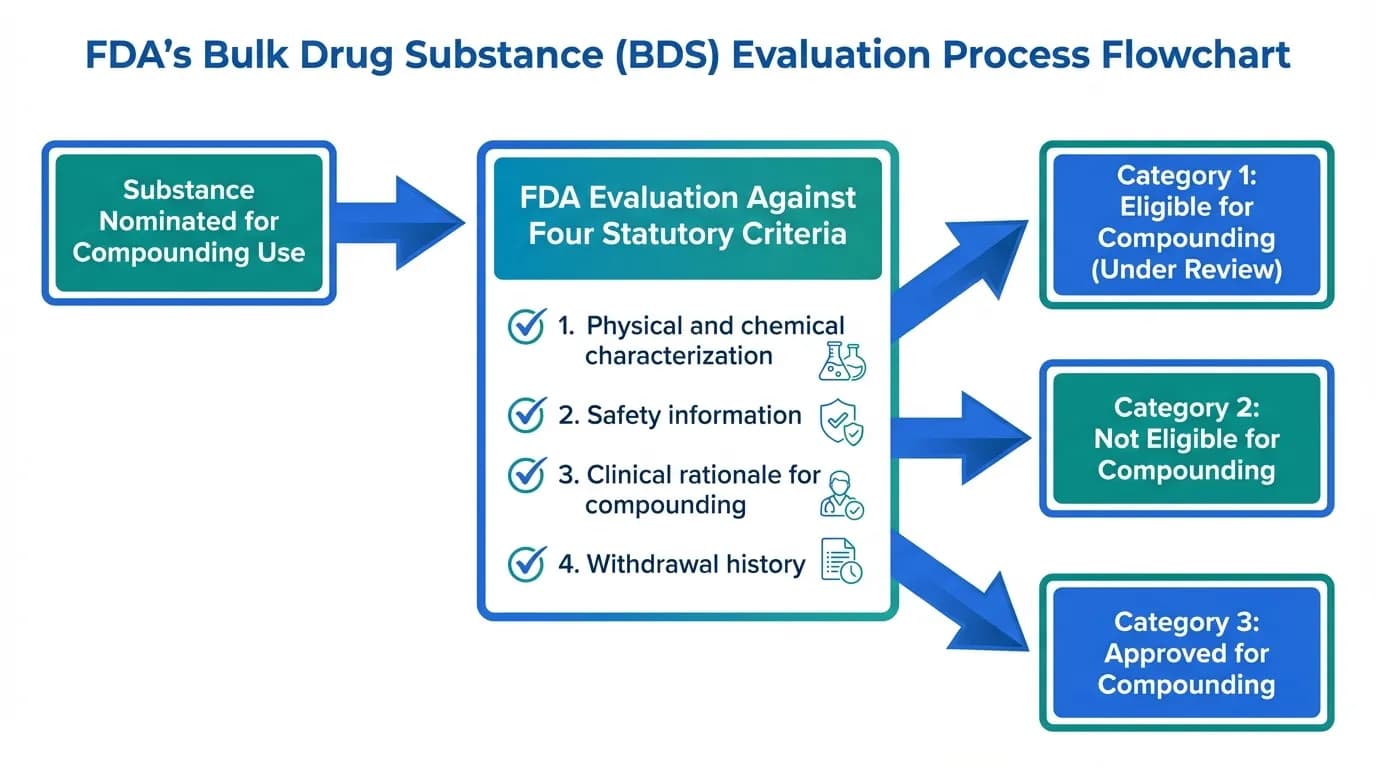
FDA Peptide Categories Explained: Category 1 vs Category 2 (2026)
Understand the FDA peptide classification system. Learn the difference between Category 1, Category 2, and Category 3 peptides and what the 2024-2026 regulatory changes mean for researchers.
Most Popular Therapeutic Peptides in 2026: 15 Ranked by Research Interest
The 15 most popular therapeutic peptides in 2026, ranked by clinical trial activity, search interest, and research community adoption. From semaglutide to BPC-157.
You Might Also Like
Related content you may find interesting