Peptide Storage Guide: How to Store Peptides Properly

Introduction#
Proper storage is one of the most important factors determining whether a peptide retains its biological activity over time. Peptides are sensitive molecules that can degrade through oxidation, hydrolysis, aggregation, and microbial contamination when exposed to unfavorable conditions. A peptide stored incorrectly for even a few days can lose a significant portion of its potency.
This guide covers the storage requirements for both lyophilized (freeze-dried) and reconstituted peptides, explains the science behind peptide degradation, and provides practical recommendations for maintaining peptide integrity. Whether you are working with research-grade peptides or pharmaceutical formulations, these principles apply broadly.
For information on the reconstitution process itself, see our complete reconstitution guide.
Understanding Peptide Forms#
Before discussing storage, it is important to understand the two forms peptides are typically encountered in:
Lyophilized (freeze-dried) peptides are dry powders or cakes produced by removing water through sublimation. This is the most stable form of a peptide. Most research peptides are shipped and sold in lyophilized form because the absence of water dramatically slows degradation reactions.
Reconstituted peptides are lyophilized peptides that have been dissolved in a solvent -- typically bacteriostatic water, sterile water, or normal saline. Once in solution, peptides are significantly more vulnerable to degradation and have a much shorter usable lifespan.
The storage requirements differ substantially between these two forms.
Lyophilized Peptide Storage#
Temperature Guidelines#
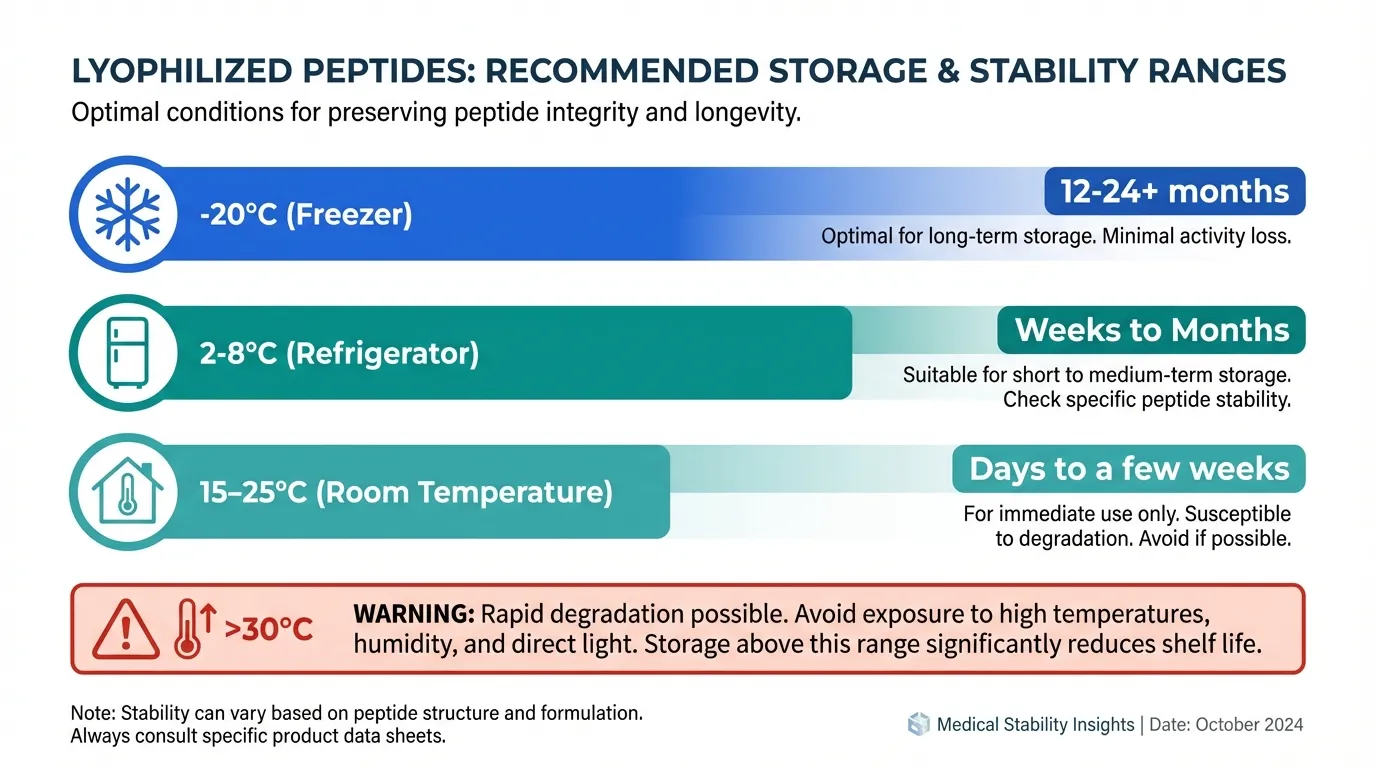
| Storage Condition | Temperature | Expected Stability |
|---|---|---|
| Long-term storage | -20 degrees C (freezer) | 12-24+ months for most peptides |
| Medium-term storage | 2-8 degrees C (refrigerator) | Several weeks to months |
| Short-term / transit | Room temperature (15-25 degrees C) | Days to a few weeks |
| Avoid | Above 30 degrees C | Rapid degradation possible |
Freezer storage (-20 degrees C) is the gold standard for long-term preservation of lyophilized peptides. At this temperature, degradation reactions are effectively halted. Most lyophilized peptides stored at -20 degrees C will remain stable for one to two years or longer, depending on the specific peptide.
Refrigerator storage (2-8 degrees C) is acceptable for peptides that will be used within a few weeks to months. This is a practical option for peptides in active use where frequent freeze-thaw cycles would be impractical.
Room temperature should only be used for brief periods such as during shipping or immediately before reconstitution. Prolonged room temperature storage accelerates degradation, particularly for peptides sensitive to heat or humidity.
Light Protection#
Many peptides are photosensitive, meaning exposure to light -- particularly ultraviolet (UV) light -- can trigger oxidation and degradation reactions. Amino acids such as tryptophan, tyrosine, and phenylalanine are especially susceptible to photo-oxidation.
Best practices for light protection:
- Store peptide vials in a dark location (inside a box, drawer, or opaque container)
- Wrap vials in aluminum foil if they will be exposed to ambient light
- Avoid placing vials near windows or under fluorescent lighting
- Use amber vials when available
Moisture Control#
Even lyophilized peptides can absorb moisture from the air, a process called deliquescence. Once moisture is absorbed, it can initiate hydrolysis reactions that break down the peptide.
To minimize moisture exposure:
- Keep vials sealed with their original rubber stopper and crimp cap
- Allow frozen vials to warm to room temperature before opening (this prevents condensation from forming inside the vial)
- Consider storing vials with desiccant packets in a sealed container
- Avoid opening lyophilized vials in humid environments
Freeze-Thaw Cycles#
While lyophilized peptides are stored frozen, they should not be subjected to repeated freeze-thaw cycles. Each cycle can introduce moisture through condensation and may cause physical changes to the lyophilized cake.
Best practice: If you have a large quantity of a peptide, consider dividing it into smaller aliquots before freezing so you can thaw only what you need.
Reconstituted Peptide Storage#
Once a peptide is reconstituted -- dissolved in a liquid solvent -- the storage requirements become more stringent and the usable lifespan decreases substantially.
Temperature Requirements#
Reconstituted peptides must always be refrigerated at 2-8 degrees C. This is non-negotiable.
Do not store reconstituted peptides at room temperature. Even a few hours at room temperature can initiate degradation, and bacterial growth becomes a significant concern in the absence of cold-chain storage.
Shelf Life by Solvent Type#
| Solvent | Preservative | Recommended Use Window | Storage Temperature |
|---|---|---|---|
| Bacteriostatic water (BAC water) | 0.9% benzyl alcohol | Up to 28 days | 2-8 degrees C |
| Sterile water for injection | None | Within 24 hours | 2-8 degrees C |
| Normal saline (0.9% NaCl) | None (unless preserved) | 1-2 weeks | 2-8 degrees C |
Bacteriostatic water is the preferred solvent for multi-dose peptide vials because the benzyl alcohol preservative inhibits bacterial growth, extending the safe-use window to approximately four weeks. Even with the preservative, peptide degradation still occurs over time -- the bacteriostatic agent prevents microbial contamination but does not stop chemical degradation.
Sterile water for injection contains no preservative. Once used to reconstitute a peptide, the solution should be used within 24 hours because there is no barrier to bacterial growth. This solvent is appropriate when the entire vial will be consumed in a single session.
Do Not Freeze Reconstituted Peptides#
This is one of the most common storage errors. Never freeze a reconstituted peptide solution. Freezing causes ice crystal formation that can physically damage the peptide through a process called cryodenaturation. Additionally, the freeze-thaw process can cause peptide aggregation and loss of biological activity.
If you need to preserve peptides for longer than four weeks, store them in lyophilized form and reconstitute only what you will use within the recommended window.
Minimizing Contamination#
Each time a needle pierces the rubber stopper of a reconstituted peptide vial, there is a small risk of introducing bacteria or particulates. To minimize contamination:
- Always swab the vial stopper with an alcohol wipe before each use
- Use a new, sterile syringe and needle for every withdrawal
- Avoid touching the needle tip to any non-sterile surface
- Do not leave vials open or with needles left in the stopper
- Store vials upright to keep the rubber stopper above the liquid level
Peptide-Specific Storage Considerations#
While the general principles above apply to most peptides, some have particular sensitivities worth noting.
Methionine-Containing Peptides#
Peptides containing the amino acid methionine are particularly susceptible to oxidation. The sulfur atom in methionine readily reacts with oxygen, forming methionine sulfoxide, which can alter the peptide's biological activity. These peptides benefit from:
- Storage under inert gas (nitrogen or argon) if possible
- Extra attention to light protection
- Shorter use windows after reconstitution
Large Peptides and Proteins#
Larger peptides and small proteins (such as growth hormone, follistatin, and EPO) are more prone to aggregation and denaturation than smaller peptides. They require:
- Gentler handling during reconstitution (never shake)
- Strict temperature control (even brief temperature excursions can cause irreversible aggregation)
- Careful attention to solvent pH and ionic strength
GLP-1 Receptor Agonists#
Pharmaceutical GLP-1 receptor agonists like semaglutide and tirzepatide are supplied in pre-filled pens with specific storage instructions from the manufacturer:
- Before first use: Refrigerate at 2-8 degrees C
- After first use: May be stored at room temperature (up to 30 degrees C) for a limited time (typically 28-56 days depending on the product)
- Do not freeze: These are already in liquid formulation
- Always follow the manufacturer's patient information leaflet for specific guidance
Copper Peptides#
GHK-Cu and other copper-containing peptides require attention to the type of container used. Copper ions can interact with certain metals and plastics, so storage in glass vials is preferred. Avoid prolonged contact with metal needles when possible.
Common Storage Mistakes#
Mistake 1: Leaving Reconstituted Peptides at Room Temperature#
Even a few hours at room temperature accelerates peptide degradation. Always return reconstituted vials to the refrigerator immediately after use. If you are drawing multiple doses during a research session, keep the vial on a cold pack.
Mistake 2: Freezing Reconstituted Solutions#
As described above, freezing reconstituted peptides causes ice crystal damage and aggregation. This mistake is particularly common when researchers try to extend the shelf life of reconstituted peptides.
Mistake 3: Ignoring Condensation When Thawing#
When removing a frozen lyophilized peptide from the freezer, condensation can form on the vial walls as it warms. If the vial is opened while condensation is present, moisture can reach the lyophilized powder and begin degradation. Always allow frozen vials to reach room temperature before opening -- this typically takes 10-15 minutes.
Mistake 4: Storing Near Heat Sources#
Refrigerators and freezers near ovens, radiators, or in direct sunlight may experience temperature fluctuations that compromise peptide stability. Place peptide storage units in a consistent, cool location away from heat sources.
Mistake 5: Using Expired Reconstituted Peptides#
Reconstituted peptides degrade progressively over time. Using a peptide solution that is weeks old may produce unpredictable results due to partially degraded material. When in doubt, reconstitute a fresh vial.
Mistake 6: No Labeling System#
Failing to label reconstituted vials with the reconstitution date, concentration, and solvent used leads to confusion and potential use of expired material. Always label every vial immediately after reconstitution.
Storage Quick Reference Chart#
| Peptide Form | Recommended Temp | Max Duration | Light Protection | Key Rule |
|---|---|---|---|---|
| Lyophilized (long-term) | -20 degrees C | 12-24+ months | Store in dark | Allow to warm before opening |
| Lyophilized (short-term) | 2-8 degrees C | Weeks to months | Store in dark | Keep sealed, use desiccant |
| Reconstituted (BAC water) | 2-8 degrees C | Up to 28 days | Protect from light | Never freeze |
| Reconstituted (sterile water) | 2-8 degrees C | 24 hours | Protect from light | Use promptly |
| Pre-filled pens (before use) | 2-8 degrees C | Per manufacturer | Per manufacturer | Follow label instructions |
| Pre-filled pens (in use) | Up to 25-30 degrees C | 28-56 days | Per manufacturer | Do not freeze |
Shipping and Transport#
When peptides need to be transported, maintaining the cold chain is critical for reconstituted solutions. Lyophilized peptides are more forgiving but should still be protected.
For lyophilized peptides:
- Short transit at room temperature is generally acceptable (1-3 days)
- For longer shipments, cold packs are recommended
- Protect from extreme heat (e.g., a car in summer)
For reconstituted peptides:
- Use an insulated cooler with ice packs
- Keep the vial upright and secure to prevent damage
- Use within the established shelf life regardless of cold-chain maintenance
- Consider transporting lyophilized vials instead and reconstituting at the destination
Tools for Peptide Research#
Proper storage goes hand-in-hand with correct preparation and dosing. Our dosing calculator can help determine the right concentration and volume for your reconstituted peptides. For information on converting animal study doses to human-equivalent doses, see the HED calculator.
Key Takeaways#
-
Lyophilized peptides are most stable at -20 degrees C and can last 12-24 months or longer when properly stored. Refrigerator temperature (2-8 degrees C) is acceptable for shorter periods.
-
Reconstituted peptides must be refrigerated at 2-8 degrees C and used within 28 days when reconstituted with bacteriostatic water, or within 24 hours with sterile water.
-
Never freeze reconstituted peptide solutions. Ice crystal formation causes irreversible damage to peptide structure.
-
Protect all peptides from light, especially those containing tryptophan, tyrosine, or methionine residues.
-
Allow frozen vials to warm to room temperature before opening to prevent condensation from degrading the lyophilized powder.
-
Label every vial with the peptide name, concentration, reconstitution date, and solvent used.
-
When in doubt, reconstitute fresh. Using degraded peptides produces unreliable results. A new vial is always preferable to a questionable one.
Related Peptide Profiles#
Learn more about the peptides discussed in this article:
- Semaglutide Overview and Research Guide
- Semaglutide Dosing Protocols
- Semaglutide Side Effects and Safety
- Tirzepatide Overview and Research Guide
- Tirzepatide Dosing Protocols
- Tirzepatide Side Effects and Safety
- GHK-Cu Overview and Research Guide
- GHK-Cu Dosing Protocols
- GHK-Cu Side Effects and Safety
- Follistatin Overview and Research Guide
- Follistatin Dosing Protocols
- Follistatin Side Effects and Safety
- EPO Overview and Research Guide
- EPO Dosing Protocols
- EPO Side Effects and Safety

Frequently Asked Questions About Peptide Storage Guide: How to Store Peptides Properly
What does this article cover?
How to store lyophilized and reconstituted peptides properly. Covers temperature, shelf life, light sensitivity, and common mistakes. This guide is for educational purposes only and does not constitute medical advice.
Which peptides are discussed in this article?
This article covers Semaglutide, Tirzepatide, GHK-Cu, Follistatin, EPO. Key context: Semaglutide (); Tirzepatide (); GHK-Cu (). Each peptide is discussed based on available research evidence.
Who is this guide written for?
This guide is written for researchers and individuals seeking an evidence-based overview of the topic covered in "Peptide Storage Guide: How to Store Peptides Properly." It summarizes available research data without making treatment recommendations. Always consult a healthcare provider for medical decisions.
What are the key takeaways from this article?
The main findings covered in this article include: . These takeaways are based on the research data available at the time of publication.
Continue reading this research review
Free access to the complete analysis with citations and evidence ratings.
150+ peptide profiles · 30+ comparisons · 18 research tools
Medical Disclaimer
This website is for educational and informational purposes only. The information provided is not intended to diagnose, treat, cure, or prevent any disease. Always consult with a qualified healthcare professional before using any peptide or supplement.
Join 2,000+ researchers getting biweekly updates
Enjoyed this article?
The Research Briefing delivers deep-dives like this biweekly — plus new study breakdowns, safety updates, and tool announcements.
Free forever. No spam. Unsubscribe in one click.
Where to Find These Peptides
Continue Exploring
Peptide Profiles
Keep Reading
Most Popular Therapeutic Peptides in 2026: 15 Ranked by Research Interest
The 15 most popular therapeutic peptides in 2026, ranked by clinical trial activity, search interest, and research community adoption. From semaglutide to BPC-157.

How Long Do Peptides Take to Work? Timelines by Category
How long peptides take to work: timelines for GLP-1 agonists, healing peptides, GH secretagogues, and factors influencing onset.

Peptides for Women: 7 Research-Backed Options
Seven peptides relevant to women's health — covering weight management, skin rejuvenation, healing, and hormonal support with evidence.
You Might Also Like
Related content you may find interesting