The Klow Blend: BPC-157 + TB-500 + GHK-Cu + KPV Recovery Peptide Research

Introduction#
The Klow Blend is a four-peptide formulation combining BPC-157, TB-500, GHK-Cu, and KPV that extends the three-peptide "Glow Blend" by adding a dedicated anti-inflammatory component. While the Glow Blend targets tissue regeneration through angiogenesis (BPC-157), cell migration (TB-500), and gene-level tissue remodeling (GHK-Cu), the Klow Blend adds KPV's NF-kappaB inhibitory pathway to directly address the inflammatory milieu that can impede healing.
This guide examines what KPV adds to the existing three-peptide combination and whether the expanded formulation has a stronger theoretical foundation than the sum of its parts.
Regulatory Note: BPC-157 and GHK-Cu were placed in FDA Category 2 (banned from compounding) in 2024. TB-500 and KPV are not FDA-approved. None of the four components are approved for human therapeutic use.
What KPV Adds to the Glow Blend#
The Glow Blend Foundation#
The three-peptide Glow Blend (covered in detail in our Glow Blend guide) targets tissue regeneration through:
- BPC-157: Angiogenesis via VEGFR2 upregulation and nitric oxide pathways, growth factor amplification
- TB-500: Cell migration via actin sequestration, endothelial progenitor cell differentiation
- GHK-Cu: Gene expression reprogramming across 4,000+ regenerative genes, collagen synthesis
KPV: The Anti-Inflammatory Addition#
KPV (Lys-Pro-Val) is a tripeptide derived from the C-terminal end of alpha-melanocyte-stimulating hormone (alpha-MSH). Despite being only three amino acids long, KPV retains potent anti-inflammatory activity that is, in some models, stronger than the full alpha-MSH peptide from which it derives 1.
Key mechanisms:
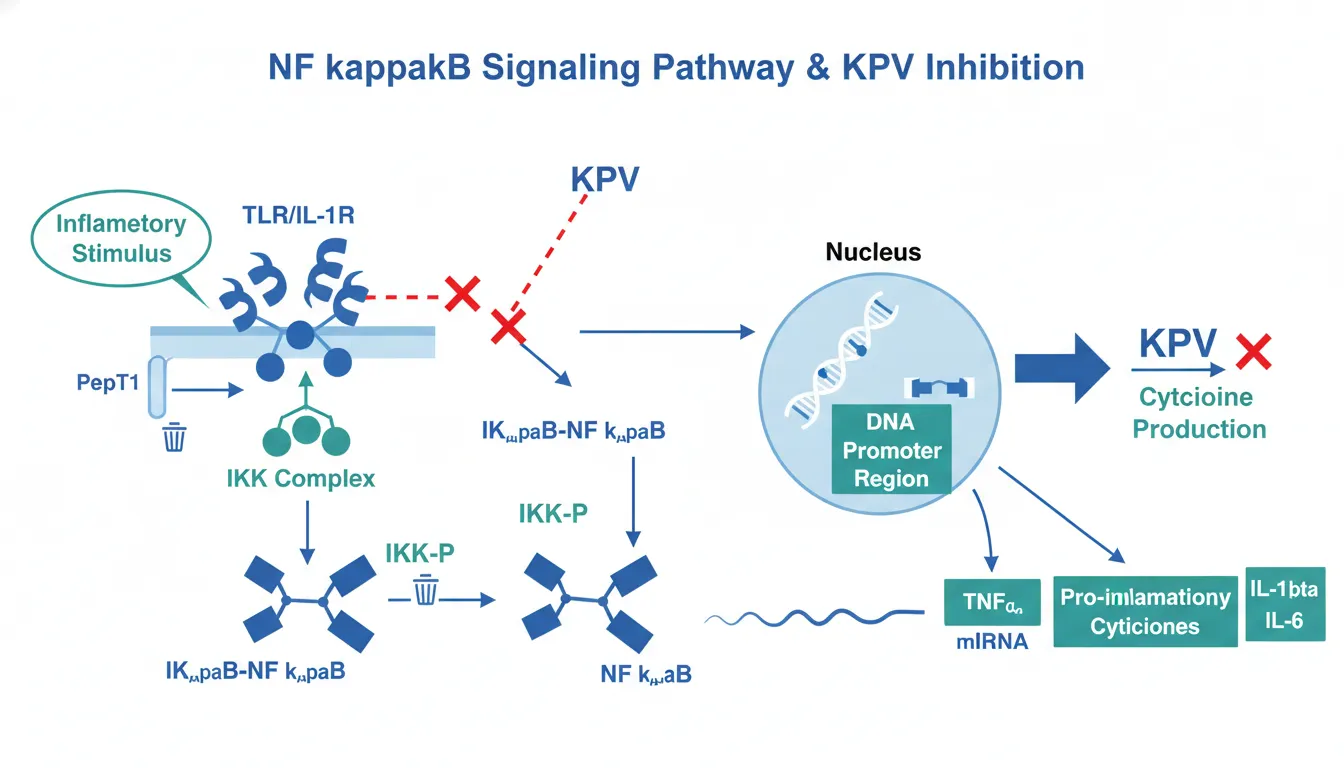
- NF-kappaB inhibition: KPV inhibits NF-kappaB activation in a dose-dependent manner, suppressing the master inflammatory transcription factor that drives production of TNF-alpha, IL-1beta, IL-6, and other pro-inflammatory cytokines 2.
- IL-8 suppression: KPV reduces IL-8 production, which dampens neutrophil recruitment to inflamed tissue 2.
- PepT1-mediated uptake: KPV is absorbed through the PepT1 transporter in immune and intestinal epithelial cells, an unusual property for peptides that enhances its bioavailability in inflamed tissues 2.
- Selective anti-inflammatory action: KPV demonstrates selective action in inflamed tissues while largely sparing normal immune responses, distinguishing it from broad immunosuppressants.
Gut-Specific Evidence#
KPV's strongest evidence base is in gut inflammation models:
- Oral KPV reduced DSS-induced and TNBS-induced colitis in mouse models 3
- The anti-inflammatory effect was mediated through PepT1-dependent uptake in intestinal epithelial cells 2
- KPV exerted stronger anti-inflammatory effects than full-length alpha-MSH in the same models 1
This gut-specific data is relevant to the Klow Blend because chronic inflammation originating from the gut (intestinal permeability, dysbiosis) can impair systemic tissue repair. By targeting gut inflammation specifically, KPV may address a root cause of impaired healing in some research contexts.
The Four-Peptide Framework#
How Each Component Contributes#
| Healing Stage | Primary Peptide | Mechanism | Evidence Level |
|---|---|---|---|
| Inflammatory resolution | KPV | NF-kappaB inhibition, cytokine suppression | Preclinical (animal + in vitro) |
| Vascular supply | BPC-157 | VEGFR2/NO-mediated angiogenesis | Preclinical (100+ studies) |
| Cell migration | TB-500 | Actin sequestration, cytoskeletal reorganization | Phase 2 clinical (parent compound) |
| Matrix remodeling | GHK-Cu | Gene modulation of collagen, elastin, GAGs | Extensive in vitro |
| Growth factor signaling | BPC-157 | VEGF, EGF, FGF upregulation | Preclinical |
| Antioxidant defense | GHK-Cu | SOD upregulation, copper delivery | In vitro gene data |
| Gut barrier integrity | KPV | PepT1-mediated mucosal healing | Preclinical (animal) |
| Stem cell recruitment | TB-500 | Epithelial and mesenchymal stem cell mobilization | Preclinical |
The Inflammation-First Hypothesis#
The theoretical advantage of adding KPV is that unresolved inflammation is one of the primary barriers to tissue regeneration. If the inflammatory phase of healing is prolonged or excessive:
- Pro-inflammatory cytokines (TNF-alpha, IL-1beta) directly inhibit fibroblast function and collagen synthesis
- Excessive neutrophil recruitment causes collateral tissue damage
- The transition from inflammation to proliferation is delayed
- Chronic NF-kappaB activation promotes fibrosis rather than organized tissue repair
By suppressing NF-kappaB at the molecular level, KPV could theoretically create a more favorable environment for the regenerative actions of the other three peptides. In this model, KPV does not directly repair tissue but removes an inflammatory brake on the repair process.
Where BPC-157 and KPV Overlap#
Both BPC-157 and KPV have anti-inflammatory properties, but through different mechanisms:
- BPC-157 modulates inflammatory cytokines as a secondary effect of its growth factor and NO signaling pathways 4
- KPV directly inhibits NF-kappaB, the upstream transcription factor that controls inflammatory gene expression 2
This distinction means the two peptides may provide complementary anti-inflammatory coverage: BPC-157 addresses inflammation through growth factor modulation, while KPV targets the transcriptional machinery of inflammation itself.
Evidence Assessment#
What Exists#
For each individual peptide:
- BPC-157: 100+ preclinical studies; very limited human data (n < 15) 4
- TB-500: Phase 2 clinical trials for wound healing (parent compound thymosin beta-4) 5
- GHK-Cu: Extensive gene expression data (4,000+ genes); limited clinical data 6
- KPV: Preclinical animal and in vitro studies; no human clinical trials 123
What Does Not Exist#
- No published study has tested any two-peptide combination from this blend
- No published study has tested the four-peptide combination
- No pharmacokinetic interaction data between any of these peptides
- No dose optimization for the multi-peptide formulation
- No stability studies assessing how four peptides interact in solution, particularly regarding copper ions from GHK-Cu
The Copper Compatibility Question#
A unique concern for multi-peptide blends containing GHK-Cu is the potential for copper-mediated interactions. Copper(II) ions are redox-active and can catalyze oxidation reactions that degrade other peptides. Whether the copper in GHK-Cu affects the stability or activity of BPC-157, TB-500, or KPV in solution has not been studied. Commercial formulations presumably address this through formulation chemistry, but published stability data for the four-peptide blend does not exist.
Comparison: Glow Blend vs. Klow Blend#
| Feature | Glow Blend (3 peptides) | Klow Blend (4 peptides) |
|---|---|---|
| Components | BPC-157, TB-500, GHK-Cu | BPC-157, TB-500, GHK-Cu, KPV |
| Anti-inflammatory | Indirect (BPC-157 cytokine modulation) | Direct (KPV NF-kappaB inhibition) + indirect |
| Gut healing | Limited | KPV adds gut mucosal data |
| Complexity | 3 potential interactions | 6 potential interactions |
| Stability risk | Moderate (copper interactions) | Higher (4 peptides + copper) |
| Evidence for combination | None | None |
| Price point | Lower | Higher |
Safety Considerations#
Individual Safety Profiles#
BPC-157: Generally well-tolerated in limited human data. No significant adverse effects at IV doses of 10-20 mg 7.
TB-500 (Thymosin beta-4): Phase 2 trials report favorable safety profile in wound healing applications 5.
GHK-Cu: Long history of topical cosmetic use. Injectable safety data limited. Naturally occurring peptide with age-related decline.
KPV: No human safety data. Derived from alpha-MSH, which is a naturally occurring hormone. The tripeptide itself has not been evaluated in human clinical trials.
Four-Peptide Combination Concerns#
- No combination safety data exists for any pairing within this blend
- Adding a fourth peptide increases the number of potential drug-drug interactions from 3 (in the Glow Blend) to 6
- KPV's NF-kappaB inhibition could theoretically impair beneficial inflammatory responses needed for pathogen defense
- The selective anti-inflammatory property of KPV (sparing normal immune function) is only demonstrated in preclinical models
- Multi-peptide formulations present compounding stability challenges
When Might the Klow Blend Be Studied Over the Glow Blend?#
The theoretical rationale for the four-peptide version over the three-peptide version is strongest in research contexts involving:
- Chronic inflammatory conditions where NF-kappaB-driven inflammation is a documented barrier to healing
- Gut-barrier related research where KPV's PepT1-mediated mucosal effects are relevant
- Models with excessive neutrophil infiltration where KPV's IL-8 suppression could reduce collateral damage
- Age-related repair impairment where chronic low-grade inflammation ("inflammaging") may slow regeneration
In research contexts where inflammation is not a primary barrier, the additional complexity of a fourth peptide may not provide meaningful benefit over the three-peptide Glow Blend.
Key Takeaways for Researchers#
-
KPV adds direct NF-kappaB inhibition to the Glow Blend's regenerative mechanisms, targeting the inflammatory transcription factor that controls cytokine production.
-
KPV's strongest data is in gut inflammation. Its PepT1-mediated uptake in intestinal epithelial cells and anti-colitis effects in animal models are its best-characterized properties.
-
The inflammation-resolution rationale is plausible. Unresolved inflammation is a well-documented barrier to tissue repair, and adding a direct anti-inflammatory component to a regenerative blend is theoretically sound.
-
No combination data exists. The four-peptide formulation has never been tested in any published study, and all synergy claims remain extrapolations from individual peptide data.
-
Complexity increases with each added component. Four peptides create 6 potential pairwise interactions (vs. 3 for the Glow Blend), increasing the unknowns in terms of stability, pharmacokinetics, and pharmacodynamics.
-
Copper compatibility is an unaddressed concern. Whether GHK-Cu's copper ions affect the other three peptides in solution remains unstudied.
-
All four peptides face regulatory barriers. Two are FDA Category 2 (banned from compounding), and none are approved for therapeutic use.
References#
Related Peptide Profiles#
Learn more about the peptides discussed in this article:
- BPC-157 Overview and Research Guide
- BPC-157 Dosing Protocols
- BPC-157 Side Effects and Safety
- TB-500 Overview and Research Guide
- TB-500 Dosing Protocols
- TB-500 Side Effects and Safety
- GHK-Cu Overview and Research Guide
- GHK-Cu Dosing Protocols
- GHK-Cu Side Effects and Safety
- KPV Overview and Research Guide
- KPV Dosing Protocols
- KPV Side Effects and Safety
Footnotes#
-
Dissection of the anti-inflammatory effect of the core and C-terminal (KPV) alpha-MSH peptides. PMID: 12750433. 2003. ↩ ↩2 ↩3
-
PepT1-mediated tripeptide KPV uptake reduces intestinal inflammation. PMID: 18061177. 2008. ↩ ↩2 ↩3 ↩4 ↩5 ↩6
-
Melanocortin-derived tripeptide KPV has anti-inflammatory potential in murine models of IBD. PMID: 18092346. 2008. ↩ ↩2
-
Emerging Use of BPC-157 in Orthopaedic Sports Medicine: A Systematic Review. PMID: 40756949. 2025. ↩ ↩2
-
The regenerative peptide thymosin beta-4 accelerates the rate of dermal healing in preclinical models and patients. PMID: 23050815. 2012. ↩ ↩2
-
GHK Peptide as a Natural Modulator of Multiple Cellular Pathways in Skin Regeneration. PMID: 26236730. 2015. ↩
-
Safety of Intravenous Infusion of BPC157 in Humans: A Pilot Study. PMID: 40131143. 2025. ↩

Frequently Asked Questions About The Klow Blend: BPC-157 + TB-500 + GHK-Cu + KPV Recovery Peptide Research
What does this article cover?
An evidence-based guide to the four-peptide Klow Blend combining BPC-157, TB-500, GHK-Cu, and KPV for recovery and inflammation research, examining each component's mechanisms, the anti-inflammatory rationale, and evidence gaps. This guide is for educational purposes only and does not constitute medical advice.
Which peptides are discussed in this article?
This article covers BPC-157, TB-500, GHK-Cu, KPV. Key context: BPC-157 (Blend component for angiogenesis and growth factor upregulation via VEGFR2/NO pathways); TB-500 (Blend component for cell migration and wound healing via actin sequestration); GHK-Cu (Blend component for gene-level tissue regeneration modulating 4,000+ genes). Each peptide is discussed based on available research evidence.
Who is this guide written for?
This guide is written for researchers and individuals seeking an evidence-based overview of the topic covered in "The Klow Blend: BPC-157 + TB-500 + GHK-Cu + KPV Recovery Peptide Research." It summarizes available research data without making treatment recommendations. Always consult a healthcare provider for medical decisions.
What are the key takeaways from this article?
The main findings covered in this article include: Blend component for angiogenesis and growth factor upregulation via VEGFR2/NO pathways. Blend component for cell migration and wound healing via actin sequestration. Blend component for gene-level tissue regeneration modulating 4,000+ genes. These takeaways are based on the research data available at the time of publication.
What is BPC-157 and why is it significant?
BPC-157 is a peptide discussed in this article because: Blend component for angiogenesis and growth factor upregulation via VEGFR2/NO pathways. For a complete profile of BPC-157, see the dedicated peptide page on this site.
Continue reading this research review
Free access to the complete analysis with citations and evidence ratings.
150+ peptide profiles · 30+ comparisons · 18 research tools
Medical Disclaimer
This website is for educational and informational purposes only. The information provided is not intended to diagnose, treat, cure, or prevent any disease. Always consult with a qualified healthcare professional before using any peptide or supplement.
Join 2,000+ researchers getting biweekly updates
Enjoyed this article?
The Research Briefing delivers deep-dives like this biweekly — plus new study breakdowns, safety updates, and tool announcements.
Free forever. No spam. Unsubscribe in one click.
Where to Find These Peptides
Continue Exploring
Peptide Profiles
Keep Reading
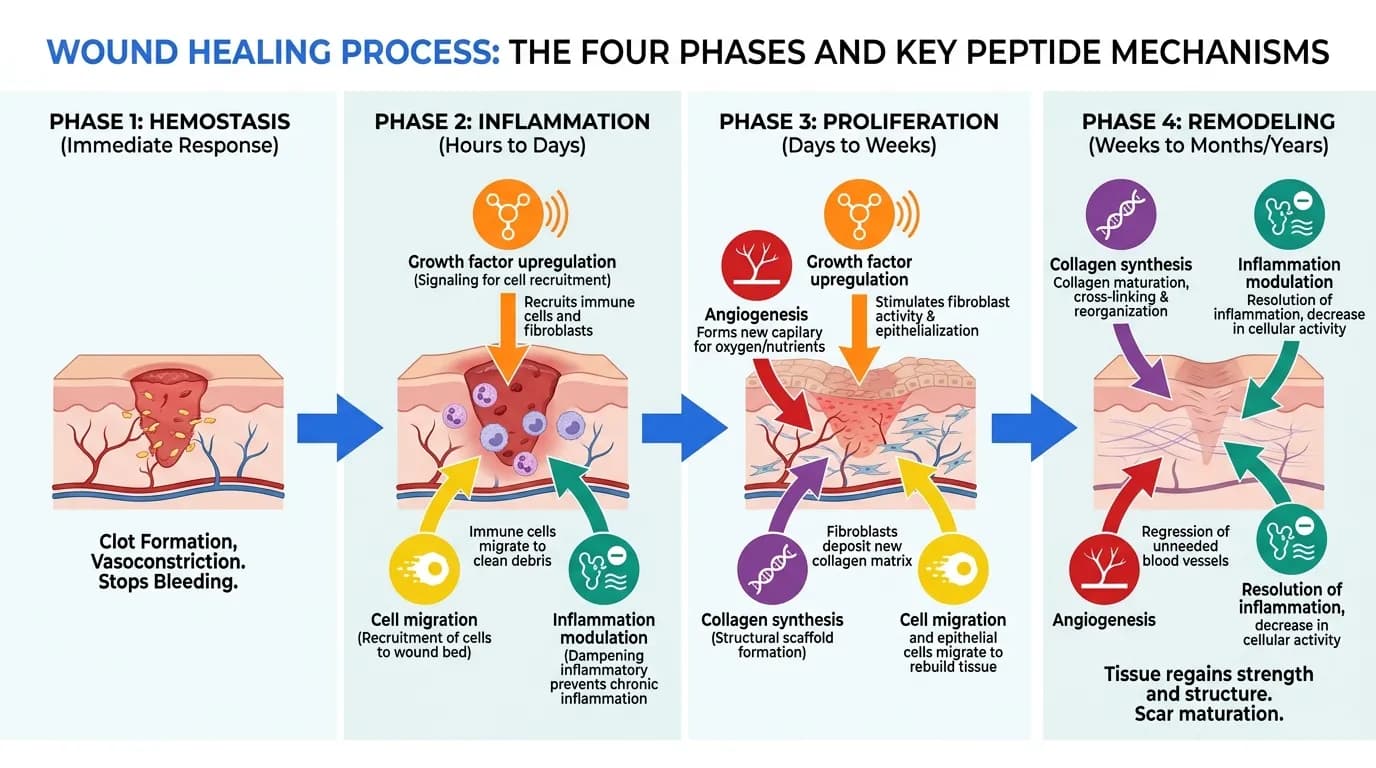
Peptides for Wound Healing & Tissue Repair: What the Research Shows (2026)
Which peptides support wound healing? An educational overview of BPC-157, TB-500, GHK-Cu, KPV, and Thymosin Alpha-1 — mechanisms, evidence status, best-use scenarios, and safety context for tissue repair research.
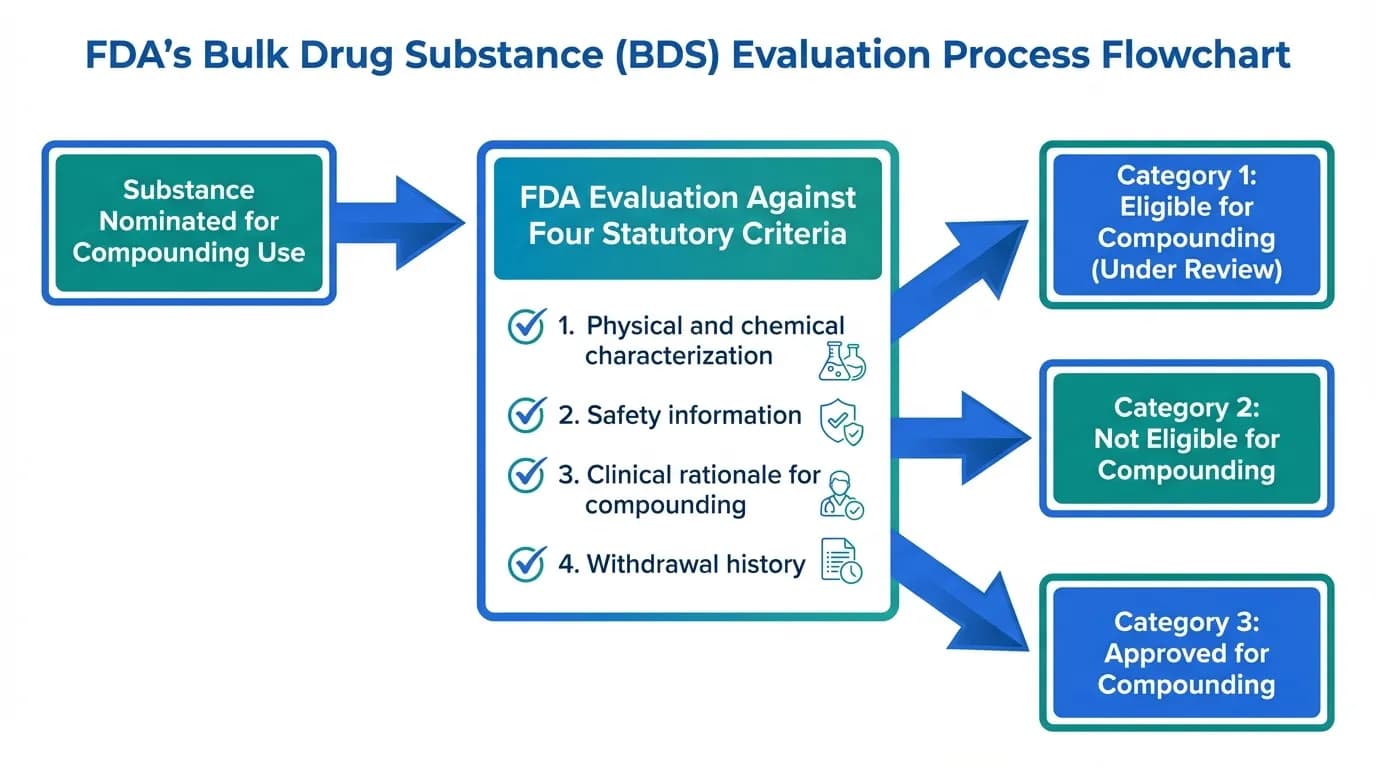
FDA Peptide Categories Explained: Category 1 vs Category 2 (2026)
Understand the FDA peptide classification system. Learn the difference between Category 1, Category 2, and Category 3 peptides and what the 2024-2026 regulatory changes mean for researchers.
Most Popular Therapeutic Peptides in 2026: 15 Ranked by Research Interest
The 15 most popular therapeutic peptides in 2026, ranked by clinical trial activity, search interest, and research community adoption. From semaglutide to BPC-157.
You Might Also Like
Related content you may find interesting