Best Peptides to Stack with Retatrutide (2026 Research Guide)
Key Takeaways
- Retatrutide (LY3437943) is a once-weekly triple GIP/GLP-1/glucagon agonist that produced 24.2% mean weight loss at 48 weeks in the Phase 2 obesity trial and 28.7% mean weight loss in TRIUMPH-4 — the highest figures reported for any incretin-class agent to date.
- The side effects driving user interest in stacking are predominantly gastrointestinal (nausea, vomiting, constipation, diarrhea) and the lean-mass loss that accompanies rapid total-mass loss with any GLP-1-class agent.
- No peptide has been studied in a human stacking trial with retatrutide. Every stack discussion in this article extrapolates from monotherapy data on the adjunct peptide, which is a meaningful evidence gap.
- The peptides most often discussed — BPC-157 for GI, tesamorelin and CJC-1295/ipamorelin for lean mass, GHK-Cu for skin and hair, DSIP for sleep, AOD-9604 and MOTS-c for adjunct fat loss — each have very different levels of supporting evidence.
- Retatrutide is not FDA-approved for any indication as of June 2026; combining unapproved peptides with an unapproved investigational drug compounds the regulatory and safety uncertainty.
Infographic overview of Best Peptides to Stack with Retatrutide (2026 Research Guide)
Infographic pending generation
The 28.7% Number, and Why Users Are Asking About Stacks#
Retatrutide (Eli Lilly's LY3437943) is a once-weekly triple agonist of the GIP, GLP-1, and glucagon receptors. The Phase 2 obesity trial reported a 24.2% mean weight reduction at the 12 mg dose at 48 weeks,1 and the TRIUMPH-4 Phase 3 program reported a 28.7% mean weight loss at 12 mg — the highest figures published for any incretin-class agent to date.2 As of June 2026, retatrutide is not FDA-approved for any indication; the TRIUMPH registrational program is the basis on which an approval decision will be made.2
Site search data shows users specifically searching for "best peptides for retatrutide users" — a natural-language question that maps onto a real set of concerns about the drug: gastrointestinal tolerability, lean-mass preservation during very rapid weight loss, hair and skin changes, sleep disruption, and adjunct fat loss. This guide reviews what the literature actually supports about each adjunct peptide commonly raised in those discussions, and where the evidence ends.
This is research discussion, not medical advice. No peptide has been studied in a human trial in combination with retatrutide. Every recommendation users encounter online about "stacking with retatrutide" extrapolates from monotherapy data on the adjunct, plus mechanistic plausibility. That extrapolation is the binding limitation of every section below.
For GI Side Effects: BPC-157#
The most common reason users ask about peptide adjuncts to retatrutide is gastrointestinal tolerability. The TRIUMPH-4 Phase 3 program reported nausea, vomiting, diarrhea, and constipation as the dominant adverse events, with the highest rates in the dose-escalation period — a pattern consistent with the Phase 2 program where 91% of participants on the 12 mg dose reported at least one adverse event, the majority gastrointestinal.12
BPC-157 — a 15-amino-acid sequence derived from a gastric protective protein — has an extensive preclinical literature for gastrointestinal healing. The Sikiric group's body of work documents accelerated healing of gastric ulcers, esophageal lesions, intestinal anastomoses, and inflammatory damage across rodent models.3 A 2018 review of the preclinical BPC-157 dataset catalogs the GI-specific findings in detail.4
The honest limitation: there are essentially no controlled human BPC-157 trials. Anecdotal human reports and animal data do not establish efficacy for the specific problem of incretin-induced nausea. The mechanism most often invoked — endothelial and mucosal repair — is plausible for inflammatory or ulcerative GI injury but is not the mechanism behind the nausea that drives retatrutide discontinuation, which is central (area-postrema) and motility (delayed gastric emptying) driven.1
If BPC-157 has a defensible niche in this conversation, it is for the constipation and gastric irritation profile rather than the central nausea, and even there the human evidence is absent.
For Lean-Mass Preservation: Tesamorelin, CJC-1295/Ipamorelin#
Rapid weight loss with any incretin agent produces a body-composition outcome in which fat mass is preferentially lost but lean mass is also reduced. The retatrutide Phase 2 trial did not publish a DXA-based body-composition substudy in its primary paper, but the broader literature on GLP-1 RAs and the dual-agonist tirzepatide suggests roughly 20–40% of total mass loss is lean tissue at the population level. The clinical relevance of this lean-mass loss is contested but is the basis for adjunct discussions of growth-hormone-axis peptides.
Tesamorelin is a stabilized GHRH analog that is FDA-approved for HIV-associated lipodystrophy. The pivotal Falutz et al. trials in HIV patients demonstrated reductions in visceral adipose tissue with preservation of lean mass and modest increases in IGF-1.56 The lean-mass preservation signal in that population is the basis for extrapolation to non-HIV weight-loss settings — though the trials were not designed to test that question and the patient population is not the same.
The CJC-1295 (no DAC) plus ipamorelin combination pairs a short-acting GHRH analog with a selective ghrelin-receptor agonist; the rationale is amplified pulsatile GH release by stimulating both arms of the GH-control system.7 Neither component is FDA-approved, and CJC-1295's full-length (DAC) variant had its development discontinued. The body-composition data in healthy or weight-losing humans is limited; most evidence is short-term GH and IGF-1 stimulation rather than long-term lean-mass outcomes.
The realistic position: tesamorelin has the best human dataset of the three but in a narrow indication; CJC-1295/ipamorelin has mechanistic plausibility and limited human data. Neither has been studied in combination with retatrutide.
For Hair and Skin Changes: GHK-Cu#
Rapid weight loss is a documented trigger for telogen effluvium (diffuse hair shedding, typically presenting 2–4 months after a significant caloric or weight-status change) and is also a period during which skin elasticity changes are noticeable. Users searching for adjuncts in this space encounter GHK-Cu most often.
GHK-Cu is a naturally occurring copper-binding tripeptide with an extensive dermatology research literature, primarily from Pickart and colleagues. Documented activities in preclinical and small clinical studies include wound healing, anti-inflammatory effects, extracellular-matrix synthesis, and follicular activity in dermal papilla cells.8 A 2018 review summarizes the cosmetic and dermatology dataset.9
The hair-cycle data is the most often-cited for this use case: GHK-Cu has been studied topically in trichology contexts and is included in some hair-restoration topical formulations. The human RCT evidence is limited and the trials are small. For incretin-driven telogen effluvium specifically, there are no published trials of GHK-Cu — the extrapolation is from general hair-cycle modulation work, not weight-loss-specific evidence.
For Sleep and Recovery: DSIP#
DSIP (delta sleep-inducing peptide) is a nonapeptide originally isolated from rabbit cerebral venous blood in the 1970s. The historical literature suggested sleep-promoting and stress-modulating effects in humans, but the body of work is small, dated, and methodologically limited by modern standards.10 No large modern controlled trials have been published, and the peptide is not FDA-approved for any indication.
The honest answer for "what does DSIP do for retatrutide users?" is: the human evidence base is too thin to make any meaningful claim about sleep-quality improvement specifically in the context of incretin-induced metabolic changes. Listed here because users will encounter the recommendation; not endorsed by current evidence.
For Adjunct Fat Loss: AOD-9604 and MOTS-c#
The premise of an "adjunct fat-loss peptide" stacked on top of retatrutide is conceptually strained: retatrutide already drives the largest weight loss in the class. Two peptides nonetheless come up:
AOD-9604 is a synthetic analog of the C-terminal fragment of human growth hormone (hGH 177–191) developed by Metabolic Pharmaceuticals. The Phase 2b obesity trial published by Stier et al. randomized 536 obese adults to AOD-9604 (1.0, 0.5, 0.25, or 0.1 mg) or placebo for 24 weeks and did not show a statistically significant difference in weight loss between any AOD-9604 dose and placebo.11 That null result is the most robust human dataset on the compound and is sufficient grounds to be skeptical of AOD-9604 as an adjunct fat-loss agent.
MOTS-c is a 16-amino-acid mitochondrial-derived peptide first characterized by Lee et al. in 2015.12 The preclinical literature describes effects on insulin sensitivity, AMPK signaling, and metabolic regulation in rodent models.13 There are no published human clinical trials of MOTS-c in the obesity indication; the extrapolation from rodent metabolic data to human fat-loss claims is large and speculative.
Stacking Caveats and Drug-Interaction Concerns#
Beyond the per-peptide evidence gaps, several stack-level concerns deserve explicit mention:
- Compounded GI burden. BPC-157 is generally well-tolerated in animal data, but introducing any injectable adjunct during a high-GI-adverse-event window is a confound when attributing nausea or pain to one agent versus the other.
- Growth-hormone-axis stacking and glucose. GH secretagogues (tesamorelin, CJC-1295, ipamorelin) modestly elevate IGF-1 and can alter insulin sensitivity. The interaction with an incretin agonist's metabolic profile has not been studied. The site's Stack Compatibility Checker flags pairwise interaction risks where data exists, but combinations with investigational drugs like retatrutide are inherently off-label.
- Pancreatitis signal overlap. GLP-1-class agents carry a pancreatitis warning. The adjunct peptides discussed here do not carry such a signal in their own data, but the retatrutide signal does not disappear in combination, and any unexplained abdominal pain during a stack should be evaluated as a possible drug-related event.
- Regulatory status. Retatrutide is not FDA-approved; BPC-157, GHK-Cu (injectable), CJC-1295, ipamorelin, AOD-9604, MOTS-c, and DSIP are also not FDA-approved drugs. Tesamorelin is approved only for HIV-associated lipodystrophy. Combining unapproved compounds with an investigational drug compounds, rather than averages, regulatory uncertainty.
For dose-volume planning of any individual peptide, the site's Dosing Calculator covers reconstitution math; it cannot, by design, evaluate whether a given stack is advisable.
What We Don't Know#
A short, honest inventory of evidence gaps in this article's subject area:
- No human trials of any of these peptides combined with retatrutide. Every stack discussion online is extrapolation.
- No DXA-based lean-mass data from the TRIUMPH-4 primary report that would let researchers quantify the lean-mass loss problem the secretagogue stacks are nominally addressing.
- No controlled human BPC-157 data of any kind at conventional doses for any indication — the literature is overwhelmingly preclinical.
- No evidence that GHK-Cu prevents incretin-induced telogen effluvium specifically. The dermatology data is for other contexts.
- No demonstrated AOD-9604 efficacy in a Phase 2b obesity trial — the only well-powered human RCT on the peptide was negative.11
- No published MOTS-c human obesity trials. The metabolic data is preclinical.
- Sparse modern DSIP human data. The historical literature is small and dated.
These gaps are the reason this article is framed as research discussion rather than a stack recommendation. The 28.7% TRIUMPH-4 number is dramatic; the support for adding research peptides on top of it is much weaker than internet stack guides typically convey.
Related Reading#
- Retatrutide overview
- Retatrutide side-effects guide
- Retatrutide Phase 3 results (2026)
- Liraglutide side effects: 2026 update
- CJC-1295 + ipamorelin stack
- Stack Compatibility Checker
- Dosing Calculator
References#
Footnotes#
-
Jastreboff AM, Kaplan LM, Frias JP, et al. Triple-hormone-receptor agonist retatrutide for obesity — a Phase 2 trial. New England Journal of Medicine. 2023;389(6):514-526. PMID: 37366315. DOI: 10.1056/NEJMoa2301972. ↩ ↩2 ↩3
-
Giblin K, Boehnke A, Brown C, et al. Retatrutide for the treatment of obesity, obstructive sleep apnea and knee osteoarthritis: Rationale and design of the TRIUMPH registrational clinical trials. Diabetes, Obesity and Metabolism. 2026. PMID: 41090431. DOI: 10.1111/dom.70209. ↩ ↩2 ↩3
-
Sikiric P, Seiwerth S, Rucman R, et al. Stable gastric pentadecapeptide BPC 157 in the treatment of colitis and ischemia and reperfusion in rats: new insights. World Journal of Gastroenterology. 2019;25(15):1814-1837. PMID: 31057295. DOI: 10.3748/wjg.v25.i15.1814. ↩
-
Sikiric P, Seiwerth S, Rucman R, et al. Brain-gut Axis and Pentadecapeptide BPC 157: Theoretical and Practical Implications. Current Neuropharmacology. 2016;14(8):857-865. PMID: 26935539. DOI: 10.2174/1570159X13666160502153022. ↩
-
Falutz J, Allas S, Blot K, et al. Metabolic effects of a growth hormone-releasing factor in patients with HIV. New England Journal of Medicine. 2007;357(23):2359-70. PMID: 18057338. DOI: 10.1056/NEJMoa072375. ↩
-
Falutz J, Mamputu JC, Potvin D, et al. Effects of tesamorelin (TH9507), a growth hormone-releasing factor analog, in human immunodeficiency virus-infected patients with excess abdominal fat: a pooled analysis of two multicenter, double-blind placebo-controlled phase 3 trials with safety extension data. Journal of Clinical Endocrinology and Metabolism. 2010;95(9):4291-304. PMID: 20554713. DOI: 10.1210/jc.2010-0490. ↩
-
Teichman SL, Neale A, Lawrence B, et al. Prolonged stimulation of growth hormone (GH) and insulin-like growth factor I secretion by CJC-1295, a long-acting analog of GH-releasing hormone, in healthy adults. Journal of Clinical Endocrinology and Metabolism. 2006;91(3):799-805. PMID: 16352683. DOI: 10.1210/jc.2005-1536. ↩
-
Pickart L, Margolina A. Regenerative and protective actions of the GHK-Cu peptide in the light of the new gene data. International Journal of Molecular Sciences. 2018;19(7):1987. PMID: 29986520. DOI: 10.3390/ijms19071987. ↩
-
Pickart L, Vasquez-Soltero JM, Margolina A. GHK peptide as a natural modulator of multiple cellular pathways in skin regeneration. BioMed Research International. 2015;2015:648108. PMID: 26236730. DOI: 10.1155/2015/648108. ↩
-
Kovalzon VM, Strekalova TV. Delta sleep-inducing peptide (DSIP): a still unresolved riddle. Journal of Neurochemistry. 2006;97(2):303-9. PMID: 16539679. DOI: 10.1111/j.1471-4159.2006.03693.x. ↩
-
Stier H, Vos E, Kenley D. Safety and Tolerability of the Hexadecapeptide AOD9604 in Humans. Journal of Endocrinology and Metabolism. 2013;3(1-2):7-15. DOI: 10.4021/jem159w. ↩ ↩2
-
Lee C, Zeng J, Drew BG, et al. The mitochondrial-derived peptide MOTS-c promotes metabolic homeostasis and reduces obesity and insulin resistance. Cell Metabolism. 2015;21(3):443-454. PMID: 25738459. DOI: 10.1016/j.cmet.2015.02.009. ↩
-
Kim KH, Son JM, Benayoun BA, Lee C. The mitochondrial-encoded peptide MOTS-c translocates to the nucleus to regulate nuclear gene expression in response to metabolic stress. Cell Metabolism. 2018;28(3):516-524.e7. PMID: 29983246. DOI: 10.1016/j.cmet.2018.06.008. ↩
Data visualization for Best Peptides to Stack with Retatrutide (2026 Research Guide)
Infographic pending generation
Continue reading this research review
Free access to the complete analysis with citations and evidence ratings.
150+ peptide profiles · 30+ comparisons · 18 research tools
Medical Disclaimer
This website is for educational and informational purposes only. The information provided is not intended to diagnose, treat, cure, or prevent any disease. Always consult with a qualified healthcare professional before using any peptide or supplement.
Join 2,000+ researchers getting biweekly updates
Enjoyed this article?
The Research Briefing delivers deep-dives like this biweekly — plus new study breakdowns, safety updates, and tool announcements.
Free forever. No spam. Unsubscribe in one click.
Where to Find These Peptides
Continue Exploring
Peptide Profiles
Keep Reading
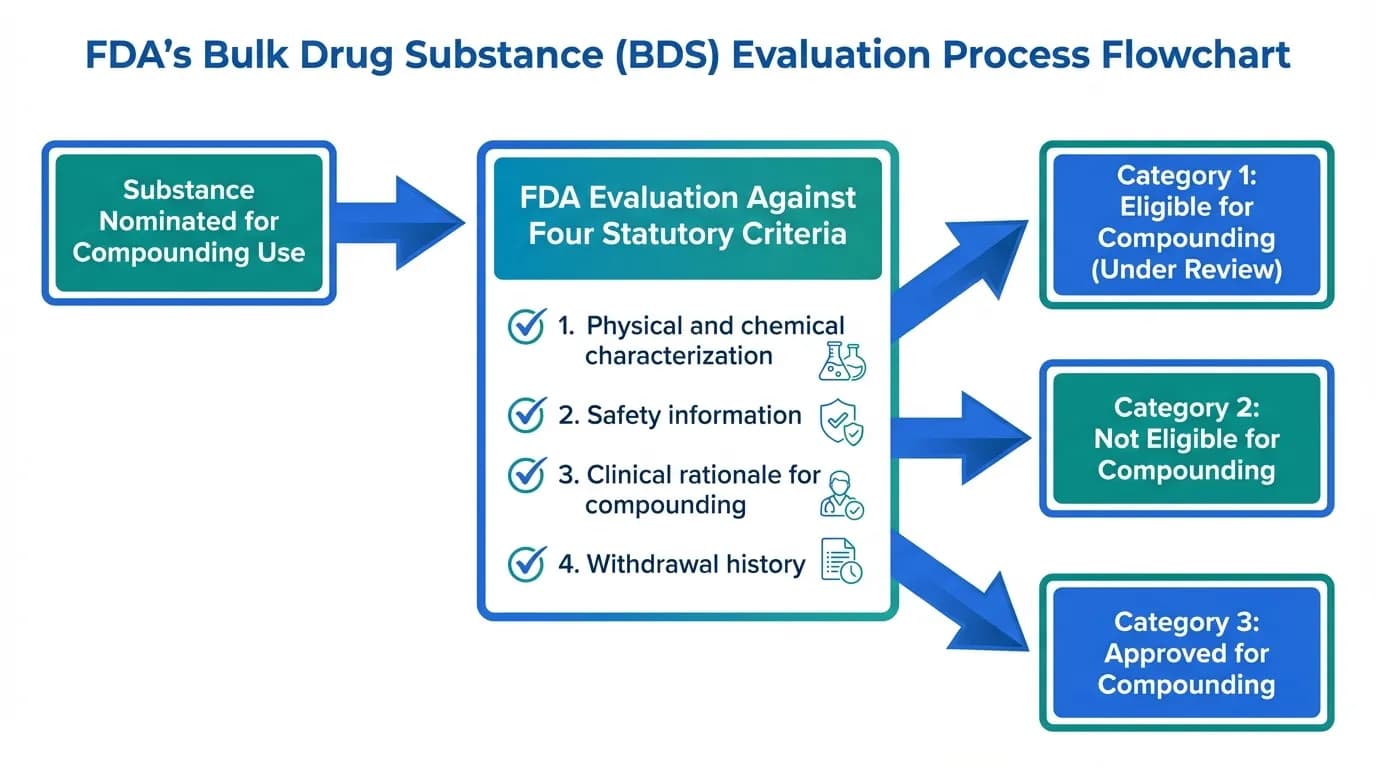
FDA Peptide Categories Explained: Category 1 vs Category 2 (2026)
Understand the FDA peptide classification system. Learn the difference between Category 1, Category 2, and Category 3 peptides and what the 2024-2026 regulatory changes mean for researchers.
Peptide Stacking Guide 2026: Best Combinations by Goal
The definitive 2026 guide to peptide stacking organized by goal. Fat loss, muscle growth, healing, anti-aging, and cognitive stacks with evidence levels, dosing timing, and safety considerations.
Most Popular Therapeutic Peptides in 2026: 15 Ranked by Research Interest
The 15 most popular therapeutic peptides in 2026, ranked by clinical trial activity, search interest, and research community adoption. From semaglutide to BPC-157.
You Might Also Like
Related content you may find interesting