Can Peptides Help with Inflammation? A Research-Based Guide

Introduction#
Inflammation is one of the most fundamental biological processes — a complex immune response that protects the body from infection and initiates tissue repair. However, when inflammation becomes chronic or dysregulated, it drives a wide range of diseases: autoimmune conditions, cardiovascular disease, neurodegenerative disorders, and metabolic syndrome.
Peptides offer a unique approach to inflammation management because many act as immunomodulators rather than simple immunosuppressants. Unlike conventional anti-inflammatory drugs that broadly suppress immune function, several peptides can shift the immune system toward a more balanced state — reducing pathological inflammation while preserving the protective inflammatory responses needed for host defense.
This research guide examines six peptides with documented anti-inflammatory properties, covering their mechanisms, evidence levels, and clinical status. For related immune system peptide research, see Top Immune-Boosting Peptides.
Important note: Chronic inflammatory conditions require medical diagnosis and management. No peptide in this guide should replace established anti-inflammatory therapies without medical guidance.
Understanding Inflammatory Pathways#
Most anti-inflammatory peptides target one or more of these core inflammatory signaling pathways:
- NF-kappaB — the "master switch" of inflammation, controlling the expression of hundreds of pro-inflammatory genes. NF-kappaB inhibition is the most common anti-inflammatory mechanism among the peptides in this guide
- Cytokine cascades — pro-inflammatory cytokines (TNF-alpha, IL-1beta, IL-6, IL-12) amplify inflammatory responses. Anti-inflammatory cytokines (IL-10, TGF-beta) counterbalance them
- Oxidative stress — reactive oxygen species (ROS) both trigger and amplify inflammation through NF-kappaB activation and inflammasome signaling
- Inflammasome activation — NLRP3 and other inflammasomes link cellular stress signals to IL-1beta and IL-18 release
1. KPV#
Evidence Level: Preclinical (in vitro and animal models) Primary Mechanism: NF-kappaB inhibition; PepT1-mediated intestinal uptake FDA Status: Not approved; not evaluated by FDA
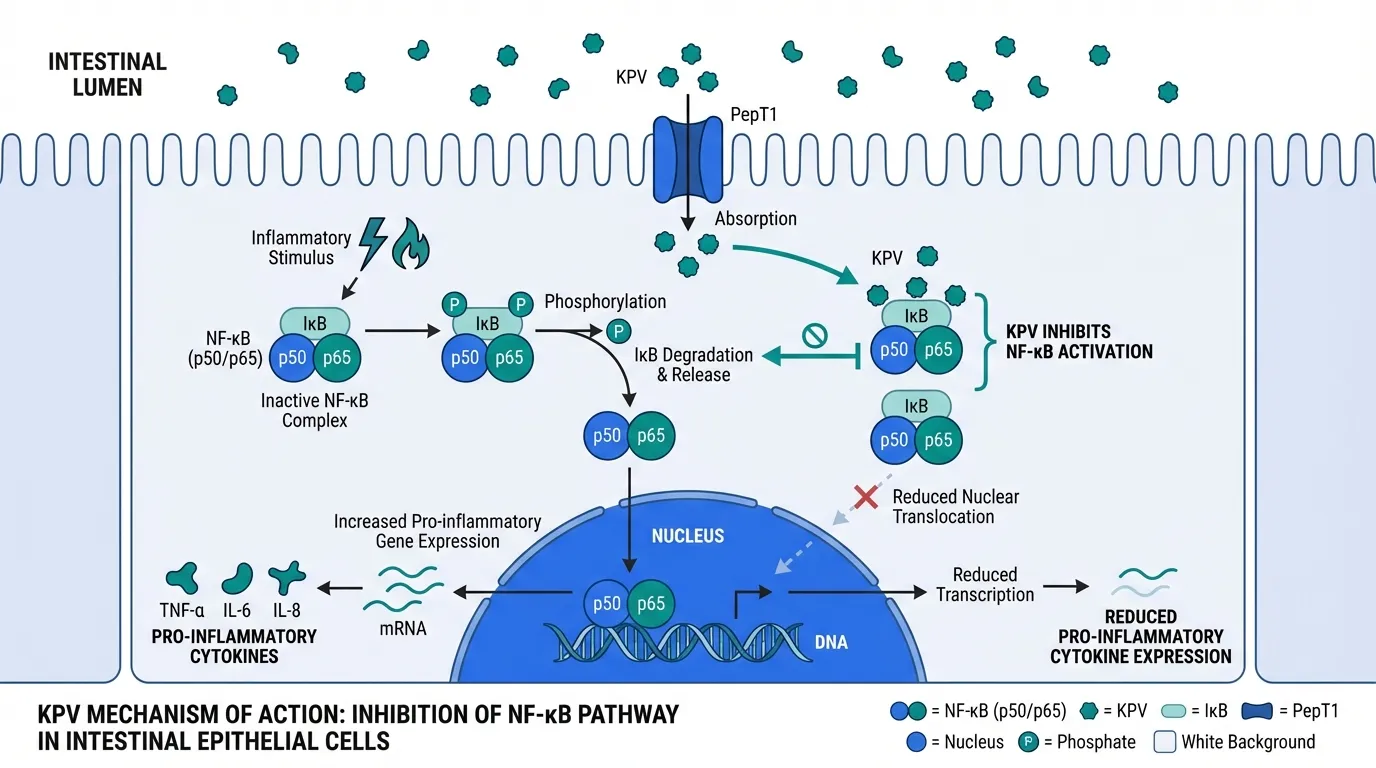
KPV is a tripeptide (Lys-Pro-Val) derived from the C-terminal end of alpha-melanocyte-stimulating hormone (alpha-MSH). It is the most specifically anti-inflammatory peptide in this guide, with a mechanism directly targeting the NF-kappaB pathway.
Research Findings#
KPV's anti-inflammatory research centers on several key findings:
- NF-kappaB inhibition — KPV has demonstrated dose-dependent suppression of NF-kappaB activation in multiple cell types, including intestinal epithelial cells, macrophages, and keratinocytes
- Cytokine suppression — reduces production of pro-inflammatory cytokines TNF-alpha, IL-6, and IL-8 in stimulated immune cells
- IBD models — oral KPV significantly reduced colitis severity in both DSS-induced and TNBS-induced murine colitis models, demonstrating anti-inflammatory efficacy in the gut (see Peptides for Gut Health)
- PepT1 uptake — KPV is absorbed through the PepT1 transporter in intestinal epithelial cells, enabling oral delivery directly to inflamed intestinal tissue
- Greater potency than alpha-MSH — KPV demonstrated stronger anti-inflammatory effects than the full 13-amino-acid alpha-MSH from which it is derived, suggesting the C-terminal tripeptide contains the core anti-inflammatory activity
Important Considerations#
All KPV data is preclinical. No human clinical trials have been conducted for any indication. The murine colitis models, while standard, do not perfectly replicate human IBD. KPV's systemic anti-inflammatory effects (beyond the gut) and long-term safety profile have not been characterized in humans.
2. BPC-157#
Evidence Level: Extensive preclinical; very limited human data Primary Mechanism: NO system modulation; growth factor regulation; cytoprotective FDA Status: Category 2 (banned from compounding)
BPC-157 is primarily known as a healing peptide, but many of its tissue repair effects are mediated through anti-inflammatory mechanisms. Its anti-inflammatory profile is intertwined with its pro-healing properties — inflammation modulation is part of how BPC-157 promotes tissue repair.
Research Findings#
BPC-157's anti-inflammatory properties have been demonstrated across multiple contexts:
- NO system regulation — BPC-157 modulates nitric oxide synthesis in a context-dependent manner, reducing excessive NO production (which drives inflammation) while supporting appropriate NO signaling for tissue repair
- Colitis models — BPC-157 reduced inflammation severity in multiple animal models of inflammatory bowel disease
- NSAID damage protection — BPC-157 protected against gastrointestinal damage caused by NSAIDs (non-steroidal anti-inflammatory drugs), which paradoxically cause inflammation in the gut
- Adjuvant arthritis — animal studies have shown anti-inflammatory effects in adjuvant-induced arthritis models
- Endothelial protection — BPC-157 protects blood vessel endothelium from inflammatory damage, which may contribute to its tissue healing effects
Important Considerations#
BPC-157's anti-inflammatory effects are difficult to separate from its broader tissue repair activities. It is not a pure anti-inflammatory agent. All data is preclinical. BPC-157 is FDA Category 2. For its healing applications, see Best Healing Peptides and Peptides for Joint Pain.
3. LL-37#
Evidence Level: Extensive in vitro; limited clinical data for anti-inflammatory applications Primary Mechanism: Dual antimicrobial and immunomodulatory; LPS neutralization; cytokine modulation FDA Status: Not approved
LL-37 is the only human cathelicidin antimicrobial peptide. While primarily known for its antimicrobial activity, LL-37 has significant immunomodulatory properties that include both pro-inflammatory and anti-inflammatory effects depending on context.
Research Findings#
LL-37's anti-inflammatory properties are context-dependent:
- LPS neutralization — LL-37 directly binds and neutralizes lipopolysaccharide (LPS), a potent bacterial inflammatory trigger. This prevents LPS from activating TLR4 signaling and the downstream inflammatory cascade
- Cytokine modulation — LL-37 can suppress pro-inflammatory cytokine production (TNF-alpha, IL-6) in response to bacterial stimulation while promoting anti-inflammatory mediators
- Wound healing — LL-37 promotes resolution of inflammation in wound environments, facilitating the transition from inflammatory to proliferative healing phases
- Immune cell recruitment — LL-37 acts as a chemoattractant for immune cells, helping coordinate rather than simply suppress the inflammatory response
- Biofilm disruption — by disrupting bacterial biofilms, LL-37 can resolve chronic inflammatory responses maintained by persistent biofilm infections
Important Considerations#
LL-37 is not a simple anti-inflammatory agent. At high concentrations, LL-37 can be pro-inflammatory, activating mast cells and promoting inflammatory cytokine release. This dual nature means that dose and context are critical — LL-37 modulates rather than suppresses inflammation. Its large size (37 amino acids) makes it susceptible to proteolytic degradation, limiting delivery options.
4. Thymosin Alpha-1#
Evidence Level: Approved internationally (Zadaxin); extensive clinical data Primary Mechanism: Immune modulation; dendritic cell maturation; T-regulatory cell promotion FDA Status: Not FDA-approved in the US; approved in 35+ countries; Category 2
Thymosin alpha-1 is a 28-amino-acid peptide originally isolated from the thymus gland. While primarily studied as an immune enhancer (see Top Immune-Boosting Peptides), thymosin alpha-1's mechanism includes immunoregulatory effects that can reduce pathological inflammation.
Research Findings#
Thymosin alpha-1's anti-inflammatory properties stem from immune system rebalancing:
- T-regulatory cell induction — thymosin alpha-1 promotes the development and activity of T-regulatory cells (Tregs), which are the immune system's primary mechanism for suppressing excessive inflammation
- Dendritic cell modulation — influences dendritic cell maturation toward a tolerogenic phenotype that promotes immune tolerance rather than inflammatory activation
- Sepsis and critical illness — clinical studies have evaluated thymosin alpha-1 as adjunctive therapy in sepsis, where it may help restore immune balance between hyper-inflammation and immunosuppression
- Chronic hepatitis — approved in several countries for chronic hepatitis B and C, where it modulates the inflammatory immune response to viral infection
- IDO pathway activation — thymosin alpha-1 activates indoleamine 2,3-dioxygenase (IDO) in dendritic cells, promoting immune tolerance through tryptophan metabolism
Important Considerations#
Thymosin alpha-1 is an immune modulator, not a direct anti-inflammatory. Its effects on inflammation are mediated through rebalancing the immune system rather than directly suppressing inflammatory pathways. In some contexts (such as immunocompromised patients), thymosin alpha-1 can actually enhance inflammatory responses to infection — this is a feature, not a side effect, as it reflects appropriate immune activation.
5. VIP (Vasoactive Intestinal Peptide)#
Evidence Level: Well-characterized anti-inflammatory physiology; limited therapeutic trial data Primary Mechanism: Cytokine suppression (TNF-alpha, IL-6, IL-12); T-regulatory cell promotion; Th2 shift FDA Status: Not approved for anti-inflammatory indications
VIP is a 28-amino-acid neuropeptide with some of the most potent documented anti-inflammatory effects of any endogenous peptide. Produced by neurons and immune cells throughout the body, VIP is a key endogenous regulator of the inflammatory response.
Research Findings#
VIP's anti-inflammatory properties are extensive and well-characterized:
- Pro-inflammatory cytokine suppression — VIP suppresses production of TNF-alpha, IL-6, IL-12, and IL-2 while promoting anti-inflammatory IL-10 production
- Macrophage polarization — VIP shifts macrophages from the pro-inflammatory M1 phenotype toward the anti-inflammatory M2 phenotype
- T-cell regulation — promotes Th2 differentiation and T-regulatory cell development, reducing Th1/Th17-driven inflammatory responses
- Autoimmune models — VIP has shown efficacy in animal models of rheumatoid arthritis, multiple sclerosis (EAE model), Crohn's disease, and type 1 diabetes
- Septic shock — VIP protected against mortality in animal models of septic shock through suppression of the inflammatory cytokine storm
Important Considerations#
VIP's very short half-life (approximately 1-2 minutes) has severely limited clinical translation. The peptide is rapidly degraded by dipeptidylpeptidase IV and other enzymes. VIP analog development (longer-acting derivatives) and targeted delivery systems are active areas of research. VIP's broad physiological effects (it is also active in the gut, lungs, and cardiovascular system) mean that systemic anti-inflammatory use could produce widespread side effects. For VIP's gut-specific role, see Peptides for Gut Health.
6. Glutathione#
Evidence Level: Biochemistry well-established; limited clinical trial data for anti-inflammatory applications Primary Mechanism: ROS scavenging; NF-kappaB pathway modulation; inflammasome regulation FDA Status: GRAS (as a dietary supplement)
Glutathione is the body's primary intracellular antioxidant — a tripeptide (glutamate-cysteine-glycine) present in virtually every cell. Its role in inflammation is mediated through its antioxidant function, because oxidative stress is a major driver and amplifier of inflammatory signaling.
Research Findings#
Glutathione modulates inflammation through the oxidative stress-inflammation axis:
- NF-kappaB regulation — intracellular glutathione levels directly influence NF-kappaB activation. Glutathione depletion promotes NF-kappaB activation and inflammatory gene expression, while adequate glutathione levels help keep NF-kappaB in check
- Inflammasome regulation — oxidative stress activates the NLRP3 inflammasome, a key driver of IL-1beta-mediated inflammation. Glutathione's antioxidant activity helps regulate NLRP3 activation
- Immune cell function — T-cells, macrophages, and other immune cells require adequate glutathione for proper function. Glutathione depletion impairs immune cell activity and can shift immune responses toward inflammatory phenotypes
- Chronic disease association — reduced glutathione levels are consistently associated with chronic inflammatory conditions including cardiovascular disease, diabetes, and neurodegenerative disorders
Important Considerations#
Glutathione's anti-inflammatory effects are indirect, operating through oxidative stress reduction rather than direct pathway inhibition. Oral glutathione bioavailability is limited due to digestive degradation. Glutathione precursors (N-acetylcysteine, glycine) or liposomal formulations may be more effective at raising tissue levels. Clinical evidence specifically linking glutathione supplementation to measurable anti-inflammatory outcomes is limited.
How These Peptides Compare#
| Feature | KPV | BPC-157 | LL-37 | Thymosin Alpha-1 | VIP | Glutathione |
|---|---|---|---|---|---|---|
| Primary Target | NF-kappaB | NO system / growth factors | LPS / cytokines | Immune balance (Tregs) | Cytokine suppression | Oxidative stress |
| Mechanism Type | Direct inhibition | Modulation | Context-dependent | Immune rebalancing | Direct suppression | Indirect (antioxidant) |
| Evidence Level | Preclinical | Extensive preclinical | Extensive in vitro | International approval | Well-characterized | Biochemistry established |
| FDA Status | Not evaluated | Category 2 | Not approved | Category 2 | Not approved (anti-inflammatory) | GRAS |
| Oral Bioavailability | Yes (PepT1) | Uncertain | Poor | No | Very poor | Limited |
| Specificity | High (NF-kappaB) | Moderate | Context-dependent | Broad (immune system) | Broad (multiple cytokines) | Broad (redox balance) |
Conclusion#
Anti-inflammatory peptides span a wide range of mechanisms — from KPV's targeted NF-kappaB inhibition to glutathione's broad antioxidant-mediated effects. The most important distinction is between direct anti-inflammatory agents (KPV, VIP) and immunomodulators (thymosin alpha-1, LL-37) that rebalance rather than suppress inflammatory responses.
VIP has perhaps the most potent documented anti-inflammatory effects but is limited by its extremely short half-life. KPV offers targeted NF-kappaB inhibition with oral bioavailability but lacks human data. Thymosin alpha-1 has the strongest clinical track record but its anti-inflammatory effects are secondary to broader immune modulation.
For researchers, the choice among these peptides depends on the specific inflammatory context — gut inflammation (KPV, BPC-157), systemic immune dysregulation (thymosin alpha-1), infection-related inflammation (LL-37), or oxidative stress-driven inflammation (glutathione).
For dose calculations and further research tools, visit the Dosing Calculator and HED Calculator. For important safety information, see the Safety page.
Related Peptide Profiles#
Learn more about the peptides discussed in this article:
- KPV Overview and Research Guide
- KPV Dosing Protocols
- KPV Side Effects and Safety
- BPC-157 Overview and Research Guide
- BPC-157 Dosing Protocols
- BPC-157 Side Effects and Safety
- LL-37 Overview and Research Guide
- LL-37 Dosing Protocols
- LL-37 Side Effects and Safety
- Thymosin Alpha-1 Overview and Research Guide
- Thymosin Alpha-1 Dosing Protocols
- Thymosin Alpha-1 Side Effects and Safety
- VIP Overview and Research Guide
- VIP Dosing Protocols
- VIP Side Effects and Safety
- Glutathione Overview and Research Guide
- Glutathione Dosing Protocols
- Glutathione Side Effects and Safety

Frequently Asked Questions About Can Peptides Help with Inflammation? A Research-Based Guide
What does this article cover?
Anti-inflammatory peptides — KPV, BPC-157, LL-37, thymosin alpha-1, VIP, and glutathione — with mechanisms and clinical evidence. This research review is for educational purposes only and does not constitute medical advice.
Which peptides are discussed in this article?
This article covers KPV, BPC-157, LL-37, Thymosin Alpha-1, VIP, Glutathione. Key context: KPV (Anti-inflammatory tripeptide derived from alpha-MSH with NF-kappaB inhibition and oral bioavailab...); BPC-157 (Gastric pentadecapeptide with anti-inflammatory properties mediated through NO system modulation ...); LL-37 (Human cathelicidin with dual antimicrobial and immunomodulatory properties including cytokine reg...). Each peptide is discussed based on available research evidence.
What level of evidence does this research review cover?
This research review examines published preclinical and clinical studies related to the peptides discussed. Evidence quality varies between peptides and indications. The article distinguishes between FDA-approved uses and investigational applications where applicable.
What are the key takeaways from this article?
The main findings covered in this article include: Anti-inflammatory tripeptide derived from alpha-MSH with NF-kappaB inhibition and oral bioavailab.... Gastric pentadecapeptide with anti-inflammatory properties mediated through NO system modulation .... Human cathelicidin with dual antimicrobial and immunomodulatory properties including cytokine reg.... These takeaways are based on the research data available at the time of publication.
What is KPV and why is it significant?
KPV is a peptide discussed in this article because: Anti-inflammatory tripeptide derived from alpha-MSH with NF-kappaB inhibition and oral bioavailability through PepT1 transporter. For a complete profile of KPV, see the dedicated peptide page on this site.
Continue reading this research review
Free access to the complete analysis with citations and evidence ratings.
150+ peptide profiles · 30+ comparisons · 18 research tools
Medical Disclaimer
This website is for educational and informational purposes only. The information provided is not intended to diagnose, treat, cure, or prevent any disease. Always consult with a qualified healthcare professional before using any peptide or supplement.
Join 2,000+ researchers getting biweekly updates
Enjoyed this article?
The Research Briefing delivers deep-dives like this biweekly — plus new study breakdowns, safety updates, and tool announcements.
Free forever. No spam. Unsubscribe in one click.
Where to Find These Peptides
Continue Exploring
Peptide Profiles
Keep Reading

Immune-Modulating Peptides: Thymosin Alpha-1, KPV, LL-37, and Beyond
Comprehensive research review of immune-modulating peptides including thymosin alpha-1, KPV, LL-37, thymalin, VIP, and glutathione. Clinical evidence, mechanisms of immune regulation, and implications for autoimmune and inflammatory conditions.

6 Peptides for Gut Health Research
Peptides for gut health — BPC-157, KPV, LL-37, VIP, and Glutathione reviewed with mechanisms, evidence levels, and key research findings.

Antimicrobial Peptides: LL-37 and KPV in Infection and Inflammation Research
LL-37 and KPV antimicrobial peptide research reviewed — mechanisms of action, infection defense, gut immunity, and anti-inflammatory pathways.
You Might Also Like
Related content you may find interesting