Best Peptides for Tendon Repair and Recovery: Research Guide
Infographic overview of Best Peptides for Tendon Repair and Recovery: Research Guide
Infographic pending generation
Tendon injuries are among the most frustrating in sports medicine and rehabilitation: they heal slowly, incompletely, and with a high recurrence rate. Tendons are metabolically hypovascular tissue with limited self-repair capacity, and the current standard of care — rest, physical therapy, PRP, and surgery for severe tears — leaves many patients with chronic pain and functional limitations.
Several peptides have emerged from preclinical research as potentially meaningful adjuncts to tendon healing. This guide reviews the strongest candidates, their mechanisms, the quality of available evidence, and what the research suggests about protocol considerations.
Why Tendon Healing Is Biologically Challenging#
Tendons consist primarily of densely packed type I collagen fibrils produced by tenocytes (specialized fibroblasts), with a matrix of proteoglycans and elastin. The tendon is sparsely vascularized, meaning nutrient delivery, immune cell recruitment, and growth factor signaling are all limited compared to muscle or bone.
After injury, tendon healing proceeds through three overlapping phases:
- Inflammatory phase (days 1–7): Hematoma formation, neutrophil and macrophage infiltration, pro-inflammatory cytokine release
- Proliferative phase (weeks 1–6): Fibroblast recruitment, angiogenesis, type III collagen deposition (weaker scar tissue)
- Remodeling phase (months to years): Collagen maturation, conversion from type III to type I, alignment along lines of mechanical stress
The majority of chronic tendinopathy and re-rupture risk originates from incomplete remodeling — the replacement tissue never fully recapitulates the mechanical properties of uninjured tendon.
BPC-157: The Most Studied Peptide for Tendon Repair#
BPC-157 (Body Protection Compound-157) is a 15-amino acid synthetic peptide derived from a protective gastric protein. It has accumulated the broadest preclinical evidence base of any peptide in musculoskeletal repair research.
Mechanisms relevant to tendon healing:
- Upregulation of VEGFR2 (vascular endothelial growth factor receptor 2), promoting angiogenesis in the hypovascular tendon bed
- Direct stimulation of tendon fibroblast outgrowth via FGFR2 (fibroblast growth factor receptor 2) activation
- Modulation of the GH/IGF-1 axis, increasing local IGF-1 activity
- Activation of FAK-paxillin signaling, a mechanotransduction pathway critical for tendon cell alignment
- Counter-regulation of nitric oxide (NO) dysregulation, which contributes to tendinopathy
Key tendon-specific preclinical studies:
- Achilles tendon transection models in rats: BPC-157 treatment (both local peritendinous and systemic IP injection) significantly accelerated biomechanical strength recovery, collagen organization, and fibroblast density at 2, 4, and 8 weeks post-injury compared to saline controls
- Rotator cuff repair models: BPC-157 improved tendon-to-bone healing with greater fibrocartilage zone formation and higher load-to-failure force
- Chronic tendinopathy models (collagenase injection): BPC-157 reduced the degenerative changes and restored more normal collagen architecture
Doses in animal studies typically range from 2–10 mcg/kg, administered daily or every other day.
Evidence level: Preclinical (animal models). No completed human RCTs for tendon indications.
TB-500: Actin Dynamics and Tissue Migration#
TB-500 is a synthetic analog of thymosin beta-4 (Tβ4), a 43-amino acid G-actin sequestering protein. Its role in tissue repair centers on two primary mechanisms:
Actin polymerization regulation: Tβ4 sequesters G-actin monomers, regulating the pool available for F-actin polymerization. This controls cell migration, cytoskeletal organization, and mechanosensing — all critical for tenocyte migration into the injury site.
Angiogenesis and stem cell recruitment: In healing studies, TB-500 promotes blood vessel formation (through VEGF upregulation) and recruits progenitor cells to injured tissue, including Sca-1+ tendon stem/progenitor cells.
Tendon research findings:
- Murine Achilles tendon repair studies show improved healing scores with TB-500 treatment versus controls
- Cardiac models (where the most TB-500 research exists) demonstrate the capacity of Tβ4/TB-500 to promote endothelial and smooth muscle cell migration via the PI3K/AKT pathway — mechanisms plausible for tendon vasculogenesis
- In vitro studies using human tendon-derived fibroblasts show increased cell migration and proliferation with Tβ4 treatment
A Phase 2 clinical trial of Tβ4 for dry eye disease demonstrated acceptable safety (NCT02074033), providing some human safety data for the parent molecule, though not for musculoskeletal applications.
Evidence level: Preclinical, with very limited human data. The clearest evidence is in cardiac and wound healing models.
GHK-Cu: Collagen Synthesis and Matrix Remodeling#
GHK-Cu (copper tripeptide glycyl-L-histidyl-L-lysine with copper) is a naturally occurring copper complex found in human plasma and saliva that declines with age. Its role in tendon healing is indirect but mechanistically relevant.
Collagen synthesis stimulation: A series of studies by Pickart and colleagues demonstrated that GHK-Cu activates transcription of collagen I, III, and elastin genes via TGF-beta pathway modulation and direct copper-mediated effects on prolyl hydroxylase (the enzyme that cross-links collagen). In fibroblast cell cultures, GHK-Cu increased collagen synthesis by up to 70% at physiological concentrations.
Matrix metalloproteinase (MMP) regulation: GHK-Cu has a dual regulatory effect on MMPs — enzymes that degrade extracellular matrix. It stimulates tissue inhibitors of metalloproteinases (TIMPs) while also activating MMP-2 and MMP-9 in a context-dependent manner, suggesting a role in remodeling rather than purely inhibiting degradation.
Anti-inflammatory activity: GHK-Cu downregulates TNF-alpha and IL-6 expression, which may reduce the chronic inflammatory state characteristic of tendinopathy.
Direct tendon-specific GHK-Cu studies are limited, but given that tendon healing critically depends on collagen quality and matrix remodeling, the mechanistic case is strong.
IGF-1 LR3: Tenocyte Proliferation and Protein Synthesis#
IGF-1 LR3 is a long-acting analog of insulin-like growth factor-1 with an N-terminal extension that reduces IGF binding protein binding, extending its half-life from minutes to approximately 20–30 hours.
IGF-1 is a key driver of tenocyte proliferation and protein synthesis. IGF-1 receptor (IGF-1R) is expressed on tenocytes throughout the healing process, and IGF-1 signaling activates PI3K/AKT and MEK/ERK pathways that drive both cell division and collagen gene transcription.
Research findings:
- IGF-1 delivery via gene transfer significantly improved tendon healing in rat models (muscle-derived stem cells transfected with IGF-1)
- Exogenous IGF-1 treatment increases collagen synthesis in tenocyte cultures and accelerates matrix production in tendon explant models
- The role of systemic IGF-1 in tendon health is supported by observations that GH-deficient individuals have impaired tendon mechanical properties
IGF-1 LR3's systemic effects (muscle protein synthesis, potential insulin resistance with higher doses) make it a higher-risk compound compared to locally acting peptides like BPC-157 and TB-500.
Comparing the Evidence#
| Peptide | Primary Mechanism | Tendon Evidence | Human Data |
|---|---|---|---|
| BPC-157 | VEGFR2, FGFR2, GH/IGF-1 axis | Strong (multiple rodent models) | None (tendon) |
| TB-500 | Actin dynamics, angiogenesis | Moderate (rodent, in vitro) | Limited (safety only) |
| GHK-Cu | Collagen synthesis, MMP regulation | Indirect (fibroblast cultures) | None (tendon) |
| IGF-1 LR3 | IGF-1R, PI3K/AKT | Moderate (rodent, in vitro) | None (tendon) |
Protocol Considerations#
All four peptides discussed here are investigational compounds not approved for human therapeutic use. The available data comes from animal models and cell culture studies, with the exception of limited human safety data for TB-500 and GHK-Cu in non-tendon contexts.
For those reviewing this research in an investigational context, the most commonly cited protocol considerations from the preclinical literature include:
- BPC-157: Peritendinous or systemic subcutaneous injection; typical research doses range from 200–500 mcg/day; most animal studies use 4–12 week treatment windows
- TB-500: Subcutaneous injection; loading and maintenance phase designs based on Tβ4 pharmacokinetics; often combined with BPC-157 given complementary mechanisms
- GHK-Cu: Topical (limited penetration), subcutaneous, or IV routes; lower concentrations studied in most research (1–10 mcg/mL range in cell culture)
- IGF-1 LR3: Subcutaneous injection; systemic IGF-1 activity at doses used for musculoskeletal purposes warrants careful blood glucose monitoring
The most important limitation to understand: no peptide has been shown in a rigorous human clinical trial to accelerate tendon healing. The preclinical evidence is mechanistically compelling and reproducible across multiple research groups, but translational success from animal to human studies is not guaranteed, particularly in complex chronic conditions like tendinopathy.
Data visualization for Best Peptides for Tendon Repair and Recovery: Research Guide
Infographic pending generation
Frequently Asked Questions About Best Peptides for Tendon Repair and Recovery: Research Guide
Does BPC-157 actually heal tendons, or is the evidence only in animals?
The substantial majority of direct tendon healing evidence for BPC-157 comes from rodent studies, where it consistently accelerates healing of Achilles tendon, rotator cuff, and patellar tendon injuries. Human clinical trial data is limited — BPC-157 is not an approved drug and has not completed Phase 2/3 trials. The animal data is mechanistically plausible and reproducible, but extrapolation to humans must be made cautiously. No rigorous human RCT has been completed for tendon healing specifically.
Can BPC-157 and TB-500 be used together for tendon injuries?
These two peptides are commonly combined in research contexts because they act through complementary mechanisms. BPC-157 primarily drives tendon fibroblast growth factor receptor (FGFR2) and VEGFR2 upregulation and GH/IGF-1 axis modulation, while TB-500 promotes actin polymerization and angiogenesis via Tβ4/G-actin sequestration. There is no direct clinical evidence evaluating the combination, and any stacking decision should consider that both are unproven in human tendon repair trials.
How long does it take for peptides to work on a tendon injury?
In animal studies, statistically significant differences in tendon healing parameters (tensile strength, collagen organization, fibroblast density) are typically observed at 2–4 weeks in acute injury models and 4–8 weeks in chronic or surgically created tendon defect models. Human recovery timelines for tendon injuries are inherently longer — major tendon repairs typically require 3–6 months of rehabilitation regardless of any adjunctive therapy.
Is local (injection near the injury) or systemic administration better for tendon repair peptides?
Animal studies have used both local (peritendinous injection) and systemic (IP, SC, oral) routes with BPC-157 showing efficacy via all routes, which is mechanistically unusual for a peptide. TB-500 is typically studied via SC or IP injection. In human research contexts, local injection near the injury site is theoretically advantageous for concentration delivery, but systemic routes are more commonly used in practice due to convenience and lower infection risk from tendon-adjacent injections.
What is the role of collagen synthesis in tendon healing, and which peptides support it?
Tendons are approximately 70% type I collagen by dry weight, organized into a hierarchical structure of fibrils, fibers, and fascicles. After injury, the initial repair response produces predominantly type III collagen (weaker, disorganized), which is gradually remodeled to type I over months to years. GHK-Cu is the most directly collagen-stimulating peptide in this list, having shown upregulation of collagen I, III, and elastin gene expression. BPC-157 also supports collagen remodeling indirectly through growth factor pathway activation.
Continue reading this research review
Free access to the complete analysis with citations and evidence ratings.
150+ peptide profiles · 30+ comparisons · 18 research tools
Medical Disclaimer
This website is for educational and informational purposes only. The information provided is not intended to diagnose, treat, cure, or prevent any disease. Always consult with a qualified healthcare professional before using any peptide or supplement.
Join 2,000+ researchers getting biweekly updates
Enjoyed this article?
The Research Briefing delivers deep-dives like this biweekly — plus new study breakdowns, safety updates, and tool announcements.
Free forever. No spam. Unsubscribe in one click.
Where to Find These Peptides
Continue Exploring
Peptide Profiles
Keep Reading

BPC-157 + TB-500 Blend: The Research Behind the 'Wolverine Stack'
An evidence-based review of the BPC-157 and TB-500 (thymosin beta-4) peptide blend, examining the research behind their complementary healing mechanisms, preclinical evidence, and important limitations.
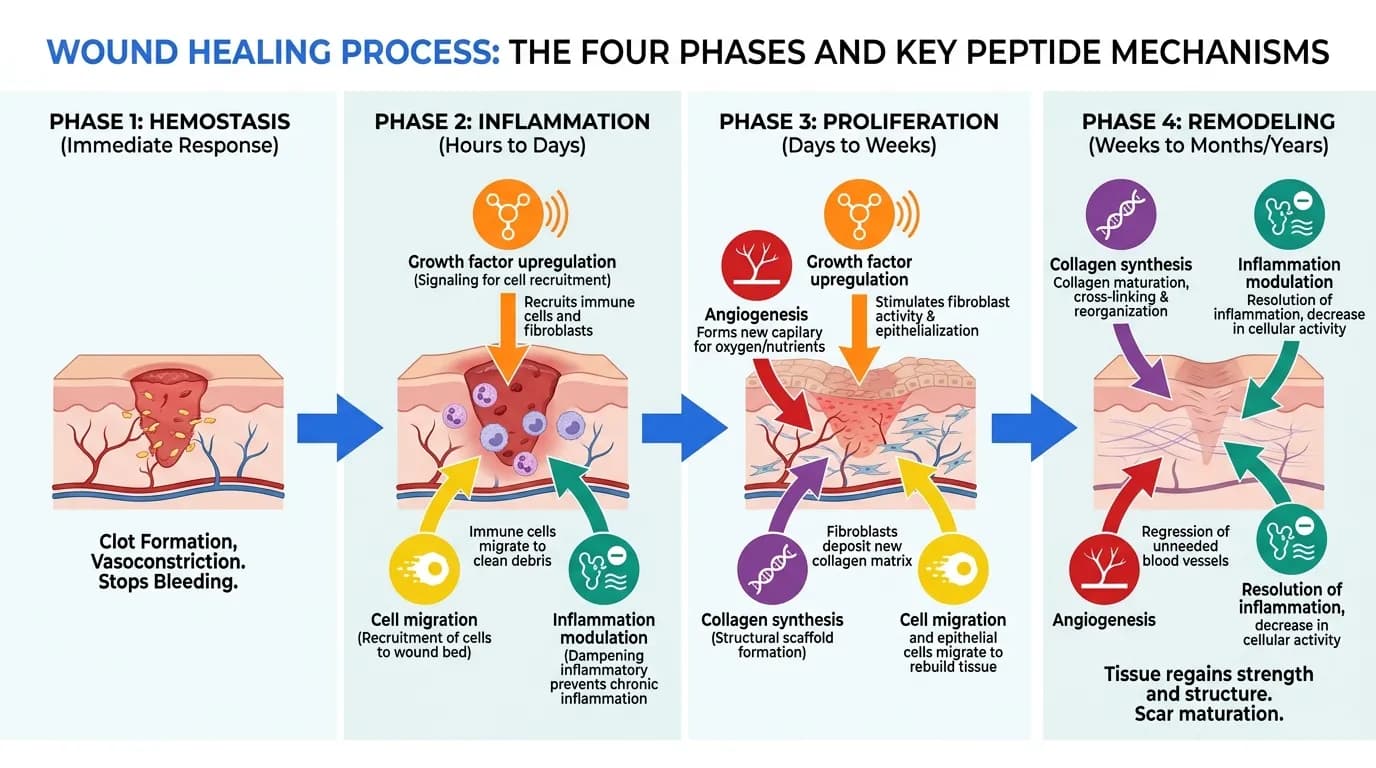
Peptides for Wound Healing & Tissue Repair: What the Research Shows (2026)
Which peptides support wound healing? An educational overview of BPC-157, TB-500, GHK-Cu, KPV, and Thymosin Alpha-1 — mechanisms, evidence status, best-use scenarios, and safety context for tissue repair research.
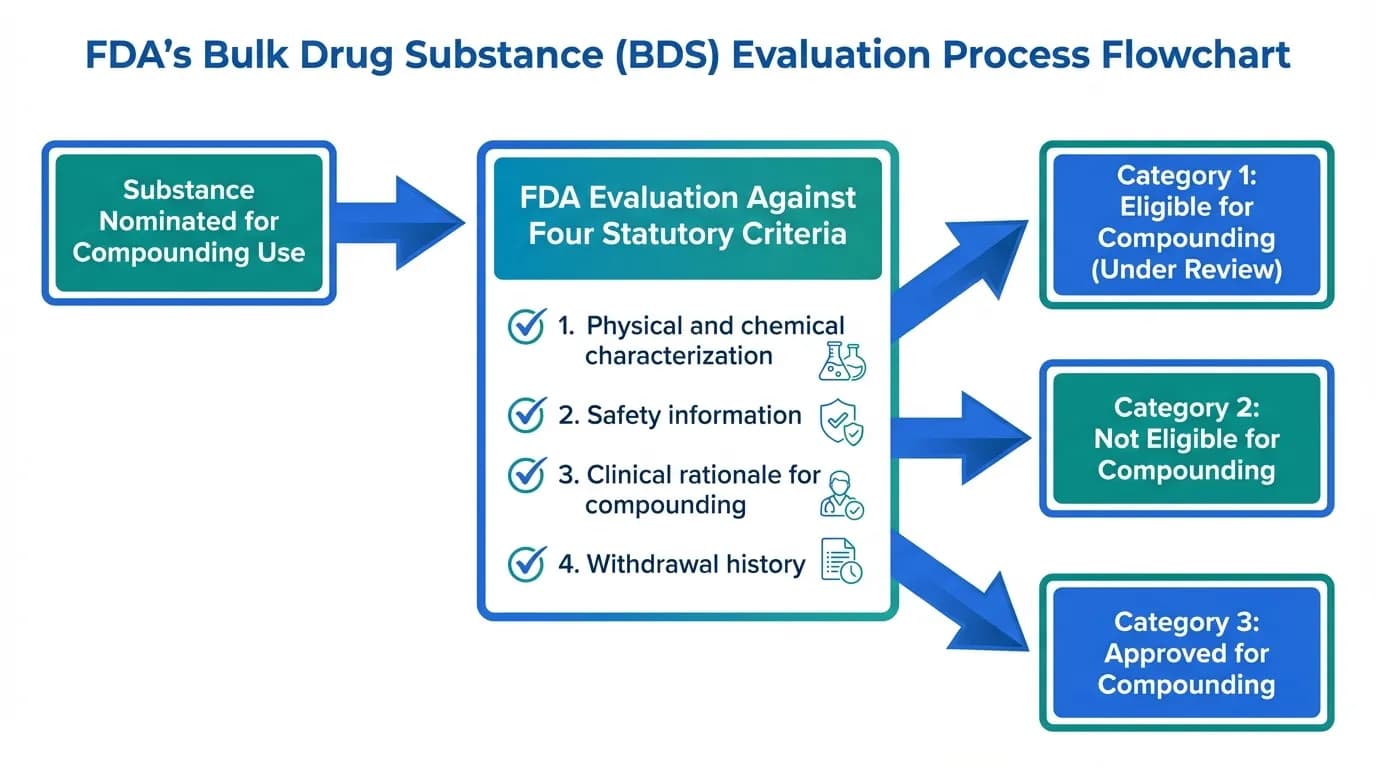
FDA Peptide Categories Explained: Category 1 vs Category 2 (2026)
Understand the FDA peptide classification system. Learn the difference between Category 1, Category 2, and Category 3 peptides and what the 2024-2026 regulatory changes mean for researchers.
You Might Also Like
Related content you may find interesting