Peptides for Athletic Performance: What the Research Shows
Infographic overview of Peptides for Athletic Performance: What the Research Shows
Infographic pending generation
The use of peptides in athletic and sports recovery contexts has grown substantially over the past decade — driven by the combination of compelling preclinical data, accessibility through research chemical vendors, and a culture of aggressive performance optimization among competitive and recreational athletes alike.
This guide takes an honest look at what the research actually shows: where the evidence is strong, where it is speculative, which compounds are prohibited in sport, and what the real risks look like.
The Two Primary Categories of Athletic Peptides#
Peptides used in sports contexts generally fall into two functional categories:
1. Growth Hormone Axis Peptides: These compounds work by stimulating the body's own production of growth hormone (GH) and, secondarily, insulin-like growth factor-1 (IGF-1). They include GH-releasing peptides (GHRPs) and GH-releasing hormone (GHRH) analogs.
2. Tissue Repair Peptides: These work through growth factor receptor signaling, extracellular matrix remodeling, and angiogenesis to accelerate healing of tendons, ligaments, and muscle. BPC-157 and TB-500 are the primary agents in this category.
GH Secretagogues: Ipamorelin and CJC-1295#
Ipamorelin#
Ipamorelin is a selective, third-generation GHRP that stimulates GH release from the pituitary without meaningfully raising cortisol or prolactin — the main drawback of earlier GHRPs like GHRP-2 and GHRP-6.
Athletic rationale: GH promotes lipolysis (fat oxidation), increases collagen synthesis in connective tissue, supports sleep quality (GH is primarily secreted during slow-wave sleep), and moderately stimulates protein synthesis via IGF-1. For athletes, the recovery-supporting properties of optimized GH pulsatility are the primary interest.
Research findings:
- Ipamorelin consistently increases GH pulse amplitude in dose-dependent fashion in rodent and early human studies
- Peak GH release occurs approximately 30–45 minutes post-injection
- No significant cortisol or prolactin elevation at therapeutic doses in human trials (unlike GHRP-6)
- IGF-1 elevation is modest but statistically significant with regular use
WADA status: Prohibited (GH-releasing peptides, S2 Peptide Hormones category).
CJC-1295 (No DAC) and the GHRH + GHRP Stack#
CJC-1295 (modified GRF 1-29) is a GHRH analog that mimics the first 29 amino acids of endogenous GHRH, stimulating GH release through the pituitary GHRH receptor. The "no DAC" version has a half-life of approximately 30 minutes — producing a physiological GH pulse rather than the sustained supraphysiological elevation of the long-acting DAC version.
The combination of Ipamorelin (GHRP) and CJC-1295 No DAC (GHRH analog) is among the most commonly researched GH-axis stacks. The two mechanisms are synergistic: GHRH analogs prime the pituitary, while GHRPs stimulate GH release via the separate ghrelin receptor pathway. Co-administration typically produces GH pulses 2–5x greater than either agent alone.
Practical timing note from research literature: Both are typically administered together, immediately pre-sleep, to amplify the natural nocturnal GH pulse — the single largest GH secretory event in most adults.
GHRP-2: First Generation, Higher Side Effects#
GHRP-2 was one of the first GHRPs characterized and remains widely studied. It produces robust GH release but has two notable drawbacks compared to Ipamorelin:
- Cortisol elevation: GHRP-2 stimulates ACTH release alongside GH, leading to meaningful cortisol increases — counterproductive for recovery-focused applications
- Prolactin elevation: Observed at higher doses, potentially disrupting hormonal balance
For research purposes, Ipamorelin has largely replaced GHRP-2 and GHRP-6 as the preferred GHRP due to its selectivity profile, though GHRP-2 remains valuable for GH stimulation testing protocols.
Tissue Repair Peptides: BPC-157 and TB-500#
BPC-157#
BPC-157 has the broadest preclinical evidence base of any peptide in sports injury research. Its mechanisms in tendon, ligament, and muscle healing are detailed in depth in our tendon repair guide, but the key points for athletes are:
- Upregulates VEGFR2 and FGFR2 on tenocytes and fibroblasts, accelerating vascularization of injured tissue
- Modulates the GH/IGF-1 axis locally, increasing IGF-1 activity at the injury site
- Reduces excessive inflammation without completely suppressing the healing response
- Maintains efficacy via oral, subcutaneous, and local routes in animal models (mechanistically unusual)
In sports research contexts, BPC-157 is typically studied for:
- Achilles and rotator cuff tendon injuries
- Ligament sprains (ACL, MCL models in rodents)
- Muscle crush injuries and tears
- Post-surgical healing enhancement
WADA status: Not explicitly listed by name on the WADA Prohibited List as of 2026. However, WADA's S2 category includes "other substances with similar chemical structure or similar biological effect(s)" — and BPC-157 may be captured under this clause depending on interpretation. Athletes subject to WADA testing should seek specific guidance.
TB-500#
TB-500 (synthetic thymosin beta-4 fragment) promotes healing through actin polymerization regulation and angiogenesis. In sports injury models, the primary research focus has been on its ability to recruit progenitor cells and promote vascularization of injured tissue.
WADA status: Thymosin beta-4 and its fragments are explicitly prohibited under WADA S2 (Peptide Hormones, Growth Factors, Related Substances and Mimetics).
IGF-1 LR3: Muscle Growth and Repair#
IGF-1 LR3 is the most anabolically potent peptide commonly discussed in athletic contexts. Its extended half-life (approximately 20–30 hours, versus 10–20 minutes for native IGF-1) produces sustained IGF-1 receptor activation throughout the day.
Athletic applications:
- Satellite cell (muscle stem cell) activation, supporting muscle fiber hyperplasia in high-dose animal models
- Increased muscle protein synthesis via mTOR and PI3K/AKT pathways
- Enhanced nutrient uptake in skeletal muscle (insulin-like activity)
- Post-injury muscle regeneration via local IGF-1R signaling
Critical safety consideration: IGF-1 has insulin-like effects and can cause significant hypoglycemia, particularly when combined with caloric restriction or endurance training. Monitoring of blood glucose is essential. Long-term elevated IGF-1 has been associated in epidemiological studies with increased cancer risk, though causality in a research context at moderate doses is not established.
WADA status: Explicitly prohibited (IGF-1 and all analogs, S2 category).
Honest Evidence Assessment#
| Peptide | Muscle Growth Evidence | Recovery/Repair Evidence | Human RCT Data |
|---|---|---|---|
| Ipamorelin | Indirect (via GH/IGF-1) | Moderate (sleep, GH axis) | Limited (GH release confirmed) |
| CJC-1295 No DAC | Indirect (via GH/IGF-1) | Moderate (synergistic GH) | Limited |
| BPC-157 | Moderate (animal models) | Strong (animal models) | None |
| TB-500 | Limited | Moderate (animal models) | Safety only |
| IGF-1 LR3 | Strong (animal models) | Strong (animal models) | None (this compound) |
| GHRP-2 | Indirect | Low-Moderate | Limited |
The evidence pattern is consistent: strong preclinical data, very limited or absent human RCT data. This is not unusual for peptides — the regulatory pathway for approval of peptides in healthy athletes does not exist, and drug sponsors have no financial incentive to fund such trials.
WADA Prohibited List Summary#
The following peptides are explicitly banned by WADA for all athletes subject to anti-doping rules:
- All GHRPs: GHRP-2, GHRP-6, Ipamorelin, Hexarelin, Alexamorelin
- All GHRH analogs: CJC-1295, Sermorelin, Tesamorelin, Modified GRF 1-29
- IGF-1 and all analogs including IGF-1 LR3 and IGF-1 DES
- Thymosin beta-4 and TB-500
- GH itself (hGH, any form)
BPC-157 is not explicitly named but may fall under the catch-all "similar structure or biological effect" clause.
Risk-Benefit Considerations#
Athletes considering peptide research should weigh several practical factors:
Testing risk: Any athlete subject to WADA or USADA testing faces real disqualification risk. Detection windows vary by compound and test type, but targeted testing for growth factor peptides has become increasingly sensitive.
Supply chain quality: The research chemical market lacks pharmaceutical-grade quality control. Mislabeling, contamination, and concentration errors are documented risks with vendor-purchased peptides.
Unknown long-term effects: None of the GH-axis peptides discussed here have long-term safety data in healthy athletes. GH axis overstimulation over years carries theoretical risks including insulin resistance, acromegalic features at very high doses, and cardiovascular remodeling.
Legitimate clinical alternatives: For injury recovery, evidence-based interventions (load management, physiotherapy, PRP, and in appropriate cases surgery) have a far stronger human evidence base than any peptide. The most defensible role for peptide research is as a complement to, not a replacement for, these established approaches.
The research on athletic peptides is genuinely interesting and mechanistically sound. The honest assessment is also that most of the clinically relevant evidence remains in animal models, and the leap to assuming equivalent efficacy in human athletes has yet to be validated in controlled trials.
Data visualization for Peptides for Athletic Performance: What the Research Shows
Infographic pending generation
Frequently Asked Questions About Peptides for Athletic Performance: What the Research Shows
Are peptides banned by WADA (World Anti-Doping Agency)?
Yes — many peptides are prohibited under WADA's Prohibited List. The list explicitly bans GH-releasing peptides (GHRPs including GHRP-2, GHRP-6, Ipamorelin, Hexarelin), GHRH analogs (CJC-1295, Sermorelin, Tesamorelin), IGF-1 and its analogs (including IGF-1 LR3), and TB-500/thymosin beta-4 (Peptide S-23 category). BPC-157 is not explicitly named on the current WADA Prohibited List, though it falls under 'other substances with similar chemical structure or biological effects.' Athletes subject to WADA testing should treat all of these as prohibited.
Do GH secretagogues like Ipamorelin actually increase muscle mass?
GH secretagogues increase endogenous GH pulsatility and secondarily raise IGF-1 levels. GH and IGF-1 promote lipolysis and protein synthesis, but the muscle mass effects in healthy adults are modest compared to direct anabolic agents. A 2021 meta-analysis of GH in athletes found that while GH increased lean mass, it did not consistently improve strength or athletic performance — much of the lean mass gain appears to be water retention and connective tissue, not contractile muscle. For recovery from injury and sleep quality, the evidence is more positive.
What is the difference between a GHRP and a GHRH analog?
GHRPs (GH-releasing peptides) like GHRP-2, GHRP-6, Ipamorelin, and Hexarelin act on the ghrelin receptor (GHSR-1a) to stimulate GH release from the pituitary. GHRH analogs like CJC-1295 and Sermorelin mimic growth hormone-releasing hormone, acting on GHRH receptors. These two mechanisms are synergistic: combining a GHRP with a GHRH analog (e.g., Ipamorelin + CJC-1295) produces significantly greater GH pulse amplitude than either alone — roughly 2–5x the single-agent response in animal studies.
Is BPC-157 effective for muscle injuries in addition to tendons?
Yes. BPC-157's preclinical evidence extends to muscle injury models. Studies in rats with surgically induced muscle crush injuries or transections show accelerated healing, reduced inflammatory infiltrate, and earlier restoration of force production with BPC-157 treatment. The proposed mechanism involves upregulation of growth factor receptors (VEGFR2, FGFR2) that promote both angiogenesis and satellite cell (muscle stem cell) activation. Human data is absent for direct muscle healing, but the mechanistic basis is similar to the tendon research.
What monitoring is recommended for athletes researching peptides?
For GH secretagogues: baseline and periodic IGF-1 levels (to assess response and avoid excessive elevation), fasting glucose and HbA1c (GH has insulin-antagonizing effects), and if using for extended periods, an IGF-1 within the normal reference range is a reasonable target. For BPC-157 and TB-500: there are no established monitoring biomarkers, but general inflammatory markers (CRP, ESR) and liver/kidney function panels at baseline and 8–12 weeks provide safety context.
Continue reading this research review
Free access to the complete analysis with citations and evidence ratings.
150+ peptide profiles · 30+ comparisons · 18 research tools
Medical Disclaimer
This website is for educational and informational purposes only. The information provided is not intended to diagnose, treat, cure, or prevent any disease. Always consult with a qualified healthcare professional before using any peptide or supplement.
Join 2,000+ researchers getting biweekly updates
Enjoyed this article?
The Research Briefing delivers deep-dives like this biweekly — plus new study breakdowns, safety updates, and tool announcements.
Free forever. No spam. Unsubscribe in one click.
Where to Find These Peptides
Continue Exploring
Peptide Profiles
Keep Reading
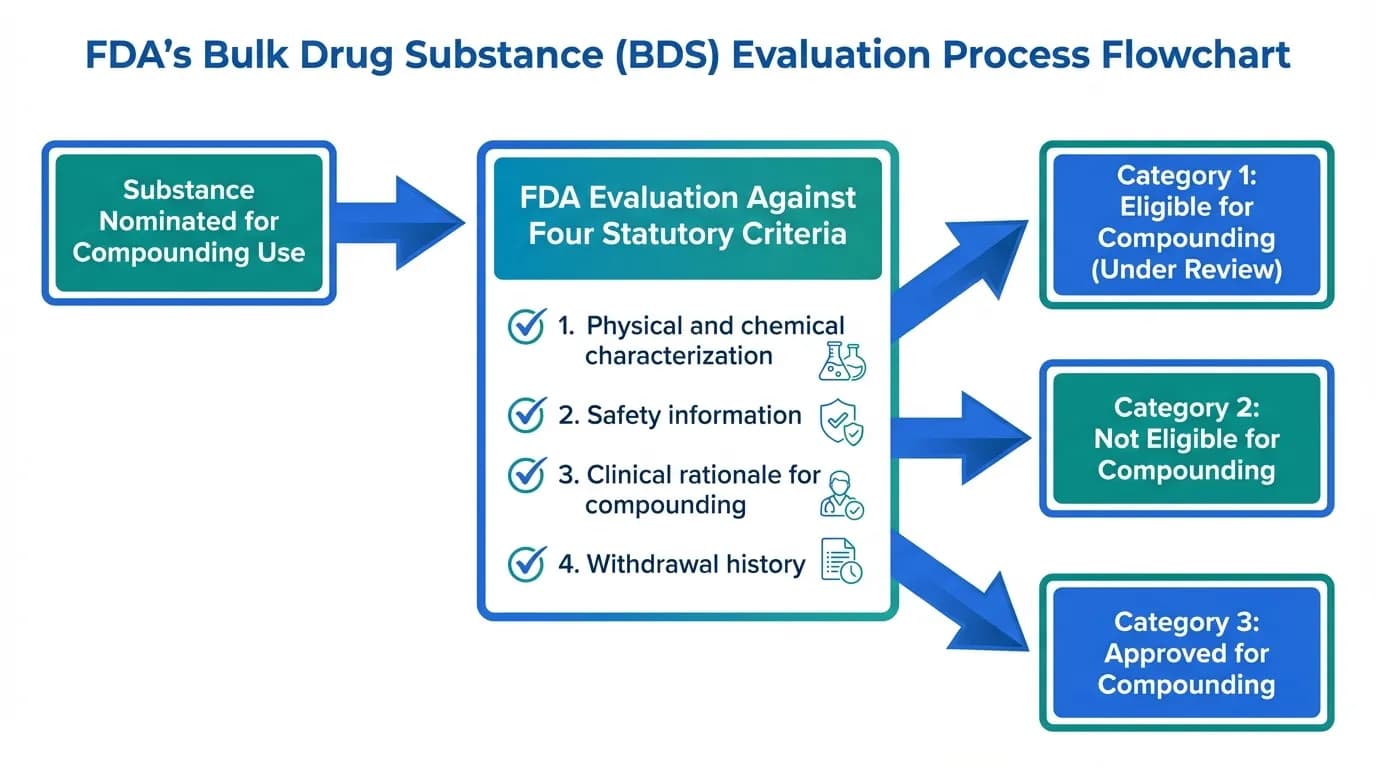
FDA Peptide Categories Explained: Category 1 vs Category 2 (2026)
Understand the FDA peptide classification system. Learn the difference between Category 1, Category 2, and Category 3 peptides and what the 2024-2026 regulatory changes mean for researchers.

Top 10 Peptides for Muscle Recovery and Growth: Evidence-Based Research Guide
The 10 most studied peptides for muscle recovery and growth, including BPC-157, TB-500, IGF-1 LR3, ipamorelin, and follistatin, with mechanisms, evidence levels, and key research data.
How to Reconstitute Peptides: A Complete Step-by-Step Guide
A detailed guide to peptide reconstitution covering bacteriostatic water vs sterile water, step-by-step mixing technique, post-reconstitution dosing calculations, proper storage, and the most common mistakes to avoid.
You Might Also Like
Related content you may find interesting