Peptide Stacking Safety: Synergies, Interactions, and Protocol Design
Key Takeaways
- Peptide stacking can enhance outcomes but requires understanding mechanistic compatibility, not just layering multiple agents.
- The BPC-157 + TB-500 and Ipamorelin + CJC-1295 combinations are the most evidence-supported synergistic stacks.
- Monitor IGF-1, fasting glucose, and relevant biomarkers every 8-12 weeks during active stacked protocols.
- Use the Stack Compatibility Checker at /tools/stack-checker to screen your combination before committing to a protocol.
Infographic overview of Peptide Stacking Safety: Synergies, Interactions, and Protocol Design
Infographic pending generation
Why People Stack Peptides#
Peptide stacking — running two or more peptides simultaneously — is motivated by a straightforward logic: different peptides act on different receptors, pathways, and tissues, so thoughtful combinations can address multiple therapeutic goals or amplify a single outcome through mechanistically complementary routes.
The most common stacking motivations are:
- Synergistic GH stimulation: GHRH analogs and GHRPs act on different receptors; co-administration produces a larger GH pulse than either alone.
- Accelerated tissue repair: BPC-157 and TB-500 target overlapping but distinct repair cascades, with evidence of additive effects.
- Metabolic + body composition goals: Combining a GLP-1 agent for fat loss with a GH secretagogue or muscle-preservation agent.
- Neuroprotection + recovery: Peptides like selank or semax alongside systemic recovery agents.
The critical safety principle: stacking is not simply additive. Pharmacodynamic interactions, overlapping side-effect profiles, and receptor competition all require deliberate consideration. Before starting any stack, use the Stack Compatibility Checker to screen your specific combination.
Known Synergistic Combinations#
BPC-157 + TB-500#
The most widely researched connective-tissue pairing. BPC-157 (Body Protection Compound-157) is a pentadecapeptide derived from gastric juice protein that promotes angiogenesis, upregulates growth factor receptors (VEGF, EGF), modulates nitric oxide signaling, and accelerates healing of tendons, ligaments, and gut mucosa. TB-500 (Thymosin Beta-4 synthetic fragment) works via a fundamentally different pathway — it binds G-actin monomers, promoting actin polymerization, cell migration, and tissue remodeling.
Because these mechanisms are complementary and non-competing, the combination is well-supported in animal models and extensively used in clinical research settings. Neither peptide appears to suppress the other's mechanism. The combination is typically administered as a repair-focused cycle during active injury recovery (4-8 weeks), with each peptide injected subcutaneously or intramuscularly 2-3 times per week.
Ipamorelin + CJC-1295#
The foundational GH peptide stack. Ipamorelin (GHS-R1a agonist) and CJC-1295 (GHRH-R agonist) work through distinct intracellular signaling cascades — GHS-R1a signals via Gq/PKC/IP3, while GHRH-R signals via Gs/cAMP/PKA. Their co-activation at the pituitary somatotroph is synergistic: published rodent data and human clinical observations consistently show GH pulses 2-5 times larger than either peptide alone.
Practical administration: inject both subcutaneously simultaneously, either pre-sleep (aligning with natural nocturnal GH release) or first thing in the morning on an empty stomach. Elevated blood glucose from a recent meal blunts GH secretion, so timing relative to food is important. Typical protocols run 3-6 months followed by a washout.
Semaglutide + Bimagrumab (Emerging)#
An emerging combination in metabolic research. Semaglutide produces weight loss that includes a meaningful proportion of lean mass loss alongside fat mass reduction — a known limitation of potent GLP-1 agonism. Bimagrumab is an anti-ActRII antibody (not a peptide per se, but relevant to the metabolic stacking conversation) that blocks myostatin/activin signaling, preserving or building muscle mass. A 48-week Phase 2 trial (N=58, published 2021 in JAMA Network Open) showed that bimagrumab + semaglutide produced greater fat mass loss and lean mass gain compared to semaglutide alone. This "preserve muscle while losing fat" pairing represents a mechanistically sound approach to addressing GLP-1's primary limitation.
Contraindicated and High-Caution Combinations#
Two GLP-1 Agonists Simultaneously#
Combining semaglutide with tirzepatide, liraglutide, or any other GLP-1 agonist is contraindicated. The additive GI toxicity (nausea, vomiting, gastroparesis risk) and the compounded risk of hypoglycemia in the context of caloric restriction provide no benefit justification. The GLP-1 receptor would be near-maximally occupied by a single agent at therapeutic doses; adding a second provides minimal additional GH signal at disproportionate risk.
GHRP-2 With Cortisol-Sensitive Recovery Protocols#
GHRP-2 is a potent GH secretagogue but it co-stimulates cortisol secretion via ACTH release at the pituitary, especially at higher doses. If the reason for adding a recovery peptide (such as BPC-157) is to resolve an inflammatory injury, simultaneously raising cortisol via GHRP-2 may blunt the anti-inflammatory repair environment. GHRP-2 is better paired with GHRH analogs alone (GHRH + GHRP framework) rather than mixed into injury-repair stacks.
Any GH-Elevating Peptide With Active or Historical Malignancy#
Elevated IGF-1 is a theoretically permissive environment for tumor growth, as IGF-1 receptor signaling promotes cell proliferation and inhibits apoptosis. While no clinical trial has demonstrated that GH secretagogue use causes cancer initiation, the theoretical concern warrants absolute caution. Any GH-axis peptide (secretagogues, HGH 191aa, IGF-1 LR3) is generally avoided in individuals with current or recent malignancy until formal clinical guidance is established.
High-Dose Combinations With Overlapping Hypotensive Effects#
Several peptides have secondary vasodilatory or hypotensive effects — BPC-157 modulates nitric oxide pathways, selank has anxiolytic/vasodilatory properties, and sermorelin can cause mild blood pressure reduction. Stacking multiple vasoactive peptides at higher doses, especially in individuals already taking antihypertensives, warrants careful monitoring and conservative initial dosing.
Timing and Administration Considerations#
Injection Timing Relative to Food#
GH secretagogues lose significant potency when GH release is blunted by postprandial insulin and glucose elevation. The 30-minute pre-meal window or, ideally, a 2+ hour fast before injection is recommended for GHRH analogs and GHRPs. BPC-157 and TB-500 are less sensitive to food timing.
Injection Site and Route#
Most peptides in research use are administered subcutaneously (SC) or intramuscularly (IM). BPC-157 is often injected near the injury site for localized effect (supported by preclinical data), though systemic SC administration also appears effective. TB-500 is typically administered IM for broader distribution. CJC-1295 and ipamorelin are standard SC injections in the abdominal region. Avoid injecting different peptides into the same site simultaneously unless they're pre-mixed — sequential injection at different sites is preferable.
Cycling and Washout#
GH secretagogue stacks: 12-24 weeks on, 4-8 weeks off. This preserves GHS-R1a sensitivity and prevents desensitization, particularly relevant for GHRPs. Recovery stacks (BPC-157/TB-500): typically goal-oriented (run until healing is observed or 8 weeks, whichever comes first) rather than fixed cycles. GLP-1 agents: designed for chronic use; washout is not standard practice but temporary discontinuation is manageable given the short half-life of most formulations.
Monitoring and Bloodwork Recommendations#
| Stack Type | Baseline Tests | 8-Week Follow-Up | 12-Week Follow-Up |
|---|---|---|---|
| GH secretagogue stack | IGF-1, fasting glucose, HbA1c, CMP | IGF-1, fasting glucose | Full panel repeat |
| GLP-1 agent | Fasting glucose, HbA1c, amylase, lipase | Fasting glucose, HbA1c | Full panel repeat |
| Recovery stack (BPC-157/TB-500) | CBC, CRP, CMP | CRP, CBC | Optional if asymptomatic |
| Multi-peptide stack (3+) | Full panel + TSH, free T3/T4 | IGF-1, glucose, CRP | Full panel repeat |
IGF-1 values above the age-adjusted reference range are the primary signal for GH-axis overdosing. Fasting glucose creeping above 95-100 mg/dL warrants dose reduction or protocol reassessment.
Red Flags to Watch For#
Persistent nausea beyond week 2: Normal during GLP-1 dose escalation but should resolve. Persistent nausea beyond dose-escalation periods, or nausea without a GLP-1 agent present, warrants investigation.
Unexpected blood glucose changes: Either hypoglycemia (relevant with IGF-1 LR3 or high-dose GH secretagogues) or hyperglycemia (can occur with GH excess increasing insulin resistance).
Swelling, fluid retention, carpal tunnel symptoms: Signs of GH excess — reduce or pause the GH secretagogue and check IGF-1.
Accelerated existing lesion growth: Any mole, skin tag, or other lesion that grows unexpectedly during IGF-1-elevating protocols should be evaluated.
Significant heart rate elevation or palpitations: Relevant with hexarelin or high-dose GHRPs; these agents can have direct cardiac effects via CD36 receptors at higher doses.
Building a Safe Stack Protocol#
A practical framework for protocol design:
- Start with one peptide for 2-4 weeks to establish your individual baseline response before adding a second.
- Understand the mechanism of each agent — only add peptides that address genuinely distinct biological targets.
- Check interactions using the Stack Compatibility Checker before committing.
- Begin at the lower end of dose ranges and titrate up. Stacked peptides may have additive effects that reduce the dose needed for each individual agent.
- Log symptoms systematically — timing, dose, injection site, food proximity, and any noted effects.
- Run bloodwork at baseline and every 8-12 weeks for any stack lasting beyond 60 days.
Conclusion#
Peptide stacking, done thoughtfully, can meaningfully expand the therapeutic range beyond what single-agent use achieves. The BPC-157 + TB-500 combination for tissue repair, the ipamorelin + CJC-1295 combination for GH pulsation, and the emerging semaglutide + muscle-preservation pairings represent the most evidence-supported synergistic stacks currently in use.
The common mistakes are layering too many agents simultaneously, neglecting food/timing interactions that blunt efficacy, and skipping baseline bloodwork. The peptide that works best in a stack is the one you can monitor safely and run long enough to produce meaningful results.
Use the Stack Compatibility Checker to validate your specific combination before starting.
Data visualization for Peptide Stacking Safety: Synergies, Interactions, and Protocol Design
Infographic pending generation
Frequently Asked Questions About Peptide Stacking Safety: Synergies, Interactions, and Protocol Design
Is it safe to combine BPC-157 and TB-500?
The BPC-157 and TB-500 combination is one of the most widely used in peptide research and is generally considered low-risk. The two peptides work via distinct mechanisms — BPC-157 acts through NO-mediated angiogenesis and growth factor upregulation, while TB-500 binds G-actin to promote cell migration and tissue remodeling. No published human trials exist, but the complementary mechanistic profiles and extensive anecdotal safety record make this one of the better-characterized stacks.
Can you take ipamorelin and CJC-1295 at the same time?
Yes — the ipamorelin and CJC-1295 combination is one of the most documented peptide stacks. They act on distinct receptors (GHS-R1a and GHRH-R respectively) and produce a synergistic GH pulse when co-administered. Standard practice is to inject both simultaneously in the same syringe or separately at the same time point, typically before bed or first thing in the morning on an empty stomach to avoid blunting from elevated blood glucose.
Which peptide combinations should be avoided?
Combinations to approach with caution include: (1) Any two GLP-1 agonists together — additive nausea and hypoglycemia risk; (2) GHRP-2 with cortisol-sensitive protocols — GHRP-2's cortisol elevation may undermine recovery-focused peptides; (3) Potent GH secretagogues with active malignancy history — theoretical IGF-1 promotion concern; (4) Peptides with overlapping hypotensive effects (e.g., BPC-157 and selank together in high doses).
What bloodwork should I track when running a peptide stack?
At minimum, track IGF-1 and fasting glucose when using GH secretagogues (to detect GH excess or insulin resistance). For GLP-1 agents, monitor fasting glucose, HbA1c, and amylase/lipase. For recovery stacks (BPC-157/TB-500), baseline and 8-week CRP and CBC are useful. A comprehensive metabolic panel and thyroid panel (TSH, free T3/T4) every 12 weeks is prudent for any multi-peptide protocol lasting beyond 90 days.
How long should you run a stacked peptide protocol before taking a break?
Protocol length depends on the agents involved. GH secretagogue stacks typically run 3-6 months followed by a 4-8 week washout to preserve receptor sensitivity. Recovery stacks (BPC-157/TB-500) are often run for a defined injury period (4-8 weeks) rather than on a fixed cycle. GLP-1 agents are intended for chronic use under medical supervision. The general principle is to avoid continuous, indefinite use of any peptide stack without periodic reassessment of biomarkers.
Continue reading this research review
Free access to the complete analysis with citations and evidence ratings.
150+ peptide profiles · 30+ comparisons · 18 research tools
Medical Disclaimer
This website is for educational and informational purposes only. The information provided is not intended to diagnose, treat, cure, or prevent any disease. Always consult with a qualified healthcare professional before using any peptide or supplement.
Join 2,000+ researchers getting biweekly updates
Enjoyed this article?
The Research Briefing delivers deep-dives like this biweekly — plus new study breakdowns, safety updates, and tool announcements.
Free forever. No spam. Unsubscribe in one click.
Where to Find These Peptides
Continue Exploring
Peptide Profiles
Keep Reading
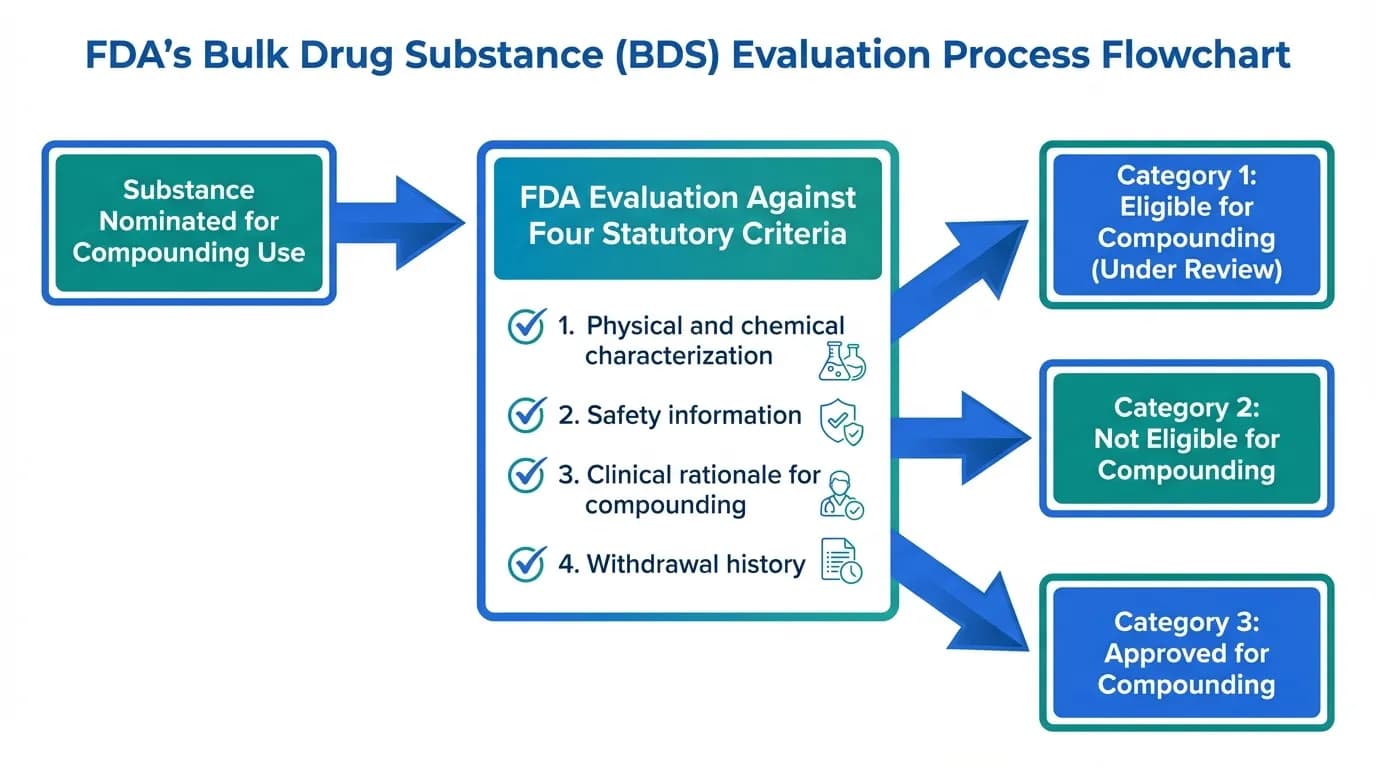
FDA Peptide Categories Explained: Category 1 vs Category 2 (2026)
Understand the FDA peptide classification system. Learn the difference between Category 1, Category 2, and Category 3 peptides and what the 2024-2026 regulatory changes mean for researchers.
Understanding Peptide Side Effects: A Comprehensive Safety Guide
A thorough, evidence-based guide to peptide side effects by category — covering GLP-1 agonists, GH secretagogues, tissue repair peptides, and melanocortins — with serious risk flags, drug interactions, monitoring recommendations, and guidance on when to stop.
Most Popular Therapeutic Peptides in 2026: 15 Ranked by Research Interest
The 15 most popular therapeutic peptides in 2026, ranked by clinical trial activity, search interest, and research community adoption. From semaglutide to BPC-157.
You Might Also Like
Related content you may find interesting