Managing GLP-1 Side Effects: Practical Tips for Daily Life

Introduction#
Gastrointestinal side effects are the most common challenge people face when starting a GLP-1 receptor agonist medication. In clinical trials, nausea affected 20-44% of participants across different drugs, and GI events were the leading reason for treatment discontinuation.
The good news is that these side effects are typically worst during the initial weeks and dose escalation period, and most people find them manageable with the right strategies. This guide provides practical, evidence-informed tips for navigating the most common side effects of semaglutide (Wegovy/Ozempic), tirzepatide (Zepbound/Mounjaro), liraglutide (Saxenda), and other GLP-1 class medications.
Important: This article provides practical lifestyle tips and does not constitute medical advice. Always discuss side effect management with your prescribing healthcare provider, especially if side effects are severe or persistent.
Understanding Why Side Effects Happen#
Before managing side effects, it helps to understand why they occur. GLP-1 receptor agonists cause GI effects through two primary mechanisms:
-
Delayed gastric emptying: The medication slows how quickly food moves from the stomach into the small intestine. This contributes to the appetite-suppressing effects but also causes nausea, bloating, fullness, and constipation.
-
Central nervous system signaling: GLP-1 receptors in the brain's area postrema (the nausea and vomiting center) are activated by circulating drug, producing nausea independently of what is happening in the stomach.
These are "on-target" effects, meaning the same biological pathways that produce weight loss also cause side effects. This is why the side effects cannot be completely eliminated, but they can be meaningfully reduced through behavioral strategies.
Managing Nausea#
Nausea is the single most common side effect across all GLP-1 medications. In the STEP 1 trial, 44% of participants on semaglutide 2.4 mg reported nausea, while 31% reported nausea on tirzepatide 15 mg in SURMOUNT-1.
Dietary Strategies#
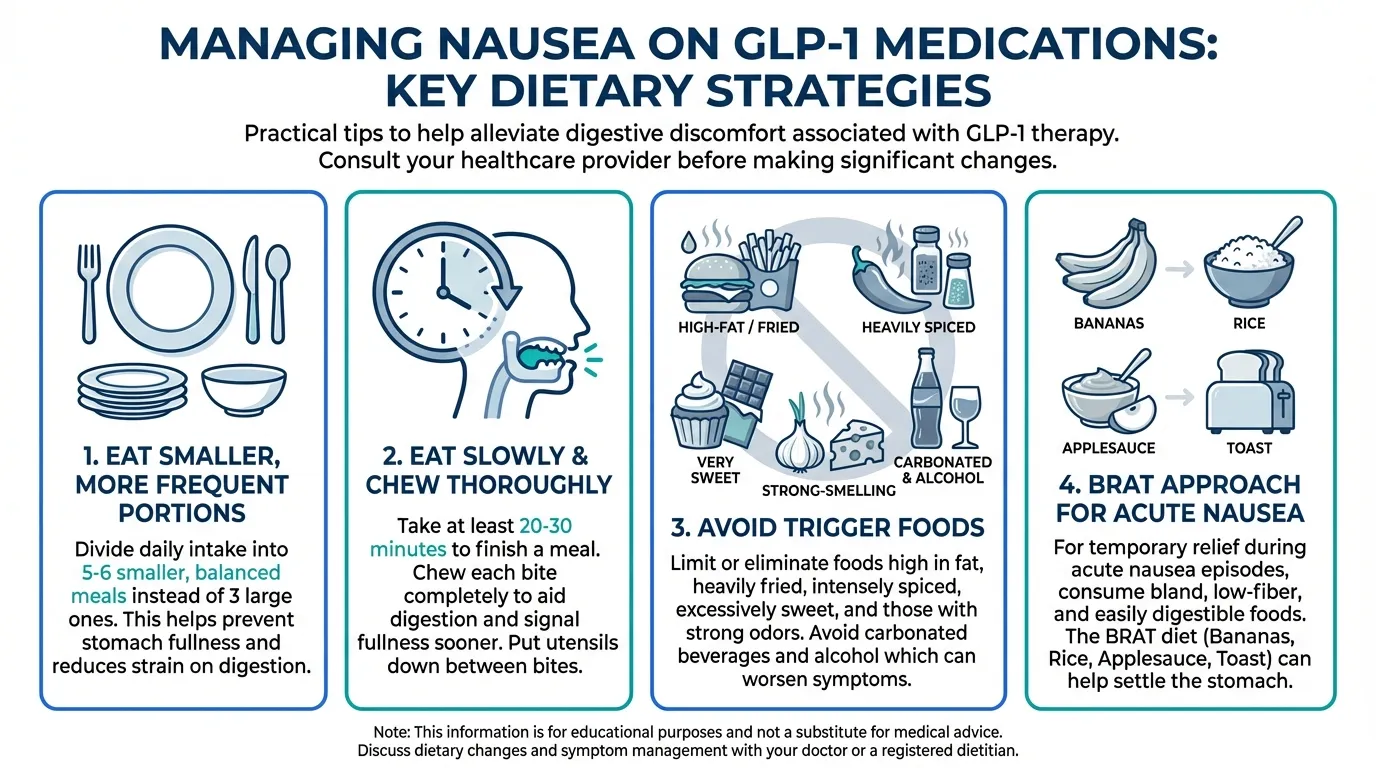
Eat smaller portions more frequently. The most important dietary change is shifting from large meals to smaller, more frequent eating. Because gastric emptying is delayed, a large meal sits in the stomach longer and triggers more nausea. Aim for 4-6 smaller meals rather than 2-3 large ones.
Eat slowly and chew thoroughly. Rushing through meals overwhelms the slowed digestive system. Taking 20-30 minutes per meal allows the stomach to process food more comfortably.
Avoid trigger foods. The most common nausea triggers while on GLP-1 medications include:
- High-fat and fried foods
- Heavily spiced foods
- Very sweet foods and sugary drinks
- Large amounts of dairy
- Strong-smelling foods
The BRAT approach for acute nausea. When nausea is at its worst (typically 1-3 days after injection), bland foods are better tolerated: bananas, rice, applesauce, toast, crackers, and broth.
Timing Strategies#
Injection timing matters. Many people find that injecting in the evening (for weekly injectables) allows them to sleep through the peak nausea window. Others prefer morning injections so side effects resolve before bedtime. Experiment to find what works best for your schedule.
Plan around the side effect cycle. With weekly injectables like semaglutide and tirzepatide, side effects typically peak 24-72 hours after injection and then gradually improve. Planning lighter meals and less demanding activities during the peak window can make the experience more manageable.
Natural Remedies#
Several natural approaches have evidence supporting their anti-nausea effects:
- Ginger: Available as tea, capsules, candies, or fresh root. Research supports ginger's anti-emetic properties, and many GLP-1 patients report benefit
- Peppermint: Peppermint tea or peppermint oil capsules may help with nausea and bloating
- Vitamin B6: Sometimes recommended for nausea, particularly in combination with other approaches
- Fresh air and movement: Light walking or sitting in fresh air can help when nausea strikes
- Deep breathing: Slow, controlled breathing activates the parasympathetic nervous system and can reduce acute nausea
Medical Interventions#
If behavioral and natural strategies are insufficient, discuss the following with your healthcare provider:
- Over-the-counter options: Bismuth subsalicylate (Pepto-Bismol), antacids
- Prescription anti-emetics: Ondansetron (Zofran), promethazine, or metoclopramide for short-term use during dose titration
- Dose adjustment: Slowing the dose escalation schedule (e.g., staying at each dose level for 6-8 weeks instead of 4) can significantly reduce nausea
Managing Constipation#
Constipation affects 10-25% of people on GLP-1 medications and can persist longer than nausea.
Why It Happens#
Delayed gastric emptying and reduced food intake combine to slow the entire digestive tract. Less food moving through the system, combined with potentially lower fluid and fiber intake, leads to constipation.
Practical Solutions#
Increase fiber gradually. Add fiber-rich foods (vegetables, fruits, whole grains, legumes) or a fiber supplement (psyllium husk, methylcellulose). Start with small amounts and increase slowly to avoid worsening bloating and gas.
Stay hydrated. Adequate water intake is essential for preventing constipation. Aim for at least 64 ounces (2 liters) daily, more if exercising or in warm weather.
Physical activity. Regular movement, especially walking, stimulates bowel motility. A 15-30 minute walk after meals can be particularly helpful.
Over-the-counter options if needed:
- Stool softeners (docusate sodium) as a first-line option
- Osmotic laxatives (polyethylene glycol / MiraLAX) for more stubborn constipation
- Magnesium citrate supplements can serve double duty as both a mineral supplement and mild laxative
When to seek help: If constipation persists beyond 3-4 days, becomes painful, or is accompanied by severe bloating, discuss with your healthcare provider.
Managing Diarrhea#
Diarrhea affects 15-35% of GLP-1 users, particularly during dose escalation.
Practical Management#
- Hydrate aggressively. Diarrhea causes fluid and electrolyte losses that need to be replaced. Oral rehydration solutions, broths, and electrolyte drinks are important
- Avoid dairy temporarily. Lactose intolerance can worsen during GLP-1 therapy
- Follow the BRAT diet. Bland, binding foods help firm stool
- Probiotics. While evidence is mixed, some people report improvement with probiotic supplementation
- Monitor for dehydration. Watch for dark urine, dizziness, dry mouth, and rapid heartbeat. Contact your provider if dehydration signs develop
Managing Fatigue and Low Energy#
Many people on GLP-1 medications report fatigue, particularly during dose titration and the early weeks of treatment.
Why It Happens#
- Caloric deficit: Dramatically reduced caloric intake means less available energy
- Blood sugar changes: Even in non-diabetic patients, GLP-1 drugs can lower blood glucose, potentially causing low-energy feelings
- Dehydration: Subtle dehydration from reduced food and fluid intake
- Nutrient deficiencies: Inadequate intake of iron, B vitamins, or other nutrients
Strategies#
- Ensure adequate protein and calorie intake. While the medication reduces appetite, eating too few calories leads to excessive fatigue. Work with your provider to establish a minimum caloric floor
- Time meals around activities. Eat a balanced meal or snack before periods of physical or mental demand
- Stay hydrated. Even mild dehydration causes fatigue
- Maintain sleep quality. GI discomfort can disrupt sleep; address nighttime symptoms proactively
- Consider blood work. If fatigue persists, ask your provider about checking iron, B12, vitamin D, and thyroid levels
Managing Injection Site Reactions#
For injectable GLP-1 medications, minor injection site reactions can occur.
Common Reactions#
- Redness, swelling, or itching at the injection site (typically mild and self-resolving)
- Small bruises
- Injection site pain or tenderness
Prevention Tips#
- Rotate injection sites: Alternate between abdomen, thigh, and upper arm
- Allow the medication to reach room temperature before injecting (if stored in the refrigerator)
- Use proper injection technique: Clean the site with alcohol, inject at the recommended angle, and avoid injecting into areas of skin irritation
- Do not inject into the same exact spot consecutively; rotate within each anatomical area
The Dose Titration Principle#
The single most effective strategy for managing GLP-1 side effects is proper dose titration. All GLP-1 medications are designed to be started at a low dose and increased gradually:
Semaglutide (Wegovy) titration schedule:
| Weeks | Dose |
|---|---|
| Weeks 1-4 | 0.25 mg |
| Weeks 5-8 | 0.5 mg |
| Weeks 9-12 | 1.0 mg |
| Weeks 13-16 | 1.7 mg |
| Week 17+ | 2.4 mg (maintenance) |
Tirzepatide (Zepbound) titration schedule:
| Weeks | Dose |
|---|---|
| Weeks 1-4 | 2.5 mg |
| Weeks 5-8 | 5.0 mg |
| Weeks 9-12 | 7.5 mg |
| Weeks 13-16 | 10 mg |
| Weeks 17-20 | 12.5 mg |
| Week 21+ | 15 mg (maintenance) |
Key insight: Side effects are concentrated during dose escalation. Most patients who tolerate the titration period will have manageable side effects at their maintenance dose. If a particular dose increase triggers intolerable side effects, your provider may recommend:
- Staying at the current dose for an additional 2-4 weeks before attempting the increase again
- Extending the titration period overall
- Settling on a lower maintenance dose if efficacy is adequate
When to Seek Medical Attention#
Most GLP-1 side effects are manageable, but certain symptoms require prompt medical attention:
Contact Your Provider If:#
- Nausea or vomiting prevents you from eating or drinking for more than 24-48 hours
- Diarrhea is severe or persistent
- You notice signs of dehydration (dark urine, dizziness, rapid heartbeat, confusion)
- Abdominal pain is severe, persistent, or radiates to the back (possible pancreatitis sign)
- You develop a lump or swelling in the neck (thyroid concern)
- Skin or eye yellowing occurs (liver concern)
- Side effects significantly impair your daily functioning
Seek Emergency Care For:#
- Severe, unrelenting abdominal pain
- Inability to keep any fluids down
- Signs of severe allergic reaction (difficulty breathing, swelling of face/throat, severe rash)
- Severe dizziness, fainting, or confusion
Side Effect Comparison by Drug#
Not all GLP-1 medications produce the same side effect burden. This table summarizes GI event rates from pivotal trials to help contextualize your experience:
| Side Effect | Semaglutide 2.4 mg | Tirzepatide 15 mg | Liraglutide 3.0 mg | Retatrutide 12 mg |
|---|---|---|---|---|
| Nausea | 44% | 31% | 39% | 43% |
| Diarrhea | 30% | 23% | 21% | 35% |
| Vomiting | 25% | 12% | 16% | 21% |
| Constipation | 24% | 12% | 19% | 25% |
| AE discontinuation | 4.3% | 6.2% | 6.4% | 18.2% |
Note: Retatrutide is investigational and not FDA-approved. Cross-trial comparisons have limitations. See our GLP-1 side effects comparison article for detailed analysis.
Key Takeaways#
-
Side effects are worst during dose escalation and typically improve significantly once you reach your maintenance dose. The first 4-8 weeks are the hardest.
-
Smaller, more frequent meals are the single most impactful dietary change. Avoid large meals, high-fat foods, and eating too quickly.
-
Hydration requires active attention. Reduced food intake, nausea, and diarrhea all increase the risk of dehydration. Aim for at least 2 liters of water daily.
-
Ginger, proper timing, and patience are your allies. Natural anti-nausea remedies, strategic injection timing, and understanding that symptoms are usually temporary all help.
-
Dose titration should not be rushed. If a dose increase triggers severe side effects, discuss slowing the titration with your provider rather than discontinuing the medication.
-
Know when to seek help. Severe abdominal pain, inability to keep fluids down, signs of dehydration, or any symptom that significantly impairs daily life warrants medical evaluation.
This article is for informational purposes only and does not constitute medical advice. All side effect management strategies should be discussed with your prescribing healthcare provider.
Related Articles#

Frequently Asked Questions About Managing GLP-1 Side Effects: Practical Tips for Daily Life
How long do GLP-1 side effects last?
For most people, GI side effects like nausea are worst during the first 4-8 weeks and during dose escalation periods. Many patients report significant improvement once they reach their maintenance dose. In clinical trials, the majority of GI events were described as mild to moderate and transient. However, a small percentage of patients experience persistent effects. If side effects remain severe after the titration period, discuss dose adjustment or medication switching with your healthcare provider.
What helps with nausea from semaglutide or tirzepatide?
Several strategies can reduce nausea. Eat smaller, more frequent meals rather than large portions. Avoid high-fat, greasy, or heavily spiced foods. Eat slowly and stop eating when you feel full rather than pushing through. Stay hydrated by sipping water throughout the day. Ginger tea, ginger supplements, or ginger candies may help. Some patients find that taking their injection in the evening allows them to sleep through the peak nausea period. If nausea is severe, your doctor may prescribe an anti-nausea medication for short-term use during dose titration.
Can I take anti-nausea medication with GLP-1 drugs?
Yes, anti-nausea medications can be used alongside GLP-1 agonists. Over-the-counter options like ginger supplements and vitamin B6 are commonly used. Prescription anti-emetics such as ondansetron (Zofran) or promethazine may be prescribed for more severe nausea during dose escalation. Always discuss anti-nausea medications with your healthcare provider to avoid potential interactions and ensure appropriate use.
Should I change my injection day if side effects are bad?
Timing your injection strategically can help manage side effects. Many people find that injecting on a day when they can rest (such as a Friday evening or before a less active day) helps them get through the peak side effect period. Side effects from weekly injectables like semaglutide and tirzepatide typically peak 1-3 days after injection. Discuss injection timing with your prescriber if you need to adjust your schedule.
When should I contact my doctor about GLP-1 side effects?
Contact your healthcare provider if you experience severe or persistent vomiting that prevents you from keeping food or fluids down, severe abdominal pain (which could indicate pancreatitis), signs of dehydration (dark urine, dizziness, rapid heartbeat), symptoms lasting more than a few days without improvement, any signs of allergic reaction, or any side effect that significantly impacts your quality of life. Seek emergency care for severe abdominal pain, persistent vomiting, or signs of a serious allergic reaction.
Continue reading this research review
Free access to the complete analysis with citations and evidence ratings.
150+ peptide profiles · 30+ comparisons · 18 research tools
Medical Disclaimer
This website is for educational and informational purposes only. The information provided is not intended to diagnose, treat, cure, or prevent any disease. Always consult with a qualified healthcare professional before using any peptide or supplement.
Join 2,000+ researchers getting biweekly updates
Enjoyed this article?
The Research Briefing delivers deep-dives like this biweekly — plus new study breakdowns, safety updates, and tool announcements.
Free forever. No spam. Unsubscribe in one click.
Where to Find These Peptides
Continue Exploring
Peptide Profiles
Keep Reading
Liraglutide Side Effects: 2026 Mid-Year Update
A mid-2026 review of liraglutide (Saxenda, Victoza) side effects covering GI tolerability, cardiovascular safety from LEADER, long-term post-marketing signals, and how the profile compares to semaglutide, tirzepatide, and retatrutide.

Retatrutide Side Effects Guide
Retatrutide Side Effects: What the Research Shows — part of the Next-Gen Weight Loss content cluster.

GLP-1 Drug Cost Comparison 2026: Insurance, Cash, and Compounded Pricing
A comprehensive comparison of GLP-1 medication costs in 2026, covering brand name, generic, and compounded pricing for semaglutide, tirzepatide, and liraglutide, plus insurance coverage strategies and cost-saving options.
You Might Also Like
Related content you may find interesting