Living on GLP-1 Medications: Diet, Exercise, and Lifestyle Adjustments

Introduction#
Starting a GLP-1 receptor agonist medication -- whether semaglutide (Wegovy, Ozempic), tirzepatide (Zepbound, Mounjaro), or liraglutide (Saxenda) -- changes more than just the number on the scale. These medications fundamentally alter appetite, food preferences, and the body's relationship with eating.
While GLP-1 drugs do the heavy lifting on appetite suppression, research consistently shows that lifestyle factors determine how much of the weight lost is fat versus muscle, how sustainable the results are, and how well side effects are managed. This guide covers practical, evidence-informed strategies for building a sustainable lifestyle while on GLP-1 therapy.
Important: This article provides general lifestyle information and does not constitute medical advice. All dietary and exercise changes should be discussed with your healthcare provider, especially during medication titration.
Nutrition on GLP-1 Medications#
The Protein Priority#
The single most important nutritional strategy while on a GLP-1 medication is prioritizing protein intake. Here is why it matters:
The muscle loss problem: In the STEP 1 trial, participants on semaglutide lost an average of 14.9% of body weight, but approximately 39% of that weight loss was lean body mass (primarily muscle). Similar patterns have been observed with tirzepatide and other GLP-1 drugs. Losing muscle reduces metabolic rate, impacts physical function, and may make weight regain more likely after discontinuation.
Protein targets: Research on weight loss and muscle preservation suggests the following daily protein intake goals:
| Body Weight | Minimum Target (1.0 g/kg) | Optimal Target (1.2-1.6 g/kg) |
|---|---|---|
| 150 lbs (68 kg) | 68 g/day | 82-109 g/day |
| 200 lbs (91 kg) | 91 g/day | 109-145 g/day |
| 250 lbs (113 kg) | 113 g/day | 136-181 g/day |
Practical protein strategies:
- Eat protein first at every meal before vegetables and carbohydrates
- Include a protein source with every snack
- Consider protein supplements (shakes, bars) if appetite suppression makes it difficult to eat enough whole food protein
- Track protein intake for the first few weeks to calibrate portion sizes
Meal Structure and Timing#
GLP-1 medications slow gastric emptying, meaning food stays in the stomach longer. This has practical implications for how and when to eat:
Smaller, more frequent meals: Rather than three large meals, many people on GLP-1 therapy find that 4-5 smaller meals are better tolerated and help meet nutritional targets despite reduced appetite.
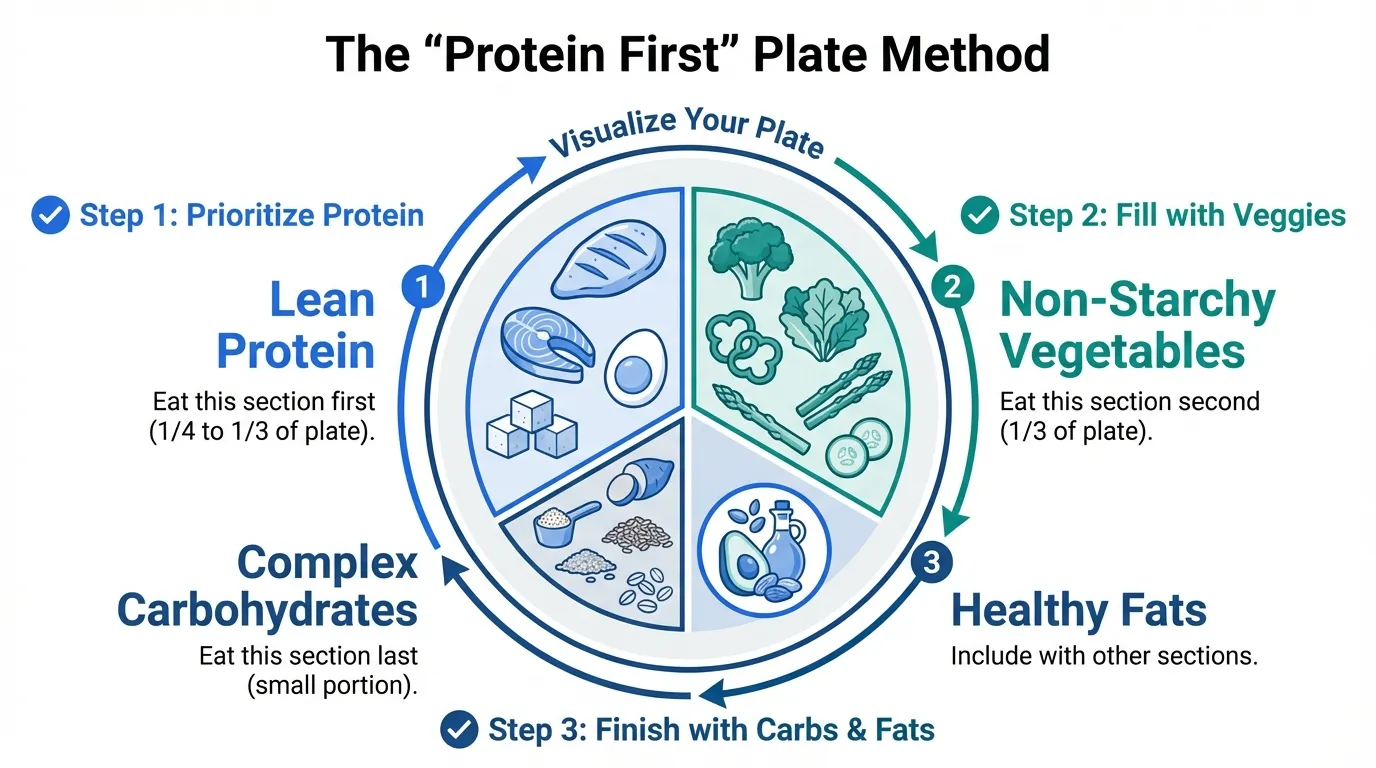
The "protein first" plate method:
- Fill one-quarter to one-third of the plate with lean protein
- Fill one-third with non-starchy vegetables
- Add a small portion of complex carbohydrates
- Include a small amount of healthy fats
Eating pace: Eating slowly and chewing thoroughly is more important on GLP-1 medications. Rapid eating can trigger nausea, vomiting, and worsened GI discomfort.
Meal timing around injections: For weekly injectables like semaglutide and tirzepatide, some people find that side effects peak 1-3 days after injection. Planning lighter meals during this window and more nutrient-dense meals on "good days" can help maintain adequate nutrition.
Foods to Emphasize#
- Lean proteins: Chicken breast, fish, turkey, eggs, Greek yogurt, cottage cheese, tofu, legumes
- Non-starchy vegetables: Leafy greens, broccoli, bell peppers, zucchini, cauliflower
- Complex carbohydrates: Whole grains, sweet potatoes, quinoa, oats (in moderate portions)
- Healthy fats: Avocado, olive oil, nuts, seeds (in small amounts -- high-fat foods may worsen GI effects)
- Hydrating foods: Soups, smoothies, water-rich fruits (can help with both nutrition and hydration)
Foods to Limit or Avoid#
- High-fat, fried foods: Often trigger nausea and GI discomfort; the delayed gastric emptying from GLP-1 drugs means fatty foods sit in the stomach even longer
- Sugary foods and drinks: Empty calories that displace nutrient-dense food when appetite is limited
- Large portions of any food: Overfilling the stomach when gastric emptying is slowed causes discomfort
- Carbonated beverages: Can worsen bloating and GI symptoms
- Alcohol: Reduced tolerance is common on GLP-1 medications; alcohol also provides empty calories and may impair judgment around food choices
Exercise and Physical Activity#
Why Exercise Matters More on GLP-1 Therapy#
Exercise is not optional during GLP-1-mediated weight loss -- it is a critical tool for three reasons:
- Muscle preservation: Resistance training is the most effective intervention for maintaining lean mass during caloric deficit
- Metabolic health: Exercise improves insulin sensitivity, cardiovascular fitness, and metabolic markers independently of weight loss
- Long-term weight maintenance: Exercise habits established during GLP-1 therapy improve outcomes if the medication is discontinued
Resistance Training#
Resistance training should be the cornerstone of exercise programming while on GLP-1 medications:
Frequency: 2-4 sessions per week targeting all major muscle groups Approach: Compound movements (squats, deadlifts, presses, rows) that recruit multiple muscle groups simultaneously Progression: Gradually increase weight or resistance over time -- progressive overload signals the body to maintain muscle
Starting points by experience level:
- Beginners: 2 sessions per week, full-body workouts with machines or bodyweight exercises
- Intermediate: 3 sessions per week, upper/lower split or push/pull/legs
- Advanced: 3-4 sessions per week, maintaining pre-existing training volume
Cardiovascular Exercise#
While resistance training takes priority for muscle preservation, cardiovascular exercise provides independent health benefits:
- Walking: The most accessible and well-tolerated form; 150+ minutes per week aligns with general health guidelines
- Low-impact cardio: Swimming, cycling, and elliptical training are joint-friendly options, especially important during significant weight loss
- High-intensity interval training (HIIT): May be appropriate for those with adequate fitness levels, but should be introduced gradually
Exercise Considerations Specific to GLP-1 Medications#
- Energy availability: Reduced appetite may mean lower glycogen stores. Have a small, easily digestible snack 30-60 minutes before intense workouts
- Hydration: Increased attention to hydration during exercise, especially if experiencing GI side effects
- Timing around injections: Some people prefer to schedule intense workouts on days when side effects are minimal
- Monitoring for hypoglycemia: Particularly relevant for patients also on diabetes medications -- exercise plus GLP-1-mediated caloric reduction can lower blood glucose
Hydration#
Why Hydration Requires Extra Attention#
GLP-1 medications create several hydration challenges (see our GLP-1 side effects management guide for more on handling these):
- Reduced food intake means less water obtained from food (food typically provides 20-30% of daily water intake)
- GI side effects like diarrhea and vomiting directly cause fluid loss
- Delayed gastric emptying may make drinking large volumes uncomfortable
Practical Hydration Tips#
- Aim for at least 64 ounces (2 liters) of water daily, more with exercise or in warm climates
- Sip water throughout the day rather than drinking large amounts at once
- Flavor water with lemon, cucumber, or mint if plain water is unappealing
- Monitor urine color as a hydration indicator -- pale yellow is the target
- Consider electrolyte supplementation if experiencing significant GI fluid losses
- Broths and soups count toward hydration goals while also providing nutrients
Managing the Psychological Aspects#
Changed Relationship with Food#
Many people on GLP-1 medications report a profound shift in how they experience food and eating:
- "Food noise" reduction: The constant mental preoccupation with food that many people with obesity experience often diminishes significantly
- Reduced food reward: Foods that were previously irresistible may become uninteresting
- Social eating challenges: Eating much less than peers at social gatherings can feel awkward or draw unwanted attention
- Identity shifts: For people whose social life or identity was built around food, the medication-driven changes can be disorienting
Practical Strategies#
- Communicate with your support network: Let close friends and family know about your dietary changes without feeling obligated to disclose medication use
- Focus on food quality over quantity: Reframe meals around nutrition and enjoyment rather than volume
- Maintain social eating: Continue participating in social meals even if eating less -- the social connection matters
- Consider professional support: A registered dietitian experienced with GLP-1 medications can help navigate nutritional challenges, and a therapist can help with the psychological aspects of rapid body change
Supplementation Considerations#
Potential Nutritional Gaps#
Significantly reduced caloric intake creates the risk of micronutrient deficiencies. Common areas of concern include:
- Iron: Especially for menstruating women eating less red meat
- B vitamins: Particularly B12 if eating fewer animal products
- Calcium and Vitamin D: Important for bone health during weight loss
- Fiber: Reduced food intake often means reduced fiber intake, which can worsen constipation
- Electrolytes: Sodium, potassium, and magnesium can be depleted by GI side effects
Reasonable Supplementation#
- A quality daily multivitamin provides baseline micronutrient coverage
- Vitamin D supplementation (1000-2000 IU daily) if blood levels are not being monitored
- Fiber supplements if constipation is problematic (start with small doses and increase gradually)
- Protein supplements if dietary protein targets are difficult to meet through food alone
Note: Discuss all supplementation with your healthcare provider, particularly if taking other medications. GLP-1-mediated delayed gastric emptying may affect the absorption of oral medications and supplements.
Planning for the Long Term#
Building Sustainable Habits#
GLP-1 medications are most effective as part of a comprehensive lifestyle change, not as a standalone solution:
- Develop exercise habits now. The structured exercise routine established during GLP-1 therapy becomes critical for weight maintenance if the medication is ever discontinued
- Learn to cook protein-rich meals. Meal preparation skills translate directly to long-term weight management
- Establish regular sleep patterns. Sleep quality impacts hunger hormones, and poor sleep can undermine weight management efforts
- Monitor and adjust. Regular check-ins with your healthcare team help catch nutritional deficiencies, adjust dosing, and optimize outcomes
What Happens When You Stop#
Research on GLP-1 discontinuation is clear: most people regain a significant portion of lost weight within 1-2 years of stopping the medication. The STEP 1 extension study showed participants regained approximately two-thirds of their weight loss within one year of discontinuation.
This underscores the importance of:
- Viewing GLP-1 therapy as potentially long-term rather than a short-term fix
- Building the lifestyle habits (exercise, nutrition, sleep) that provide independent weight management benefits
- Discussing discontinuation plans with your healthcare provider before making changes
Key Takeaways#
-
Protein is the nutritional priority. Aim for 1.0-1.6 g/kg of body weight daily to help preserve muscle mass during GLP-1-mediated weight loss.
-
Resistance training is not optional. At least 2-3 sessions per week of resistance training is the most effective tool for maintaining lean body mass while losing fat.
-
Eat smaller, more frequent meals. The gastric emptying delay from GLP-1 medications means smaller portions are better tolerated and help maintain nutritional adequacy.
-
Stay hydrated. Reduced food intake and GI side effects increase hydration needs. Aim for at least 2 liters of water daily.
-
Plan for the long term. GLP-1 medications work best as part of a sustainable lifestyle change. The habits built during treatment are critical for long-term outcomes, whether continuing or eventually discontinuing medication.
-
Work with your healthcare team. A physician, registered dietitian, and potentially a mental health professional can help optimize the GLP-1 therapy experience.
This article is for informational purposes only and does not constitute medical or nutritional advice. Always consult your healthcare provider before making changes to diet, exercise, or supplementation while on GLP-1 medications.
Related Articles#

Frequently Asked Questions About Living on GLP-1 Medications: Diet, Exercise, and Lifestyle Adjustments
What should I eat while taking a GLP-1 medication?
Focus on protein-rich foods first at every meal (lean meats, fish, eggs, legumes), followed by vegetables and then complex carbohydrates. Because GLP-1 medications reduce appetite significantly, every calorie needs to count nutritionally. Aim for at least 1.0-1.2 grams of protein per kilogram of body weight daily to help preserve muscle mass during weight loss. Eat smaller, more frequent meals rather than large portions, and avoid high-fat and fried foods that may worsen GI side effects.
Can I exercise while on semaglutide or tirzepatide?
Exercise is strongly recommended while on GLP-1 medications. Research from the STEP and SURMOUNT trials suggests that combining GLP-1 therapy with structured exercise, particularly resistance training, helps preserve lean muscle mass during weight loss. Start with moderate activity and gradually increase intensity. Resistance training at least 2-3 times per week is especially important to counteract the muscle loss that accompanies rapid weight loss.
How much water should I drink on GLP-1 medications?
Adequate hydration is particularly important on GLP-1 medications because reduced food intake means less water from food sources, and GI side effects like diarrhea and vomiting can cause fluid loss. A general guideline is at least 64 ounces (about 2 liters) per day, increasing with exercise and in hot weather. Sipping water throughout the day rather than drinking large amounts at once may be better tolerated.
Will I lose muscle on GLP-1 medications?
Some muscle loss is expected with any significant weight loss. In the STEP 1 trial, approximately 39% of weight lost with semaglutide was lean mass. However, this ratio can be improved with adequate protein intake (1.0-1.2 g/kg/day or higher), regular resistance training, and gradual weight loss. Combining these strategies can shift the ratio toward more fat loss and less muscle loss.
Continue reading this research review
Free access to the complete analysis with citations and evidence ratings.
150+ peptide profiles · 30+ comparisons · 18 research tools
Medical Disclaimer
This website is for educational and informational purposes only. The information provided is not intended to diagnose, treat, cure, or prevent any disease. Always consult with a qualified healthcare professional before using any peptide or supplement.
Join 2,000+ researchers getting biweekly updates
Enjoyed this article?
The Research Briefing delivers deep-dives like this biweekly — plus new study breakdowns, safety updates, and tool announcements.
Free forever. No spam. Unsubscribe in one click.
Where to Find These Peptides
Continue Exploring
Peptide Profiles
Keep Reading

Retatrutide Side Effects Guide
Retatrutide Side Effects: What the Research Shows — part of the Next-Gen Weight Loss content cluster.
Compounded Semaglutide Cost Guide 2026: Prices, Pharmacies & What to Expect
A deep dive into compounded semaglutide pricing in 2026, covering 503A and 503B pharmacy costs, telehealth platform pricing, dose-by-dose monthly breakdowns, and how to evaluate compounding pharmacy quality.

The History of Peptide Research: From Insulin to Modern Therapeutics
History of peptide research from insulin's 1921 discovery to modern GLP-1 agonists. Key milestones in synthesis and therapeutics.
You Might Also Like
Related content you may find interesting