GLP-1 Drugs for MASH and Liver Disease: Beyond Weight Loss

Introduction#
The GLP-1 revolution extends far beyond weight loss. Metabolic dysfunction-associated steatohepatitis (MASH, formerly NASH) affects an estimated 5-6% of the global adult population and is the fastest-growing cause of liver transplantation. Until recently, treatment options were limited to lifestyle modification and off-label agents. The emergence of GLP-1-based therapies has transformed the MASH treatment landscape, with several agents now showing remarkable liver-specific benefits in clinical trials.
What makes this particularly significant is the role of the glucagon receptor. While GLP-1 alone provides meaningful hepatic benefit through weight loss and improved insulin sensitivity, agents that also activate the glucagon receptor -- such as survodutide, pemvidutide, and mazdutide -- appear to deliver substantially greater liver fat reduction and MASH resolution. Glucagon directly stimulates hepatic fatty acid oxidation and reduces de novo lipogenesis, making it a powerful liver-targeted pathway.
Why GLP-1 Drugs Work in Liver Disease#
Direct Hepatic Mechanisms#
GLP-1 receptor agonists improve liver health through multiple pathways:
- Weight loss: Reduces hepatic fat delivery and insulin resistance
- Improved insulin sensitivity: Reduces de novo lipogenesis in hepatocytes
- Anti-inflammatory effects: GLP-1 receptor activation reduces hepatic inflammation
- Reduced lipotoxicity: Lower circulating free fatty acids decrease hepatocyte injury
The Glucagon Advantage#
Agents that add glucagon receptor activation provide additional liver-specific benefits:
- Hepatic fatty acid oxidation: Glucagon directly stimulates beta-oxidation in hepatocytes
- Reduced de novo lipogenesis: Glucagon suppresses lipogenic gene expression
- Glycogenolysis regulation: Glucagon modulates hepatic glucose and lipid metabolism
- Synergy with GLP-1: The combination produces greater liver fat reduction than either pathway alone
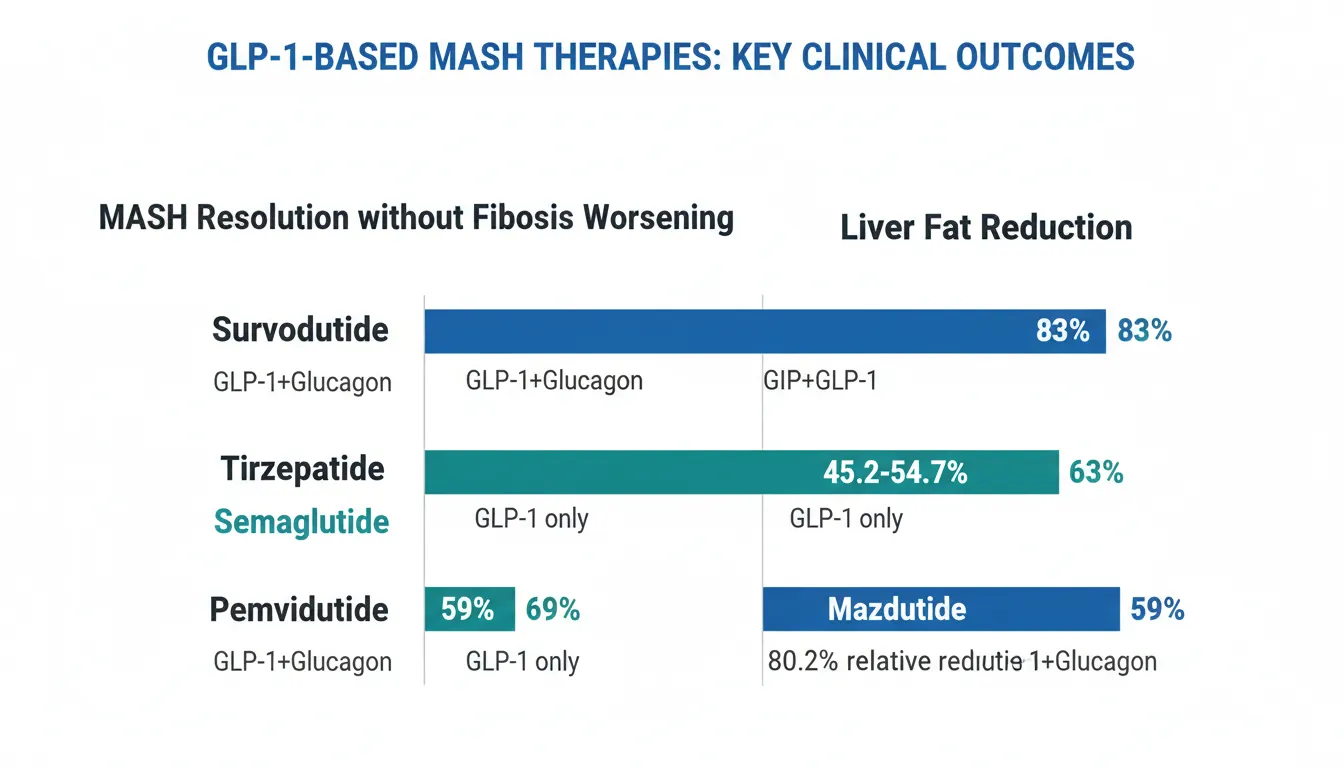
This is why dual GLP-1/glucagon agonists (survodutide, pemvidutide, mazdutide) consistently show greater liver fat reduction than GLP-1-only agents like semaglutide.
Clinical Evidence by Agent#
Survodutide: FDA Breakthrough Therapy for MASH#
Survodutide (Boehringer Ingelheim/Zealand Pharma) is a dual glucagon/GLP-1 receptor agonist that received FDA Breakthrough Therapy Designation for non-cirrhotic MASH in October 2024.
Phase 2 MASH Trial (295 patients, 48 weeks):
| Outcome | Survodutide | Placebo |
|---|---|---|
| MASH resolution without fibrosis worsening | 83% | 18.2% |
| Trial population | Biopsy-confirmed MASH with fibrosis | Same |
Phase 3 Program (LIVERAGE):
- LIVERAGE: ~1,800 adults with MASH and fibrosis stages F2-F3
- LIVERAGE-Cirrhosis: ~1,590 adults with compensated MASH cirrhosis (F4)
- Total enrollment: 3,000+ patients globally
Survodutide's glucagon receptor activation provides direct hepatic fat oxidation, which likely contributes to the remarkably high MASH resolution rate of 83%.
Pemvidutide: The Lancet-Published MASH Data#
Pemvidutide (ALT-801, Altimmune) is a dual GLP-1/glucagon receptor agonist with Phase 2b data specifically in biopsy-confirmed MASH, published in The Lancet.
IMPACT Phase 2b Trial (212 patients, 48 weeks, biopsy-confirmed MASH F2-F3):
| Outcome | 1.2 mg | 1.8 mg | Placebo |
|---|---|---|---|
| Liver fat reduction | 45.2% | 54.7% | 8.2% |
| MASH resolution (no fibrosis worsening) | 59.1% | 52.1% | 19.1% |
| ALT reduction (IU/L) | -37.8 | -37.4 | -10.3 |
| cT1 reduction (ms) | -124 | -140 | -21 |
| Weight loss | 4.5% | 7.5% | -- |
The IMPACT trial is notable for several reasons: it used biopsy-confirmed endpoints, demonstrated dose-dependent liver fat reduction, and showed that pemvidutide's hepatic benefits extend beyond weight loss (the weight loss was modest at 4.5-7.5%, yet liver fat reduction was 45-55%).
Semaglutide: ESSENCE Phase 3#
Semaglutide became the first GLP-1 agonist with Phase 3 MASH data from the ESSENCE trial, published in the NEJM.
ESSENCE Phase 3 Trial (MASH with moderate to advanced fibrosis):
| Outcome | Semaglutide | Placebo |
|---|---|---|
| MASH resolution without fibrosis worsening | 63% | Lower |
| Fibrosis improvement without MASH worsening | 37% | Lower |
| Both outcomes achieved | ~33% | Lower |
The ESSENCE results led to FDA approval of semaglutide for MASH, making it the first GLP-1 therapy approved for liver disease. However, as a GLP-1-only agent, semaglutide lacks the direct glucagon-mediated hepatic fat oxidation that dual agonists provide.
Tirzepatide: SYNERGY-NASH#
Tirzepatide demonstrated potent MASH benefits in the SYNERGY-NASH trial despite being a GIP/GLP-1 agonist without glucagon receptor activation.
SYNERGY-NASH (52 weeks):
| Outcome | Tirzepatide | Placebo |
|---|---|---|
| MASH resolution without fibrosis worsening | 72-78% | ~30% |
| NAS decrease of 2+ points | 72-78% | 37% |
Tirzepatide's strong MASH results likely reflect its profound weight loss and metabolic improvement rather than direct hepatic glucagon signaling. The higher resolution rates compared to semaglutide may relate to greater total weight loss and GIP-mediated metabolic effects.
Mazdutide: Liver Fat Reduction in GLORY#
Mazdutide (Innovent Biologics) is a dual GLP-1/glucagon agonist approved in China for obesity, with impressive liver-specific data from exploratory analyses.
GLORY-1 Exploratory Analysis:
| Outcome | Mazdutide 6 mg | Details |
|---|---|---|
| Liver fat reduction | 80.2% relative reduction | In patients with baseline liver fat 10%+ |
| Steatosis resolution | 60-70% | At weeks 32 and 48 |
| ALT improvement | Significant | Dose-dependent |
| Triglyceride reduction | >30% | Across doses |
Mazdutide's planned MASH-specific trial and the head-to-head comparison against tirzepatide will provide definitive evidence for its liver-directed efficacy.
Comparing Mechanisms for Liver Disease#
| Agent | Receptors | MASH Resolution | Glucagon Pathway | Phase |
|---|---|---|---|---|
| Survodutide | GLP-1 + Glucagon | 83% | Yes (direct) | Phase 3 |
| Tirzepatide | GIP + GLP-1 | 72-78% | No | Approved |
| Semaglutide | GLP-1 | 63% | No | Approved for MASH |
| Pemvidutide | GLP-1 + Glucagon | 59% | Yes (direct) | Phase 2b |
| Mazdutide | GLP-1 + Glucagon | N/A (MASH trial planned) | Yes (direct) | Approved (China, obesity) |
The pattern is clear: agents with glucagon receptor activation consistently show the highest MASH resolution rates and liver fat reduction, supporting the hypothesis that glucagon-mediated hepatic fat oxidation provides additive benefit beyond weight loss alone.
The Glucagon Paradox in Liver Disease#
There is an apparent paradox in using glucagon receptor agonists for metabolic disease. Glucagon is traditionally associated with raising blood glucose, which seems counterproductive in patients with type 2 diabetes. However, glucagon's hepatic effects -- stimulating fatty acid oxidation, reducing lipogenesis, and increasing energy expenditure -- are precisely what MASH patients need. The key is that GLP-1 co-agonism counteracts glucagon's hyperglycemic effect through enhanced insulin secretion, creating a net benefit for both glucose control and liver health.
This is why dual GLP-1/glucagon agonists are emerging as the optimal mechanistic approach for MASH: the GLP-1 component handles glycemia and appetite, while the glucagon component directly addresses hepatic lipid accumulation.
Clinical Implications#
Which Patients Benefit Most#
- MASH with fibrosis (F2-F3): Survodutide and pemvidutide have the strongest biopsy-confirmed data
- MASH with obesity: All agents provide dual benefit; glucagon co-agonists may be preferred
- MASLD without MASH: Semaglutide and tirzepatide are available today with proven liver fat reduction
- MASH with T2D: Mazdutide's DREAMS-3 superiority over semaglutide for glycemic control adds appeal
Timeline to Availability#
- Available now: Semaglutide (FDA-approved for MASH), tirzepatide (SYNERGY-NASH data, off-label)
- 2026-2027: Survodutide (Phase 3 LIVERAGE results expected)
- 2027+: Pemvidutide (Phase 3 needed), mazdutide (MASH trial initiating)
Conclusion#
The GLP-1 drug class has opened a new therapeutic era for MASH, but the most exciting liver-specific data comes from agents that add glucagon receptor activation. Survodutide's 83% MASH resolution rate and pemvidutide's Lancet-published IMPACT data demonstrate that dual GLP-1/glucagon agonism provides hepatic benefits that exceed weight loss alone. Semaglutide's ESSENCE approval established the first GLP-1 therapy for MASH, while tirzepatide's SYNERGY-NASH results showed impressive resolution rates through a different mechanism. As Phase 3 data from survodutide's LIVERAGE program emerge, the optimal pharmacological approach for MASH will become clearer. The glucagon receptor's direct hepatic actions position dual GLP-1/glucagon agonists as particularly promising for liver-directed therapy.
Related Peptide Profiles#
Learn more about the peptides discussed in this article:
- Survodutide Overview and Research Guide
- Survodutide Dosing Protocols
- Survodutide Side Effects and Safety
- Pemvidutide Overview and Research Guide
- Pemvidutide Dosing Protocols
- Pemvidutide Side Effects and Safety
- Mazdutide Overview and Research Guide
- Mazdutide Dosing Protocols
- Mazdutide Side Effects and Safety
- Semaglutide Overview and Research Guide
- Semaglutide Dosing Protocols
- Semaglutide Side Effects and Safety
- Tirzepatide Overview and Research Guide
- Tirzepatide Dosing Protocols
- Tirzepatide Side Effects and Safety
- Cotadutide Overview and Research Guide
- Cotadutide Dosing Protocols
- Cotadutide Side Effects and Safety

Frequently Asked Questions About GLP-1 Drugs for MASH and Liver Disease: Beyond Weight Loss
What does this article cover?
Research review of GLP-1 and multi-receptor agonists for MASH (metabolic dysfunction-associated steatohepatitis), including survodutide, pemvidutide, mazdutide, semaglutide, and tirzepatide liver-specific clinical data. This research review is for educational purposes only and does not constitute medical advice.
Which peptides are discussed in this article?
This article covers Survodutide, Pemvidutide, Mazdutide, Semaglutide, Tirzepatide, Cotadutide. Key context: Survodutide (FDA Breakthrough Therapy Designation for MASH. Phase 2 showed 83% MASH resolution. Phase 3 LIVERA...); Pemvidutide (Dual GLP-1/glucagon agonist. IMPACT Phase 2b showed 59.1% MASH resolution and 54.7% liver fat red...); Mazdutide (Dual GLP-1/glucagon agonist approved in China. GLORY-1 exploratory analysis showed 80.2% liver fa...). Each peptide is discussed based on available research evidence.
What level of evidence does this research review cover?
This research review examines published preclinical and clinical studies related to the peptides discussed. Evidence quality varies between peptides and indications. The article distinguishes between FDA-approved uses and investigational applications where applicable.
What are the key takeaways from this article?
The main findings covered in this article include: FDA Breakthrough Therapy Designation for MASH. Phase 2 showed 83% MASH resolution. Phase 3 LIVERA.... Dual GLP-1/glucagon agonist. IMPACT Phase 2b showed 59.1% MASH resolution and 54.7% liver fat red.... Dual GLP-1/glucagon agonist approved in China. GLORY-1 exploratory analysis showed 80.2% liver fa.... These takeaways are based on the research data available at the time of publication.
What is Survodutide and why is it significant?
Survodutide is a peptide discussed in this article because: FDA Breakthrough Therapy Designation for MASH. Phase 2 showed 83% MASH resolution. Phase 3 LIVERAGE trials enrolling 3,000+ patients.. For a complete profile of Survodutide, see the dedicated peptide page on this site.
Continue reading this research review
Free access to the complete analysis with citations and evidence ratings.
150+ peptide profiles · 30+ comparisons · 18 research tools
Medical Disclaimer
This website is for educational and informational purposes only. The information provided is not intended to diagnose, treat, cure, or prevent any disease. Always consult with a qualified healthcare professional before using any peptide or supplement.
Join 2,000+ researchers getting biweekly updates
Enjoyed this article?
The Research Briefing delivers deep-dives like this biweekly — plus new study breakdowns, safety updates, and tool announcements.
Free forever. No spam. Unsubscribe in one click.
Where to Find These Peptides
Continue Exploring
Peptide Profiles
Keep Reading
Peptides in Clinical Trials 2026: The Most Promising Pipeline
A research-focused overview of the most promising peptides in clinical trials as of 2026, including Retatrutide Phase 3 TRIUMPH data, Survodutide, Mazdutide, Ecnoglutide, and other emerging compounds reshaping metabolic medicine.
Weight Loss Peptides: Mechanisms, Evidence, and How They Compare
A mechanism-focused guide to weight loss peptides — how GLP-1, GIP, and glucagon pathways drive fat loss, how single, dual, and triple agonists compare, and what the clinical evidence actually shows.

Complete Guide to GLP-1 Receptor Agonists: Every Drug Explained
A comprehensive guide to every GLP-1 receptor agonist drug, from FDA-approved semaglutide and tirzepatide to pipeline therapies like retatrutide, amycretin, MariTide, and oral orforglipron.
You Might Also Like
Related content you may find interesting