Pemvidutide vs Survodutide: GLP-1/Glucagon Dual Agonist Comparison for Obesity and MASH
Evidence-based comparison of pemvidutide and survodutide, two GLP-1/glucagon dual receptor agonists being developed for obesity and MASH based on Phase 2 clinical trial data.
Verdict at a Glance
Pemvidutide and survodutide are both GLP-1/glucagon dual agonists being developed for obesity and MASH, but survodutide is further ahead in clinical development with more advanced Phase 3 programs, higher-tier regulatory designations (Breakthrough Therapy vs Fast Track), and greater weight loss in Phase 2 (18.7% vs 15.6%). However, pemvidutide differentiates itself through favorable lean mass preservation and expanding into alcohol use disorder, a novel indication for this drug class. Survodutide is backed by the larger Boehringer Ingelheim/Zealand Pharma partnership and is likely to reach market first.
| Best for | Pick | Why |
|---|---|---|
| Maximum Weight Loss | Survodutide | Phase 2 data showed 18.7% weight loss at 46 weeks, exceeding pemvidutide's 15.6% at 48 weeks. Phase 3 results expected H1 2026 may show even greater efficacy with optimized dosing. |
| Lean Mass Preservation | Pemvidutide | MOMENTUM trial demonstrated only 21.9% of weight loss from lean mass, suggesting superior body composition outcomes compared to historical data for other weight loss therapies. |
| MASH Treatment | Survodutide | FDA Breakthrough Therapy Designation (higher than pemvidutide's Fast Track), 62% MASH resolution in Phase 2, and dedicated Phase 3 LIVERAGE trials specifically designed for MASH with fibrosis. |
| Broader Indication Development | Pemvidutide | Expanding into alcohol use disorder (RECLAIM Phase 2 trial) alongside obesity and MASH, potentially addressing a broader range of metabolic and liver conditions. |
| Category | Pemvidutide | Survodutide | Advantage |
|---|---|---|---|
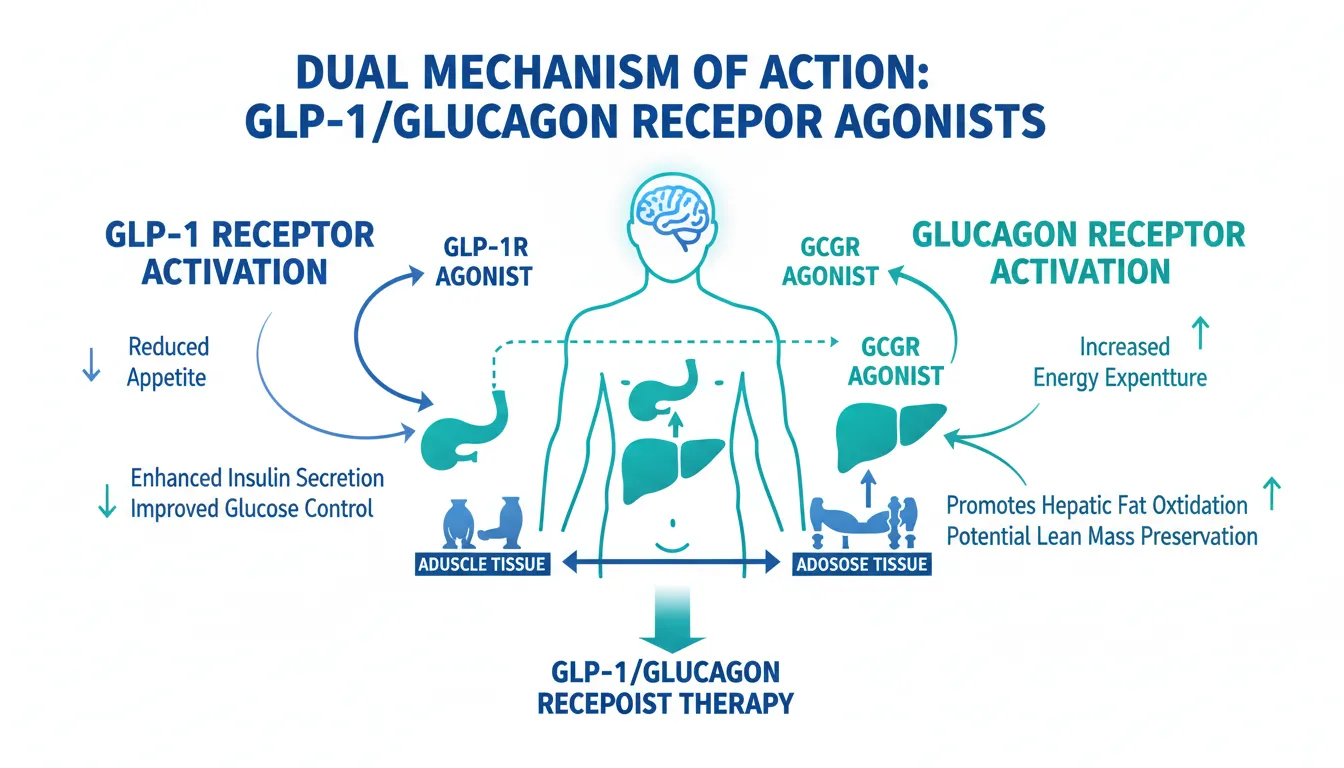
| Mechanism of Action | GLP-1/glucagon dual receptor agonist. Mimics the complementary effects of diet and exercise, with GLP-1 suppressing appetite and glucagon increasing energy expenditure. Glucagon component also directly promotes hepatic fat metabolism. | GLP-1/glucagon dual receptor agonist. Combines GLP-1-mediated appetite suppression with glucagon-mediated energy expenditure and hepatic lipid metabolism. Licensed from Zealand Pharma's peptide platform. | Comparable |
| Weight Loss Efficacy | Phase 2 MOMENTUM trial showed 15.6% mean weight loss at 48 weeks with 2.4 mg dose, with weight loss still continuing at end of treatment. Notably, only 21.9% of weight loss was from lean mass, suggesting favorable body composition effects. | Phase 2 demonstrated up to 18.7% mean weight loss at 46 weeks with 4.8 mg dose (on-treatment analysis). 40% of patients on 4.8 mg achieved at least 20% weight loss. | Survodutide |
| MASH / Liver Disease | Phase 2b IMPACT trial showed 59.1% MASH resolution at 1.2 mg and 52.1% at 1.8 mg vs 19.1% placebo at 24 weeks. Fibrosis improvement endpoint did not reach statistical significance. FDA Fast Track designation. Phase 2b 48-week data showed key measures of success. | Phase 2 MASH trial showed 62% MASH resolution at 4.8 mg vs 14% placebo. FDA Breakthrough Therapy Designation for MASH. Phase 3 LIVERAGE trials ongoing for MASH with fibrosis stages F2/F3 and compensated cirrhosis. | Survodutide |
| Research Evidence | Phase 2 MOMENTUM completed for obesity. Phase 2b IMPACT completed for MASH. Phase 2 RECLAIM enrolling for alcohol use disorder. Developed by Altimmune. FDA Fast Track for MASH. Published in Journal of Hepatology. | Phase 2 completed for obesity (Lancet 2024) and MASH (NEJM 2024). Phase 3 SYNCHRONIZE trials fully enrolled for obesity (results expected H1 2026). Phase 3 LIVERAGE trials ongoing for MASH. FDA Breakthrough Therapy and Fast Track designations. Published in NEJM and Lancet. | Survodutide |
| Side Effect Profile | GI adverse events consistent with GLP-1 class. Generally well tolerated in Phase 2 trials. Favorable lean mass preservation (only 21.9% of weight loss from lean mass) is a potential safety/tolerability advantage. | GI adverse events in 75% of survodutide vs 42% placebo in Phase 2. Nausea, diarrhea, and vomiting most common. Rapid dose escalation may have contributed to high rates. Slower Phase 3 titration expected to improve tolerability. | Pemvidutide |
| Body Composition | MOMENTUM trial showed only 21.9% of total weight loss came from lean mass, better than historical data for diet/exercise and other incretin drugs. Suggests favorable body composition preservation during weight loss. | No specific lean mass preservation data published from Phase 2 trials. Body composition effects have not been a primary focus of the survodutide clinical program to date. | Pemvidutide |

Introduction#
Pemvidutide and survodutide are both GLP-1/glucagon dual receptor agonists being developed for obesity and metabolic-associated steatohepatitis (MASH). Their comparison offers insight into how two drugs with the same fundamental mechanism can be differentiated through clinical development strategy, formulation, and positioning.
Pemvidutide, developed by Altimmune, is a GLP-1/glucagon dual agonist that has completed Phase 2 trials for obesity (MOMENTUM, 15.6% weight loss at 48 weeks) and MASH (IMPACT, up to 59.1% MASH resolution). It has FDA Fast Track designation for MASH and is expanding into alcohol use disorder (RECLAIM trial). A notable differentiator is its favorable lean mass preservation data.
Survodutide (BI 456906), developed by Boehringer Ingelheim and Zealand Pharma, has completed Phase 2 trials for obesity (18.7% weight loss at 46 weeks) and MASH (62% MASH resolution), earning FDA Breakthrough Therapy Designation for MASH. Phase 3 trials are ongoing for both indications, positioning survodutide further along in clinical development.
Mechanism of Action Comparison#
Pemvidutide#
Pemvidutide activates both GLP-1 and glucagon receptors. The dual mechanism is designed to mimic the complementary metabolic effects of diet and exercise: GLP-1 receptor activation reduces appetite and enhances insulin secretion, while glucagon receptor activation increases energy expenditure and promotes hepatic fat oxidation. The favorable lean mass preservation suggests the glucagon-mediated energy expenditure may preferentially target fat stores.
Survodutide#
Survodutide similarly activates GLP-1 and glucagon receptors, leveraging Zealand Pharma's peptide technology platform. The glucagon component is particularly relevant for MASH, where direct hepatic fat reduction through glucagon receptor activation addresses the underlying pathology of fatty liver disease.
Both drugs share the same dual-agonist mechanism. Differences in clinical outcomes likely reflect variations in receptor potency ratios, pharmacokinetic profiles, dosing, and trial design rather than fundamentally different pharmacology.
Dosing Comparison#
Pemvidutide Dosing#
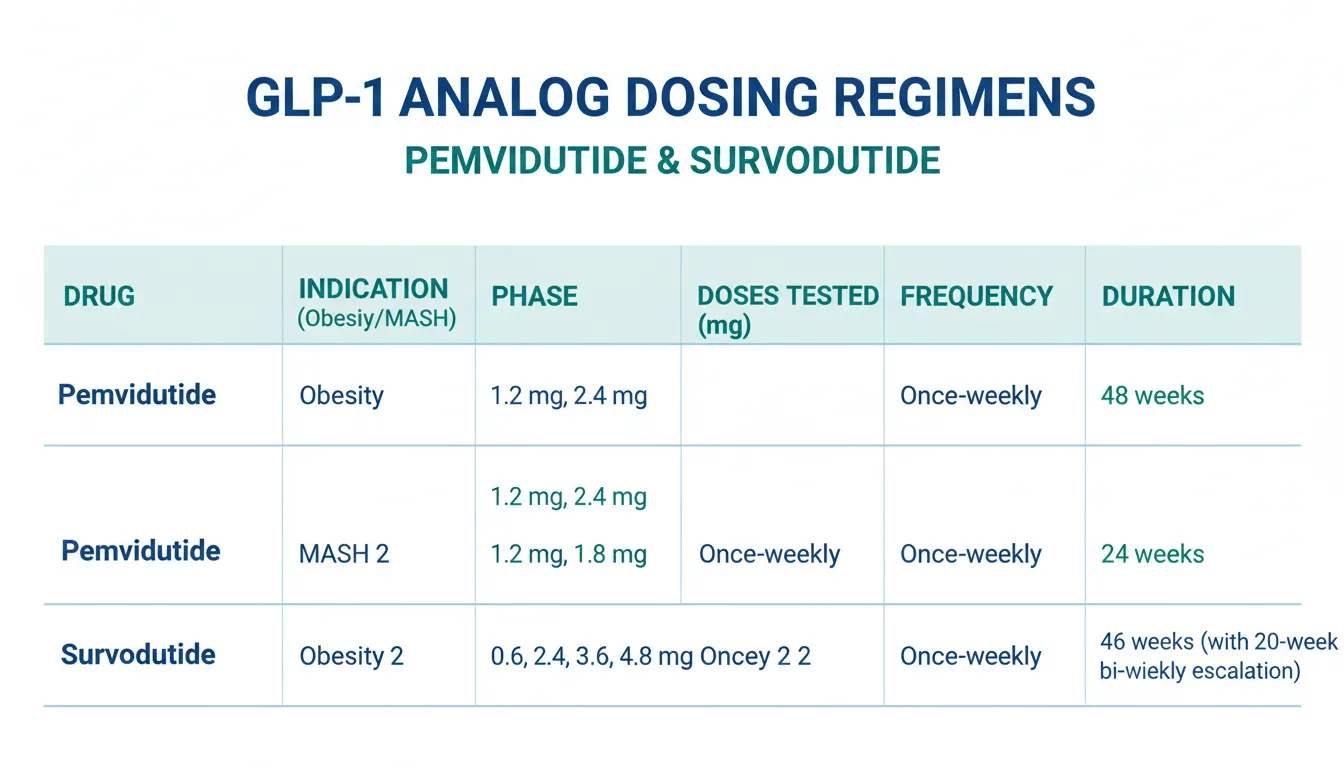
Pemvidutide has been tested at 1.2 mg and 2.4 mg once-weekly subcutaneous doses. The MOMENTUM obesity trial used the 2.4 mg dose over 48 weeks. The IMPACT MASH trial tested 1.2 mg and 1.8 mg doses over 24 weeks.
Survodutide Dosing#
Survodutide Phase 2 tested doses of 0.6, 2.4, 3.6, and 4.8 mg once weekly over 46 weeks. A 20-week bi-weekly dose escalation phase preceded maintenance. Phase 3 SYNCHRONIZE trials use optimized titration for better tolerability.
Side Effects Comparison#
Pemvidutide Side Effects#
GI adverse events were consistent with the GLP-1 class in Phase 2 trials, generally well tolerated. The MOMENTUM trial's lean mass data (only 21.9% of weight loss from lean mass) represents a potential advantage for long-term body composition and metabolic health.
Survodutide Side Effects#
GI adverse events were reported in 75% of survodutide Phase 2 patients versus 42% of placebo recipients. The rapid bi-weekly dose escalation protocol may have contributed to higher GI event rates. Phase 3 protocols with slower titration are expected to improve tolerability.
Research Evidence Comparison#
Pemvidutide Research#
Key trials include MOMENTUM (Phase 2, obesity, 15.6% weight loss at 48 weeks with 2.4 mg), IMPACT (Phase 2b, MASH, up to 59.1% MASH resolution at 24 weeks, 48-week data showing key measures of success), and RECLAIM (Phase 2, alcohol use disorder, enrolling). Published in Journal of Hepatology. FDA Fast Track for MASH. Developed by Altimmune, a smaller biotech company.
Survodutide Research#
Key trials include the obesity Phase 2 (Lancet Diabetes & Endocrinology, 2024, 18.7% weight loss), MASH Phase 2 (NEJM, 2024, 62% MASH resolution), SYNCHRONIZE-1/2 (Phase 3, obesity, fully enrolled), and LIVERAGE (Phase 3, MASH, ongoing). FDA Breakthrough Therapy and Fast Track designations. Developed by Boehringer Ingelheim/Zealand Pharma.
Key Differences Summary#
- Same mechanism, different scale: Both are GLP-1/glucagon dual agonists, but survodutide has a much larger clinical development program backed by a major pharma partnership.
- Weight loss: Survodutide showed 18.7% vs pemvidutide's 15.6% in Phase 2, though trial designs differ.
- MASH: Both show strong MASH resolution, but survodutide has the higher-tier Breakthrough Therapy Designation and Phase 3 trials.
- Body composition: Pemvidutide has published lean mass preservation data (21.9% of weight loss from lean mass); survodutide does not.
- Novel indications: Pemvidutide is expanding into alcohol use disorder; survodutide is focused on obesity and MASH.
- Development stage: Survodutide has Phase 3 trials fully enrolled; pemvidutide is earlier in development.
- Developer scale: Survodutide (Boehringer Ingelheim/Zealand Pharma) has substantially more development resources than pemvidutide (Altimmune).
Conclusion#
Pemvidutide and survodutide illustrate how the same GLP-1/glucagon dual-agonist mechanism can be developed along different clinical and commercial paths. Survodutide leads in weight loss magnitude, regulatory designations, and clinical development stage, positioning it for earlier market entry. Pemvidutide differentiates through favorable body composition data and expansion into alcohol use disorder, potentially carving out a niche if lean mass preservation proves to be a clinically meaningful differentiator.
The ultimate success of each drug will depend on Phase 3 results, safety in larger populations, and commercial positioning. Survodutide's partnership with Boehringer Ingelheim provides a clear development and commercialization advantage, while pemvidutide's lean mass preservation data and alcohol use disorder expansion could provide meaningful differentiation in a crowded market.
Detailed Category Analysis#
Mechanism of Action#
Pemvidutide: GLP-1/glucagon dual receptor agonist. Mimics the complementary effects of diet and exercise, with GLP-1 suppressing appetite and glucagon increasing energy expenditure. Glucagon component also directly promotes hepatic fat metabolism.
Survodutide: GLP-1/glucagon dual receptor agonist. Combines GLP-1-mediated appetite suppression with glucagon-mediated energy expenditure and hepatic lipid metabolism. Licensed from Zealand Pharma's peptide platform.
Advantage: Neither (tie)
Weight Loss Efficacy#
Pemvidutide: Phase 2 MOMENTUM trial showed 15.6% mean weight loss at 48 weeks with 2.4 mg dose, with weight loss still continuing at end of treatment. Notably, only 21.9% of weight loss was from lean mass, suggesting favorable body composition effects.
Survodutide: Phase 2 demonstrated up to 18.7% mean weight loss at 46 weeks with 4.8 mg dose (on-treatment analysis). 40% of patients on 4.8 mg achieved at least 20% weight loss.
Advantage: Survodutide
MASH / Liver Disease#
Pemvidutide: Phase 2b IMPACT trial showed 59.1% MASH resolution at 1.2 mg and 52.1% at 1.8 mg vs 19.1% placebo at 24 weeks. Fibrosis improvement endpoint did not reach statistical significance. FDA Fast Track designation. Phase 2b 48-week data showed key measures of success.
Survodutide: Phase 2 MASH trial showed 62% MASH resolution at 4.8 mg vs 14% placebo. FDA Breakthrough Therapy Designation for MASH. Phase 3 LIVERAGE trials ongoing for MASH with fibrosis stages F2/F3 and compensated cirrhosis.
Advantage: Survodutide
Research Evidence#
Pemvidutide: Phase 2 MOMENTUM completed for obesity. Phase 2b IMPACT completed for MASH. Phase 2 RECLAIM enrolling for alcohol use disorder. Developed by Altimmune. FDA Fast Track for MASH. Published in Journal of Hepatology.
Survodutide: Phase 2 completed for obesity (Lancet 2024) and MASH (NEJM 2024). Phase 3 SYNCHRONIZE trials fully enrolled for obesity (results expected H1 2026). Phase 3 LIVERAGE trials ongoing for MASH. FDA Breakthrough Therapy and Fast Track designations. Published in NEJM and Lancet.
Advantage: Survodutide
Side Effect Profile#
Pemvidutide: GI adverse events consistent with GLP-1 class. Generally well tolerated in Phase 2 trials. Favorable lean mass preservation (only 21.9% of weight loss from lean mass) is a potential safety/tolerability advantage.
Survodutide: GI adverse events in 75% of survodutide vs 42% placebo in Phase 2. Nausea, diarrhea, and vomiting most common. Rapid dose escalation may have contributed to high rates. Slower Phase 3 titration expected to improve tolerability.
Advantage: Pemvidutide
Body Composition#
Pemvidutide: MOMENTUM trial showed only 21.9% of total weight loss came from lean mass, better than historical data for diet/exercise and other incretin drugs. Suggests favorable body composition preservation during weight loss.
Survodutide: No specific lean mass preservation data published from Phase 2 trials. Body composition effects have not been a primary focus of the survodutide clinical program to date.
Advantage: Pemvidutide
Summary and Verdict#
Pemvidutide and survodutide are both GLP-1/glucagon dual agonists being developed for obesity and MASH, but survodutide is further ahead in clinical development with more advanced Phase 3 programs, higher-tier regulatory designations (Breakthrough Therapy vs Fast Track), and greater weight loss in Phase 2 (18.7% vs 15.6%). However, pemvidutide differentiates itself through favorable lean mass preservation and expanding into alcohol use disorder, a novel indication for this drug class. Survodutide is backed by the larger Boehringer Ingelheim/Zealand Pharma partnership and is likely to reach market first.
Best For Recommendations#
Maximum Weight Loss#
Recommendation: Survodutide
Reason: Phase 2 data showed 18.7% weight loss at 46 weeks, exceeding pemvidutide's 15.6% at 48 weeks. Phase 3 results expected H1 2026 may show even greater efficacy with optimized dosing.
Lean Mass Preservation#
Recommendation: Pemvidutide
Reason: MOMENTUM trial demonstrated only 21.9% of weight loss from lean mass, suggesting superior body composition outcomes compared to historical data for other weight loss therapies.
MASH Treatment#
Recommendation: Survodutide
Reason: FDA Breakthrough Therapy Designation (higher than pemvidutide's Fast Track), 62% MASH resolution in Phase 2, and dedicated Phase 3 LIVERAGE trials specifically designed for MASH with fibrosis.
Broader Indication Development#
Recommendation: Pemvidutide
Reason: Expanding into alcohol use disorder (RECLAIM Phase 2 trial) alongside obesity and MASH, potentially addressing a broader range of metabolic and liver conditions.
Further Reading#

Which Is Better For...
Maximum Weight Loss
Survodutide
Phase 2 data showed 18.7% weight loss at 46 weeks, exceeding pemvidutide's 15.6% at 48 weeks. Phase 3 results expected H1 2026 may show even greater efficacy with optimized dosing.
Lean Mass Preservation
Pemvidutide
MOMENTUM trial demonstrated only 21.9% of weight loss from lean mass, suggesting superior body composition outcomes compared to historical data for other weight loss therapies.
MASH Treatment
Survodutide
FDA Breakthrough Therapy Designation (higher than pemvidutide's Fast Track), 62% MASH resolution in Phase 2, and dedicated Phase 3 LIVERAGE trials specifically designed for MASH with fibrosis.
Broader Indication Development
Pemvidutide
Expanding into alcohol use disorder (RECLAIM Phase 2 trial) alongside obesity and MASH, potentially addressing a broader range of metabolic and liver conditions.
Continue Your Research
Get comparison updates
We publish new head-to-head comparisons regularly. Subscribe to see them first.
Frequently Asked Questions About Pemvidutide vs Survodutide: GLP-1/Glucagon Dual Agonist Comparison for Obesity and MASH
Which is better, Pemvidutide or Survodutide?
Pemvidutide and survodutide are both GLP-1/glucagon dual agonists being developed for obesity and MASH, but survodutide is further ahead in clinical development with more advanced Phase 3 programs, higher-tier regulatory designations (Breakthrough Therapy vs Fast Track), and greater weight loss in Phase 2 (18.7% vs 15.6%). However, pemvidutide differentiates itself through favorable lean mass preservation and expanding into alcohol use disorder, a novel indication for this drug class. Survodu... Individual responses may vary, and this comparison is based on available research data, not a treatment recommendation.
What are the key differences between Pemvidutide and Survodutide?
The main differences across comparison categories are: Mechanism of Action: advantage goes to neither (tie); Weight Loss Efficacy: advantage goes to Survodutide; MASH / Liver Disease: advantage goes to Survodutide. 3 additional categories are analyzed in the full comparison. Each category evaluates a different dimension of the two peptides.
When should I consider Survodutide over Pemvidutide?
For the scenario of "Maximum Weight Loss," research data suggests Survodutide may be more relevant. Phase 2 data showed 18.7% weight loss at 46 weeks, exceeding pemvidutide's 15.6% at 48 weeks. Phase 3 results expected H1 2026 may show even greater efficacy with optimized dosing.. This is based on currently available evidence and individual circumstances may differ.
How do Pemvidutide and Survodutide differ in their mechanisms of action?
Pemvidutide: GLP-1/glucagon dual receptor agonist. Mimics the complementary effects of diet and exercise, with GLP-1 suppressing appetite and glucagon increasing energy expenditure. Glucagon component also dire.... Survodutide: GLP-1/glucagon dual receptor agonist. Combines GLP-1-mediated appetite suppression with glucagon-mediated energy expenditure and hepatic lipid metabolism. Licensed from Zealand Pharma's peptide pla....
Which has fewer side effects, Pemvidutide or Survodutide?
In terms of side effects and tolerability, the advantage goes to Pemvidutide. Pemvidutide: GI adverse events consistent with GLP-1 class. Generally well tolerated in Phase 2 trials. Favorable lean mass preservation (only 21.9% of weight l.... Survodutide: GI adverse events in 75% of survodutide vs 42% placebo in Phase 2. Nausea, diarrhea, and vomiting most common. Rapid dose escalation may have contr....
Medical Disclaimer
This website is for educational and informational purposes only. The information provided is not intended to diagnose, treat, cure, or prevent any disease. Always consult with a qualified healthcare professional before using any peptide or supplement.