AOD-9604 + Tesamorelin + MOTS-C Stack: Fat Loss and Metabolic Peptide Research

Introduction#
The combination of AOD-9604, tesamorelin, and MOTS-C targets body composition and metabolic health through three distinct mechanisms: direct lipolysis (AOD-9604), growth hormone-mediated visceral fat reduction (tesamorelin), and mitochondrial metabolic optimization (MOTS-C). This triple-peptide approach has gained attention in clinical and research settings as a multi-pathway strategy for body recomposition.
Among these three peptides, the evidence base varies dramatically. Tesamorelin is FDA-approved with robust clinical trial data. AOD-9604 completed Phase 2 trials but failed to show efficacy. MOTS-C is a recently discovered peptide with promising preclinical data but no human clinical trials.
This guide reviews each component's evidence, examines the theoretical rationale for their combination, and provides researchers with an honest assessment of what the data supports and what remains speculative.
Component 1: Tesamorelin (FDA-Approved)#
What It Is#
Tesamorelin is a synthetic analog of growth hormone-releasing hormone (GHRH) consisting of the 44 amino acids of native GHRH with a trans-3-hexenoic acid modification at the N-terminus. It is FDA-approved (Egrifta) for the reduction of excess abdominal fat in HIV-infected patients with lipodystrophy.
Clinical Evidence#
Tesamorelin has the strongest evidence base of the three components, with multiple randomized controlled trials:
Visceral adipose tissue (VAT) reduction:
- In the pivotal Phase 3 trials, tesamorelin reduced trunk fat by approximately 15% and visceral adipose tissue by approximately 18% over 26 weeks compared to placebo 1.
- In a 52-week extension study, tesamorelin maintained VAT reduction in patients who continued treatment but effects reversed upon discontinuation 1.
Growth hormone and IGF-1 effects:
- Tesamorelin stimulates endogenous GH release from the pituitary, producing a more physiological GH pattern than exogenous GH administration
- IGF-1 levels increase in response to elevated GH secretion
- The GH response preserves pulsatility, which is considered metabolically advantageous over continuous GH elevation
Metabolic parameters:
- Improved triglyceride levels in treated patients
- No significant worsening of glucose metabolism in most studies, though glucose should be monitored
- Improved ratio of visceral to subcutaneous fat
Mechanism of Action#
Tesamorelin binds to GHRH receptors on pituitary somatotrophs, stimulating the synthesis and release of endogenous growth hormone. GH then mediates fat loss through:
- Lipolysis activation: GH stimulates hormone-sensitive lipase in adipocytes, promoting the breakdown of stored triglycerides
- Preferential visceral fat targeting: Visceral adipose tissue is more responsive to GH-mediated lipolysis than subcutaneous fat, which accounts for the selective visceral fat reduction
- Hepatic effects: GH stimulates hepatic IGF-1 production and influences hepatic lipid metabolism
FDA Status and Limitations#
Tesamorelin is FDA-approved specifically for HIV-associated lipodystrophy. Off-label use for general body composition optimization is not FDA-sanctioned. Key limitations include:
- Effects reverse upon discontinuation
- Not approved for non-HIV obesity or general weight loss
- May elevate IGF-1, which requires monitoring
- Contraindicated in patients with active malignancy
Component 2: AOD-9604 (Failed Phase 2)#
What It Is#
AOD-9604 is a modified fragment of human growth hormone corresponding to amino acids 177-191 of the C-terminal region. It was developed as an oral anti-obesity agent based on the observation that this specific hGH fragment retains lipolytic activity without the growth-promoting or diabetogenic effects of full-length GH.
Preclinical Promise#
The initial preclinical data was compelling:
- In obese mice, chronic treatment with AOD-9604 reduced body weight gain, increased fat oxidation, and stimulated lipolysis without affecting food intake 2.
- The mechanism appeared independent of the GH receptor, as AOD-9604 did not activate classical GH signaling pathways 2.
- Importantly, unlike full-length GH, AOD-9604 did not worsen glucose tolerance or promote IGF-1 elevation.
Clinical Reality#
AOD-9604 completed six human clinical trials involving over 900 participants 3:
Pilot studies: Two IV and two oral dosing pilot studies established safety and tolerability
Phase 2b trials: Two oral Phase 2b studies with 300 and 500 obese adults were conducted
Results: AOD-9604 failed to achieve statistical significance for weight loss in the Phase 2b trials. Development was terminated in 2007 due to lack of efficacy in the clinical setting.
Safety Profile#
Despite the efficacy failure, AOD-9604 demonstrated a favorable safety profile across all six human trials. The peptide subsequently received GRAS (Generally Recognized As Safe) status for use in foods, drinks, and dietary supplements 3. No significant adverse effects were reported at doses up to 100 mg/kg/day in chronic animal studies.
Critical Assessment#
AOD-9604's story is one of preclinical promise that did not translate to human efficacy. This is a cautionary example for the peptide field: impressive animal data does not guarantee clinical relevance. The reasons for the clinical failure are not fully characterized but may include:
- Poor oral bioavailability limiting effective systemic levels
- Differences in human vs. mouse adipose tissue response to the fragment
- Dose limitations in clinical settings compared to the weight-adjusted doses used in mice
Component 3: MOTS-C (Preclinical Only)#
What It Is#
MOTS-C (Mitochondrial Open Reading Frame of the Twelve S rRNA Type-C) is a 16-amino-acid peptide encoded by the mitochondrial genome. Discovered in 2015 by Lee et al., it is one of a small number of known mitochondrial-derived peptides (MDPs) that act as systemic signaling molecules 4.
The Exercise Mimetic Hypothesis#
MOTS-C has been described as an "exercise mimetic" based on its primary mechanism of action:
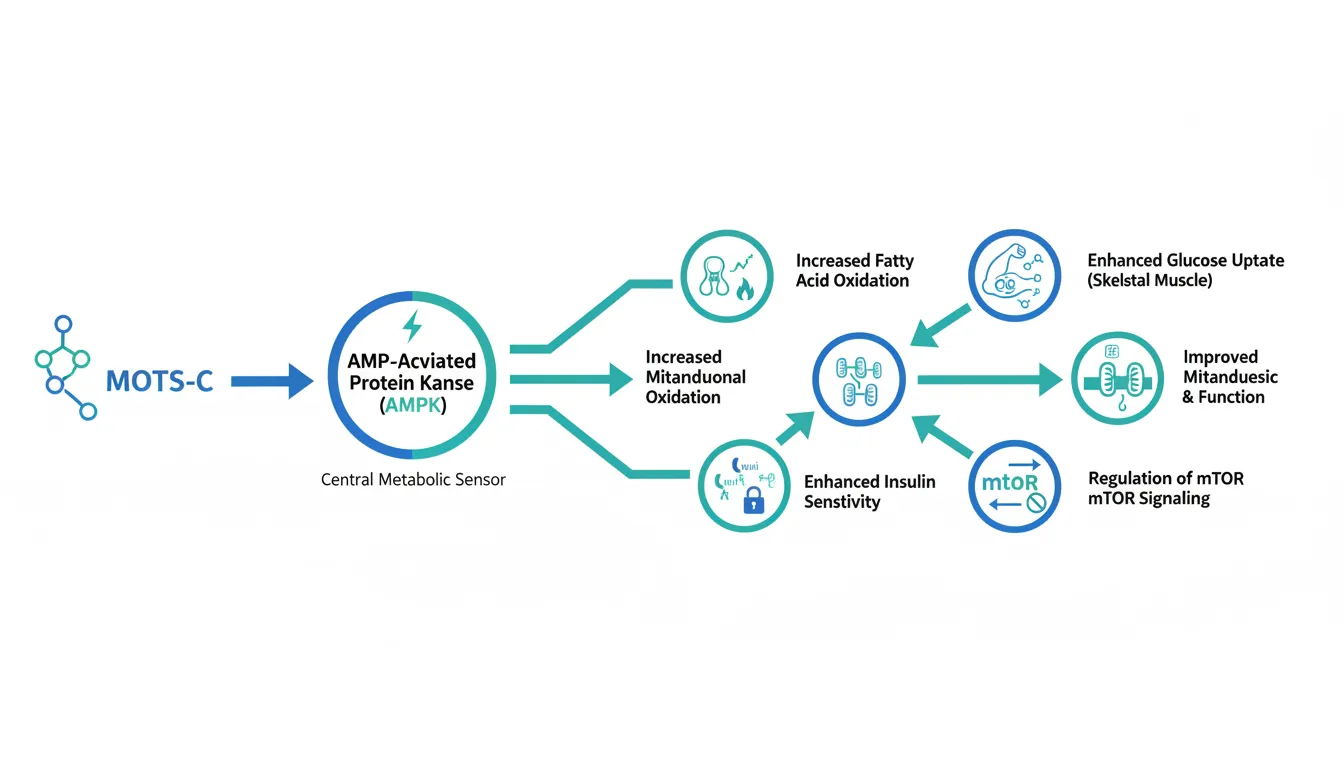
AMPK pathway activation: MOTS-C activates AMP-activated protein kinase (AMPK), the central metabolic sensor that coordinates cellular energy balance. AMPK activation is one of the key molecular events triggered by exercise and caloric restriction 45.
Downstream effects of AMPK activation:
- Enhanced glucose uptake into skeletal muscle
- Increased fatty acid oxidation
- Improved mitochondrial biogenesis and function
- Enhanced insulin sensitivity
- Regulation of mTOR signaling (which influences cell growth and autophagy)
Preclinical Research#
Metabolic effects in animal models:
- MOTS-C treatment prevented obesity and insulin resistance in mice fed a high-fat diet 4
- Importantly, the anti-obesity effect occurred without changes in food intake, suggesting MOTS-C increases metabolic rate rather than suppressing appetite
- MOTS-C improved glucose tolerance and insulin sensitivity in type 1 and type 2 diabetic mouse models 5
Age-related decline:
- Circulating MOTS-C levels decrease with aging in both mice and humans 5
- Blood MOTS-C levels are lower in individuals with type 2 diabetes, gestational diabetes, and obese children and adolescents 5
- This age- and disease-related decline has led to the hypothesis that MOTS-C supplementation could restore metabolic function
Recent developments (2024-2025):
- MOTS-C was shown to restore mitochondrial respiration in type 2 diabetic heart tissue 6
- MOTS-C prevented pancreatic islet cell senescence and delayed diabetes progression in aged mice 7
- MOTS-C activated the AMPK-HIF-1alpha-PFKFB3 glycolysis pathway in lung tissue models 8
Evidence Level and Caveats#
MOTS-C has no published human clinical trial data for any indication. All efficacy data comes from animal models and cell culture studies. While the preclinical profile is promising, the translation gap remains significant. Key unknowns include:
- Human pharmacokinetics and optimal dosing
- Long-term safety profile in humans
- Whether exogenous administration replicates the endogenous peptide's tissue-specific effects
- Potential interactions with existing medications
The Three-Peptide Combination Rationale#
Multi-Pathway Body Composition Approach#
The rationale for combining these three peptides targets fat loss and metabolic health through three independent mechanisms:
| Pathway | Peptide | Mechanism | Evidence Level |
|---|---|---|---|
| GH-mediated lipolysis | Tesamorelin | Stimulates pituitary GH release, preferentially targeting visceral fat | FDA-approved (HIV lipodystrophy) |
| Direct lipolysis | AOD-9604 | Activates lipase in adipose tissue independent of GH receptor | Phase 2 (failed efficacy) |
| Metabolic optimization | MOTS-C | AMPK activation enhances fat oxidation and glucose utilization | Preclinical only |
Theoretical Complementarity#
If all three mechanisms were active simultaneously, they could theoretically address body composition from multiple angles:
- Tesamorelin drives visceral fat reduction through the established GH-lipolysis pathway, the most well-validated mechanism in the stack
- AOD-9604 may provide additional direct lipolytic activity independent of the GH pathway, though its clinical efficacy is unproven
- MOTS-C could enhance the metabolic environment by improving mitochondrial function, increasing basal metabolic rate, and improving insulin sensitivity, thereby supporting the effects of the other two agents
Where the Evidence Falls Short#
Despite the appealing theoretical framework:
- No combination studies exist. No published research has tested any two-peptide or three-peptide combination from this stack.
- One component has failed clinical trials. AOD-9604's inability to demonstrate efficacy in Phase 2b trials is a significant concern. Including a component that failed to work in humans undermines the overall rationale.
- One component has no human data at all. MOTS-C's promising preclinical profile has not been validated in any human clinical trial.
- Interactions are unknown. Whether these three peptides interact pharmacokinetically or pharmacodynamically has not been studied.
- Tesamorelin is approved for a specific indication. Using it outside of HIV lipodystrophy is off-label.
Comparing the Three Components#
| Feature | Tesamorelin | AOD-9604 | MOTS-C |
|---|---|---|---|
| Size | 44 amino acids | 15 amino acids | 16 amino acids |
| Origin | Synthetic GHRH analog | hGH fragment (177-191) | Mitochondrial genome |
| Primary target | Pituitary GHRH receptor | Adipose tissue (non-GH pathway) | AMPK pathway |
| Fat loss mechanism | GH-mediated lipolysis | Direct lipolytic activity | Increased fat oxidation via AMPK |
| Human clinical data | Phase 3 (FDA-approved) | Phase 2b (failed efficacy) | None |
| FDA status | Approved (HIV lipodystrophy) | GRAS (food ingredient only) | Not evaluated |
| IGF-1 effect | Increases (requires monitoring) | No effect | No direct effect |
| Glucose effect | Generally neutral | No adverse effect | Improves insulin sensitivity (animal) |
Safety Considerations#
Individual Safety Profiles#
Tesamorelin:
- Well-characterized safety profile from Phase 3 trials and post-marketing surveillance
- Most common side effects: injection site reactions, arthralgia, peripheral edema
- IGF-1 elevation requires monitoring; contraindicated with active malignancy
- Glucose effects: generally neutral but monitoring recommended
AOD-9604:
- Demonstrated safety across six human trials involving 900+ participants 3
- GRAS status for food and supplement use
- No significant adverse effects at tested doses
- The primary concern is not safety but efficacy
MOTS-C:
- No human safety data exists
- Animal studies have not reported significant toxicity
- As a mitochondrial-derived peptide, it is endogenously produced, which may suggest a favorable safety profile, though dose-response relationships in humans are unknown
Combination Concerns#
- No toxicology data for any two- or three-peptide combination from this stack
- Tesamorelin's GH elevation could theoretically interact with AOD-9604's GH-independent pathway in unknown ways
- AMPK activation by MOTS-C has broad cellular effects that could interact with GH signaling cascades
- Long-term concurrent use of all three has never been studied
Honest Assessment: What Researchers Should Consider#
Strengths#
- Tesamorelin has genuine clinical evidence for visceral fat reduction, making it the anchor of this combination
- The pathways are distinct and do not obviously conflict with each other
- MOTS-C represents an interesting new biology with the AMPK/mitochondrial mechanism targeting metabolic efficiency rather than just lipolysis
Weaknesses#
- AOD-9604 failed Phase 2 trials for weight loss. Including it in a combination does not rescue its individual failure. The preclinical data, while interesting, did not translate to humans.
- MOTS-C has zero human evidence. Promising animal data is insufficient to justify clinical use.
- The combination has never been tested. All claims of synergistic fat loss are purely theoretical.
- Quality control is a significant concern for research peptides, particularly for newer compounds like MOTS-C where standardized manufacturing is less established.
Key Takeaways for Researchers#
-
Tesamorelin is the only evidence-backed component in this stack, with FDA approval and Phase 3 data supporting its use for visceral fat reduction in a specific population.
-
AOD-9604's inclusion is problematic given its failure in Phase 2b clinical trials. Preclinical promise that does not translate to human efficacy should be weighted accordingly.
-
MOTS-C is scientifically interesting but clinically unproven. The AMPK/mitochondrial mechanism is well-characterized in animal models, but no human data exists for any indication.
-
The combination is entirely hypothetical. No published research has tested any combination of these peptides together. Claims of synergistic body composition effects are extrapolations from individual peptide data.
-
Evidence quality varies dramatically across components. Researchers should not conflate tesamorelin's FDA-quality evidence with AOD-9604's failed trials or MOTS-C's preclinical-only status.
-
Regulatory status spans the full spectrum: from FDA-approved (tesamorelin) to GRAS food ingredient (AOD-9604) to unevaluated (MOTS-C). This heterogeneity complicates any systematic risk assessment.
-
Body composition optimization has better-validated approaches including semaglutide, tirzepatide, and tesamorelin alone, all of which have robust clinical trial data supporting their efficacy.
References#
Related Peptide Profiles#
Learn more about the peptides discussed in this article:
- Tesamorelin Overview and Research Guide
- Tesamorelin Dosing Protocols
- Tesamorelin Side Effects and Safety
- MOTS-C Overview and Research Guide
- MOTS-C Dosing Protocols
- MOTS-C Side Effects and Safety
Footnotes#
-
Tesamorelin (Egrifta) prescribing information. FDA-approved for reduction of excess abdominal fat in HIV-infected patients with lipodystrophy. ↩ ↩2
-
Increase of fat oxidation and weight loss in obese mice caused by chronic treatment with human growth hormone or a modified C-terminal fragment. PMID: 11673763. 2001. ↩ ↩2
-
Safety and Metabolism of AOD9604, a Novel Nutraceutical Ingredient for Improved Metabolic Health. Journal of Endocrinology and Metabolism. 2015. ↩ ↩2 ↩3
-
The Mitochondrial-Derived Peptide MOTS-c Promotes Metabolic Homeostasis and Reduces Obesity and Insulin Resistance. Cell Metabolism. 2015. ↩ ↩2 ↩3
-
MOTS-c: A promising mitochondrial-derived peptide for therapeutic exploitation. Frontiers in Endocrinology. 2023. ↩ ↩2 ↩3 ↩4
-
Mitochondria-derived peptide MOTS-c restores mitochondrial respiration in type 2 diabetic heart. Frontiers in Physiology. PMC: 12257629. 2025. ↩
-
Mitochondrial-encoded peptide MOTS-c prevents pancreatic islet cell senescence to delay diabetes. Experimental & Molecular Medicine. 2025. ↩
-
MOTS-c Promotes Glycolysis via AMPK-HIF-1alpha-PFKFB3 Pathway to Ameliorate Cardiopulmonary Bypass-induced Lung Injury. PMID: 40035775. 2025. ↩

Frequently Asked Questions About AOD-9604 + Tesamorelin + MOTS-C Stack: Fat Loss and Metabolic Peptide Research
What does this article cover?
An evidence-based review of the AOD-9604, tesamorelin, and MOTS-C peptide stack for body composition and metabolic health, examining clinical evidence for each component, the rationale for combining them, and critical gaps. This guide is for educational purposes only and does not constitute medical advice.
Which peptides are discussed in this article?
This article covers Tesamorelin, MOTS-C. Key context: Tesamorelin (FDA-approved GHRH analog with clinical evidence for visceral fat reduction); MOTS-C (Mitochondrial-derived peptide studied for AMPK activation and metabolic regulation). Each peptide is discussed based on available research evidence.
Who is this guide written for?
This guide is written for researchers and individuals seeking an evidence-based overview of the topic covered in "AOD-9604 + Tesamorelin + MOTS-C Stack: Fat Loss and Metabolic Peptide Research." It summarizes available research data without making treatment recommendations. Always consult a healthcare provider for medical decisions.
What are the key takeaways from this article?
The main findings covered in this article include: FDA-approved GHRH analog with clinical evidence for visceral fat reduction. Mitochondrial-derived peptide studied for AMPK activation and metabolic regulation. These takeaways are based on the research data available at the time of publication.
What is Tesamorelin and why is it significant?
Tesamorelin is a peptide discussed in this article because: FDA-approved GHRH analog with clinical evidence for visceral fat reduction. For a complete profile of Tesamorelin, see the dedicated peptide page on this site.
Continue reading this research review
Free access to the complete analysis with citations and evidence ratings.
150+ peptide profiles · 30+ comparisons · 18 research tools
Medical Disclaimer
This website is for educational and informational purposes only. The information provided is not intended to diagnose, treat, cure, or prevent any disease. Always consult with a qualified healthcare professional before using any peptide or supplement.
Join 2,000+ researchers getting biweekly updates
Enjoyed this article?
The Research Briefing delivers deep-dives like this biweekly — plus new study breakdowns, safety updates, and tool announcements.
Free forever. No spam. Unsubscribe in one click.
Where to Find These Peptides
Continue Exploring
Peptide Profiles
Keep Reading
Most Popular Therapeutic Peptides in 2026: 15 Ranked by Research Interest
The 15 most popular therapeutic peptides in 2026, ranked by clinical trial activity, search interest, and research community adoption. From semaglutide to BPC-157.
Best Peptides to Stack with Retatrutide (2026 Research Guide)
A 2026 research-focused review of the peptides most often discussed alongside retatrutide for GI side effects, lean-mass preservation, hair and skin changes, sleep, and adjunct fat loss — what the literature does and does not support.
Weight Loss Peptides: Mechanisms, Evidence, and How They Compare
A mechanism-focused guide to weight loss peptides — how GLP-1, GIP, and glucagon pathways drive fat loss, how single, dual, and triple agonists compare, and what the clinical evidence actually shows.
You Might Also Like
Related content you may find interesting