SS-31 (Elamipretide) Research Review: Clinical Trials, Anti-Aging Data, and Regulatory Status
What Is SS-31 (Elamipretide)?#
SS-31, also known as elamipretide, Bendavia, or MTP-131, is a synthetic tetrapeptide with the sequence D-Arg-Dmt-Lys-Phe-NH2 and a molecular weight of 639.8 Da. Developed by Stealth BioTherapeutics, it represents a fundamentally different approach to mitochondrial therapeutics: rather than scavenging reactive oxygen species after they form, SS-31 targets the underlying bioenergetic dysfunction that produces them.
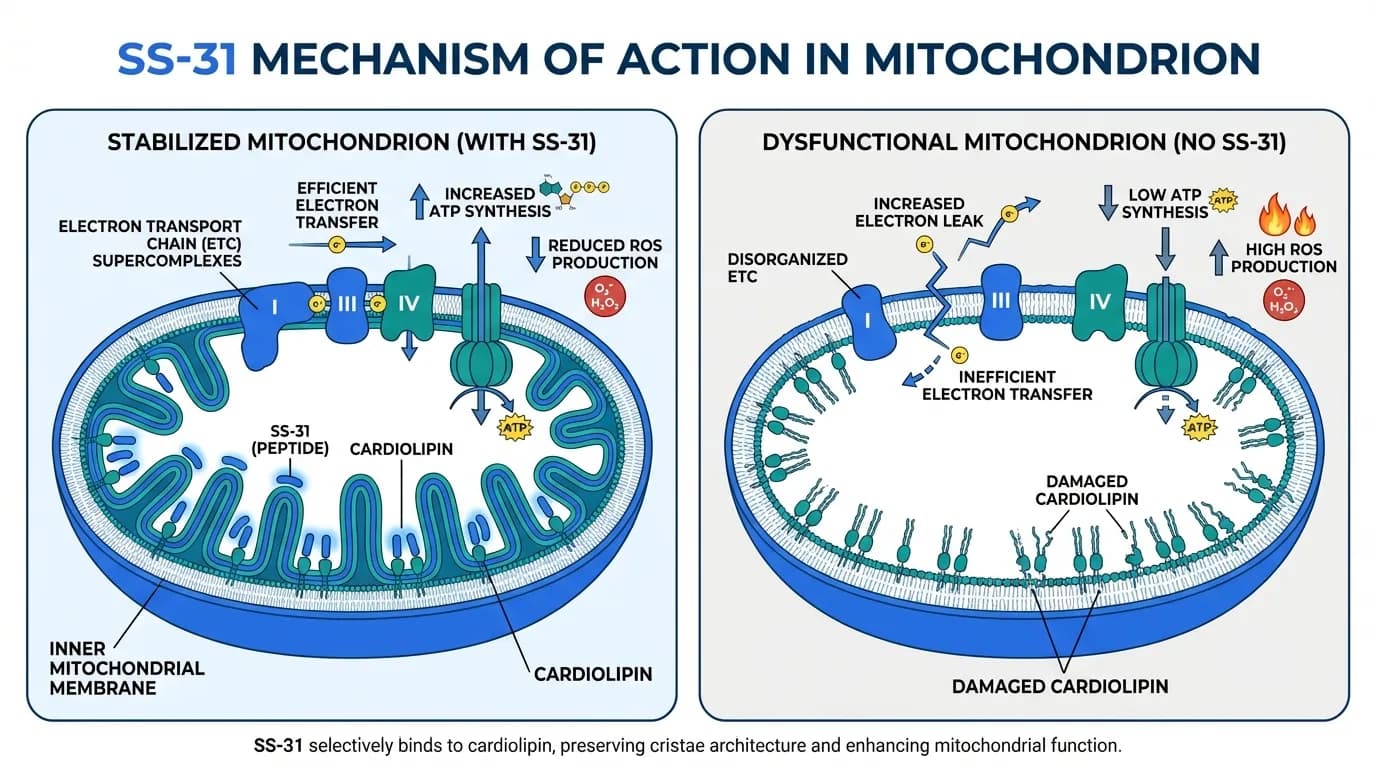
The peptide's mechanism centers on its selective binding to cardiolipin, a phospholipid found almost exclusively in the inner mitochondrial membrane. Cardiolipin is essential for the structural organization of electron transport chain (ETC) supercomplexes. When cardiolipin is damaged by oxidation or is structurally abnormal (as in Barth syndrome), ETC efficiency degrades, electron leak increases, and mitochondrial ROS production accelerates in a destructive cycle.
SS-31 concentrates more than 1,000-fold within the inner mitochondrial membrane and stabilizes cardiolipin-dependent supercomplex assembly. This restores efficient electron transfer, reduces ROS at the source, and improves ATP production. The distinction between "antioxidant" and "cardiolipin stabilizer" is not merely semantic; it defines the therapeutic rationale for pursuing diseases of primary mitochondrial dysfunction.
TAZPOWER Phase 3 Trial: Barth Syndrome#
The TAZPOWER trial (Thompson WR et al., 2021, Cardiology in the Young) was the pivotal Phase 3 study for elamipretide in Barth syndrome, a rare X-linked genetic disorder caused by mutations in the tafazzin gene that impair cardiolipin remodeling. Patients with Barth syndrome accumulate abnormal cardiolipin species, leading to cardiomyopathy, skeletal myopathy, neutropenia, and exercise intolerance.
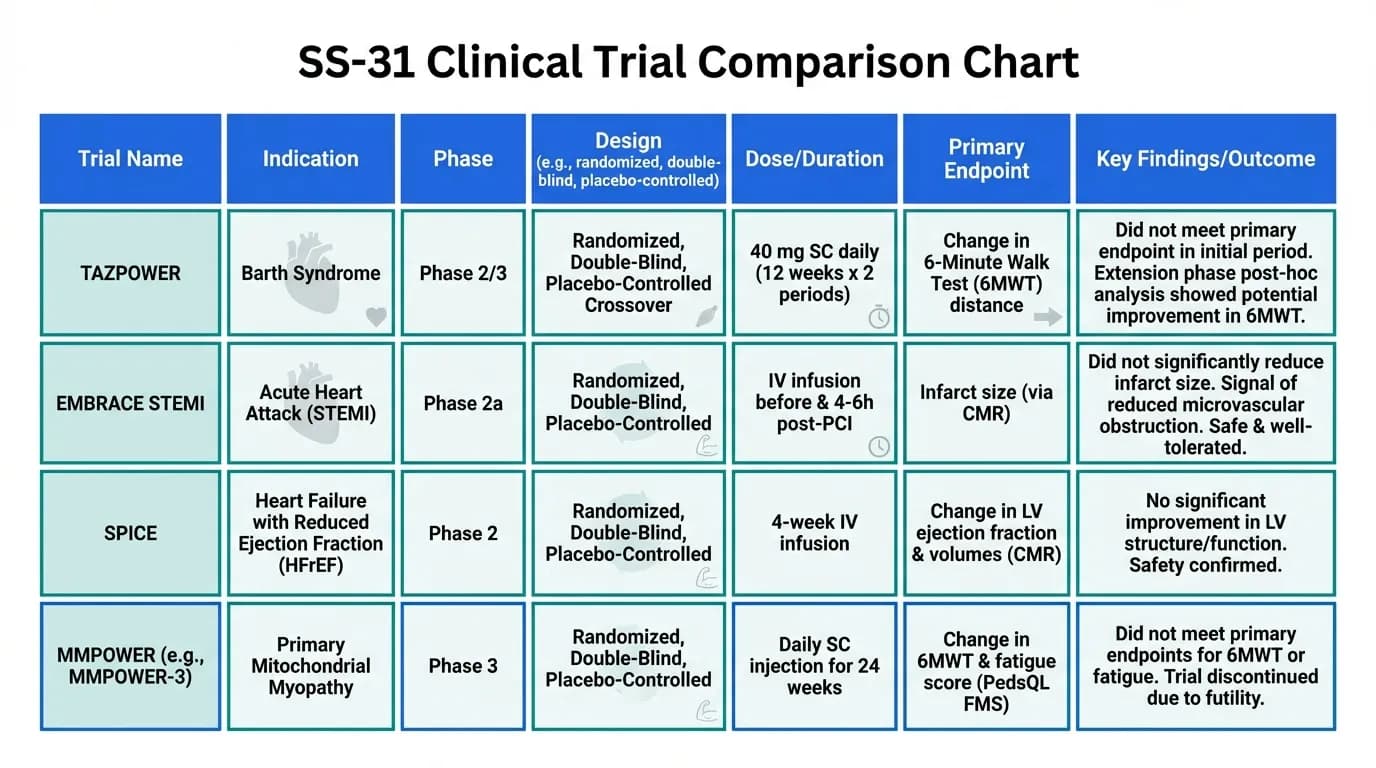
TAZPOWER was a randomized, double-blind, placebo-controlled crossover trial enrolling 12 patients with genetically confirmed Barth syndrome. Patients received 40 mg daily subcutaneous elamipretide for 12 weeks in each treatment period.
Key results:
- The primary endpoint, change in six-minute walk test (6MWT) distance, showed a trend toward improvement but did not reach conventional statistical significance (p < 0.05)
- The five-times sit-to-stand test demonstrated statistically significant improvement
- Injection site reactions were the most common adverse event
- The drug was generally well tolerated throughout the study
The primary endpoint miss must be understood in context. With only 12 patients, the trial was statistically underpowered by conventional standards. Barth syndrome affects an estimated 1 in 300,000-400,000 live births, making larger trials extraordinarily difficult to conduct. The FDA has specific pathways for ultra-rare diseases, but the statistical bar remains a challenge.
Open-Label Extension Data#
Data from the open-label extension study, spanning up to 168 weeks of continuous treatment, provided additional evidence. Patients maintained or continued to improve on functional measures over this extended period, addressing questions about durability of effect. These data were included in Stealth BioTherapeutics' NDA submission to the FDA.
For detailed analysis of all SS-31 clinical studies, see the full SS-31 research evidence page.
EMBRACE STEMI Trial: Acute Heart Attack#
The EMBRACE STEMI trial (Gibson CM et al., 2016, American Heart Journal) tested whether SS-31 could reduce myocardial ischemia-reperfusion injury when administered during percutaneous coronary intervention (PCI) for first-time ST-elevation myocardial infarction (STEMI).
This Phase 2a randomized, double-blind, placebo-controlled trial evaluated a single intravenous dose of elamipretide (0.25 mg/kg) administered at the time of reperfusion. The rationale was that mitochondrial damage during reperfusion, driven by cardiolipin oxidation and permeability transition pore opening, is a major contributor to final infarct size even after blood flow is restored.
Results:
- The primary endpoint (creatine kinase-MB area under the curve) was not met
- Cardiac MRI showed trends toward reduced infarct size, a pre-specified secondary endpoint
- The drug was well tolerated in the acute cardiac care setting
- The study supported the concept of mitochondrial protection during ischemia-reperfusion
The disconnect between the biomarker primary endpoint and the imaging secondary endpoint highlights a recurring challenge in SS-31 clinical development: selecting endpoints sensitive enough to detect mitochondrial-level improvements in short-duration studies. No follow-up Phase 3 trial in STEMI has been initiated.
Heart Failure with Reduced Ejection Fraction#
A Phase 2 randomized trial (Daubert MA et al., 2017, Circulation Heart Failure) evaluated 4 weeks of daily subcutaneous elamipretide (40 mg) in patients with heart failure with reduced ejection fraction (HFrEF).
This trial produced some of the more encouraging cardiac data for SS-31:
- Improvement in left ventricular end-systolic volume (LVESV), an echocardiographic marker of cardiac remodeling
- Trends toward improved cardiac output
- Acceptable safety profile over the 4-week treatment period
- Support for mitochondrial dysfunction as a therapeutic target in heart failure
However, the trial was limited by its short duration and small sample size. Imaging-based endpoints, while mechanistically informative, do not substitute for clinical outcomes data. No Phase 3 heart failure trial has been reported.
Mitochondrial Myopathy#
A Phase 2 trial (Karaa A et al., 2018, Neurology) evaluated 5 days of intravenous elamipretide (0.25 mg/kg daily) in patients with genetically confirmed primary mitochondrial myopathy (PMM). Numerical improvements in 6MWT distance were observed but were not conclusive given the short treatment duration and genetic heterogeneity of the patient population.
This trial demonstrated the feasibility of mitochondrial targeting in a genetically diverse PMM population but underscored the difficulty of achieving measurable clinical improvement with only 5 days of treatment. Mitochondrial bioenergetic remodeling likely requires sustained treatment periods.
Preclinical Anti-Aging and Longevity Research#
The anti-aging research for SS-31 is exclusively preclinical but has generated significant interest in the longevity research community. In aged mice, SS-31 treatment has demonstrated:
- Cardiac aging reversal: Restoration of diastolic function in aged mouse hearts to levels comparable to young animals, associated with normalization of mitochondrial membrane potential and supercomplex organization
- Skeletal muscle rejuvenation: Improved ATP production, exercise tolerance, and reduced oxidative damage markers in aged skeletal muscle
- Renal protection: Amelioration of age-related kidney pathology and reduction in mitochondrial-derived oxidative stress markers
- Neuroprotection: Improvements in mitochondrial function in aged brain tissue, though behavioral and cognitive endpoints were less consistently reported
These findings collectively support the hypothesis that age-related mitochondrial dysfunction across multiple organ systems is pharmacologically reversible through cardiolipin stabilization. The breadth of organ systems responding to SS-31 in aged animals suggests that mitochondrial decline may be a unifying mechanism underlying multi-organ aging.
However, no formal human aging trial of SS-31 has been conducted or announced. The translation gap between preclinical aging models and clinical geriatric medicine remains substantial, and the regulatory pathway for an "anti-aging" indication is undefined.
Current Regulatory Status#
As of March 2026, the regulatory status of SS-31 is as follows:
- FDA: Stealth BioTherapeutics received a Complete Response Letter (CRL) for their Barth syndrome NDA, indicating that the FDA required additional clinical data before granting approval. The company has continued to work with the FDA using supplemental data from the open-label extension study
- Orphan Drug Designation: Elamipretide holds orphan drug designation for Barth syndrome in the United States
- No other indications have advanced to NDA/BLA stage
The CRL was a significant setback, as Barth syndrome was considered the most favorable indication given the direct cardiolipin mechanism. The path forward likely depends on whether the accumulated long-term data from the open-label extension and additional analyses satisfy the FDA's requirements.
Research Gaps and Open Questions#
Several critical gaps remain in the SS-31 evidence base:
- No Phase 3 heart failure data: Despite encouraging Phase 2 results, no large-scale outcomes trial in HFrEF has been completed
- Long-term safety unknown: Effects of chronic cardiolipin stabilization over years to decades have not been characterized
- Dose optimization incomplete: Optimal dosing for non-Barth indications has not been established through formal dose-ranging studies
- No human aging data: Clinical translation of the extensive preclinical aging findings has not been attempted
- Biomarker development needed: Reliable biomarkers for patient selection and treatment monitoring remain an unmet need
Summary#
SS-31 (elamipretide) represents a mechanistically distinct approach to mitochondrial medicine through direct cardiolipin stabilization. The clinical program has produced mixed results: functional improvements in Barth syndrome that were clinically meaningful but statistically limited by the ultra-rare disease population, encouraging but preliminary cardiac data, and a regulatory path that remains unresolved. The preclinical anti-aging data is compelling in scope but entirely untranslated to human studies. For researchers and clinicians following mitochondrial therapeutics, SS-31 remains one of the most thoroughly characterized compounds in the field, and its regulatory and clinical trajectory will have implications beyond this single molecule.
For the complete peptide profile, visit the SS-31 overview page.
Frequently Asked Questions About SS-31 (Elamipretide) Research Review: Clinical Trials, Anti-Aging Data, and Regulatory Status
What is SS-31 and how does it work?
SS-31 (elamipretide) is a synthetic tetrapeptide (D-Arg-Dmt-Lys-Phe-NH2) that selectively targets the inner mitochondrial membrane by binding to cardiolipin. Rather than acting as a conventional antioxidant, it stabilizes electron transport chain supercomplexes to improve mitochondrial bioenergetics and reduce reactive oxygen species production at the source.
Is SS-31 FDA approved?
SS-31 is not FDA approved as of March 2026. Stealth BioTherapeutics received an FDA Complete Response Letter for their Barth syndrome NDA, requesting additional clinical data before approval. The company has continued to pursue the regulatory pathway with supplemental evidence from the open-label extension study.
What were the results of the TAZPOWER trial?
The TAZPOWER Phase 3 crossover trial enrolled 12 patients with Barth syndrome receiving 40 mg daily subcutaneous elamipretide. While the primary endpoint of six-minute walk test improvement did not reach conventional statistical significance due to the very small sample size, the five-times sit-to-stand test showed statistically significant improvement. Open-label extension data demonstrated sustained benefits over 168 weeks.
Does SS-31 have anti-aging effects?
Preclinical studies in aged mice have shown that SS-31 can reverse age-related mitochondrial dysfunction in the heart, skeletal muscle, kidney, and brain. It has restored cardiac diastolic function and exercise tolerance in aged animals to levels comparable to young controls. However, no formal human aging trials have been conducted, so clinical translation of these findings remains unconfirmed.
What are the main side effects of SS-31?
In clinical trials, SS-31 has been generally well tolerated. The most commonly reported adverse event is injection site reactions with subcutaneous administration. Some patients have experienced mild gastrointestinal symptoms. The safety profile across multiple trials has been considered acceptable for the conditions studied.
Continue reading this research review
Free access to the complete analysis with citations and evidence ratings.
150+ peptide profiles · 30+ comparisons · 18 research tools
Medical Disclaimer
This website is for educational and informational purposes only. The information provided is not intended to diagnose, treat, cure, or prevent any disease. Always consult with a qualified healthcare professional before using any peptide or supplement.
Join 2,000+ researchers getting biweekly updates
Enjoyed this article?
The Research Briefing delivers deep-dives like this biweekly — plus new study breakdowns, safety updates, and tool announcements.
Free forever. No spam. Unsubscribe in one click.
Where to Find These Peptides
Continue Exploring
Peptide Profiles
Keep Reading

Anti-Aging Peptides by Mechanism: Senolytics, Telomeres, Mitochondria, and Hormones
Research review of anti-aging peptides organized by mechanism of action including senolytic peptides (FOXO4-DRI), telomere peptides (epitalon), mitochondrial peptides (SS-31, MOTS-c), tissue remodelers (GHK-Cu), and bioregulators (pinealon, thymalin). Evidence quality assessment for each approach.

Mitochondrial Peptides: The Next Frontier in Longevity
Mitochondrial peptides MOTS-c, SS-31, and Epitalon reviewed for their roles in cellular energy, aging, and longevity research.

Peptide Therapy for Brain Health: Neuroprotection, Cognition, and Recovery
Comprehensive guide to peptides for brain health covering neurotrophic factors, neuroprotective agents, anxiolytics, and experimental cognitive enhancers. Includes cerebrolysin, semax, selank, BPC-157, dihexa, pinealon, SS-31, and rapastinel.
You Might Also Like
Related content you may find interesting